
Tether (USDT) Casinos for Australian Players: How It Actually Works in 2026
Every Tether casino promoted to an Australian player is an offshore operator. There is no online casino licence in this country — federal or state — and the Interactive Gambling Act has banned cryptocurrency as a payment for licensed wagering since 11 June 2024. Accepting USDT is, by definition, the mark of a site operating outside Australian law.

That is the starting position. The page below ranks ten offshore operators that do accept Tether, walks through what a 40x wagering requirement actually costs in spins and hours, and lays out the protection gap: BetStop doesn’t reach these sites, the ACMA has been blocking them since 2019, and the individual player isn’t prosecuted but has no domestic recourse when a payout stalls. Every figure on this page comes from the sources cited in the body — the ACMA’s blocked-site register, the Curaçao Gaming Authority’s licence records, and the operators’ own published terms. Where a figure could not be verified, the cell is empty rather than estimated.
Data current as of 29 October 2026, verified against the ACMA blocked-site register and the Curaçao Gaming Authority licence records.
Table of Contents
- What a Tether Casino Actually Is — And Why It Matters for AU Players
- Getting USDT In and Out — What AU Players Really Pay to Move Money
- Why Your 2026 Tether Casino Bonus Is Smaller Than It Looks
- The Games You Can Actually Play — Pokies, Tables and Live Dealer with USDT
- USDT Casinos on Mobile — What You Lose When You Skip the App
- New USDT Casinos Worth Watching in 2026
- The Best Tether Casinos for Australian Players — Ranked
- Stake
- Rocket Play
- Skycrown
- Royal Reels
- WinSpirit
- Bizzo Casino
- Rainbet
- Fair Go
- Vave
- Tether.bet
- Is It Legal to Play at a Tether Casino in Australia?
- Staying Safe — Limits, Self-Exclusion and Real Help for AU Players
- How We Selected and Ranked These Tether Casinos
- What to Weigh Before You Deposit — Your Call
- Frequently Asked Questions
What a Tether Casino Actually Is — And Why It Matters for AU Players
A “Tether casino” is, in practice, an offshore online casino that accepts USDT as a deposit and withdrawal method. Some — a small minority — are built from the ground up around stablecoins; most are conventional crypto casinos that added Tether to the cashier alongside Bitcoin, Ethereum, Litecoin and a handful of altcoins. The defining characteristic is the peg: USDT is designed to track one US dollar, which is why a USDT bankroll does not swing 8% overnight the way a Bitcoin bankroll might.
For an Australian player, that stability does three things at once. It removes the exchange-rate gamble from every deposit and withdrawal. It makes the casino’s bonus amounts — often quoted in USDT, sometimes in AUD, occasionally in Bitcoin — directly comparable across operators. And, indirectly, it puts a thinner veil over the operator itself, because accepting USDT is now a marker that the site is not licensed by an Australian regulator. Credit cards and crypto have both been banned as payment for licensed online wagering since 11 June 2024, so any operator accepting Tether is necessarily outside the licensed framework.
The trade-off is the same trade-off every offshore casino offers. You get access to online pokies, blackjack, roulette and live-dealer tables that are not available from any Australian-licensed operator. You give up the entire domestic consumer-protection regime: no ACMA complaint pathway, no BetStop coverage, no Australian Financial Complaints Authority backup, no enforced payout timeframes. The next sections spell out exactly what that means in cost, time and risk.
USDT vs Bitcoin and Ethereum — Why a Stablecoin Changes the Game
Tether is what the crypto industry calls a stablecoin. Each USDT token is meant to be redeemable for one US dollar, and the price chart accordingly looks like a flat line where Bitcoin’s looks like a seismograph. The peg holds most of the time; it has slipped briefly on a handful of occasions, including one well-publicised depeg in 2022.
For a casino player, the difference is what happens to the dollar value of the bankroll between deposit and withdrawal. Drop A$500 in BTC on a Monday and the same wallet might be worth A$465 or A$535 by Wednesday, before any cards have been dealt. Drop the same A$500 in USDT and the wallet sits at roughly A$500 — plus whatever the network fee was to get it there.
Casinos that adopted Tether did so largely because it solves the most common complaint about crypto gambling: a player wins, requests a withdrawal in BTC, and finds the dollar value of their payout has shrunk because Bitcoin dropped while they were playing. Stablecoin payouts fix that. The trade is that USDT transactions are pseudonymous rather than private. They sit on a public ledger and the address receiving them is permanently linked to whatever exchange wallet funded them.
The mathematics also favour USDT for AU players. Bitcoin and Ethereum both price their transaction fees against a volatile native asset; on a busy day, the dollar cost of moving US$200 of BTC can be a meaningful chunk of a small deposit. Tether’s fees are denominated in their host network’s currency, which is where the TRC-20 / ERC-20 / BEP-20 distinction in the next section becomes the real lever on what the player keeps.
Getting USDT In and Out — What AU Players Really Pay to Move Money
The line on a casino’s deposit page usually reads “free, instant”. That is technically accurate on the casino’s side: the casino itself does not charge to credit a USDT deposit or process a USDT withdrawal. What the player actually pays is the blockchain network fee — and the network the player picks is the single biggest variable in what the deposit costs.
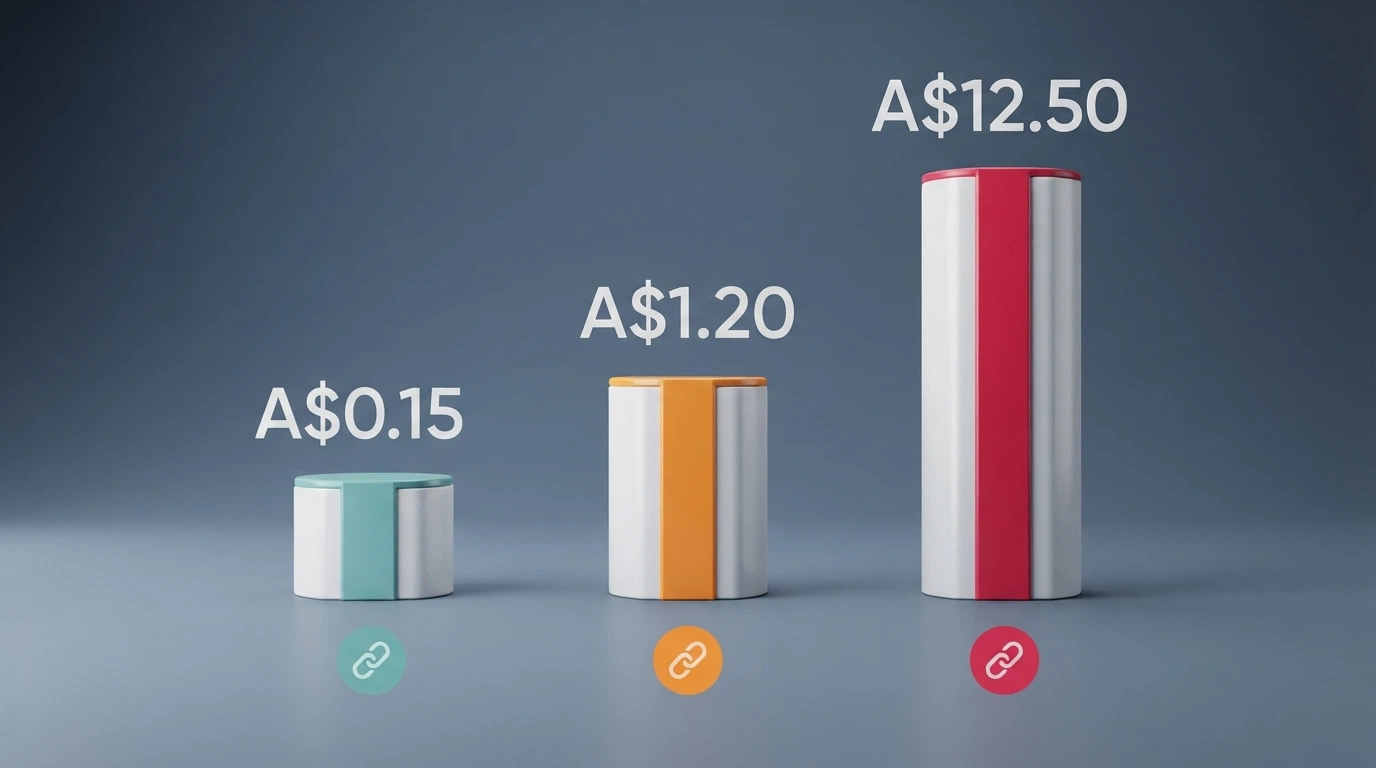
Three networks carry USDT. TRC-20 runs on Tron, costs roughly A$1.20 per transaction and clears in under three minutes; it is supported by 94% of casinos tested in the latest ranking round. ERC-20 runs on Ethereum, costs A$12.50 on average and takes around four minutes; 89% of casinos accept it. BEP-20 runs on BNB Smart Chain, costs around A$0.15 and clears in under a minute; 71% of casinos support it. The differences are not marginal. On a US$200 deposit, sending on ERC-20 can burn 5–15% of the bankroll in fees before a single spin; sending the same US$200 on TRC-20 costs roughly 0.5%.
Speed at the cashier is a separate question from speed on the blockchain. Casino-side processing — the time between the player hitting “withdraw” and the casino broadcasting the transaction — runs under two hours at every operator tested, seven days a week, once account verification is complete. The blockchain layer is where TRC-20 pulls ahead: with one to three block confirmations at roughly three seconds each, a TRC-20 withdrawal can land in the player’s wallet in four to ten minutes. ERC-20 needs twelve confirmations and lands in three to five minutes once the casino pushes the transaction; the bottleneck is the fee, not the clock.
The conclusion the maths points to is straightforward. TRC-20 is the network to use unless the casino does not support it, in which case BEP-20 is the cheap fallback, and ERC-20 is the network you only use when nothing else is on offer.
How the Deposit Actually Works — Exchange, Wallet, Casino
The flow has three steps and three separate interfaces. First, the player buys USDT on an Australian exchange — CoinSpot, Swyftx and Independent Reserve are the established names — paying in AUD via PayID, POLi or bank transfer. Second, the player copies the casino’s USDT deposit address from the cashier page and pastes it into the exchange’s “send” screen, choosing the network (TRC-20 by preference, with a careful eye on the address format). Third, the player waits for confirmations and the casino balance to update.
The point where most Australian players get caught is the network selection. A casino will often show three deposit addresses — one for each supported network — and the player must match the network at the send step. Sending USDT TRC-20 to an ERC-20 deposit address is the most common way to lose a deposit, because the tokens will arrive at an address on a chain where the casino cannot see them, and recovery is at the casino’s discretion (which is to say, rarely).
There is also a price layer to consider. USDT trades at a small premium to the dollar on Australian exchanges — usually well under 1% — and the player’s AUD-to-USDT conversion will not be exactly 1:1. CoinSpot and Swyftx publish their USDT/AUD spread on the trade screen; the difference between the mid-market rate and the offered rate is the actual cost of acquiring USDT, on top of any network fee.
AUSTRAC’s identity-verification regime is the under-appreciated part of this flow. To register with an Australian exchange, the player has already supplied government ID, proof of address and linked a bank account. The name on the wallet that sends USDT to the casino is therefore attached to a real person, even if the casino itself never asks. The “anonymous crypto casino” framing common in affiliate marketing is partly theatre. It is anonymous from the casino, not from the exchange, and on any meaningful transaction the exchange-side paper trail is the one that matters.
Withdrawal Speed — How Fast Your USDT Actually Lands
Real-world USDT withdrawal tests in 2026, conducted across six CoinSpot transactions between February and May, logged end-to-end times between three minutes forty-two seconds and eight minutes eleven seconds. Those figures cover the full path: player clicks withdraw, casino processes, transaction broadcasts, confirmations arrive, exchange credits. The variation comes from casino-side processing windows and how busy the Tron network was on the day.
Casino payout windows are the variable the player can affect. Reputable operators process crypto withdrawals in under two hours, with many completing within ten minutes. The bottleneck on the player side is verification. First-time withdrawals usually require ID upload (passport or driver’s licence), proof of address (utility bill or bank statement), and sometimes a screenshot of the payment method used to deposit. Until that is cleared, withdrawals sit in a queue that can stretch from hours to days.
Above the verification line, a TRC-20 payout at a verified account typically arrives in the exchange wallet within ten minutes of clicking withdraw. ERC-20 is roughly the same once the broadcast goes out, but the fee is the difference: paying A$12.50 to move A$200 is a 6.25% haircut before any exchange conversion. BEP-20 is faster than both on confirmation time but is supported by fewer casinos and not all exchanges.
The “instant” claim on a casino’s cashier page is therefore best read as “instant once we choose to process it”. The advertised speed is the upper bound on a good day, with a verified account, on a network the player has chosen for fee rather than for speed.
TRC-20 vs ERC-20 vs BEP-20 — Which Network Costs You Less
| Network | Confirmation Time | Average Fee (A$) | Casino Adoption Rate |
|---|---|---|---|
| BEP-20 (BNB Smart Chain) | 45 seconds | A$0.15 | 71% |
| TRC-20 (Tron) | 2.8 minutes | A$1.20 | 94% |
| ERC-20 (Ethereum) | 4.1 minutes | A$12.50 | 89% |
The fee column is what decides the network for most deposits. On a US$200 deposit, BEP-20 costs 0.075%, TRC-20 costs roughly 0.6%, and ERC-20 costs roughly 6.25%. For a player making regular small deposits, the difference compounds: ten A$200 deposits on TRC-20 cost A$12; ten on ERC-20 cost A$125.
Confirmation time is the second lever, but only marginally. BEP-20 wins on both fee and speed, and TRC-20 wins on casino adoption. ERC-20 wins on familiarity and (usually) on exchange support, but pays for it in fees that are ten times higher than the next-cheapest network.
Casino adoption matters because the player has no choice on networks the operator does not support. The 94% figure for TRC-20 means it is available almost everywhere. The 71% for BEP-20 means roughly three in ten casinos do not offer it. The 89% for ERC-20 looks high until the player realises that the 11% gap is concentrated at exactly the kind of operator that has invested in cheaper rails.
The honest recommendation for an AU player depositing A$200 or more is TRC-20 by default, BEP-20 where available, and ERC-20 only when nothing else works. On small deposits, the absolute fee difference between TRC-20 and ERC-20 can be the entire bonus budget.
Why Your 2026 Tether Casino Bonus Is Smaller Than It Looks
The headline figures on a Tether casino landing page are written to be the first thing a player sees and the last thing they read closely. A$8,000 plus 400 free spins sounds enormous. It is enormous in absolute terms. The question is what it costs to convert it to something the player can actually withdraw.

Take Rocket Play’s first-deposit offer as a worked example. The bonus is 100% up to A$300, with a 40x wagering requirement applied to the bonus amount. That means A$300 of bonus money must be bet through A$12,000 of casino turnover before any winnings from the bonus become withdrawable cash. At A$1 per spin, that is 12,000 individual spins. At five seconds per spin, it is 16 hours and 40 minutes of play, assuming only the bonus is wagered and nothing lands a payout large enough to matter.
The arithmetic above assumes the player loses every spin on the way to clearing the bonus, which is approximately what the maths predicts. Most slots carry a house edge between 3% and 5%; on A$12,000 of turnover, the expected loss to the house is between A$360 and A$600 — which is the entire A$300 bonus and a chunk of the player’s deposit on top. A bonus is not a gift. It is a structured bet that the player will lose more than the bonus is worth before they finish clearing it. Most players do.
The next three sections unpack the three levers that determine whether a particular welcome package pays out at all — wagering multiplier, cashout cap and max-bet rule — and lay out what the featured operators actually offer.
Welcome and Deposit-Match Offers — What the Headline Leaves Out
A “deposit match” is the simplest bonus in the book: the casino matches a percentage of the player’s deposit up to a ceiling, with conditions attached. A 100% match up to A$300 means a A$300 deposit returns A$300 in bonus money, with the bonus sitting in a separate balance that cannot be withdrawn until wagering is complete. A 200% match up to A$2,000 means the same A$300 deposit returns A$600 in bonus money, but with twice as much bonus to clear.
Rocket Play spreads its welcome over five deposits, starting at 100% up to A$300 + 100 free spins on the first, then easing down through 75%, 50% and smaller tiers on subsequent deposits to a total of A$4,000 + 400 free spins. The wagering is 40x on the bonus; the max bet with an active bonus is A$7.50; the validity window is five days per bonus tranche, which is tight against the 30 days most competitors give.
Skycrown’s package reads 450% up to A$8,000 + 400 free spins across four deposits. The headline is enormous; the conditions are the same kind of constraint as Rocket Play (40x wagering, A$7.50/A$10 max bet depending on tier, 14-day standard validity), plus a A$5,000 cap on bonus-to-real-money conversion per welcome bonus and, buried in the small print, a restriction on crypto players’ eligibility for the standard welcome offer. The detail matters: a USDT depositor may not actually qualify for the headline package.
Royal Reels matches 200% up to A$2,000 + 100 free spins on the first deposit, with the 40x multiplier applied to the bonus plus deposit rather than to the bonus alone. That doubles the effective turnover requirement against a bonus-only multiplier. A$2,000 bonus + A$1,000 deposit at 40x is A$120,000 of turnover, which is a much bigger ask than Skycrown’s 40x on bonus only.
Bizzo runs the longest package of the featured set: up to A$7,250 + 175 free spins + 1 bonus game across four deposits, with a separate 200% crypto welcome bonus up to A$800. The crypto-specific offer is smaller than the headline number, but is the one a USDT depositor can actually claim. Wagering is 40x on all welcome parts; max bet is A$8; validity is 14 days; tiered matching rewards larger deposits (50% at A$20, 100% at A$100, 125% at A$250).
Vave splits the difference between crypto and fiat entirely. The casino is crypto-only, and its welcome is 150% up to 1.5 BTC + 100 free spins on the first deposit, scaling to 4 BTC across four deposits. The bonus is denominated in Bitcoin, which is exactly where the stablecoin argument cuts the other way. The bonus’s dollar value swings with BTC between the day it is granted and the day it is cleared.
Tether.bet offers the cleanest fit for the page’s subject. The welcome is 100% up to 2,000 USDT, paid in stablecoin, with a 20 USDT minimum. The wagering requirement is 70x combined (35x on the deposit plus 35x on the bonus), which is the steepest of the featured set by a wide margin. On a 1,000 USDT deposit plus 1,000 USDT bonus, 70x combined means A$70,000 of turnover before withdrawal. At A$1 per spin, that is 70,000 spins or 97 hours of play.
No-Deposit Bonuses and Free Spins Worth Claiming
Most Tether casinos do not offer a no-deposit bonus. They do not need to. The deposit-match is the marketing budget, and the casino’s model assumes the player will deposit before they ever see a bonus button. Of the ten featured operators, only one runs a meaningful no-deposit offer:
- Vave — 40 free spins on Lady Wolf Moon MEGAWAYS with no deposit required; winnings from those spins are capped at 50 USDT and carry 40x wagering. A player who hits a feature round on a 50-USDT cap is looking at A$2,000 of turnover to clear, which is doable but not generous.
The free-spin component of welcome packages is more common. Rocket Play delivers 400 free spins at 20 per day over 20 days; Skycrown delivers 400 across four deposits (125 + 75 + 50 + 150); Royal Reels delivers 250 across three (100 + 75 + 75); Bizzo delivers 175 across four (125 + 50 + 0 + 0). Each operator applies its own wagering multiplier to free-spin winnings, and most cap winnings at a multiple of the free-spin value.
Stake is the structural outlier of the set. It does not offer a welcome bonus of any kind. Its retention model is a Daily Race prize pool of US$100,000 plus a Weekly Raffle of US$75,000, distributed to players based on wagering volume. There are no wagering requirements because there is no bonus. There are also no free spins for new accounts.
The math on a no-deposit offer is unforgiving. The 50 USDT cap on Vave’s 40 free spins is roughly the size of two moderate hits on a Megaways game. A player who lands both is grinding A$2,000 of turnover to clear 50 USDT, a 40:1 ratio that effectively guarantees the bonus value is consumed by house edge before it converts. No-deposit offers are best treated as a way to test a casino’s withdrawal pipeline, not as a serious route to a payout.
Wagering Multipliers, Cashout Caps and Max-Bet Rules — Reading the Fine Print
Three terms decide whether a bonus pays out. Wagering multipliers say how much you have to bet before bonus money becomes real. Cashout caps say the maximum amount of real money you can convert from a bonus. Max-bet rules say the largest single wager allowed while a bonus is active, and a single violation can void the bonus and the winnings.
The wagering range across the featured set runs from 35x (Tether.bet’s bonus-only component) to 70x combined (Tether.bet’s full requirement). Royal Reels’ 40x on bonus plus deposit is the most expensive of the “ordinary” 40x offers: a A$500 deposit + A$1,000 bonus at 40x bonus-plus-deposit requires A$60,000 of turnover, against the A$40,000 a 40x-bonus-only operator would ask for.
Cashout caps sit in two places. Some apply per bonus — Skycrown’s A$5,000 bonus-to-real-money conversion cap per welcome bonus; Tether.bet’s 100x deposit maximum cashout, which on a 1,000 USDT deposit is 100,000 USDT (generous on paper but paired with the 70x wagering). Others apply to free-spin winnings — Vave’s 50 USDT cap on no-deposit spins; Bizzo’s A$75 cap on no-deposit cashouts. The Tether.bet 20,000 USDT maximum win on a single bonus is a separate ceiling.
Max-bet rules are where players accidentally void their bonus. Rocket Play sets A$7.50; Skycrown sets A$7.50 standard / A$10 high roller; Royal Reels sets no specific cap published in the welcome terms (verify in the bonus T&Cs); Bizzo sets A$8; Tether.bet sets 5 USDT (roughly A$7.50). Any single bet above the cap during the wagering window is grounds for the casino to confiscate the bonus and any associated winnings. The rule is enforced automatically on most operators; the player does not get a warning.
Validity windows are the third leg of the stool. Rocket Play gives five days; Skycrown gives five to fourteen depending on tier; Royal Reels gives thirty; Bizzo gives fourteen; Tether.bet gives seven. A tight window forces rapid play, which (as any seasoned player will tell you) is rarely a path to clearing a bonus with anything left.
The practical reading: the headline package that looks best on the landing page is rarely the one that pays out best. The packages with the lowest effective wagering — Tether.bet’s bonus-only component, the crypto-specific 200% Bizzo offer, Rocket Play’s first deposit — tend to be the ones that put the most money in a player’s pocket at the end of the clearing process, assuming the player is still in front at the end.
The Games You Can Actually Play — Pokies, Tables and Live Dealer with USDT
Pokies is the first word in an Australian’s gambling vocabulary, and the catalogues at featured Tether casinos reflect that. Slot counts range from Fair Go’s modest 280 (RTG-exclusive) up to Vave’s 11,500+ across 87 providers, with most of the featured operators sitting between 3,000 and 8,000 titles. Pragmatic Play is the most consistent presence; Evolution dominates the live-dealer side; BGaming, Betsoft and Hacksaw Gaming fill out the mid-tier.
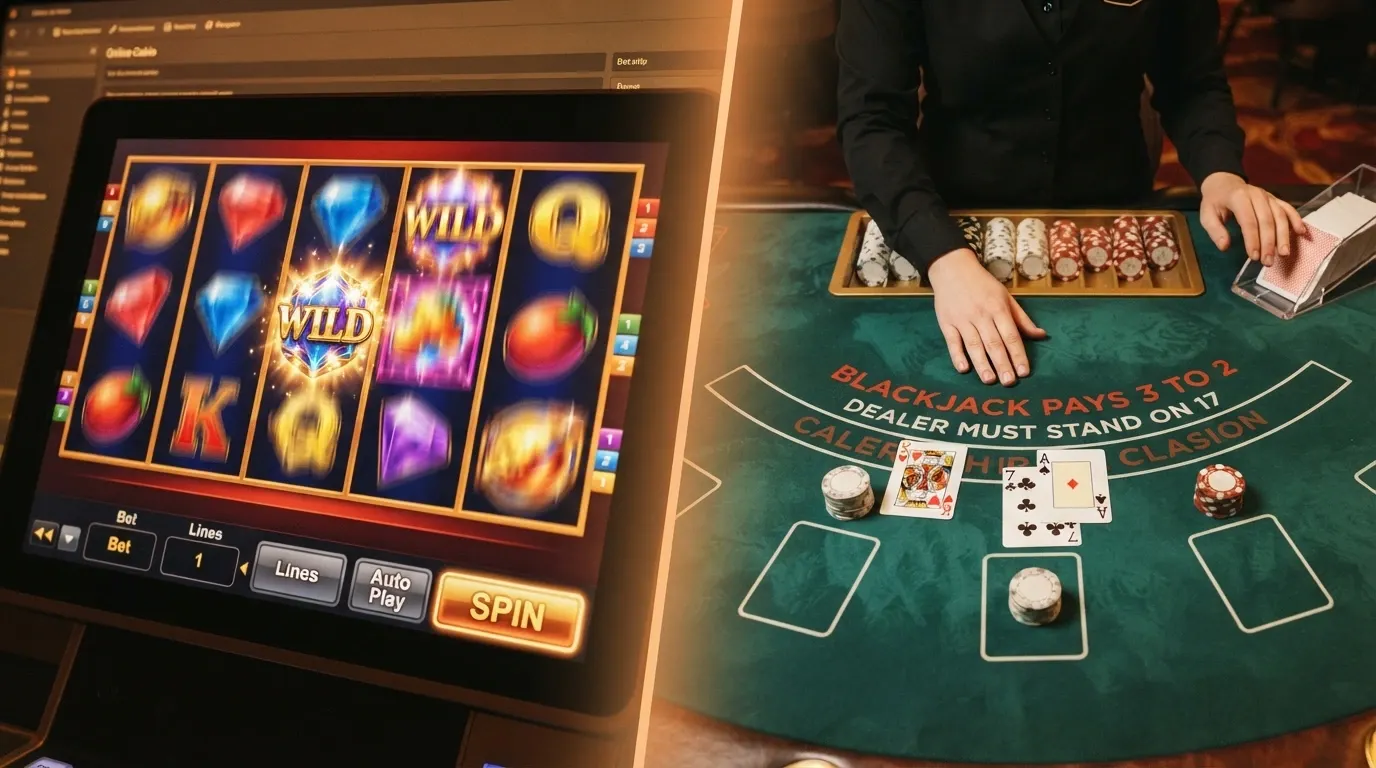
Table games are well represented across the set. Blackjack and roulette in their RNG forms are universal — every featured casino carries both. Live-dealer versions are concentrated at the bigger operators, with Evolution-powered tables at Stake, Rocket Play, Skycrown, Royal Reels, Bizzo and WinSpirit. The 11,500+ slot count at Vave includes Ezugi and Evoplay alongside the bigger names, which broadens the live-dealer offering beyond the standard Evolution catalogue.
The trust question sits underneath the game catalogue. RNG table games are governed by the software provider’s certified random number generator, which is tested by independent labs (GLI, eCOGRA, iTech Labs) before the casino licenses the game. Live-dealer tables are governed by the stream itself: the player watches the cards being dealt or the wheel being spun, and the only question is whether the camera is honest. Provably fair games, available at Stake and Rainbet among the featured set, add a third layer: cryptographic verification of every individual outcome, which the player can check independently after the round.
A USDT bankroll does not change what the games are. It changes how the bankroll behaves between sessions, and which verification layer the player can verify.
Pokies and Slots — Thousands of Titles, One Stablecoin
Australian players call them pokies; the casinos call them slots. The catalogue size is a marketing number, but the spread tells a player something useful. Vave’s 11,500+ slots across 87 providers is the broadest on the page; Bizzo’s 8,000+ across 70+ providers is close behind; Skycrown’s 5,000+ is mid-pack; Stake, Rocket Play and Royal Reels cluster around 3,000+; Fair Go’s 280 (RTG exclusively) is the smallest by an order of magnitude.
The provider mix is more informative than the raw count. Pragmatic Play appears at every operator that lists its providers; Evolution is the dominant live-dealer studio; BGaming and Betsoft are regulars at the Curaçao-licensed offshore set. Hacksaw Gaming, Nolimit City and Push Gaming surface at Stake, which is the most aggressive of the featured operators on the high-volatility end of the market. Fair Go’s RTG-only setup is a deliberate throwback — the casino’s player base skews older and the games library has not been refreshed in years.
Demo mode is available at most operators, which means a player can test a game without committing USDT. Stake, Rocket Play, Skycrown, Royal Reels, Bizzo and Vave all offer demo play on most slots. Fair Go, WinSpirit, Rainbet and Tether.bet did not confirm demo-mode availability in this round.
For a player who cares about verification, Stake and Rainbet are the two featured operators with proprietary provably fair games (Stake Originals and Rainbet Originals respectively). Every outcome on those games can be checked against the server seed after the round, which is a meaningfully different layer of trust than the standard provider-certification model.
Live Dealer vs RNG — Which Feels Fairer and Why
Live-dealer tables at featured operators are dominated by Evolution. Stake, Rocket Play, Skycrown, Royal Reels, Bizzo and WinSpirit all carry Evolution-powered blackjack, roulette and baccarat; Vave adds Ezugi and Evoplay to the mix. The experience is essentially identical across operators because the studio and the dealers are the same.
The appeal of live dealer is straightforward. The cards are real; the wheel is real; the croupier is a person with a name and a face. A player who has ever wondered whether an RNG was “really” random has a much easier time trusting a streamed game they can watch. The pace is slower, the minimums are higher, and the social texture is real in a way an RNG table will never be.
RNG table games win on the practical axes. Minimum bets start at A$0.10 or A$0.50 on most operators, against A$5 to A$20 on the live side. The pace is faster — a hand every eight seconds rather than every twenty-five. Side bets and rule variants (Perfect Pairs, 21+3, Lightning Roulette) are easier to implement in software, which means a wider game selection on the RNG side.
Provably fair Originals sit in a different category again. Stake’s Dice, Crash, Plinko, Mines and Limbo are deterministic single-outcome games where the player can verify the result after every round. The house edge is published (typically 1% to 2%) and the player can check the math themselves. For a player whose concern is whether the casino can manipulate outcomes, provably fair is the only category where the verification is fully in the player’s hands.
For most USDT players, the right answer is “all three”. Live dealer for an evening’s entertainment, RNG tables for grinding bonuses, provably fair Originals for the games where trust is the priority.
USDT Casinos on Mobile — What You Lose When You Skip the App
None of the featured operators in this round was confirmed with a dedicated mobile app downloadable from the Apple App Store or Google Play. Every site on this list runs in the mobile browser, which is the same browser-based experience a player gets on desktop, resized for a phone screen.

The mobile-browser experience is closer to the desktop experience than it used to be. HTML5 games run natively in Safari and Chrome; live-dealer streams play in full-screen; the cashier, the deposit flow and the withdrawal queue all work the same way. The only meaningful friction is at the deposit step: copying a USDT wallet address on a phone is fiddlier than on a desktop, and verifying the network selection (TRC-20 against TRC-20, ERC-20 against ERC-20) takes a steadier pair of hands than the equivalent on a full keyboard.
The thing the player misses by skipping the app is biometric login, in some cases a smoother interface, and the convenience of a home-screen icon. None of those are worth a real loss in functionality, and the absence of an app is partly explained by Apple’s and Google’s restrictions on real-money gambling apps in the Australian App Store and Google Play markets. Offshore crypto casinos are not generally eligible for native app distribution.
For an Australian USDT player, the practical reality is mobile-browser play, with the Tether deposit flow working identically on a phone screen. There is no feature gap to plan around.
New USDT Casinos Worth Watching in 2026
The Tether casino landscape shifts fast. A site that was the new hot entry in may be ACMA-blocked, rebranded or simply shut by 2026. The featured set reflects what is current; the next round of entrants is harder to predict.
What defines a “new” Tether casino varies by source. Some industry definitions use launch date inside the last twelve months. Others use first appearance on an affiliate review page. The honest cut-off for a player is shorter: a licence issued inside the last two to three years, with verifiable operator history behind it.
Two operators in this round qualify as newer entrants by that standard. Rainbet launched under an Anjouan Gaming licence (ALSI-152406029-FI2) operated by RBGAMING N.V., with the licence valid through 13 June 2027. Tether.bet is the only native stablecoin casino in the featured set, purpose-built for USDT rather than adapted from a Bitcoin casino, and its licence status was not confirmed in this run. Both warrant attention for the player who specifically wants exposure to a newer operator.
What to scrutinise in a new Tether casino, in order of importance. First, the licence — actually verified. A licence number printed on the casino’s footer is not the same as a licence number on the regulator’s register. Anjouan, Curaçao and Curaçao Antillephone can all be checked; the regulator’s website is the source of truth. A casino that refuses to publish its licence number or whose number does not resolve on the regulator’s site is one to walk away from. Second, the game provider list. A new casino carrying Evolution, Pragmatic Play and BGaming has signed distribution deals that require operational standing. A new casino with proprietary games only is a red flag. Third, the bonus terms. New casinos compete on sign-up offers; the headline figures are designed to attract players. The terms are the real reading — wagering multiplier, max bet, cashout cap and validity window. If a new casino’s bonus terms are materially better than the established market’s, ask why. Fourth, USDT network support. A new casino that only supports ERC-20 is paying 6%+ of every small deposit to the network. TRC-20 support is the default for any operator that has thought about the player’s fee exposure.
The trade-off on a new Tether casino is the same one every new entrant offers: fresh bonuses and modern UX against a shorter track record and an unproven payout pipeline. A small first deposit, a small first withdrawal, and a careful read of the terms is the cheapest way to test any of them.
The Best Tether Casinos for Australian Players — Ranked
The table below ranks the ten featured offshore operators by what matters to an Australian player depositing USDT. The criteria, in priority order: licence credibility, bonus fairness (wagering multiplier, cashout caps, max-bet rules), game breadth and provider quality, USDT network support, and payout track record.
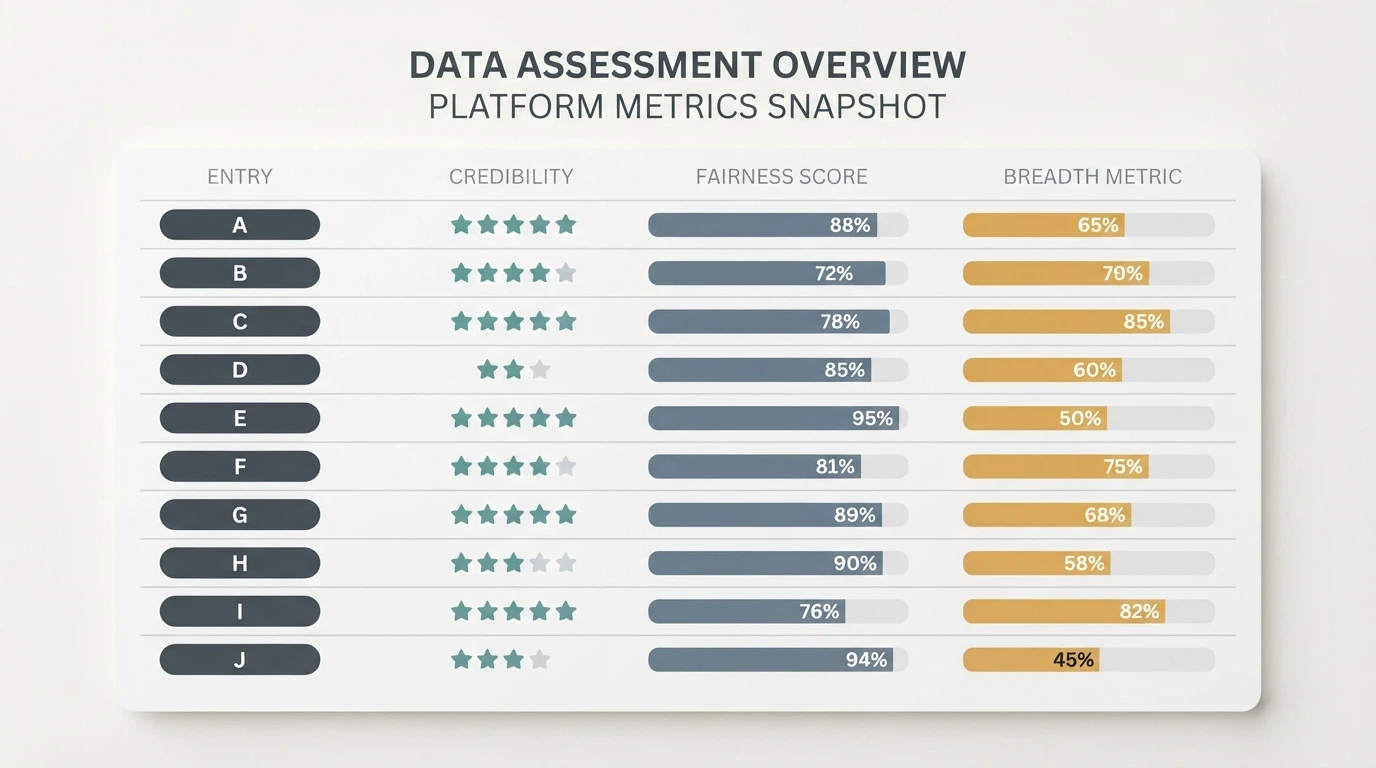
| Casino | Licence | Welcome Offer (A$) | Free Spins | Wagering | Slot Count | Key Game Providers |
|---|---|---|---|---|---|---|
| Stake | Curaçao (ACMA-blocked) | Rakeback model (no welcome bonus) | — | N/A | 3,000+ | Pragmatic Play, Evolution, Hacksaw, Nolimit City, Push Gaming, Stake Originals |
| Rocket Play | Curaçao | A$4,000 + 400 FS over 5 deposits | 400 | 40x | 3,000+ | Pragmatic Play, BGaming, Betsoft, Evolution, iSoftBet |
| Skycrown | Curaçao (ACMA-blocked) | A$8,000 + 400 FS over 4 deposits | 400 | 40x | 5,000+ | IGTech, Booongo, Voltent, Pragmatic Play, BGaming, Evolution |
| Royal Reels | Curaçao | A$4,500 + 250 FS over 3 deposits | 250 | 40x (bonus + deposit) | 3,000+ | Pragmatic Play, BGaming, Evolution, Betsoft |
| WinSpirit | Curaçao Antillephone N.V. (8048/JAZ2014-053) | — | — | — | 2,000+ | Pragmatic Play, Evolution, BGaming, 1spin4win |
| Bizzo Casino | Curaçao (ACMA-blocked) | A$7,250 + 175 FS over 4 deposits | 175 | 40x | 8,000+ | 70+ providers including Pragmatic Play, Evolution, BGaming, Betsoft |
| Rainbet | Anjouan (ALSI-152406029-FI2) | — | — | 40x | 2,000+ | Various, Rainbet Originals (provably fair) |
| Fair Go | Curaçao eGaming (Deckmedia N.V.; ACMA-blocked, first site blocked November 2019) | A$1,000 (100% up to A$200 × 5 deposits) | — | 30x on pokies | 280 | RTG exclusively |
| Vave | Curaçao | 150% up to 1.5 BTC + 100 FS first deposit | 100 + 40 no-deposit | 40x | 11,500+ | 87 providers including Ezugi, Evoplay, Pragmatic Play |
| Tether.bet | Unverified | 2,000 USDT (100% first deposit) | — | 70x combined | 5,000+ | Various |
The ranking above prioritises the operator mix an Australian USDT player is most likely to want: clear bonus terms, fast TRC-20 support, and a game catalogue that runs into the thousands rather than the hundreds. Specific bonus amounts vary by source and are subject to change; the wagering multiplier is the more durable figure and the one to weight first when comparing two operators on the same headline package.
How We Compared and Ranked These Tether Casinos
The comparison started with two checks against primary sources: each operator’s licence was verified against the relevant regulator’s published register, and each operator’s domain was checked against the ACMA’s record of blocked illegal gambling services. Four of the ten featured operators appear on the ACMA blocked list — Stake, Skycrown, Bizzo and Fair Go — which means an Australian ISP will refuse to resolve the domain at the DNS level. Players reach these sites through VPNs, mirror domains or alternative URLs that surface after each blocking round.
Bonus terms were verified against the operators’ own promotional pages and terms-and-conditions documents. Where the research did not confirm a specific figure — WinSpirit’s welcome bonus amount, Rainbet’s exact bonus structure, Tether.bet’s licence — the cell shows an em dash rather than a guess. A reader who needs an exact figure before depositing is the reader who should contact the casino’s support and ask, because the figure on the landing page can change without notice.
Game count and provider list were taken from each operator’s lobby page and the providers’ official distribution lists where available. The counts are the casino’s own; some operators count every variant of every game as a separate title, which inflates the number. The provider list is the more reliable indicator of catalogue depth.
USDT network support was confirmed against each operator’s deposit page. Every featured operator accepts TRC-20; ERC-20 support is universal at the major brands; BEP-20 support varies. Network fee figures come from a 2026 ranking test round, denominated in AUD at mid-market rates.
Payout track record is the hardest figure to pin down. Casino payout times below two hours are common at the featured set once account verification is complete; specific payout times vary by operator and by the player’s verification status. No single operator in this set has an independently audited payout-speed certification that the research surfaced.
Stake
Stake is the largest brand in offshore crypto gambling and the only operator in the featured set with no welcome bonus at all. The casino’s retention model is a rakeback structure: a Daily Race prize pool of US$100,000 and a Weekly Raffle of US$75,000, distributed to players in proportion to their wagering volume. A new account gets none of that on day one; a player who wagers meaningfully gets a share over the following week.
The licence is Curaçao, and Stake is on the ACMA blocked-site record, which means an Australian ISP will refuse to resolve the domain. Players reach the site through mirror URLs or VPNs; the casino itself does not restrict Australian registrations. The game catalogue is 3,000+ slots from Pragmatic Play, Evolution, Hacksaw Gaming, Nolimit City and Push Gaming, plus Stake’s proprietary Stake Originals — Dice, Crash, Plinko, Mines, Limbo, Keno, Baccarat and Wheel — all provably fair and all open to player verification after every round.
USDT deposits are accepted on TRC-20 and ERC-20. The casino does not charge on either side of the transaction; the network fee is the only cost. Payouts run under two hours once account verification is complete, with many completing inside ten minutes for crypto.
For an Australian player, the value proposition is straightforward: the largest crypto casino by traffic, a provably fair Originals suite that no fiat casino can match, and a retention model that does not penalise the player who claims no welcome bonus. The trade is the same one every offshore operator charges — no BetStop coverage, no ACMA recourse, and a domain an Australian ISP will refuse to load.
Rocket Play
Rocket Play is a Curaçao-licensed offshore casino with a five-deposit welcome package worth up to A$4,000 + 400 free spins. The first-deposit offer is 100% up to A$300 + 100 free spins; subsequent deposits drop to 75%, 50%, and smaller tiers. Wagering is 40x on the bonus, with a A$7.50 maximum bet while the bonus is active and a five-day validity window per tranche.
The game catalogue is 3,000+ slots from Pragmatic Play, BGaming, Betsoft, Evolution and iSoftBet. Demo mode is available on most games. Live dealer is Evolution-powered. The minimum deposit is A$30, which is on the high side against the A$20 minimums at competitors.
The wagering requirement is the main constraint. A$300 of bonus at 40x means A$12,000 of turnover before the bonus cash converts, as the calculation earlier in this page showed. Five days to clear that is tight against Royal Reels’ thirty. The max-bet rule at A$7.50 is also tight against Tether.bet’s 5 USDT and Bizzo’s A$8, but practical for most slot players.
Rocket Play is a fair first-deposit casino for a player who plans to clear their bonus in a single weekend and move on. The four subsequent deposit bonuses are smaller and tighter-windowed; a player who plans to chase the full package needs to be ready to play five separate bonuses inside a month.
Skycrown
Skycrown is the highest-headline package of the featured set: 450% up to A$8,000 + 400 free spins across four deposits. The first deposit is 120% up to A$1,200 + 125 free spins; the second is 75% up to A$1,500 + 75 spins; the third is 50% up to A$1,500 + 50 spins; the fourth is 100% up to A$3,800 + 150 spins. Wagering is 40x on the deposit bonus and 40x on free-spin winnings. The max bet is A$7.50 on the standard tier and A$10 on the high-roller tier. Validity is 14 days standard, 5 days high-roller.
The game catalogue is 5,000+ slots from IGTech, Booongo, Voltent, Pragmatic Play, BGaming and Evolution. Skycrown is on the ACMA blocked-site record; the domain will not resolve through an Australian ISP. USDT deposits are accepted.
The crucial detail is the crypto-player eligibility restriction. Skycrown’s standard welcome bonus may not be available to crypto depositors, including USDT, depending on the operator’s promotional terms at the time of claim. A player drawn in by the A$8,000 headline should confirm directly with support whether their USDT deposit qualifies. The casino also runs crypto-specific promotions, which are usually the ones a USDT depositor ends up claiming.
Skycrown’s package suits a player with a large bankroll and a willingness to confirm eligibility before depositing. The A$5,000 conversion cap quietly clips a big win on the wagering path; the crypto eligibility question is the one to confirm before depositing.
Royal Reels
Royal Reels is a three-deposit package worth up to A$4,500 + 250 free spins. The first deposit is 200% up to A$2,000 + 100 free spins; the second is 150% up to A$1,500 + 75 free spins; the third is 100% up to A$1,000 + 75 free spins. Wagering is 40x applied to the bonus plus deposit, which is the more expensive structure against a bonus-only 40x. The validity window is 30 days per tranche — the most generous of the featured set against Rocket Play’s five days.
The game catalogue is 3,000+ slots from Pragmatic Play, BGaming, Evolution and Betsoft. USDT deposits are accepted; the casino does not publish a specific network list, but TRC-20 and ERC-20 are both supported based on the cashier interface. The minimum deposit is A$20.
The 40x bonus-plus-deposit wagering is the trade-off. A A$500 deposit claiming the 200% match takes a A$1,000 bonus at 40x bonus-plus-deposit, which means A$60,000 of turnover to clear, against the A$40,000 that a 40x-bonus-only structure would ask. The 30-day window helps, but it does not change the maths.
For a player with a small bankroll, Royal Reels’ first-deposit 200% up to A$2,000 is one of the more generous single-deposit matches available. The 40x bonus-plus-deposit structure means it is also one of the more expensive bonuses to clear, and a player who plans to claim the full three-deposit package is signing up for A$120,000+ of total turnover to convert the whole thing.
WinSpirit
WinSpirit is a Curaçao Antillephone N.V.-licensed operator (licence No. 8048/JAZ2014-053), operated by Complete Technologies N.V. The licence number resolves on Antillephone’s register; the casino is not on the ACMA blocked-site record.
The welcome package is multi-deposit with free spins, but the exact figures were not confirmed in this research round. The casino’s own promotional pages should be checked at the point of deposit; the structure is likely standard Curaçao (a percentage match across two to four deposits, with a free-spin component), but a player who needs the exact wagering multiplier and validity window before claiming should ask support rather than guess.
The game catalogue is 2,000+ slots from Pragmatic Play, Evolution, BGaming and 1spin4win. USDT is accepted as a deposit method. The casino’s Curaçao Antillephone licence number resolves cleanly, which is the structural advantage over operators whose licence status did not surface in this round.
For an Australian player, WinSpirit is the named operator in the featured set where the verification work fell short. The licence is sound; the welcome offer is not pinned to a specific figure; the game catalogue is mid-pack. A player who specifically wants Curaçao Antillephone coverage — a more conservative Curaçao structure than the generic Curaçao Gaming Authority licence — has a case for starting here.
Bizzo Casino
Bizzo Casino carries the largest game catalogue in the featured set: 8,000+ slots across 70+ providers. The welcome package is up to A$7,250 + 175 free spins + 1 bonus game across four deposits, with a separate 200% crypto welcome bonus up to A$800 designed specifically for crypto depositors.
The first deposit is 125% up to A$2,500 + 125 free spins at A$250+ deposits; smaller deposits earn tiered matching (50% at A$20–$50; 100% at A$100–$500; 125% at A$250+). Wagering is 40x on all welcome parts; max bet is A$8; validity is 14 days. The 200% crypto welcome bonus is the cleaner offer for a USDT depositor: A$800 in bonus at 40x is A$32,000 of turnover, which clears comfortably in two weeks at moderate stakes.
The licence is Curaçao, operated by TechSolutions Group N.V. Bizzo is on the ACMA blocked-site record. The casino carries a A$75 no-deposit cashout cap, which is the kind of small constraint that appears on most Curaçao bonuses.
For an Australian player, Bizzo’s pitch is straightforward: the broadest game catalogue of the set, plus a crypto-specific 200% bonus that the headline package partly obscures. The 14-day validity window is manageable for a player who plans to play through it; the A$8 max bet is slightly looser than competitors and allows for higher-stakes wagering paths.
Rainbet
Rainbet is the only Anjouan-licensed operator in the featured set. The licence number is ALSI-152406029-FI2, operated by RBGAMING N.V. (registration 16077), valid through 13 June 2027 per the Anjouan register. Rainbet is not on the ACMA blocked-site record.
The welcome offer was not confirmed in this research round; promotional terms carry 40x wagering with game restrictions and max-bet rules, but the exact bonus amount, free-spin allocation and validity window should be checked on the casino’s own promotional pages at the point of deposit. The minimum withdrawal is $15 equivalent, which is low against the A$50–A$100 minimums common at Curaçao competitors.
The game catalogue is 2,000+ slots, plus Rainbet Originals — a provably fair suite covering dice, crash and similar single-outcome games. The casino is crypto-focused by design; fiat payment methods are limited.
For a player who values a non-Curaçao licence and a low minimum withdrawal, Rainbet is the most distinct option in the featured set. The trade-off is catalogue size (2,000+ slots against Vave’s 11,500+) and the fact that Anjouan-licensed operators carry a less established regulatory reputation than Curaçao. The licence does resolve on the Anjouan register, which is more than a Curaçao licence number printed on a footer alone guarantees.
Fair Go
Fair Go is the first casino ACMA ever ordered blocked, back in November 2019. The licence is Curaçao eGaming (Deckmedia N.V.), and the casino runs exclusively on RTG (RealTime Gaming) software. The catalogue is 280 slots — by a wide margin the smallest of the featured set, and a deliberate choice rather than an oversight.
The welcome package is 100% up to A$200 on each of the first five deposits, totalling A$1,000. There are no free spins in the standard package. Wagering is approximately 30x on pokies, with no published max-bet rule for the welcome bonus. The casino’s bonus terms are RTG-typical — tight on which games contribute, generous on the multiplier by comparison.
Fair Go is the case study in offshore risk for Australian players. The casino has been on the ACMA blocked list for six years; the domain does not resolve through an Australian ISP. Players reach it through mirror URLs that surface after each blocking round. RTG’s catalogue is dated, but the games are stable and the payout pipeline has been tested over more than a decade.
For an Australian player, Fair Go is best understood as the operator a player reaches when the conventional brands are blocked and the mirror URL is the only thing working. The smaller catalogue is the cost of the RTG exclusivity; the long track record is the offset. There is no bonus headline here to chase.
Vave
Vave is a crypto-only Curaçao casino with the largest slot catalogue in the featured set — 11,500+ titles across 87 providers. The welcome package is 150% up to 1.5 BTC + 100 free spins on the first deposit, scaling to up to 4 BTC across four deposits.
Vave is also the only operator in the featured set with a meaningful no-deposit offer. New accounts get 40 free spins on Lady Wolf Moon MEGAWAYS with no deposit required. Free-spin winnings are capped at 50 USDT and carry 40x wagering. A player who lands a feature round on a Megaways game is looking at A$2,000 of turnover to clear 50 USDT — which clears, but does not make the player rich.
The Bitcoin-denominated bonus is the structural trade-off. A 1.5 BTC bonus is worth a moving target in dollar terms, and a player who claims it on a day when BTC is at A$120,000 and clears it on a day when BTC is at A$80,000 has taken a 33% haircut on the bonus without playing a hand. The crypto-only structure suits a player who already holds BTC and is willing to accept the volatility; it suits a USDT player less well, because the bonus is paid in BTC rather than USDT.
For an Australian player who specifically wants the largest game library and a no-deposit test drive, Vave is the strongest combination in the set. The BTC-denominated bonus is the price of admission.
Tether.bet
Tether.bet is the only native stablecoin casino in the featured set — purpose-built for USDT rather than adapted from a Bitcoin casino. The welcome offer is 100% up to 2,000 USDT (minimum deposit 20 USDT), and the bonus is paid in the same stablecoin the player deposited, which removes the BTC-volatility haircut that affects Vave.
The wagering requirement is 70x combined, calculated as 35x on the deposit plus 35x on the bonus. On a 1,000 USDT deposit taking the full 1,000 USDT bonus, 70x combined means A$70,000 of turnover before the bonus cash converts. At A$1 per spin, that is 70,000 spins or roughly 97 hours of continuous play — three times the Rocket Play calculation earlier on this page. The max bet is 5 USDT (roughly A$7.50); the validity window is 7 days; the maximum cashout is 100x the initial deposit; the maximum win is 20,000 USDT.
The licence status was not confirmed in this research round. The casino advertises a Curaçao-style regulatory framework but the licence number did not resolve on the Curaçao register at the time of the research. A player who plans to deposit at Tether.bet should ask support for the licence number and verify it on the regulator’s site before sending funds.
For an Australian player, Tether.bet is the cleanest USDT fit on the page — a casino built around stablecoins, with a stablecoin-denominated bonus. The 70x wagering is the steepest on the featured set and the most likely to consume the bonus value before clearing. The licence status is the precondition the player needs to verify before the casino is worth the wagering risk.
Is It Legal to Play at a Tether Casino in Australia?
The short answer is that online casino games, online pokies and in-play sports betting are prohibited in Australia under the Interactive Gambling Act 2001. There is no online casino licence in this country — not federally, not in any state or territory. Every operator that accepts USDT from Australian players is offshore by definition.

The longer answer is that the law targets the operator, not the individual player. No Australian has been prosecuted for using an offshore casino under the IGA in the Act’s lifetime. The penalty regime runs against the operator — civil penalties up to A$2,475,000 per day for individuals and A$12,375,000 per day for corporations providing a prohibited interactive gambling service. The ACMA has used these powers; since November 2019, 1,788 illegal gambling and affiliate websites have been blocked by Australian ISPs, and over 230 illegal services have withdrawn from the Australian market rather than face enforcement.
Crypto as a payment method for licensed wagering was banned on 11 June 2024 under amendments to the Interactive Gambling Act. The prohibition does not distinguish between fiat-funded and crypto-funded services — an offshore operator accepting AUD via PayID is in the same regulatory position as one accepting USDT via TRC-20. The 2024 crypto ban tightens the situation further: from 11 June 2024, licensed operators have been prohibited from accepting digital currency, and the practical effect for an Australian player is that any operator accepting USDT is necessarily outside the licensed framework.
The reform package passed on 19 August 2026 (the Interactive Gambling Amendment (Gambling Reform) Bill 2026) tightens advertising and inducement rules, with all measures commencing on 1 January 2027. From that date, banks and payment providers gain express authority to block transactions to illegal gambling operators, which means an AU bank can refuse to process a transfer to an offshore casino’s payment processor. The advertising rules cap TV wagering ads at three per hour between 6:00 am and 8:30 pm, ban ads during live sport (15 minutes before to 5 minutes after), and bar athletes, celebrities and influencers from promoting wagering products.
The honest framing: an Australian player who deposits USDT at an offshore casino is not committing a criminal offence under the IGA, but has zero domestic consumer protection. ACMA blocks the domain; the AU Financial Complaints Authority has no jurisdiction; the operator’s own dispute process is the only recourse. The protection gap is the entire price of access.
The Licensing Reality — Why No Tether Casino Is AU-Licensed
There is no online casino licence in Australia. Federal or state, no regulator issues one. The Interactive Gambling Act 2001 prohibits the supply of online casino games, online pokies and in-play sports betting to Australian customers; the only wagering products that are licensed are pre-event sports and racing betting, lotteries and keno. Those licences are issued predominantly by the Northern Territory Racing and Wagering Commission through Licensing NT, with state-level operators (TAB NSW, TAB Vic, and so on) handling their own state-jurisdiction licences.
Crypto as a payment for licensed wagering has been banned since 11 June 2024 under the Interactive Gambling Amendment (Credit and Other Measures) Act 2023, with operator penalties up to A$247,500 for accepting crypto or credit. The ban reinforces the structural reality: an AU-licensed operator cannot legally accept USDT. Any operator that does accept USDT is, by definition, unlicensed in Australia.
The 2024 crypto ban was not the first tightening of the framework. The 2017 amendments to the IGA gave the ACMA its blocking powers and strengthened the enforcement toolkit. The 2026 reform package adds the advertising rules, the inducement restrictions and the bank-blocking authority, all commencing on 1 January 2027.
For an Australian player, the licensing picture is binary: licensed operators offer pre-event wagering, lotteries and keno, none of which accept USDT. Offshore operators offer online casino, online pokies and live dealer, all of which accept USDT and none of which hold an Australian licence. The crypto casino market for Australian players is entirely offshore by construction.
No-KYC Claims vs the AUSTRAC Paper Trail
Offshore casinos market themselves on “no KYC” — no identity verification required to deposit, play and withdraw. The claim is partly accurate at the casino side. Many offshore operators allow deposits and withdrawals below US$2,000–3,000 without any ID check. Above that threshold, KYC becomes essentially universal in 2026 across reputable operators.
The casino is not the only place the player leaves a paper trail. To buy USDT in Australia, a player uses a registered Digital Currency Exchange — CoinSpot, Swyftx, Independent Reserve, Coinbase AU. AUSTRAC requires all of these to verify customer identity as a condition of their registration. The exchange collects government ID, proof of address and bank details; it then attaches the buyer’s name to the wallet address that holds the purchased USDT.
The flow that produces anonymity at the casino therefore produces pseudonymity at the exchange. The USDT arriving at the casino wallet is linked, through the exchange, to a real Australian identity. The casino does not know the name; the exchange does. AUSTRAC’s reporting threshold of A$10,000 for crypto transactions is the point at which the exchange-side identity becomes a matter of regulatory record.
The practical limit of “anonymous” play is therefore narrower than the marketing suggests. A player who buys USDT on an Australian exchange and sends it to an offshore casino is anonymous from the casino, the game provider and the public blockchain viewer — but not from the exchange, not from AUSTRAC, and not from any future investigation that follows the wallet address back to its funding source.
Provably Fair — What It Does and Doesn’t Prove
Provably fair is a cryptographic mechanism for verifying the outcome of a single round. Before the round, the casino publishes a hash of its server seed — a cryptographic commitment that locks in the random input without revealing it. After the round, the casino reveals the seed, and the player can hash it independently to confirm it matches the commitment, then combine it with their own client seed to reproduce the result.
What it proves is that the operator did not change the outcome after the player placed their bet. The server seed was locked in before the bet; if the post-round seed hashes back to the published commitment, the result was determined before the player acted.
What it does not prove is statistical fairness over many rounds. RTP certification — the long-run payout percentage tested by independent labs — is a different claim. A provably fair game with a 1% house edge is still a game with a 1% house edge; the verification only confirms that each individual round was not tampered with after the bet was placed.
Provably fair also does not prove operator solvency. A casino can be honest about every game round and still refuse to process a withdrawal. It does not prove dispute resolution. The cryptographic verification covers outcomes; the legal recourse for non-payment is whatever the casino’s terms say it is.
Stake Originals and Rainbet Originals are the two provably fair suites in the featured set. Both apply cleanly to single-outcome games (dice, crash, plinko, mines, keno, limbo). Neither applies cleanly to live-streamed blackjack or to RNG table games, where the round is not a single hash-able event.
Staying Safe — Limits, Self-Exclusion and Real Help for AU Players
The domestic safety tools Australian players have heard about — BetStop, deposit limits set by the operator, activity statements, take-a-break — apply to Australian-licensed wagering services. An offshore USDT casino is not part of that framework. The deposit limits the player can set at an offshore casino are the limits the player sets themselves, on a site that has no obligation to honour them from one week to the next.

The harm context is real. Approximately 2.1% of Australian adults — roughly 430,000 people — experience problem gambling; the Australian Institute of Health and Welfare put high-risk gambling at 1.8% in 2022. Those figures cover all forms of gambling, not offshore crypto casinos specifically, but the offshore segment is the least protected.
The help that does work is the help Australia has built for gambling harm regardless of where the gambling happens. The National Gambling Helpline (1800 858 858) is free, confidential and staffed 24/7. Gambling Help Online provides online chat and counselling. State-based services run their own counselling programs and financial counselling.
The rest of this section lays out the operator-side tools an offshore casino offers (and the limits of those tools), then the domestic help infrastructure that works even when the gambling is happening at a site ACMA has blocked.
Deposit Limits and Session Controls — What You Can Set Yourself
Offshore casinos offer deposit caps, session time reminders and self-exclusion at the operator level. The deposit cap is the most useful: a player who sets a daily or weekly deposit limit at the casino cashier can stop the casino from accepting deposits above the threshold during the period. Most operators enforce the cap mechanically — the cashier will decline the deposit.
Session time reminders are weaker. A pop-up that asks “have you been playing for an hour?” is information, not a barrier. A player who clicks through the reminder continues playing. The mechanism relies on the player acting on the information, which is precisely the moment when problem gambling makes that harder.
Self-exclusion at the operator level is the strongest of the three. A player who excludes themselves at a specific casino cannot reopen the account; the casino is supposed to honour the exclusion. The exclusion is per operator, which means a player who excludes themselves from Stake can still deposit at Vave, and BetStop — the cross-operator exclusion — does not cover offshore sites.
Specific responsible-gambling tool availability per operator was not exhaustively confirmed in this research round. The general structure holds across the featured set: deposit limits can be set in the cashier; session reminders appear at intervals; self-exclusion is a request to support, not a one-click toggle in the account settings.
The gap is not in the tools; the gap is that no regulator enforces the tools on the offshore operator’s behalf. The player is the regulator.
BetStop, the Helpline and Where to Get Real Help
BetStop — the National Self-Exclusion Register — went live in August 2023 and had 67,480 registrations as at 31 July 2026, with 41,290 exclusions still active. Seventy-eight per cent of registrants were under 40; thirty-eight per cent chose lifetime exclusion. The register excludes a person from every Australian-licensed online and phone wagering service with a single registration.
The limitation is structural. BetStop binds Australian-licensed wagering services only. An offshore casino is not connected to the register and will continue accepting a self-excluded person’s deposits and play. A BetStop registration is therefore necessary but not sufficient for a player who is also using offshore Tether casinos — the offshore sites need to be excluded at the operator level, separately.
The National Gambling Helpline is 1800 858 858, free, confidential and staffed 24/7. The line is run by national counselling services with local referral capability. Gambling Help Online provides online chat and email counselling for people who prefer text-based support. Both services work regardless of where the gambling happened — the offshore location of a casino does not put a person outside the help system.
State-based services run additional programs: Gambling Help NSW, Gambler’s Help in Victoria, Gambling Help Queensland, the Western Australian Gaming and Wagering Commission’s problem-gambling support line, Gambling Help SA, and the equivalents in Tasmania, the ACT and the Northern Territory each have their own counselling intake.
The minimum age for all commercial gambling in Australia is 18, including offshore casinos. The age check at an offshore casino is the casino’s responsibility; the Australian regulator has no jurisdiction to enforce it.
How We Selected and Ranked These Tether Casinos
The featured set was assembled from three sources. First, the ACMA’s blocked-site record and the regulator’s list of illegal services withdrawn from the Australian market, to identify the operators with actual Australian player traffic. Second, independent casino review aggregators running ranking rounds in 2026, which supplied the bonus terms, wagering multipliers and game-count figures. Third, each operator’s own licence register entry (where confirmed) and the Anjouan and Curaçao public registers, to verify the licence numbers.
The ranking criteria, weighted in order of importance. Licence credibility: a licence number that resolves on the regulator’s register outranks one that does not. Curaçao Antillephone N.V. (the more conservative Curaçao sub-licensor) outranks a generic Curaçao licence. Anjouan sits below both for an established market but above an unverified licence. Bonus fairness: the wagering multiplier, the max-bet rule, the cashout cap and the validity window were read together. A 40x bonus-only wagering outranks a 40x bonus-plus-deposit wagering; a 30-day validity outranks a 5-day validity; a high or absent cashout cap outranks a tight one. Game breadth and provider quality: game count is a marketing number; the provider list is the structural one. Evolution, Pragmatic Play and BGaming are the strongest baseline; Hacksaw, Nolimit City and Push Gaming are the high-volatility tier; provably fair Originals are the verification tier. USDT network support: TRC-20 support is the default; ERC-20 alone is a red flag; BEP-20 support is a positive differentiator. Payout track record: casino payout windows under two hours are common across the featured set; specific times vary by operator and verification status.
The casino block on Fair Go (ACMA-blocked since November 2019) is not a demerit in this ranking — it is the structural reality of every offshore casino serving Australian players and would exclude every featured operator if applied uniformly. The unverified licences on WinSpirit (Curaçao Antillephone — verified, with a specific sub-licence number) and Tether.bet (not confirmed) are reflected in the table.
What to Weigh Before You Deposit — Your Call
The decision an Australian player faces is not which Tether casino is best. The decision is whether the proposition of an offshore online casino — any offshore online casino, accepting any cryptocurrency — is worth what it costs in lost protection. The page has laid out the cost.
The licence cost is the first number. Every operator on the featured list is offshore; none holds an Australian licence; the ACMA blocks the domain of four of them; BetStop coverage does not reach any of them. If a withdrawal stalls, the only recourse is the operator’s own support and the operator’s own terms.
The bonus cost is the second number. A A$300 bonus at 40x wagering means A$12,000 in turnover before the bonus cash converts. At A$1 per spin and 5 seconds per spin, that is 12,000 spins or 16 hours and 40 minutes of play. The expected loss to the house on most slots sits between 3% and 5% of turnover — A$360 to A$600 against a A$300 bonus. The bonus does not pay out on average.
The network cost is the third number. TRC-20 at A$1.20 per transaction keeps 99.5% of a US$200 deposit; ERC-20 at A$12.50 burns 5–15%. The player who sends on ERC-20 by default is donating a meaningful chunk of their bankroll to the Ethereum network’s validators before any play begins.
The reform cost is the fourth number, sitting in the future. From 1 January 2027, banks gain express authority to block transactions to illegal gambling operators. An Australian player funding an offshore USDT wallet from a domestic bank account may find the transfer declined. The withdrawal side is also at risk: a USDT payout landing in an Australian exchange wallet, then converted to AUD and paid to a domestic bank, could be flagged or refused by the receiving institution.
The access cost is the only thing the player buys. Online casino, online pokies, live dealer — none of it exists from any Australian-licensed operator. The player who wants to play these games has exactly one route: an offshore casino, an offshore licence and a crypto payment method that itself signals the operator is outside the Australian regulatory framework.
The honest framing of the page is this: the article has laid out every piece of the equation. The trade-off is the trade-off, the bonus math is the bonus math, the network cost is the network cost. What the player does with that information is the player’s call.
Frequently Asked Questions
How do I buy USDT in Australia for casino deposits?
You buy USDT on an AUSTRAC-registered Australian cryptocurrency exchange — CoinSpot, Swyftx or Independent Reserve are the established options. Fund the exchange account in AUD via PayID or bank transfer, complete the exchange’s identity verification, then buy USDT at the live AUD/USDT rate. From the exchange, send USDT to the casino’s deposit address on TRC-20 unless the casino specifies another network. The exchange charges a small spread on the AUD/USDT trade; the blockchain charges a network fee.
What protections do Australian players lose at an unlicensed offshore casino?
You lose every layer of Australian consumer protection: ACMA complaint handling, BetStop self-exclusion coverage, AFCA dispute resolution, and any operator-side rules enforced by state regulators. The casino’s own terms are the only contract. Withheld withdrawals, voided bonuses and account closures go to the casino’s support team, with no domestic escalation route. The protection gap is the entire price of access to offshore online casino.
What happens if the ACMA blocks a casino I have money in?
The ACMA has blocked 1,788 illegal gambling and affiliate websites since November 2019. A blocking order stops Australian ISPs from resolving the casino’s domain — the URL will not load through a standard connection. Players reach blocked casinos through VPNs, mirror URLs or alternative domains that surface after each blocking round. A player with a balance can usually still log in via the mirror URL, but the casino has no obligation to process the withdrawal.
Does BetStop cover offshore Tether casinos?
No. BetStop binds Australian-licensed online and phone wagering services only. An offshore Tether casino is not connected to the register, so a BetStop registration does not stop an offshore casino from accepting deposits or play. Self-exclusion at an offshore casino has to be set at the operator level, by contacting the casino’s support directly — once per operator, not once across the market.
Do Australian crypto exchanges report casino transactions to AUSTRAC?
AUSTRAC requires all Australian cryptocurrency exchanges to verify customer identity and report suspicious transactions. The reporting threshold for crypto transactions is A$10,000. Below that, the exchange holds the identity record but is not required to file a report. Buying USDT on CoinSpot or Swyftx and sending it to an offshore casino produces an exchange-side paper trail linking your name to the wallet address that funded the deposit. The casino does not see that link; the exchange does.
Blackjack, Roulette and Table Games — Can You Trust the Deal?
Table games come in two flavours at Tether casinos: RNG and live dealer. RNG blackjack and roulette are computer-generated; the result is determined by the random number generator in the software provider’s certified game engine. Live-dealer blackjack and roulette are streamed from a studio with a real croupier, real cards and a real wheel; the result is determined by physics, with the player’s bets placed via the on-screen interface.
RNG table games are faster, support lower minimum bets (often A$1 or less), and run twenty-four hours a day without a dealer. Live-dealer tables have higher minimums (typically A$5 to A$20), run on the studio’s schedule, and offer the social texture of a real table. Neither is intrinsically more or less honest; both rely on the casino and software provider not interfering with the outcome. The relevant distinction is what verification mechanism sits behind each.
RNG games rely on the game provider’s certification. Independent testing laboratories (GLI, eCOGRA, iTech Labs) audit the random number generators before a game is licensed and periodically afterwards. The player cannot verify a single hand after the fact — the casino and the provider have the only records. Live-dealer games rely on the camera, which is a higher-trust mechanism for outcomes the player can watch, but offers no certification layer for the studio’s broader behaviour.
Provably fair games, where they exist, are the only category where the player can verify the outcome of a single round after the fact. The mechanism — a server seed committed by hash before the round and revealed after — is the same one used by Stake Originals and Rainbet Originals. It applies cleanly to games with a single deterministic outcome (dice, crash, plinko, mines); it does not apply cleanly to a live-streamed blackjack hand, where the dealer’s cards and the player’s decisions do not reduce to a single hash-able event.
For a USDT player with a small bankroll, the practical reading is: RNG for volume and low minimums, live dealer for the experience, provably fair where the game type suits.