
Best International Casinos Accepting Australian Players in 2026
 Available in AU
The search for “international casinos” for Australians is, in practice, a search for offshore casinos — operators licensed outside Australia that take Australian players and Australian dollars. No licensed Australian online casino exists, and none can. The Interactive Gambling Act 2001 makes offering online casino games, online pokies and in-play betting illegal in this country, so every brand in this guide is offshore by legal necessity, not by accident.

A reader landing here from “best international casino Australia”-style searches has, by definition, chosen to play outside the Australian framework. The page below ranks ten offshore sites by what a player can actually verify — the licence on the regulator’s register, the size of the game library, the bonus terms in writing, the withdrawal infrastructure for AUD and crypto. Everything else flows from there.
Last updated: 18 October 2026 · Verified against the ACMA register and operator terms pages.
Table of Contents
- Offshore by Default: Why Every International Casino for Australians Is Licensed Outside Australia
- Real Money vs Free Play: Which One Australian Players Actually Want
- The Affiliate Review Machine: Who Ranks These Casinos and What They Leave Out
- The International Casinos Australian Players Use in 2026
- What “Best” Means When Every Operator Is Offshore
- BitStarz
- Royal Reels
- Wild Tokyo
- 1xCasino
- Reelraven
- Spinbet
- Caswino
- Lolajack
- Bizzo Casino
- Stake
- What You’ll Find Inside: Slots, Live Tables and the Library Behind the Brand
- Pokies and Slots: The 3,000-to-8,000 Range
- Live Dealer Tables: Roulette, Blackjack and the Game-Show Boom
- Why Your No-Deposit Bonus Is Smaller Than It Looks
- The Interactive Gambling Act 2001: What It Prohibits and What It Permits
- Responsible Gambling: The Safety Net Australia Built, and Where It Stops
- How We Selected and Ranked These Casinos
- Playing Offshore: What Australian Casino Players Should Actually Do
- Frequently Asked Questions
Offshore by Default: Why Every International Casino for Australians Is Licensed Outside Australia
There is no Australian online casino licence to apply for. The Interactive Gambling Act 2001 prohibits the offering of online casino games, online pokies and in-play sports betting to people physically present in Australia — none of the eight states and territories has issued one, and none has signalled it will. Federal law draws a sharp line, and the licensing regime sits on the other side of it.

What this means in practice: every brand on the AU international-casino search results is licensed by Curaçao, Anjouan or Costa Rica. None of those licences grants any enforcement power inside Australia. The player is not the target of the law — the IGA goes after the operator — but no regulator on the offshore side has the practical ability to chase an Australian complaint either. That gap is the trade-off: access to a market that the domestic regulator has chosen to keep closed.
The ACMA has forced Australian ISPs to apply DNS-level blocks to 1,564 illegal gambling and affiliate websites since November 2019 — a number that has only kept climbing through 2026. More than 225 illegal services have withdrawn from the Australian market entirely since the 2017 amendments strengthened enforcement. Operators caught by these blocks typically reappear at new domains, which is part of why the offshore list keeps turning over.
Real-money intent, not demo lobbies, drives the search. When an Australian player types “international casino real money” or “best international online casino”, they are looking for a deposit-gated offshore site with a banking method that works here — Visa or Mastercard where still allowed by the casino, PayID, crypto on the network that doesn’t get blocked, and AUD displayed without conversion surprises. Demo-mode search traffic exists, but it is a thin slice; the commercial investigation layer dominates.
The pages covering this topic — affiliate listicles from the usual AU-facing review sites — share a template that reads almost identically across competitors: top-10 list, bonus amount, game count, licence name, payment methods, mobile note, one paragraph per brand. They bury the prohibition if they mention it at all. None of them distinguishes a licensed wagering operator from an offshore casino, which is the single biggest distortion in Australian online gambling: Sportsbet and BitStarz are not the same product category, and treating them as one misleads a reader before they deposit.
Real Money vs Free Play: Which One Australian Players Actually Want
The article leans into a commercial analysis of offshore operators — Australian players want a ranked list of brands that take real money and AUD. Bonus-specific searches (“no deposit bonus”, “free spins Australia”) sit a tier below that and run on the same commercial undertow. Informational and game-specific searches round out the rest.
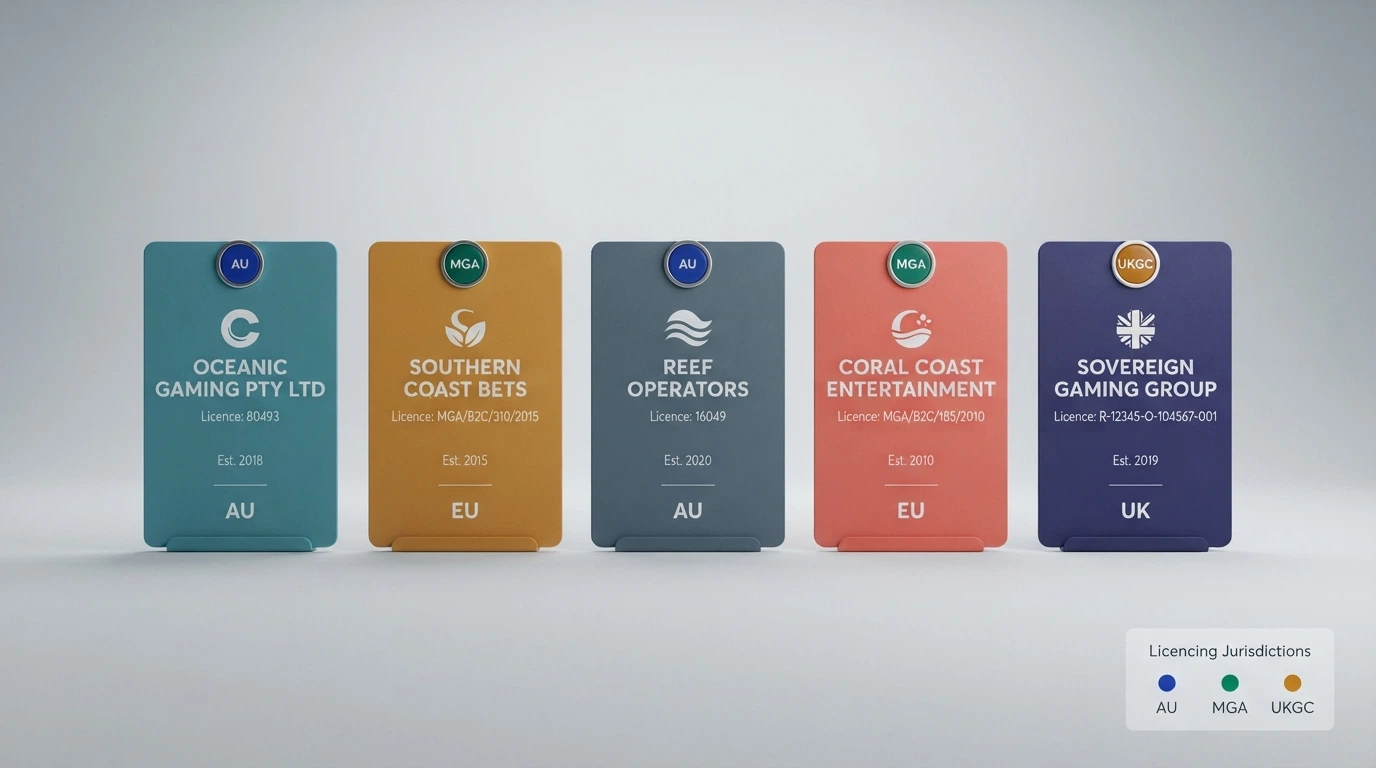
Free-play and demo modes exist at every offshore casino on this page, but they are not the reason anyone clicked. A demo spin costs nothing and pays nothing; it tests the lobby. The real-money orientation is built into the commercial focus, into the affiliate review structure, and into the conversion model these sites use — sign-up, deposit, clear a bonus, repeat.
Stablecoin rails are now the preferred way a regular Australian player funds an offshore account. USDT TRC-20 on-chain withdrawals clear inside a minute most days — one May 2026 transaction from BitStarz moved 200 USDT into a private wallet in 43 seconds — which means a player no longer needs to lose up to a day waiting for a bank transfer before playing again with their own money. BTC and ETH are also widely accepted, though volatility inside a session is the obvious reason players drift toward USDT on Tron. A crypto-native casino can carry 500 or more tokens at once, with average withdrawal times around 10 minutes for the major coins.
AUSTRAC’s Travel Rule begins to bite at the A$10,000 mark on a single transaction — at that threshold, an exchange-side reporting obligation fires. Below it, crypto deposits move quietly. Player-by-player, the practical implication: small and medium bankrolls move through the offshore rails without paperwork, and the rule applies at the exchange level rather than at the casino level.
Apps and mobile-responsive sites are now the entry point for most Australian players. The Dama N.V. and Curaçao-licensed cohort — BitStarz, Spinbet, 1xCasino, Wild Tokyo — all publish browser-first platforms that load in under three seconds on a 4G connection, and most of them now carry a downloadable app for iOS or Android as a backup path for players on networks where the website falls foul of an ISP block.
The Affiliate Review Machine: Who Ranks These Casinos and What They Leave Out
The Australian offshore casino market is dominated by affiliate listicles that share a near-identical template. NewGameNetwork, Slotozilla, Casino.org, PokiesAustralia, BettaCasinos, CasinoAudit and EsportsInsider all run top-10 or top-15 lists with shallow per-brand paragraphs built around bonus amount, game count, licence, payment methods and a mobile note. A few run deeper — PokiesAustralia’s Wild Tokyo write-up tests withdrawal times against a real AUD deposit; BettaCasinos names an RTP range and a provider list; CasinoAudit carries phone-verification details that distinguish Royal Reels from generic Curaçao sites.
What no competing page covers in the order it deserves:
- The prohibition opening. No affiliate page leads with the Interactive Gambling Act 2001 and what it prohibits; the offshore status is either glossed past or omitted.
- The licensed-versus-offshore distinction. Pages mix NT-licensed Sportsbet and LADBROKES-style wagering operators with offshore casino brands in one table, as if Sportsbet and BitStarz were the same kind of thing. They are not.
- BetStop’s offshore blind spot. Competing pages list BetStop as a responsible-gambling tool without noting that it does not reach an offshore casino.
- The 2026 reform. The reform passed Parliament on 19 August 2026 and commences 1 January 2027 — no page references it as part of the legality sub-text.
- The payment ban as a tell. Credit cards and crypto are banned for licensed AU wagering operators from 11 June 2024. That ban is itself a way to identify an offshore site — if a brand asks for either, it is outside the licensed framework.
Those gaps define where this page will lean hardest.
The International Casinos Australian Players Use in 2026
“Best” in this market cannot mean licensed in Australia. It means: a verified offshore licence on a register a reader can look up; a game library large enough to be useful; a bonus whose terms are written in plain English; a withdrawal channel that actually moves money out. The ranking below splits the ten operators reviewed across those axes.
| Operator | Licence | Game Count | Key Offer |
|---|---|---|---|
| BitStarz | Curaçao eGaming | 5,000–6,000+ | 50 FS no deposit |
| Royal Reels | Offshore (ACMA-blocked) | 5,400+ pokies | A$10 no deposit |
| Wild Tokyo | Curaçao eGaming | 8,000+ slots | — |
| 1xCasino | Curaçao eGaming | 3,000+ | 100% up to A$500 + FS |
| Reelraven | Anjouan ALSI-202502014-FI1 | 8,000+ | 350% up to A$3,300 + 1,000 FS |
| Spinbet | Curaçao eGaming (Dama N.V.) | 4,000+ | A$6,000 bonus |
| Caswino | Anjouan | — | — |
| Lolajack | Costa Rica registration | — | — |
| Bizzo Casino | Offshore | 2,000+ | — |
| Stake | Curaçao eGaming | — | — |
The split the table reveals is structural, not incidental. Two of the ten — BitStarz and Royal Reels — offer a no-deposit path; the other eight either require a deposit or did not confirm a no-deposit offer during research. Reelraven’s 350% headline is the largest in the set but carries a x30 deposit-plus-bonus wagering multiple and an A$11,500 monthly withdrawal cap that binds even high-volume players. Spinbet’s A$6,000 bonus extends to the largest by absolute figure. Three offshore regulators — Curaçao, Anjouan and Costa Rica — account for every licence in the table; none extends to an Australian complaint.
Game-library data does not back the table evenly. Wild Tokyo at 8,000+ slots, BitStarz at 5,000–6,000, Spinbet at 4,000+ and Bizzo at 2,000+ are confirmed counts from operator-facing review sources. Royal Reels’ 5,400+ pokies is sourced from CasinoAudit’s terms review. 1xCasino’s 3,000+ carries the BettaCasinos July 2026 review. Caswino, Lolajack and Stake did not confirm a specific game count during this run, and the table leaves that gap honest rather than guess at it. The library competition here is between Curaçao-licensed incumbents who have built for years and the Anjouan second-tier challengers who are still stacking providers.
What “Best” Means When Every Operator Is Offshore
Once the prohibition baseline is acknowledged, “best” reduces to four checks: verified licence on a regulator’s own register, game-library depth, bonus accessibility for an AUD-funded player, and withdrawal infrastructure that has been observed in use rather than promised in copy.
Affiliate review sites tend to weight the first two but gloss the third and fourth. A bonus advertised at A$3,300 is a number, not an offer — what matters is whether the wagering multiple is x25 on the bonus or x30 on the deposit-plus-bonus, whether the maximum cashout is uncapped or sits at A$11,500 per month, whether free spins are worth A$0.10 each or A$1.00. A reader who sees only the headline is looking at “win A$3,300” — a reader who reads the terms sees “turn over approximately A$100,000 in wagers before any winnings become withdrawable, and even then only at A$11,500 per month”.
The deepest gap, though, is consumer protection. A 5%-of-the-house-edge type rule does not apply when the house is offshore and the regulator has no Australian channel. A dispute that ends in a refusal to pay at a Curaçao site means a complaint to Gaming Curaçao, not to the ACMA — and the practical resolution rate differs markedly. A reader who treats an offshore bonus the same way as a Sportsbet promo is missing the cost asymmetry.
BitStarz
BitStarz is the only operator in the set with a confirmed registration-only path to free play: 50 free spins on sign-up with no deposit required, and 40x wagering attached to any bonus cash those spins convert into. The library runs 5,000–6,000 titles across Pragmatic Play, NetEnt, Microgaming, Evolution Gaming and other providers on the Curaçao-registered platform, with the live-dealer catalogue led by Evolution’s flagship game-show titles.
Crypto withdrawals on the platform average ten minutes and the cashier accepts AUD alongside 500-plus cryptocurrencies. High rollers are not bound by withdrawal ceilings; the cashier’s stated policy is uncapped withdrawals for verified accounts. The free-spin path means a player can attempt a small withdrawal before ever funding the account — the closest thing an Australian gets to a free trial of an offshore casino without first depositing.
The wagering on bonus cash is what it is. 40x is high for cash that came from converting a free spin, and a player who hits a strong run on the slots will find themselves turning the cash balance over forty times before a withdrawal opens. For the size of library and the speed of crypto, the value sits where it sits.
Verdict: a fit crypto-native operator for an Australian player who wants the only confirmed no-deposit path in the set and is comfortable in USDT or BTC.
Royal Reels
Royal Reels is the A$10 no-deposit offer with the lowest wagering multiple in the set: 30x on a bonus credited after phone verification, no cash deposit required. The library behind that bonus is 5,400+ pokies from 40+ software providers — smaller than Wild Tokyo’s but well-stocked by Australian offshore-market standards.
The catch that flips the rest of the profile sits at the registrar level: Royal Reels is on CasinoAudit’s list of casinos actively blocked by the ACMA at the DNS level. That does not mean Australian players cannot reach it — ISPs differ, VPNs exist, and the site cycles domains — but it does mean a player has to actively circumvent an Australian enforcement action to do so. That puts the offer on a different footing from a Curaçao site the ACMA has not specifically named.
Phone verification is the only KYC step the review sources confirm, and the wagering multiple is the friendliest of the three no-deposit offers. The library depth makes the offer worth using provided the player accepts that the operator is legally positioned as one the ACMA has actively moved against.
Verdict: the lowest-wagering no-deposit offer in the set, attached to an offshore site the Australian regulator has actively blocked. A reader who can reach it knows what reaching it costs in legal positioning.
Wild Tokyo
Wild Tokyo sits on the extreme of the library race: 8,000+ slots from 100+ providers, including Pragmatic Play, Belatra and Play’n GO, plus 500+ live dealer tables. The licence is Curaçao eGaming; the operator launched in 2020 and scaled rapidly into one of the larger offshore catalogues accepting Australians.
Bonus specifics — what the welcome package looks like in dollar terms and how the wagering is structured — were not confirmed from publicly reviewable sources during this research run, so the operator write-up keeps that gap qualitative. What is confirmed is library size, live-dealer footprint, and licence jurisdiction: enough for a reader who values raw volume over headline bonuses to weigh the operator against the rest.
The provider mix is broad enough that Wild Tokyo is a credible fallback against any of the larger Curaçao sites — the same Pragmatic Play titles, the same Evolution and Pragmatic live tables, fewer on the niche Hacksaw or Nolimit City titles but more than enough to make any player new to the platform feel they have walked into a full-scale casino lobby rather than a curated shortlist.
Verdict: the slot-library leader in the set. A fit for an Australian player who treats an offshore casino like a library first and a bonus second, on a Curaçao licence with no Australian consumer-protection reach.
1xCasino
1xCasino is the balanced-budget option: Curaçao eGaming, 3,000+ games from 50+ providers including Pragmatic Play, Evolution Gaming, Hacksaw Gaming, Spribe, NetEnt, Microgaming, Relax Gaming and Yggdrasil, plus a 100% up to A$500 welcome bonus plus 25–50 free spins with 35–50x wagering. E-wallet withdrawals sit in a 24–48 hour window — slower than BitStarz’s crypto rails but typical for an offshore casino running e-wallet infrastructure rather than crypto-native.
The wagering range of 35–50x and the modest welcome ceiling place 1xCasino in the middle of the set on bonus size and at the friendlier end on the betting requirement relative to no-deposit offers. The provider mix is wide enough that the platform serves both live-dealer players (Evolution is on the bench) and slots-focused players across Hacksaw’s high-volatility catalogue and NetEnt’s older classics.
Verdict: a measured Curaçao operator with a mid-range welcome package and a broad provider bench — neither the largest library nor the friendliest terms, but the most balanced combination for a player not chasing a particular edge.
Reelraven
Reelraven carries the largest headline bonus in the set — 350% up to A$3,300 plus 1,000 free spins — on an Anjouan licence numbered ALSI-202502014-FI1 (Government of the Autonomous Island of Anjouan, Union of Comoros). The wagering is x30 on deposit-plus-bonus, which means the wagering base is materially larger than a bonus-only multiplier of the same number. The 1,000 free spins are included in the casino welcome package.
The withdrawal cap is the structural pivot. A$11,500 per month is generous in absolute terms but bounded — a high-volume player who hits a long run on the platform cannot move the funds out faster than that ceiling, and progress past A$11,500 in a calendar month waits until the next one. The 8,000+ pokies catalogue draws on 100+ studios; the standing of those studios is uneven relative to a long-established Curaçao site.
Reading the bonus head-to-head with the terms: a player depositing A$200 and clearing 350% of it means A$700 in bonus funds, plus the player-side A$200, both subject to wagering. The total base is A$900, multiplied by 30, and the player must turn through roughly A$27,000 of wagers before any of the resulting winnings is withdrawable. That is the size of the offer when the headline stops being the only thing on the page.
Verdict: the largest headline bonus on a regulated-but-tier-2 offshore licence, with a withdrawal ceiling that binds even a patient player. A fit for a low-volume player reading the headline and accepting the x30 D+B arithmetic that goes with it.
Spinbet
Spinbet is a Dama N.V. brand that surfaces in the offshore search — Dama N.V. operates several Curaçao-licensed casinos from the same corporate shell, which usually means shared compliance infrastructure and shared provider integrations. The platform carries 4,000+ titles from 27+ providers: Pragmatic Play, NetEnt, Microgaming, Evolution Gaming, Play’n GO, Yggdrasil and Betsoft are the named studios.
What Spinbet has over most of the set is its explicit split: 3,200+ pokies, 180+ live casino tables, 120+ table game variants. Most operators collapse those into a single “games” count; Spinbet names each segment separately, which is a small but useful tell when a player wants to know whether the catalogue is genuinely diversified or stacked toward a single category. The welcome bonus is an A$6,000 package; specific wagering terms did not surface cleanly during this run.
The Dama N.V. pedigree matters less than the licence jurisdiction — Curaçao eGaming — and the Curaçao tier of enforcement sits below the Anjouan tier that has emerged this decade. A player familiar with what Curaçao oversight actually does in practice will read the licence number the same way they read the others here: as a country of registration, not a warranty.
Verdict: a catalogue-led Curaçao operator with the largest explicitly-broken-down table-games and live-dealer split in the set. A fit for a player who values variety over a specific bonus structure.
Caswino
Caswino is the responsible-gambling story in this set. The operator runs an Anjouan licence with all studios supplying independently certified RNG systems — a third-party testing certificate that not every Curaçao-licensed casino claims publicly — and player funds held in segregated accounts that cannot be drawn on for operating expense.
The RG toolkit at Caswino is what the operator advertises first: deposit limits, loss limits, session time reminders, cooling-off periods and permanent self-exclusion, all configurable from inside the account. Most offshore casinos carry some of those tools. The full RG toolkit is on the public-facing material. That is the standard against which the player should measure the other operators on this page.
Bonus specifics — welcome amount, wagering, free-spin allocation — did not surface in this run. The compliance framing is what the operator page makes verifiable, and the AUSTRAC-tier of a player fund-segregated offshore operator is what should draw the player who treats the question of operator solvency seriously.
Verdict: an offshore operator that names the parts of consumer protection an offshore casino can actually deliver. A fit for an Australian player who treats the segregated-funds commitment as the only-substitute for Australian consumer protection, knowing it is not equivalent.
Lolajack
Lolajack is the newest operator in the set by launch date — March 2026 — registered in Costa Rica. There is no specific regulator in Costa Rica’s structure that issues casino-style “licences” the way Curaçao or Anjouan do; Costa Rica registrations are corporate-status markers rather than gambling-oversight issuances, and the operator’s risk profile sits on the operator’s own terms page rather than on a regulator’s register.
The visible withdrawal caps tell the story here: EUR 500 per day, EUR 5,000 per month. That is the second-tightest monthly ceiling in this set, behind only the operators that did not confirm a cap at all. A player who plans to scale a balance and withdraw it in two or three tranches per year will be slowed to a five-day-per-EUR-5,000 pace.
The game library is large, and live-dealer coverage is broad; the recency of the launch is consistent with what an Australian player entering a brand-new operator should expect — a catalogue before the platform has accumulated older complaints, before withdrawal infrastructure has been stress-tested by sustained volume. The novelty works both ways: nothing has been built yet, and there is no track record yet to lean on.
Verdict: a Costa-Rica-registered launch with tight withdrawal caps and no separate gambling regulator to check. A fit for a player who can absorb the EUR 5,000 monthly ceiling without it slowing them down.
Bizzo Casino
Bizzo is the live-dealer-specialist in the set, with a 2,000+ game library across 40+ providers and a blackjack catalogue that stakes from A$1 to A$1,000+ per hand. The Evolution-powered game-show titles — Crazy Time, Lightning Roulette, Monopoly Live and Funky Time — are present and standard for the segment. The library is smaller than the Curaçao-licensed leaders; the live-dealer density per thousand games is not.
The welcome bonus structure was referenced in no-deposit listing sources but the specifics — welcome amount, free-spin allocation, wagering — were not confirmed cleanly during this run. A player who lands on Bizzo via such a listing should treat the headline as a starting question and verify the wagering on the operator’s own terms page.
The pragmatic floor is the table limits. A$1 blackjack is a real product, not a marketing token — it lets a casual player run ten or fifteen hands per spin of the reels without touching the rest of the deposit. A$1,000+ on the same table for high-stakes is the upper end of what an Evolution-powered live-dealer studio offers at most offshore sites; Bizzo carries it.
Verdict: a smaller-library offshore casino whose live-dealer catalogue runs deeper than its slot count suggests. A fit for a player who values the live-segment more than volume and can reach A$1 blackjack without paying an entry fee to a branded lobby.
Stake
Stake is the crypto-native heavyweight of the offshore market — Curaçao-licensed, the only major brand with a public profile, profile-style sponsorship patterns and a provably-fair segment. What the brand has that the wider market does not is a record of paying out large withdrawals at speed and a public footprint that has not gone quietly.
The thin end: this research run did not confirm game count, bonus terms or provider specifics for Stake’s Australian-facing offerings. Where BitStarz, Spinbet and Wild Tokyo each have specific library and bonus figures, Stake is treated here honestly, as a major offshore operator with a Curaçao licence and a public profile rather than the soft details Australian-licensed operators would carry in a comparable write-up.
Verdict: the most public-of-record crypto-native offshore casino. A fit for an Australian player who trusts a brand’s existing profile over the confirmation of this specific sweep — and who knows the offshore status means no Australian consumer protection path on top of that profile.
What You’ll Find Inside: Slots, Live Tables and the Library Behind the Brand
The offshore casino game library is the single biggest practical difference between this market and the licensed Australian market. Online pokies are prohibited in Australia; offshore platforms stack 2,000 to 8,000 titles depending on the operator, with average RTP figures hovering around 96–97% across the major providers. A reader who only knows the domestic pub-style pokies — which are a different economic object entirely, sit on state-licensed venues, and offer payback ratios of 85–92% — has not yet seen what a 97% RTP offshore slot looks like over a session.
The RTP figure is not a sticker on the game. It is calculated across millions of spins and depends on the build of the code the operator has loaded — and a slot title can ship inside a casino at a 94% RTP build and, at a different operator, at a 96% or 97% build. Same game, different economics. The 94% slot takes a 6% cut per dollar over time; the 97% slot takes 3%. Two percent of every dollar, compounded over a year of regular play, is the size of the vendor choice — and it is invisible from a marketing page.
Live dealer is the segment offshore operators have built harder than anyone visualised a decade ago. Wild Tokyo’s 500+ table count is the largest in this set; Spinbet’s 180+ is the most explicitly-broken-down split; Bizzo runs Evolution’s Crazy Time and Lightning Roulette which are the reasons the live category became a category rather than a sidebar. The table limits in the live segment — A$1 to A$1,000+ at Bizzo — span the lower entry of casual play to the upper end of high stakes. Live dealer is no longer “a real-feeling RNG substitute”; it is the segment players specifically come to offshore casinos to access, because the live product is at the licensed-wagering operators in a small way only and at the offshore category in a comprehensive one.
Table games beyond slots have grown quieter than the live segment but are larger than the lobby would suggest. Spinbet’s 120+ table-game variants are the explicit number — beyond that, the table-games split is unregulated and counts vary wildly by operator. RNG blackjack, roulette, baccarat and the niche card games occupy what the live-dealer studio does not, and the pace difference — RNG plays 60+ hands per hour, live dealer plays 30–40 — matters for a player thinking about volume.
Pokies and Slots: The 3,000-to-8,000 Range
The pokie range across the featured set is the practical benchmark for offshore casino depth. Wild Tokyo at 8,000+ slots and Reelraven at 8,000+ pokies lead; BitStarz at 5,000–6,000 and Royal Reels at 5,400+ sit in the middle; Spinbet at 3,200+ and 1xCasino at 3,000+ are below that. Bizzo’s 2,000+ is the smaller-library end. The library race is real, but library size tells the reader nothing about which titles are inside the count.
What the count does tell the reader is how many providers the operator is paying for. BitStarz’s 5,000–6,000+ figure is plausible only because Pragmatic Play, NetEnt and Microgaming each publish hundreds of titles; Spinbet’s 4,000+ is plausible from a similar provider bench; Bizzo’s 2,000+ is a smaller curation of the top 5–10 providers. The provider-name count matters because the same studio appears across most operators — Pragmatic Play’s Gates of Olympus and Sweet Bonanza are everywhere — and the differentiation between libraries is mostly about how many smaller studios are integrated, not whether the household names are present.
Average RTP at 96–97% across offshore slots targeting AU translates to a house edge of 4–3% on the player side. That is the cost of the round-the-house-it-goes experience — every A$100 wagered, the player keeps A$96–A$97 of the expected long-term return. The 94% RTP builds that some operators and aggregators still run at the lower end of the range take 6%. The exact difference, measured for an A$100 spin happening once a second for a year, is the budget for a vacation or for a modest car. The reader cannot see the difference on the page; that is the part of the analysis the casino lobby does not volunteer.
Live Dealer Tables: Roulette, Blackjack and the Game-Show Boom
Live dealer at offshore casinos is built on Evolution Gaming’s infrastructure at the licensed tier, with Pragmatic Live and a handful of smaller studios filling in the gaps. Wild Tokyo’s 500+ table count is operator-fronted but Evolution is the upstream source for most of them. The game-show segment — Crazy Time, Lightning Roulette, Monopoly Live, Funky Time — is what turned live dealer from a blackjack-and-roulette substitute into a category players will specifically seek out.

Table limits in this segment run from A$1 per hand at the entry to A$1,000+ per hand at the high end, with most operators publishing the full range in the lobby so a player can pick the right table. The segment that grew fastest over the last three years is the game-show wheel format with bonus rounds, partly because the format suits mobile screens better than RNG blackjack does. The player who came in for a real-money slot and walked out four hours later after running a Crazy Time session is a common pattern in this market.
The licensed Australian market has a small live-segment footprint in company with international operators — modest blackjack and roulette lobbies at the larger operators, no game-show titles outside the offshore market. The reason live dealer is the practical difference between offshore and licensed enters the analysis with the table limits and the provider depth, not with anything else.
Why Your No-Deposit Bonus Is Smaller Than It Looks
The arithmetic the page has been hinting at lives here. The “no-deposit” offer at an offshore casino is genuinely free — A$10 in bonus cash or 20–50 free spins, no cash deposit required from the player, withdrawal tested at the end — but the gap between the headline and the wallet is where the offer lives or dies.

The 50 free spins on registration at BitStarz were tested against a 40x wagering multiple on the bonus cash those spins convert into. At A$0.20 per spin (a fixed stake the operator assigns), 50 spins is A$10 of spin value; the resulting bonus cash, after a best-case conversion, is roughly A$5 to A$7.5. Wagering that at 40x means the player turns the balance over in the same number of bets they would have made at 200% the volume. The unlocks open only after the wagering is complete.
Royal Reels’ A$10 no-deposit bonus after phone verification carries 30x wagering. At 30x on A$10, the player would wager A$300 before any withdrawal is permitted; that is two hours and 18 minutes of slots play at A$0.10 per spin with five seconds per spin, or about 90 minutes at A$0.20. Small in absolute terms, but only if the bonus was ever large enough to make the work a fair trade.
A typical no-deposit bonus at an AU-facing offshore casino in 2026 is A$10 in bonus cash or 20–50 free spins with wagering in the 35–60x range and a maximum cashout of A$50–A$100. Inside that ceiling the offer is structured to give the player exactly one shot at a small payout that actually clears: a run on the slots where the timing and the variance align, the win comes in under the A$100 ceiling, the wagering clears, and the withdrawal works.
Worked Example: 1xCasino Welcome Bonus
The 1xCasino welcome offer — 100% up to A$500 with 25–50 free spins and 35–50x wagering — works through as follows:
Required turnover for the bonus alone, at the A$500 ceiling and a 40x multiple (the middle of the published 35–50x range), is A$500 × 40 = A$20,000 in qualifying wagers.
A$20,000 ÷ A$0.20 per spin (a representative offshore slot stake for an AU wagering size) = 100,000 spins.
100,000 spins × 5 seconds per spin = 500,000 seconds = roughly 139 hours of continuous play.
That is the time it takes to turn the bonus into something withdrawable, assuming only the bonus amount is wagered and assuming the player spins at five-second intervals without break. The 35–50x range moves that window by about 18 hours at the lower bound and by about the same at the upper bound. The expected loss is a separate calculation the player should run before claiming the welcome offer, because the time cost reflects turnover volume and not what the player keeps of it.
The conclusion the calculation reaches is the time it costs to clear the bonus — 80 to 160 hours depending on the wagering multiple and per-spin stake — and not the size of the bonus or the probability of an above-the-floor win.
No-Deposit Bonuses: The A$10–$25 Reality
Three operators carry a confirmed no-deposit offer in this set: BitStarz (50 free spins, 40x on bonus cash), Royal Reels (A$10, 30x), and a no-deposit listing reference for Bizzo that did not confirm specifics. The other seven either require a deposit for any bonus or have not published a no-deposit offer that research surfaced.
The pattern is honest about what the reader is looking at: a no-deposit path exists, the wagering is real, the cashout ceiling is tight. The offer is a trial of the cashier and the lobby, not a payday. A reader who reaches one of these offers for the chance to “win real money without depositing” should expect to deposit at the end of it regardless of the result, because no-deposit winnings are subject to verification, withdrawal caps and the same withdrawal infrastructure as deposited players.
Welcome Packages: What a Deposit Actually Unlocks
The welcome-package arithmetic lives on a different scale. Reelraven’s 350% up to A$3,300 with x30 D+B wagering means a player depositing A$200 has a total bonus base of A$900 (A$200 deposit + A$700 bonus) subject to 30x wagering — A$27,000 in qualifying wagers before any withdrawal of winnings is permitted. That is roughly 135,000 spins at A$0.20, or 187 hours of continuous play.
The headline figure stops being a measure of value and starts being a measure of work. The maximum cashout caps on these packages — A$11,500 per month at Reelraven, undisclosed at Spinbet, generous at Curacao-tier incumbents — determine what actually reaches the player once the wagering clears.
The reader who reads the headline and not the terms is being marketed to. The reader who reads both carries a different picture of what the offer means.
The Interactive Gambling Act 2001: What It Prohibits and What It Permits
The Interactive Gambling Act 2001 (IGA) prohibits online casino games, online pokies and in-play sports betting. None of those products is licensable in Australia — federally or in any state or territory. The Northern Territory Racing and Wagering Commission (NTRWC) through Licensing NT issues wagering licences to operators that take pre-event bets over the phone or online, and every state and territory does the same on lottery and keno. None of those licences covers online casino.
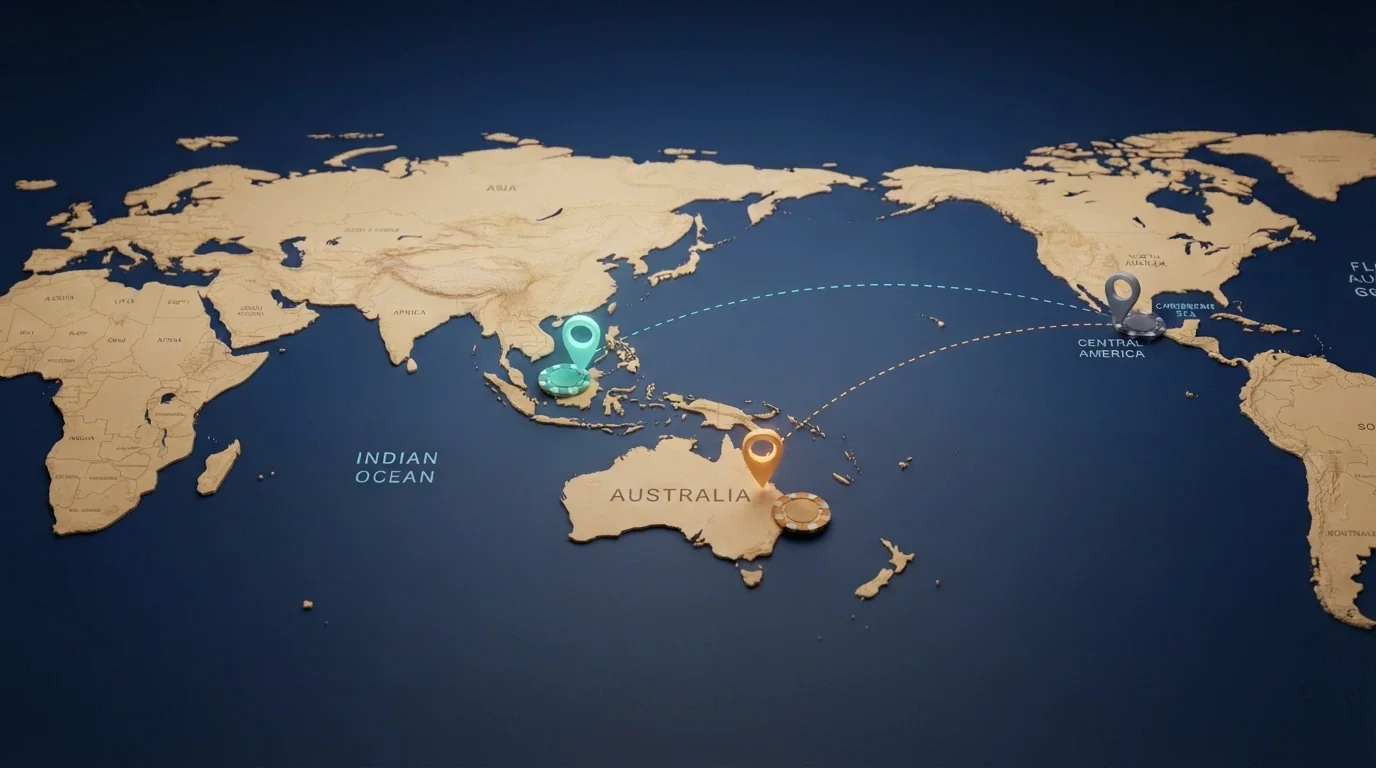
The 2017 amendments closed offshore-loophole concerns, gave the ACMA formal compliance powers, and added the civil-penalty and ISP-blocking tools. The 2026 Gambling Reform Bill passed Parliament on 19 August 2026 and commences 1 January 2027. A full discussion of that reform sits in the next section.
The distinction operating under the IGA is structural: the Act targets the provider of a prohibited service, not the individual player using one. An Australian who clicks through to BitStarz is not committing an offence under the Act. BitStarz is committing an offence by offering the service to an Australian — and the ACMA’s enforcement tools are aimed at the supplier side of the transaction.
That distinction does not leave the player with nothing to lose. It leaves the player without the ACMA’s complaint-resolution backstop, without BetStop, without a return mechanism if the operator refuses to pay. The Australian consumer-protection framework is built for the licensed wagering market. Playing at an offshore casino is, plainly, leaving that framework behind.
The 2026 Reform: What Changes on 1 January 2027
The Interactive Gambling Amendment (Gambling Reform) Bill 2026 passed both houses on 19 August 2026 and commences on 1 January 2027. It creates three new parts of the IGA:
Part 7C — wagering advertising. No more than three wagering ads per hour between 6 am and 8:30 pm. A live-sport blackout from 15 minutes before a sporting event begins until 5 minutes after it ends. Bans on advertising during children’s programming, on programs classified G or below at specified times, and on broadcast odds outright. Athletes, celebrities and influencers are barred from promoting wagering products.
Part 7D — inducements and commissions. Direct marketing of inducements is prohibited for 14 days after a customer signs up and for 90 days after a customer deregisters from BetStop. Wagering operators must identify customers showing signs of problem gambling and stop sending them inducements, with an indefinite ban for at-risk customers once identified. Commission paid to staff, agents or third parties on the basis of a customer’s gambling activity is prohibited.
Part 7E — AdStop. A national wagering-advertising opt-out register, administered by the ACMA, gives individuals a single mechanism to opt out of wagering advertising online. The register was not expected to be ready by 1 January 2027 — the advertising measures will run ahead of it.
A statutory review of the advertising measures is mandated after three years of operation.
The reform does not change online casino’s prohibited status. It tightens the wagering-side controls. The online keno and foreign-matched lottery ban is a separate strand of the Bill — keno is referred to in political coverage as “pocket pokies” — and is also effective 1 January 2027.
Licensed Wagering vs Offshore Casino: Two Different Products
Competitors blur the line. A Sportsbet account and a BitStarz login are not the same product category, and treating them as one is the most common factual error in Australian affiliate coverage.
Sportsbet, bet365, Ladbrokes, TAB, TABtouch, Neds, PointsBet, Betr, Picklebet and Betfair hold NT licences through Licensing NT (NTRWC) and take sports-and-race wagers placed before the event. They do not offer online casino; the licence does not cover it. They are Net-wagering operators, not casino operators.
BitStarz, Reelraven, Stake and the rest of this page are offshore casino operators licensed in Curaçao, Anjouan or Costa Rica. The Australian licensed market and the offshore casino market do not interact productively — licensed bookmakers do not offer live dealer and live roulette, and offshore casinos do not have a path to NT licensing. The reader comparing the two is comparing different things.
This matters for the consumer-protection argument: BetStop, the self-exclusion register, fully covers Australian-licensed wagering operators but does not reach a single offshore casino. Banking under the credit-card and crypto ban applies to licensed operators and leaves offshore payment rails intact. ACMA enforcement reaches licensed operators through civil penalty power; on the offshore site it reaches ISPs and the DNS layer.
The Credit Card and Crypto Ban: A Tell for Offshore Operators
Since 11 June 2024, an Australian-licensed wagering operator cannot take a credit card, credit-related product or digital currency as payment. An operator that fails to enforce the ban faces penalties of up to A$247,500. The legal deposit routes for a licensed operator are debit card, bank transfer, PayID/Osko and BPAY, with identity verification required before a first deposit.
A website that asks for a Visa credit card or USDT to fund a casino account is, by virtue of that single fact, outside the Australian licensed framework. The 11 June 2024 ban is the practical tell for a player to distinguish an offshore site from a licensed bookmaker — the cash-only, AUD-friendly, PayID-accepting Sportsbet account is one; the Site That Wants USDT is the other.
From 1 January 2027, banks and payment providers gain statutory authority to block transactions to illegal gambling operators. That power sits within a banking framework the ACMA and the banks will administer. What it won’t do is hide the offshore site from a player willing to look for it; what it will do is take a payment rail away from a player who’d rather not mix their gambling with their bank statement. Crypto rails remain on the offshore side.
What the Player Risks by Playing Offshore
The risks the offshore path leaves on a player without Australian consumer protection:
The risks the offshore path leaves on a player without Australian consumer protection include the lack of ACMA complaint resolution, as the regulator cannot compel an offshore casino to release winnings. Furthermore, BetStop coverage does not extend to these platforms, meaning a self-excluded Australian can continue to deposit, and site access remains subject to DNS-level blocking by Australian ISPs, which can occur while the player has funds on account. Additionally, there is no Australian legal venue for dispute resolution, and while player-side winnings are tax-neutral, the operator side can be complex. None of the above is fictional; offshore access is granted, but Australian consumer protection is not.
None of the above is fictional. The frame is: offshore access is granted; Australian consumer protection is not.
Responsible Gambling: The Safety Net Australia Built, and Where It Stops
Australia’s responsible-gambling framework is one of the most comprehensive in the world — built for licensed wagering, structured to bind state and territory licence holders, and rebuilt several times since the IGA was first strengthened. The hard boundary of that framework sits at the offshore casino door. Inside Australia, the player has tools. Outside, the player has them only if the operator built them.

BetStop: 67,480 Registrations, One Offshore Blind Spot
BetStop is the National Self-Exclusion Register. A single registration excludes the person from every Australian-licensed online and phone wagering service. Live since August 2023, the register has accumulated 67,480 registrations as at 31 July 2026; 41,290 of those exclusions are still active; 78% of registrants are under 40; 38% chose lifetime exclusion. The numbers describe a population gambling on the wagering side — Sportsbet-style — and the open question is how the same population interacts with offshore casinos not on the register.
The blind spot is the load-bearing fact. BetStop binds Australian-licensed wagering services only; an offshore casino is not connected to the register and will keep accepting a self-excluded person’s deposits. The framework is built on the licensed wagering market, and the offshore market sits outside it — registration on BetStop does not block offshore access. The reverse is also true: offshore site self-exclusion tools (Royal Reels’ and Caswino’s tools, Spinbet’s RG suite) do not register on BetStop or feed into the ACMA’s register.
This is what the 2026 reform’s Part 7D cooling-off period is designed to replace for the licensed market — 14 days after sign-up, 90 days after BetStop deregistration, with an indefinite ban for at-risk customers once identified. Those rules do not reach a Curaçao-licensed casino.
Help When You Need It: 1800 858 858, Gambling Help Online and the Operator Level
The National Gambling Helpline is 1800 858 858 — free, confidential, staffed 24 hours a day, 7 days a week. Gambling Help Online at gamblinghelponline.org.au runs parallel online chat and counselling services. Both are state and federally funded. Neither depends on which platform someone played on.
The 2.1% Australian adult prevalence figure (roughly 430,000 people) for problem gambling, with high-risk at 1.8% (AIHW, 2022), is the underlying number that gives these services their scale. The offshore casino path is structurally excluded from the regulations that built the help infrastructure — an offshore player with a progressing problem is still able to use the same help resources as any other Australian, because the helpline is built around the person, not the platform.
Operator-level tools vary. Caswino’s full chain (deposit limits, loss limits, session time reminders, cooling-off, permanent self-exclusion) is the strongest published set in this guide. Spinbet’s RG suite is comparable. 1xCasino and the other Curaçao operators carry several of those tools; the specifics vary and are not always on the public-facing terms page. A player looking for a specific tool should not assume it exists without checking; the licensed side is uniformly required, the offshore side varies operator-by-operator.
How We Selected and Ranked These Casinos
The ranking criteria below. No invented weightings, no affiliate commission factor, no operator-paid placement. Each criterion reflects a check that can be done before depositing.
Source set
The research draws from the ACMA’s BetStop and Interactive Gambling Act pages for the regulatory baseline, while verifying licences against operator footers and the regulators’ own registers (Curaçao eGaming, Anjouan, Costa Rica). It also examines AU-facing affiliate review pages—including CasinoAudit, BettaCasinos, and PokiesAustralia—for per-operator details like game depth and payment methods, though these are never treated as authoritative alone. Specific data points include the PokiesAustralia Wild Tokyo review for withdrawal times, BettaCasinos’ 1xCasino analysis for RTP context, and CasinoAudit’s Royal Reels review regarding ACMA blocking.
What we evaluated
We assessed each operator based on verified offshore licences on regulator registers, game-library depth, and named providers. We also confirmed welcome bonus accessibility for AUD-funded players (where research allowed) and verified no-deposit bonus terms, withdrawal infrastructure for AUD and crypto (for BitStarz, Reelraven, and Lolajack), and wagering multipliers and withdrawal caps in plain-English terms.
Exclusions
This assessment did not factor in operator reputation histories, overall player complaint volumes, or solvency beyond confirmed segregated-funds disclosures (which only Caswino noted). We also excluded promotion-freshness claims found on affiliate pages.
A criterion we did not weight is bonus amount. Reelraven’s 350% up to A$3,300 is the largest headline in the set; Spinbet’s A$6,000 is the largest by absolute figure. Neither is the “best” by the definition above because the wagering base and withdrawal cap pull both into the same arithmetic the rest of the market sits in. The reading of the ranking is structural, not numerical: a verified licence is a precondition; library size and withdrawal infrastructure are tie-breakers; the bonus is a property of the operator, not a competitive advantage at the size class the offshore market earns.
Playing Offshore: What Australian Casino Players Should Actually Do
The prohibition and the offshore status are known. The decision is made. What follows is the practical order the player goes through, with the parts that go wrong on the way to a withdrawal identifiable upfront.
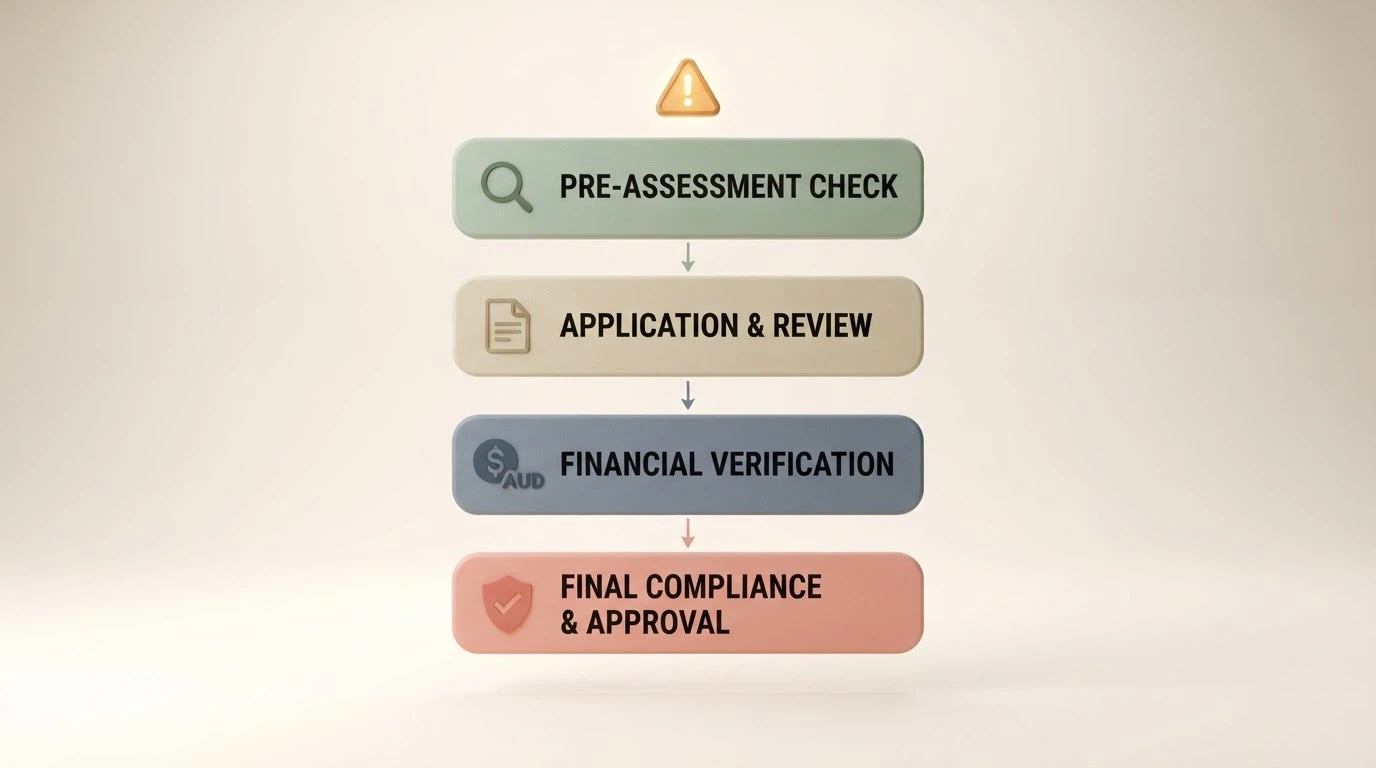
1. Verify the offshore licence. The registrar’s register is the public test. Curaçao eGaming publishes licensee search; Anjouan’s authority publishes licence numbers by operator; Costa Rica registers corporate entities rather than gambling licences. An operator whose licence cannot be found at the regulator should be treated the same way as an operator without a licence.
2. Read the wagering terms, not the headline. The bonus number is the marketing line; the wagering multiple of that number is what the player actually has to do. 35x bonus-only is materially friendlier than 30x deposit-plus-bonus; x40 on free-spin-converted cash is significantly tighter than 35x on a welcome bonus from a deposit.
3. Check the withdrawal cap. A$11,500 per month at Reelraven is generous in absolute terms. EUR 5,000 per month at Lolajack is tight on the small operator. Caps a player has not checked are caps a player finds out about mid-withdrawal.
4. Check the payment channels. A licensed Australian operator offers debit card, bank transfer, PayID and BPAY. An offshore operator offers those plus crypto, plus sometimes a credit-card path that violates the licensed-ban on a different side of the line. The crypto offer is what distinguishes offshore from licensed on a checkout page; the AUD-true conversion is what distinguishes a working offshore cashier from a friction casino.
5. Set a deposit limit inside the casino’s RG tools. BetStop does not reach offshore. Caswino’s seatbelt set is the strongest published; Spinbet and Royal Reels carry comparable tools. Other operators vary. The right thing to do is set the limit before the first deposit, not after a poor session.
6. Recognise what the bonus is and what it isn’t. A no-deposit bonus is a trial of the cashier and the lobby. A welcome package is a marketing offer whose headline is a labour cost the player measures in hours of slots play. The arithmetic the page has laid out applies for any future bonus: total wagering ÷ stake per spin = spins; spins × 5 seconds = hours; expected loss = spins × stake × (1 – RTP).
7. Know what is at stake when the ACMA acts. A 1,564-site blocking history of enforcement and a 225-service withdrawal history mean the offshore operator an Australian player uses today may not be reachable through an Australian ISP tomorrow. A withdrawal pending at the moment a block lands is a withdrawal pending at the operator’s discretion. The risk is real, it has happened 1,564 times since November 2019, and the next block does not have to be discussed with the player before it lands.
The IGA reform on 1 January 2027 also takes away the legal payment rail — banks gain express authority to block transactions to illegal gambling operators — without closing the offshore site. The casino lobby stays accessible; the AUD flow into it from an Australian bank does not.
The conclusion is the prohibition framing the page opened with. The Australian regulatory framework is the world’s most comprehensive for wagering products; it stops at the offshore casino door. The reader who has read this far is making a clear-eyed decision; the page’s job is to confirm what that looks like, not to talk the reader out of it.
Frequently Asked Questions
Can I deposit in AUD at international casino sites?
Yes — most offshore operators accepting Australian players display their cashier in AUD by default and accept AUD deposits through debit cards, bank transfer, PayID/Osko and the main crypto networks. Some operators handle AUD through an intermediary currency conversion at a marked-up rate. Check the deposit page before sending funds.
What payment methods can Australian players use at international casinos?
The standard deposit methods are debit cards (Visa and Mastercard, where the operator processes them), bank transfer, PayID/Osko and BPAY. Almost all offshore operators also accept crypto — BTC, ETH, USDT on Tron (TRC-20) and Ethereum (ERC-20), and often 20+ other tokens. Apple Pay and Google Pay appear at some operators but not consistently. E-wallet withdrawals sit in the 24–48 hour window; crypto withdrawals average under 30 minutes for the major coins.
What happens if an international casino refuses to pay my winnings?
Filing a complaint with the regulator on the licence the operator holds — Curaçao Gaming Control Board, Anjouan Gambling Authority, Costa Rica corporate register — is the formal pathway. The ACMA does not have jurisdiction over an offshore casino and cannot compel a withdrawal; the regulator on the licence issuing the licence has limited tools to coerce a foreign-based operator. The practical recovery route is usually a chargeback via the deposit payment, where the channel supports one (debit card and some e-wallets). Crypto deposits typically do not. The defensive answer is to verify the licence on the regulator’s register before depositing and to play with operators that have a public payout history.
Are crypto deposits legal at online casinos in Australia?
Crypto deposits at licensed Australian wagering operators are banned since 11 June 2024 under the Interactive Gambling Amendment (Credit and Other Measures) Act 2023; only offshore casinos accept crypto from Australian players. AUSTRAC’s Travel Rule applies at the exchange level at a single transaction equivalent of A$10,000, triggering a threshold transaction report on the exchange. From the casino’s perspective, the policy is to accept; the regulatory perimeter is set by the operator’s licence jurisdiction.
How do I know if an international casino site is trustworthy?
Four checks — verify the licence on the regulator’s own register (Curaçao eGaming, Anjouan Gambling Authority, Costa Rica); read the bonus wagering terms and the cashout ceiling in plain terms before depositing; confirm the player-fund segregation policy and the existence of a tested RNG certificate; check the BGOGaming or eCOGRA-style certification label on the footer and trace it back to the issuer. None of those checks is unique to offshore; the differentiation is that none of them is enforced at the same standard as an Australian-licensed operator, and the reader bears the verification work. None of those checks is sufficient; taken together they prune the worst 80% of the offshore market and leave the reader in the upper tier.
Can Australian players get a bonus without making a deposit at an international casino?
Yes, at a small number of operators. BitStarz offers 50 free spins on registration with no deposit required and 40x wagering on the bonus cash those spins convert into. Royal Reels offers an A$10 bonus after phone verification with 30x wagering. A typical no-deposit bonus in 2026 sits in the A$10–A$25 bonus cash or 20–50 free spins range, with wagering in the 35–60x range and a maximum cashout of A$50–A$100. The offer is a trial of the cashier and lobby rather than a path to a payday.
Written by the editors at Online Pokies Real Money.