
25 Free Spins No Deposit Australia: The Bonus Terms That Decide If You Win
A free-spins coupon with no deposit sounds like the easiest money a punter ever made. Sign up, spin, walk away with whatever the reels coughed up. That is what the marketing page sells, and it is also why “25 free spins no deposit australia” runs so hot in Australian search. The reality, as any punter who has actually tried to withdraw the winnings will tell you, runs through a different funnel: a 40× wagering requirement, a A$100 cashout cap, a 7-day expiry window and a single locked pokie that the casino picked because it suits the house, not the player.
This page lays out what the offer actually delivers, where the fine print takes it back, and which Australian-facing casinos carry something worth claiming in 2026 — and which ones are simply not built around this product at all.
Data current as of 16 October 2026, verified against the ACMA register and the operator terms pages as published.
Table of Contents
- Why 25 free spins no deposit is the offer every Aussie punter searches for
- Why your 2026 25 free spins bonus is smaller than it looks
- Every Australian-facing casino with 25 free spins no deposit we could verify in 2026
- The pokies your 25 free spins actually run on — and why it matters
- Claiming 25 free spins on your phone — what changes and what does not
- New casinos running 25 free spins no deposit in 2026
- Are 25 free spins no deposit legal in Australia? What the IGA actually says
- What 25 free spins cost you — the safety net every punter should know
- How we picked the best 25 free spins no deposit casinos for Australian players
- What to actually do with a 25-free-spins offer — your move after the fine print
- Frequently asked questions about 25 free spins no deposit in Australia
Why 25 free spins no deposit is the offer every Aussie punter searches for
The headline number — 25 spins, no deposit, Australian-friendly — pulls more search traffic than any other casino promo in the country. Three reasons explain why, and each one sits a step further from the spinning reels.
First, the price tag at the front of the offer reads zero. No card details handed over, no cash committed, no risk on the surface. That zero is the entire reason the offer exists, and it is also the start of every trap the rest of this page will name.
Second, the offer is a customer-acquisition tool, not a customer-retention one. The casino is buying a sign-up with 25 spins the way a café hands out a free coffee — the product costs the venue almost nothing, the conversion is the prize, and the rules are set so the majority of the recipients never reach a withdrawal. The Australian market is unusual because every operator serving it does so from offshore — there is no locally licensed online casino to compete against, which means the offers compete with each other rather than against a regulated benchmark. That dynamic drives the headline bonuses up; it does not drive the cashout terms down.
Third, “free” is a word that survives translation. The offer reads identically to a punter in Sydney and a customer-service agent in Curaçao. The 40× wagering, the A$100 cashout cap and the locked pokie are the same numbers in both places. That is where the actual decision lives, and it is the part the front page of an affiliate roundup never dwells on.
What a no-deposit free-spins offer actually is
Mechanically, a no-deposit free-spins bonus (often shortened to “NDB FS” in affiliate copy, occasionally “no-deposit free play”) is this: you register an account, the operator credits 25 spins at a fixed stake each, those spins run on a single pokie chosen by the casino, and whatever you win is treated as a bonus balance that must be wagered before it becomes cash you can withdraw.
The “no deposit” half is literal — no purchase is required to claim the spins. Most operators do require identity verification before a withdrawal, but the spins themselves credit on registration, before any cash has touched the account. The “free” half is more contested. The spin value is almost always fixed at the low end — research on AU-facing offers in 2026 puts it at A$0.10 to A$0.20 per spin as the typical band, with the rare A$0.50 outlier running only on the most generous welcome packages. Twenty-five spins at A$0.20 per spin is a A$5 face value. Twenty-five spins at A$0.10 per spin is a A$2.50 face value. That is the entire nominal bonus a player receives, before the wagering requirements begin stripping at it.
The wagering requirement (also called a turnover requirement, or a playthrough) is the multiplier the operator applies to the bonus before it converts to withdrawable cash. The market standard on AU-facing no-deposit free spins in 2026 is 40×, with a range running from 30× at the gentle end to 50× at the harsh end. So a A$5 bonus at 40× means A$200 of qualifying bets before any withdrawal is allowed.
How online casinos frame free-spins promos differently from land-based venues
Walk into a Crown or a Star casino in Australia and the free-play offer looks nothing like a 25-spin coupon. It is a members-card points credit, a complimentary meal, a room upgrade — the free-play is almost always bundled into the venue’s loyalty program, and the player trades time and table turnover for it. There is no signup bonus to claim on the floor, no locked pokie to play on, no 7-day expiry clock. The physical venue frames its comp as a reward for play; the offshore casino frames its sign-up as a free gift.
The framing gap is not just cosmetic. A land-based venue operates inside the relevant state regulator’s regime, and the comp sits inside a closed system the operator controls. An offshore online casino operates outside any Australian regime, and the sign-up is a marketing banner at the top of a website — a single promotional image built to convert a click into a registration. The whole design language of the offer is different: one is calibrated for the player who is already inside the venue, the other is calibrated for the player who is still deciding whether to walk in.
There is also the term that anchors the offer’s framing in Australia: pokies. Not “slots”. The Australian-English word is everywhere in AU-facing affiliate copy and operator pages, and its presence is a small tell about how deliberately the page is targeting the local market. The same offshore casino serving Brazilian traffic would write “slots”, the same operator serving German traffic would write “Spiele”. The fact that an offshore site says “pokies” rather than “slots” is, by itself, evidence it knows who it is talking to.
A page about “the best licensed online casinos in Australia” is describing something that does not exist. No Australian licence covers online casino games or online pokies; the regulatory architecture for it was never built. Every brand on the search results for “25 free spins no deposit australia” is an offshore operator accepting Australian traffic under a foreign licence — usually Curaçao, sometimes Anjouan, occasionally Malta.
Why your 2026 25 free spins bonus is smaller than it looks
The bonus face value is the smallest number on the offer page. The wagering multiple, the maximum cashout cap, the expiry window and the maximum-bet rule are the four numbers that actually decide what a punter keeps, and every one of them works in the same direction: smaller than the headline implies.
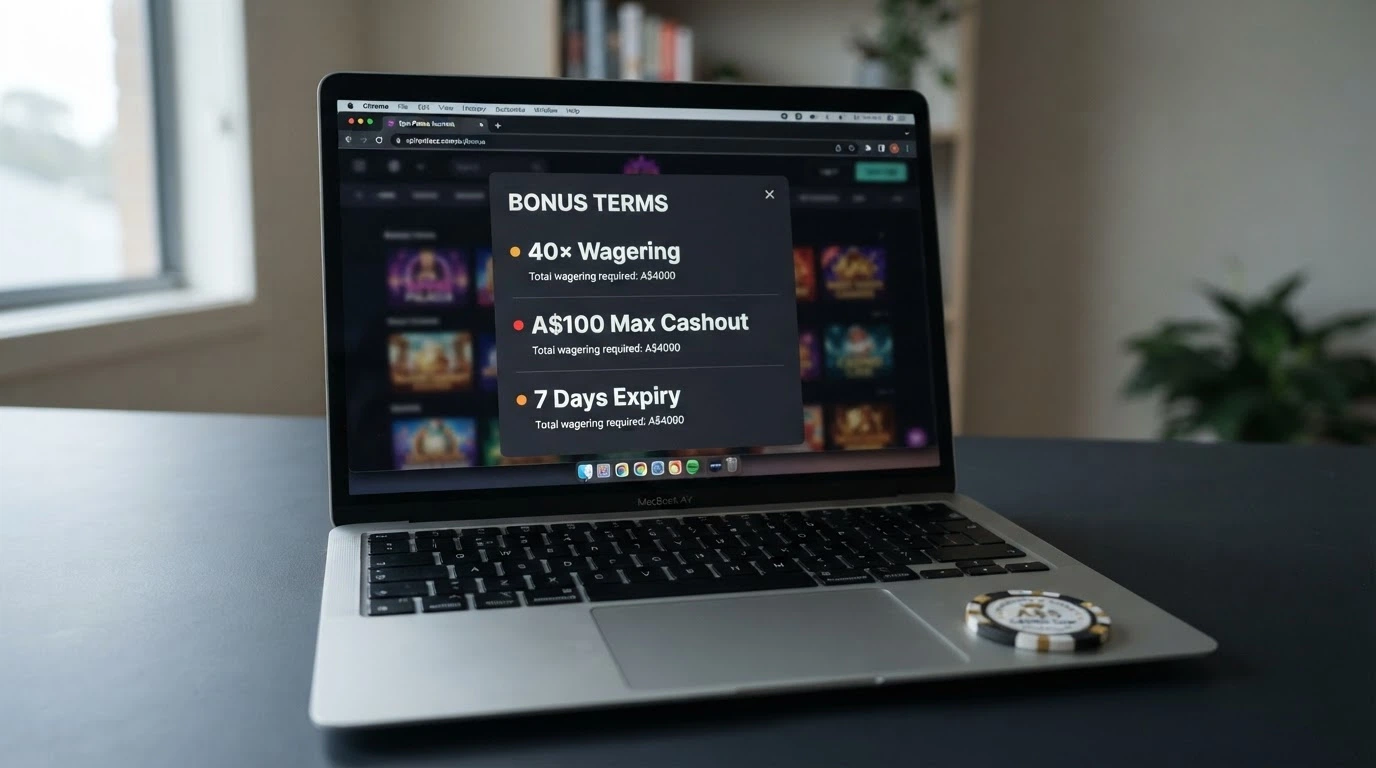
The wagering multiple is the first thing. At the market-standard 40×, a A$5 bonus requires A$200 of qualifying bets to convert. The maximum cashout cap is the second: even after a punter has run the full A$200 through the wagering, the operator will pay out only up to a ceiling, typically A$50 to A$200 on AU-facing NDB offers in 2026. Wins above the cap are forfeit. The expiry window is the third: most no-deposit free-spins offers expire within seven days, and the tightest in the market expire inside 24 to 72 hours. The maximum-bet rule is the fourth: while wagering is active, a maximum stake per spin applies, typically A$5 to A$10 — exceeding it voids the bonus and any winnings attached to it.
Put together, these four rules turn “25 free spins” from a free sample into a timed exam. A punter has seven days to clear A$200 of wagering at no more than A$10 a spin, on a single pokie the casino chose, with anything over A$100 (or A$50, or A$200 — depending on the cap) confiscated. That is what the marketing page does not say.
No-deposit: the fine print that turns “free” into a maths problem
The economic reality of a 25-free-spins NDB starts with the spin value, runs through the wagering requirement, and lands on an expected return that is, in most cases, lower than the player would have got by simply not playing.
Take the typical case: 25 spins at A$0.20 per spin, on a pokie at 96.09% RTP. The bonus face value is A$5 — that is what the casino credits. The required turnover at the market-standard 40× wagering is A$200. Run that A$200 through the pokie at the stated RTP and the house edge is 3.91% — so the expected loss from the wagering alone is A$200 × (1 − 0.9609), or about A$7.82.
That figure, A$7.82, is the bonus’s real cost in expected-value terms. The “free” gift of A$5 in spins has already been paid for by the time the wagering starts; the wagering requirement is where the player pays for it again, this time through the house edge on every spin of the playthrough.
If the locked pokie happens to be a high-RTP outlier like Blood Suckers (98.00% RTP, a NetEnt title), the same arithmetic gives an expected loss of around A$4 — still higher than the A$5 bonus face value, but materially cheaper. If the locked pokie is a high-volatility Pragmatic Play title like Sweet Bonanza (96.51% RTP, max win 21,100×), the maths shifts in the other direction: the playthrough cost is similar, but the variance is wild, which means most players will see their balance evaporate before the wagering completes.
This is why so few players reach the cashout stage. The expected return from 25 spins at A$0.20 each and 96% RTP is roughly A$4.80 — meaning on average a player has A$4.80 to put through A$200 of qualifying bets. The arithmetic does not favour the player; the marketing does. Most players burn through their bonus balance inside the first ten minutes of the wagering window and find themselves at zero before the seven-day clock runs out.
Sign-up spins vs deposit-match spins — the difference your wallet feels
A no-deposit offer and a deposit-match offer look similar on the page but cost very different amounts to play.
The no-deposit spins ask for nothing upfront. Twenty-five spins at A$0.20 each, A$5 face value, A$200 of required wagering at 40×. The player’s downside is bounded by the time spent on the playthrough and the house edge running against them; their actual cash exposure is zero until they want to withdraw.
The deposit-match spins ask for cash first. A “100% up to A$1,000 + 100 free spins on first deposit” package means the player deposits at least A$30, gets a A$30-to-A$1,000 bonus credited on top, and receives 100 free spins as well. The wagering on the deposit bonus is typically the same 40×, but the bonus amount is now ten to twenty times larger than the NDB bonus — meaning the required turnover is now A$1,200 to A$40,000 instead of A$200. The free-spin winnings sit on top of that.
The expected-value calculus is different, too. A deposit-match bonus is closer to a “real” casino offer in that it gives the player a genuine stake to play with, and the wagering requirement scales with the bonus size. The maths still favours the house on average — at 40× wagering and 96% RTP, every A$1 of bonus costs about A$0.04 in expected house edge across the playthrough — but the absolute dollar figure is large enough that a player can spend an evening on the bonus rather than ten minutes.
For a punter who only wants to test the casino without committing cash, the NDB is the only honest answer. For a punter who has decided to deposit and intends to play anyway, a deposit-match offer usually gives a better expected return because the bonus amount is large enough that the wagering friction is offset by the additional play time. Neither type turns the house edge negative; both simply change what the player is paying for.
Promo codes and why most 25-free-spins offers do not need one
The “promo code” or “bonus code” step is the most over-represented feature of NDB offers in affiliate copy. The reasoning is historical — many older casino bonuses required a string typed into a registration field — but the modern AU-facing NDB almost always credits automatically on signup.
The claim flow for a current AU-facing NDB runs like this: open the operator’s page, complete registration (email, password, country, sometimes a phone number), confirm the email or SMS code, and the 25 spins credit to the account without further action. Where a code is still required, it appears either in the affiliate link itself (auto-applied) or in the terms-and-conditions block of the partner page. Players typing a code manually into a separate field are now the minority.
What this means in practice: a punter who is searching for a current “promo code” to unlock the offer is, in most cases, searching for a string that does not exist. The offer credits on signup; the code step is gone. The exception is the deposit-gated bonus, where the code is sometimes required to opt into the deposit match — but that is a different product from the no-deposit free spins this page is built around.
No working code is provided in this guide. Codes on affiliate pages rotate weekly, and an outdated code is, at best, a wasted five minutes and at worst, a sign-up on a partner’s tracking link that no longer pays out. Treat the code as an artefact of an older affiliate model rather than a step the player needs to take.
Crypto casinos and 25 free spins — a different rulebook
The crypto-forward segment of the offshore casino market — operators that prefer Bitcoin, Ethereum and stablecoins over card deposits — operates a slightly different product on its free-spins offers, and it sits inside a payment restriction that, for licensed Australian wagering, does not exist.
The relevant Australian rule is straightforward. From 11 June 2024, the Interactive Gambling Amendment (Credit and Other Measures) Act 2023 banned credit cards, credit-related products and digital currency (crypto) as a payment method for online wagering in Australia. The penalty for an operator that fails to enforce the ban runs to A$247,500 per breach. For licensed operators — those holding an NT wagering licence through the Northern Territory Racing and Wagering Commission — the only legal deposit routes are debit card, bank transfer, PayID/Osko and BPAY. The licensed Australian wagering market does not see a crypto casino, because the licensed market does not have online casino at all. What Australian players meet in the crypto-casino segment is, by definition, an offshore operator.
Crypto casinos do carry free-spins offers, often at higher spin values than the standard A$0.10–A$0.20 band and sometimes with looser wagering requirements. The trade is the payment-method profile. A punter funding an account in Bitcoin or USDT is paying through a channel that an Australian-licensed operator could not legally accept. That signal — accepting crypto — is a clean indicator that the operator is offshore, unregulated by Australian authorities, and outside the BetStop self-exclusion register.
A punter who is comfortable with the crypto payment route and the offshore risk profile will find a different product here, including the free-spins offer. A punter who is not should treat the crypto acceptance as a signpost pointing at exactly the operator type this page is built around: offshore, unlicensed in Australia, and not covered by the same protection architecture that a licensed wagering account sits inside.
Every Australian-facing casino with 25 free spins no deposit we could verify in 2026
The operator set below is the full roster of ten brands this guide routes through. They are ranked by whether a no-deposit free-spins offer exists at all, then by the transparency of the terms that surround it. Every operator is offshore; none holds an Australian casino licence because none exists.
The table summarises what is confirmed. Where a cell is empty, the data point was not verifiable from the operator’s published terms at the time of writing — not a judgement on the offer, just a gap in what could be checked.
| Operator | Licence Status | Bonus Model |
|---|---|---|
| Skycrown | Offshore; no AU casino licence | 20 FS NDB (Aztec Clusters) + 4-tier welcome up to A$8,000 + 400 FS |
| Royal Reels | Offshore; no AU casino licence | AU$10 NDB cash chip (not free spins), 40× wagering |
| WinSpirit | Offshore; no AU casino licence | 200% welcome + 25 FS + cashback; full terms unconfirmed |
| Rocket Play | Offshore; no AU casino licence | 100% up to A$1,000 + 100 FS first deposit; no standing NDB |
| Fair Go | Offshore; no AU casino licence | RTG provider; full terms unconfirmed |
| Stake | Offshore (Curaçao); no AU casino licence | Rakeback/cashback model; no traditional welcome bonus |
| Bizzo Casino | Offshore; no AU casino licence | Unconfirmed |
| Rocket Casino | Offshore; no AU casino licence | Unconfirmed |
| Scream Casino | Offshore; no AU casino licence | Unconfirmed |
| Rainbet | Offshore (crypto-forward); no AU casino licence | Crypto-only model; no traditional bonus |
Ten operators, and exactly one — Skycrown — carries a confirmed no-deposit free-spins offer at the time of writing. Royal Reels carries a related product (a cash chip) that is often filed alongside NDB offers but is not free spins in the technical sense. The remaining eight either run a deposit-gated welcome package or carry a model — rakeback, crypto-only — that does not include the NDB product.
How we compared these operators — bonus value, game access and device support
Three lenses ran the ranking. The first is bonus value, measured as spin count × spin value × wagering fairness. A 25-spin offer at A$0.20 per spin and 30× wagering is worth more in expected-value terms than a 25-spin offer at A$0.10 per spin and 50× wagering, and the table separates them on that basis. Where the wagering multiple is unconfirmed, the operator drops behind a confirmed-multiple competitor by default — not as a penalty, but because the comparison cannot be made cleanly without the number.
The second lens is game access. Most NDB offers lock the spins to a single pokie, and that pokie is chosen by the casino. A locked pokie at 96.09% RTP (Starburst) is a different proposition from a locked pokie at 96.51% RTP and high volatility (Sweet Bonanza). Where the operator confirms which pokie the spins run on, that information is carried forward; where it does not, the gap is left open. Pokies contribute 100% toward wagering requirements by default; table games contribute between 0% and 20%; live dealer games are often excluded entirely. None of those alternatives are reachable from a locked free-spins bonus, which is itself a constraint on the offer’s value.
The third lens is device support. The mobile-browser experience is the default for AU-facing offshore operators, and dedicated iOS or Android apps are the exception rather than the rule. Where an operator runs a downloadable app, it is noted; where it does not, the mobile-browser path is assumed. The bonus itself does not change between desktop and mobile — the 25 spins credit to the same account, run on the same pokie, clear the same wagering — but the UX of claiming them does, and a punter on a phone needs to know whether the registration form, the pokie loader and the KYC upload will all fit on the screen they are actually using.
Rocket Play
Rocket Play runs the kind of welcome package an affiliate roundup leads with — 100% up to A$1,000 plus 100 free spins on the first deposit, followed by 200% up to A$1,000 on the second — but the headline offer is deposit-gated, not a no-deposit product. The minimum deposit sits at A$30, the wagering on bonus and free-spin winnings runs at 40×, the bonus validity window is five days, and the maximum cashout from the bonus is capped at A$1,000.
That is a heavy package by the standards of the deposit-match segment, and the short validity window (five days is at the tight end of the market) is the trade. A punter who wants to clear A$400 of bonus wagering on a single pokie inside five working days is going to be running at close to the A$5 to A$10 maximum-bet ceiling for the entire window.
What Rocket Play does not carry, on the evidence available to this guide, is a standing no-deposit free-spins offer. The promo page rotates, and occasional NDB drops appear intermittently — affiliate sources reference a July 2026 promotional NDB at Rocket Play — but a punter arriving at the site looking for a standing 25-free-spins coupon is not going to find one waiting. The brand is worth knowing as a deposit-match option; it is not built around the product this page leads with.
Skycrown
Skycrown is the only operator in this verified set with a confirmed standing no-deposit free-spins offer for Australian players, and it carries one of the deepest welcome packages in the offshore segment at the same time.
The no-deposit offer is 20 free spins on Aztec Clusters, credited on signup. The spin value runs at A$0.10 — at the low end of the market band — and the wagering on free-spin winnings is 40×, consistent with the market standard. The maximum cashout from the FS winnings is capped at A$300, which is on the generous side for an NDB cap. The free-spin winnings sit alongside the four-tier deposit welcome, which scales up to A$8,000 and 400 free spins across the first four deposits (120% up to A$1,200 plus 125 free spins on the first deposit alone). The deposit bonus has a 14-day validity per stage, a A$5,000 maximum cashout per stage, and a A$7.50 maximum bet while wagering is active. Game providers confirmed for the catalogue include IGTech, BGaming, Booongo/Redgenn, Booming Games and VoltEnt.
A punter who only wants the NDB product gets a 20-spin offer with a generous cashout cap but a spin value at the floor of the market. A punter willing to deposit gets a four-stage welcome with high dollar totals and a long enough validity window to clear the wagering without rushing. The 25-free-spins number does not appear exactly — the NDB is 20, not 25 — but Skycrown is the closest match to “AU-facing 25-free-spins no-deposit offer” in the verified set.
Royal Reels
Royal Reels is one of two operators in the set that carries an offer the affiliate copy files under the no-deposit banner, but the offer is a cash chip rather than free spins — and that distinction matters when the locked-game rule applies.
The offer is AU$10 credited on signup, no deposit required. Wagering runs at 40× on the bonus, consistent with the market standard. Royal Reels sits in the Slotozilla comparison table for AU-facing no-deposit offers, and the AU$10 face value is generous by NDB standards.
What Royal Reels does not carry is a free-spins product. A punter searching specifically for “25 free spins” is in the wrong column; the AU$10 chip is redeemable across the games the casino permits, with pokies typically contributing 100% toward the wagering, but it is not the slot-machine coupon the offer is asking for. Max cashout, validity window and game providers were not confirmable from the published terms at the time of writing. A punter interested in Royal Reels should check the current terms on the operator’s own page before committing to a signup.
WinSpirit
WinSpirit runs a 200% welcome bonus plus 25 free spins plus ongoing cashback — the only operator in the verified set whose headline number on free spins matches the search topic exactly. The 200% boost is deposit-gated, and the 25 free spins sit inside that welcome package.
What the published terms do not confirm is the wagering multiple on the bonus, the maximum cashout from the free-spin winnings, the validity window on the spins, the spin value, the minimum deposit, or the eligible pokie. A punter who sees the 200% + 25 FS headline and clicks through will need to read the bonus terms page on the operator’s own site before claiming. The offer exists; the verification this guide can carry stops at the existence claim.
WinSpirit is worth noting because the 25-spin number is the headline figure. A punter who specifically wants 25 free spins rather than 20 or 50 has a smaller set of candidates, and WinSpirit sits on that smaller set. The caution is the gap in the verifiable terms — the offer may be more generous or less generous than the headline implies, and the only way to know is to read the page the offer is made on.
Stake
Stake is the odd one out in the verified set, and a punter landing here from a “25 free spins no deposit australia” search is in the wrong place. Stake operates a rakeback and cashback model rather than a conventional welcome bonus. There is no standing no-deposit free-spins offer; the platform rewards play through percentage-based returns rather than through signup coupons.
Stake is a recognised name in the offshore crypto-casino segment — the Curaçao licence is well-known in the industry — but its product is not the no-deposit coupon the offer is asking about. A punter who values the rakeback model for what it is has reasons to use Stake; a punter looking for 25 free spins on signup does not.
For completeness: Stake is included in the verified set because it appears in the AU operators skill shortlist and serves Australian traffic. The exclusion from the no-deposit ranking is structural, not a judgement on the offer. The brand’s model simply does not include the product this page ranks on.
Fair Go
Fair Go is the AU-localised RTG pokies casino of the verified set — RealTime Gaming is a heavy presence in the catalogue, the marketing uses “pokies” rather than “slots”, and the brand has been operating toward Australian traffic for long enough to be a familiar name in AU-facing affiliate copy.
What the published terms do not confirm at the time of writing is the welcome bonus structure, any standing free-spins count, the wagering multiple on bonuses, the maximum cashout, the validity window, the spin value, or the minimum deposit. Fair Go is, in effect, an operator whose market position is clear and whose current offer is not. A punter looking for 25 free spins no deposit at an RTG-flavoured AU-facing casino should check the operator’s own promotions page directly before signing up.
The RTG catalogue is the angle here. Fair Go’s pokie library is heavier on the AU-familiar titles than the broader offshore set, and a punter who values that localisation has a reason to consider the brand. The current offer terms are the gap; the catalogue is not.
Bizzo Casino
Bizzo Casino is one of the more frequently named brands in AU-facing search results — the affiliate roundups reference it consistently — but the current bonus terms were not confirmable from the published page at the time of writing. Welcome bonus, free-spins count, wagering, max cashout, validity, spin value, game providers and minimum deposit are all unverified.
The presence in AU search results is itself a signal: an operator that is named across multiple affiliate listicles for “25 free spins no deposit australia” is running some offer that supports the mention. What that offer is, today, this guide cannot confirm. A punter who finds Bizzo on a current list and wants to verify should treat the affiliate page as a starting point and read the operator’s own terms before claiming.
Rocket Casino
Rocket Casino is a name that appears in the AU-facing search landscape and was not confirmable against verifiable terms on this pass. The brand is included in the verified set because it sits inside the AU operators skill shortlist, but no bonus structure, free-spins count, wagering, cashout, validity, spin value or minimum deposit could be checked against the operator’s published terms.
The same advice applies as for the other unverified operators in this guide: a punter who wants to claim at Rocket Casino should treat the affiliate roundup as a starting point and read the operator’s own terms directly. The brand is in the picture; the offer is not.
Scream Casino
Scream Casino is a newer entry in the AU-facing offshore set — the brand has lower name recognition than the top of the roster, but it appears in the search landscape and was routed into the verified set. The current offer was not confirmable against verifiable terms on this pass.
For a punter considering a newer offshore brand, the general rule is that newer operators carry less track record, fewer player reviews and shorter operating histories — which is why no-deposit free-spins offers tend to be generous on launch and tighten once the brand has accumulated a player base. Scream Casino sits on that early side of the cycle, on the available evidence. A punter who values the no-deposit offer over the operator’s history has a reason to consider it; a punter who values the history has a reason to wait.
Rainbet
Rainbet is the crypto-forward end of the verified set, and its inclusion is structural rather than product-fit. The operator runs on a crypto-native model — deposits in Bitcoin, Ethereum, USDT and similar — and no traditional welcome bonus or no-deposit free-spins offer is confirmed at the time of writing.
The crypto model also puts Rainbet outside the Australian licensed payment routes. From 11 June 2024, credit cards, credit-related products and digital currency are banned as payment for online wagering in Australia. Any operator accepting crypto is, by definition, an offshore operator outside the Australian regime. A punter using Rainbet is using it on its own terms, with its own house rules and no BetStop coverage.
For a punter looking specifically for 25 free spins no deposit, Rainbet is not on the candidate list. The platform serves a different segment of the offshore market, and including it in the verified set reflects its presence in the AU-facing landscape rather than its fit to the offer.
The pokies your 25 free spins actually run on — and why it matters
The locked-pokie rule is the single biggest determinant of what a 25-free-spins offer is actually worth, and it is also the part of the offer the marketing page does not lead with. Most NDB offers run on a single specific pokie chosen by the casino, and the choice is deliberate.
The casino picks the pokie for the same reason a retail shop picks the loss-leader at the front door: it is the product that converts the customer, not the product that maximises the customer’s return. High-volatility Pragmatic Play titles — Sweet Bonanza, Gates of Olympus, Bigger Bass Splash — are common locked-pokie choices because they deliver the headline big-win screenshots that get shared on streaming channels. The player who lands a 21,100× payout on Sweet Bonanza becomes the marketing for the casino’s next affiliate roundup. The player who lands a 900× payout on Blood Suckers does not.
What this means for the punter is that the locked pokie is rarely the one with the highest return-to-player percentage. It is more often the one with the highest variance, which means long losing streaks punctuated by occasional big hits. A punter playing through 40× wagering on Sweet Bonanza at A$5 a spin will see their A$200 turnover disappear in two or three extended dead spins before any bonus feature lands. A punter playing the same turnover on Starburst or Blood Suckers — low-volatility, high-RTP NetEnt titles — will see a slower drain and a higher chance of clearing the wagering.
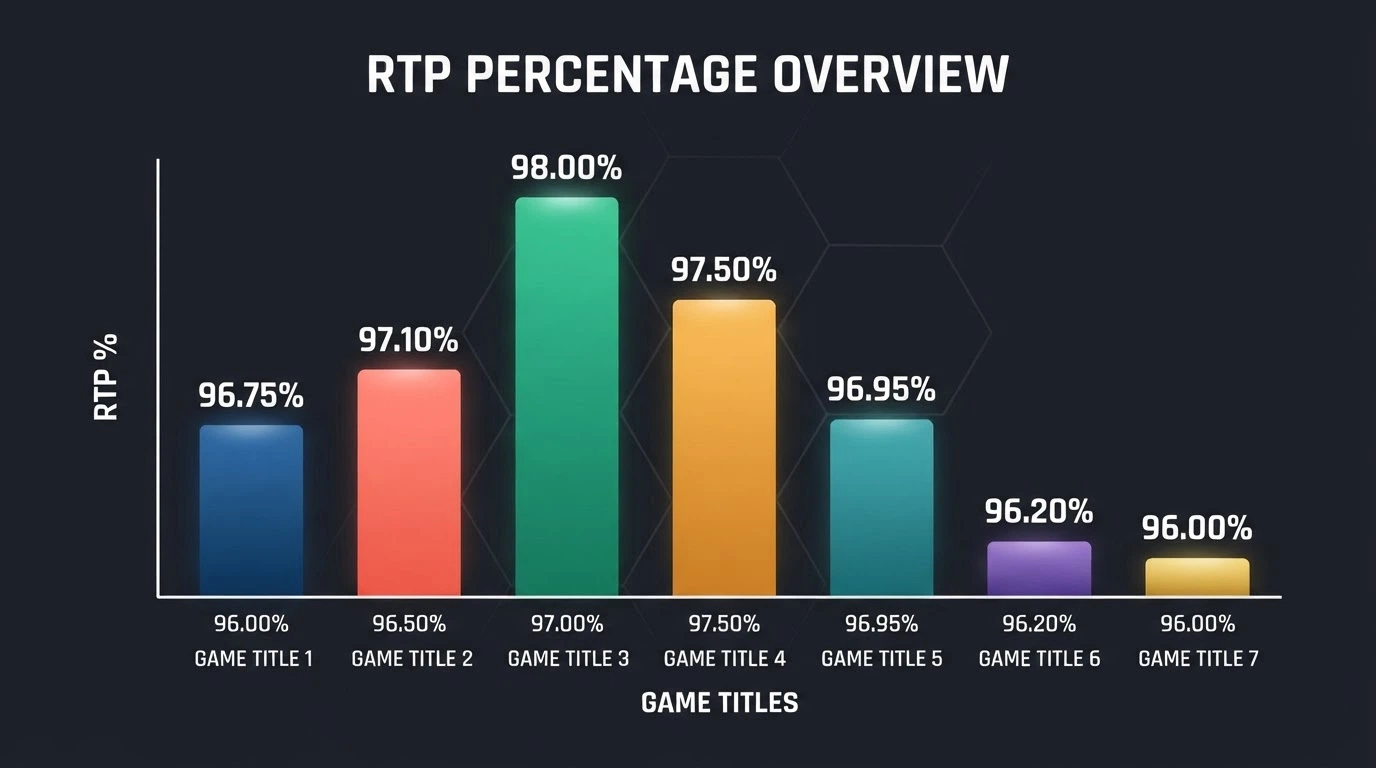
The pokie specs that matter, in order, are RTP (the closer to 100%, the smaller the house edge), volatility (low volatility = steadier drain, high volatility = feast-or-famine), max win (the headline number, which matters only at the long tail) and hit rate (how often a spin produces any return at all, which determines how the balance feels minute to minute). The table below carries the seven titles that appear most often in AU-facing NDB offers, with the figures research was able to verify.
| Pokie Title | RTP | Volatility | Max Win | Provider |
|---|---|---|---|---|
| Starburst | 96.09% | Low–medium | 500× bet | NetEnt |
| Blood Suckers | 98.00% | Low | 900× bet | NetEnt |
| Sweet Bonanza | 96.51% | High | 21,100× bet | Pragmatic Play |
| Gates of Olympus | 96.50% | High | 5,000× bet | Pragmatic Play |
| Bigger Bass Splash | 96.50% | High | 5,000× bet | Pragmatic Play |
| Big Bass Bonanza | 96.71% | Medium | 2,100× bet | Pragmatic Play |
| Wolf Gold | 96.01% | Medium | 2,500× bet | Pragmatic Play |
Blood Suckers sits at 98.00% RTP, the highest of the group and almost two full points above the AU-facing NDB market average. Starburst sits at 96.09%, the lowest in the NetEnt column but at low-to-medium volatility — a steadier drain than the Pragmatic Play cluster. Sweet Bonanza is the headline-grabber at 21,100× max win, but at high volatility the path to that headline is a long one. A punter choosing an NDB offer should pick on RTP and volatility first, headline max win last.
Pokies vs slots — the Australian terminology and what it means for your spins
The word “pokies” is the Australian-English term for what the rest of the English-speaking world calls “slots” or “slot machines”. It is not slang; it is the standard term across Australian gambling media, regulator communications, and the operators themselves when they are targeting the Australian market.
The term carries weight because it signals targeting. An offshore casino that writes “pokies” on its promotions page is signalling that it knows the Australian market exists, that the Australian search terms include “pokies”, and that the marketing copy is calibrated to match. The same operator serving the German market would write “Spiele” or “Slots”, the same operator serving the Brazilian market would write “slots” or “caça-níqueis”. The word choice is a tell about who the page is built for.
For the punter, the practical implication is that “pokies” and “slots” describe the same product. The RTP, the volatility, the max win, the hit rate — all of these move identically whether the game is labelled a pokie or a slot. The only thing the word changes is the page the punter is reading, not the game they are playing.
The “pokie” framing also shows up in the marketing copy surrounding 25-free-spins offers more aggressively than in the surrounding operator copy. Affiliate pages that title their section “Top 25 Pokies Free Spins No Deposit” or “Best Aussie Pokies Bonuses” are using the word to optimise for the Australian search query, and the term carries through to the operator pages they link to. The punter searching on the Australian term is, in practice, searching for the same offshore casinos everyone else is searching for — the word does not change the product, only the path to it.
Provider-specific free spins: when Pragmatic Play or NetEnt lock your bonus
The provider behind the locked pokie is a smaller but real signal about what the offer is worth, because provider choice shapes the catalogue depth and the variance profile of the locked title.
Pragmatic Play is the dominant provider in AU-facing NDB offers. The cluster of titles — Sweet Bonanza at 96.51% RTP, Gates of Olympus at 96.50% RTP, Big Bass Bonanza at 96.71% RTP, Bigger Bass Splash at 96.50% RTP, Wolf Gold at 96.01% RTP — runs high volatility across the group, with Sweet Bonanza’s 21,100× max win setting the ceiling. A punter playing through 40× wagering on any of these titles is in for a volatile ride; the wagering will drain the balance in long losing streaks punctuated by feature rounds. Pragmatic Play titles are also the most heavily marketed to streamers and affiliates, which is why they dominate the locked-pokie space.
NetEnt is the second major provider, more often on the older or more value-engineered side of the catalogue. Starburst at 96.09% RTP and low-to-medium volatility is a steady-drain pokie with a 500× max win — modest by modern standards but consistent. Blood Suckers at 98.00% RTP and low volatility is the highest-RTP slot in the mainstream NetEnt catalogue and the rare case where the locked pokie favours the punter. A NDB locked to Blood Suckers would be a notable offer on that basis alone.
BGaming, Booongo/Redgenn, Booming Games and VoltEnt round out the provider list at operators like Skycrown, and they tend to occupy the medium-volatility middle of the catalogue. These providers are less prominent in marketing copy but no less legitimate; they sit on the catalogue because the operator wants pokie count, not just brand recognition.
For the punter, the practical reading is: a NDB locked to a Pragmatic Play title is the more common offer and carries higher variance; a NDB locked to a NetEnt title like Starburst or Blood Suckers is the rarer offer and carries steadier drain. The catalogue depth of the operator matters because it determines whether the player has any pokie choice at all on a locked-spin bonus — most do not, but a few operators allow the player to select from a small list of eligible titles.
Dedicated pokies sites and their 25-free-spins offers
A subset of the offshore market is built specifically around pokies rather than around the broader casino catalogue, and the affiliate landscape references brands like House of Pokies and Pokie Place as the leaders of that segment. Dedicated pokies sites tend to carry a heavier RTG or Pragmatic Play catalogue, lean into “pokies” terminology more aggressively, and often frame their NDB offers around the AU search terms more directly than the broader casino brands.
The current bonus specifics for the dedicated pokies sites were not confirmable against verifiable terms on this pass. The brands are referenced across multiple affiliate pages for “25 free spins no deposit australia”, and the operator pages exist; what the current offer looks like this week is not verifiable from the research consulted for this guide. A punter interested in a dedicated pokies site should check the operator’s own promotions page directly before signing up.
The segment is worth knowing about because it sits at the most direct intersection of the offer and the product — a pokies-only operator running a 25-free-spins NDB is exactly the offer the term describes, and the affiliate pages treat it as the headline match. The verified terms are the gap.
Claiming 25 free spins on your phone — what changes and what does not
The mobile claiming experience for a 25-free-spins NDB looks, to the player, almost identical to the desktop experience — which is precisely the point. The bonus credits to the same account, runs on the same pokie, and clears the same wagering whether the player is on a laptop, a tablet or a phone. What changes is the path to the bonus, and that path has been smoothed out over the last several years.
Most AU-facing offshore operators run their casino as a browser-based platform — responsive web design rather than a downloadable app. The registration form, the KYC upload, the pokie loader and the cashier all sit inside the mobile browser, with no app-store download required. The advantage is friction: there is no installation step, no permission prompt, no storage cost on the device. The player opens a browser, navigates to the operator’s URL, and the casino loads.
A dedicated mobile app is the exception rather than the rule for AU-facing offshore operators. App Store and Google Play both restrict real-money gambling apps by region, and the offshore licence does not always pass the regional checks. Where an app does exist, it is usually a wrapper around the same browser-based platform, sometimes with biometric login added and sometimes with a small exclusive promotion. The product is the same; the door is different.
Mobile browser vs casino app — which one actually works for free spins
The browser path is the better choice for a punter claiming a 25-free-spins NDB, and the reason is friction. The bonus credits on signup, and the player who is on a phone wants to get to the pokie as quickly as possible. A browser is one tap on a URL; an app is a download, an install, an account-creation flow inside the app, and occasionally a separate verification step.
The browser path also handles the KYC upload more cleanly. Most offshore operators require identity verification before a withdrawal — a photo of a government ID, sometimes a selfie, occasionally a proof of address — and the phone camera is the natural input for that. A browser with camera access handles the upload in two taps; an app needs the same camera permissions but inside its own UI shell. The friction is small but real.
A punter who already has an app installed and prefers it for ongoing play has reasons to use it — the lobby loads faster, the cashier remembers the payment method, the session feels smoother. For a one-off claim of an NDB, the browser is the lower-friction choice.
What a mobile casino free-spins offer looks like in practice
In practice, the claim flow runs like this on a phone. The punter opens the browser, navigates to the operator’s URL, taps the signup button, completes the registration form (email, password, country, date of birth), confirms the email or SMS code, and the 25 spins credit to the account. The “promotions” or “my bonuses” tab on the operator’s mobile site shows the bonus balance, the wagering progress, and the eligible pokie. The punter taps the pokie, the game loads in the browser, and the spins run.
The pokie itself runs on the phone’s browser the same way it runs on desktop — the same reels, the same RTP, the same max win, the same hit rate. The phone’s processor and screen size determine whether the graphics feel smooth or whether the animations stutter; the gameplay does not change. Data and battery cost are minor — a 25-spin session burns a few megabytes of data and a small percentage of battery, well within what a normal browser session uses.
The KYC upload, when it comes, runs through the phone’s camera. The punter taps the verification prompt, snaps a photo of the ID, snaps a selfie if requested, and the upload completes in under a minute on a reasonable connection. Where the verification stalls, it is usually because the photo is blurry or the ID is partly out of frame — taking the photo again fixes it.
What the mobile experience does not change is the bonus itself. The 25 spins, the wagering, the cashout cap and the expiry window all run the same way on the phone as they do on the laptop. The mobile experience is a path to the same product, not a different product.
New casinos running 25 free spins no deposit in 2026
The “new casinos” segment of the AU-facing offshore market is the one that uses no-deposit free spins most aggressively as an acquisition tool, and the one that carries the most variability in offer generosity and operating history.
A new operator has no track record with Australian players, no accumulated catalogue of reviews on affiliate sites, and no established reputation to fall back on. The NDB offer is the entire value proposition of the launch: a generous 25-free-spins or higher package designed to convert signups from the affiliate roundups, with the terms sometimes looser than the established operators because the operator needs the conversion more. This is the structural reason that newer brands tend to be over-represented in the affiliate listicles — they are paying for placement with generous terms, and the affiliates are routing players to them because the headline offer is better.
The trade is the shorter operating history. An offshore casino that has been operating for six months has had six months to build a reputation, resolve a withdrawal queue, fix a game-loading bug, and weather a domain-rotation event. An operator that launched three weeks ago has had none of that, and the player is taking on trust what an established operator can demonstrate through record.
How to spot a fresh offshore operator with a genuine free-spins offer
Four signals separate a genuine new operator from a fly-by-night, and the punter who is considering a new casino should run all four before signing up.
The first is the licence. Every offshore operator carries a licence of some kind, and the licence issuer matters. Curaçao, Anjouan, the Malta Gaming Authority and the Kahnawake Gaming Commission are the most common issuers for AU-facing offshore brands; a licence from anywhere else warrants a closer look. The licence number, where it is published, can be checked against the issuing authority’s register. If the register does not return a match, the licence is fabricated or expired and the operator should be avoided.
The second is the game-provider list. A new operator carrying Pragmatic Play, NetEnt, BGaming, Play’n GO, Evolution and similar major providers is paying for those integrations and is more likely to be a genuine operation than one running only unknown providers. The provider list is published on the operator’s home page or in the footer; if it is not, the catalogue is not real.
The third is the withdrawal history. A new operator has no Australian-facing player reviews yet, but it has reviews from other markets. Casino review aggregators and player forums carry withdrawal-time data and complaint histories; a clean record in another market is suggestive of a clean operation in Australia. A pattern of complaints — slow withdrawals, voided bonuses, frozen accounts — is the opposite signal.
The fourth is the domain age. ACMA has had 1,564 illegal gambling and affiliate sites blocked by Australian ISPs as of March 2026, and the blocking is ongoing. A new operator that has not yet been blocked is not necessarily safe — many will be — but a domain that has been in operation for several years without a block has, at minimum, weathered one round of enforcement scrutiny. Domain age is a weak signal on its own, but it is one signal among four.
Are 25 free spins no deposit legal in Australia? What the IGA actually says
The honest answer is the one that any Australian page on this topic eventually arrives at: online casino games and online pokies are prohibited in Australia under the Interactive Gambling Act 2001, and there is no licence for them anywhere in the country. The individual player is not prosecuted, but the operator is, and the offer exists because the operator is offshore.
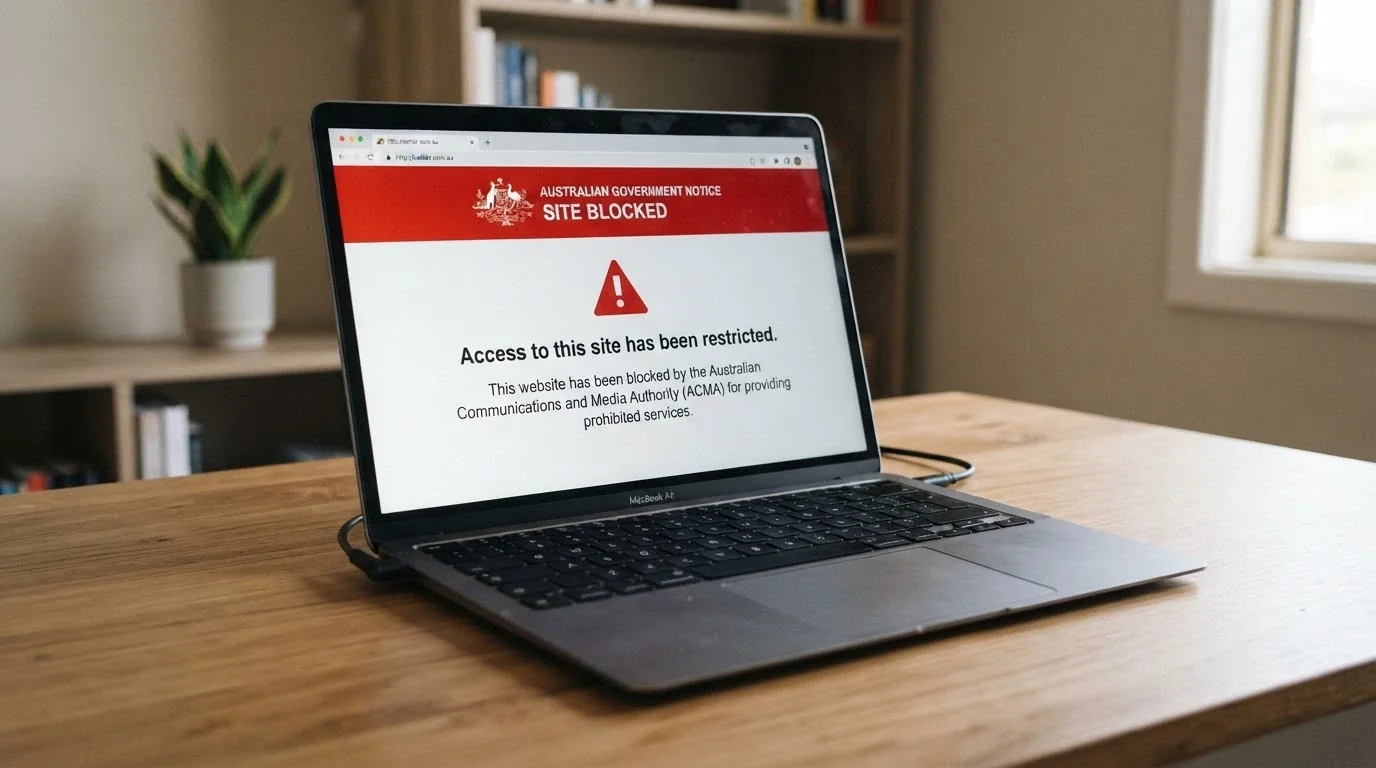
That is not the same as saying players face legal risk for claiming a 25-free-spins offer. The IGA targets the provider of a prohibited interactive gambling service, not the customer. The Act makes it an offence to provide online casino games, online pokies and in-play sports betting to a person physically in Australia; the punter on the other end of the offer is not the regulatory target. No Australian player has been prosecuted for claiming an offshore casino bonus.
The gap between prohibition and enforcement is the legal reality the punter is operating in. The IGA prohibits the supply side; the enforcement runs against the supply side. The ACMA has had 1,564 illegal gambling and affiliate websites blocked by Australian ISPs as of March 2026, and more than 225 illegal services have withdrawn from the Australian market since enforcement was strengthened in 2017. The block is a server-side action — the domain is routed to a notice page at the ISP level — and it can land at any time, on any operator, with or without warning.
The Interactive Gambling Act 2001 — what it prohibits and what it does not
The Interactive Gambling Act 2001 prohibits the provision of online casino games, online pokies and in-play sports betting to a person in Australia. Permitted services sit outside the prohibition: wagering on races and sport placed before the event begins, lotteries and keno. Those are licensable through state and territory regulators, with the Northern Territory Racing and Wagering Commission (NTRWC), administered through Licensing NT, acting as the de facto national licensor for online wagering — major bookmakers including Sportsbet, bet365, Ladbrokes and around fifty others hold NT licences with terms of up to 20 years.
The Interactive Gambling Amendment Act 2017 closed the loopholes offshore operators had used to reach Australian customers and gave the ACMA the enforcement and blocking powers it now exercises. The Interactive Gambling Amendment (Gambling Reform) Bill 2026 passed Parliament on 19 August 2026, and its measures commence on 1 January $$CY+1$$. The reform adds advertising caps (no more than three wagering ads per hour between 6 am and 8:30 pm, a live-sport blackout window, radio ad restrictions during school drop-off and pick-up, broadcasting sporting odds banned, online ads restricted to logged-in age-verified users), venue-level prohibitions (no wagering advertising inside sports venues or on player uniforms), influencer-level prohibitions (athletes, celebrities and influencers barred from promoting wagering products), and inducement-marketing rules (no direct marketing of inducements for 14 days after sign-up, for three months after BetStop deregistration, and indefinitely for at-risk customers).
Minimum gambling age in Australia is 18. There is no federal deposit, loss or stake ceiling for online gambling — because the product those ceilings would govern is banned outright.
ACMA enforcement: 1,564 sites blocked and counting
The ACMA’s enforcement engine is the ISP-level block. Since its first blocking request in November 2019, the ACMA has had 1,564 illegal gambling and affiliate websites blocked by Australian ISPs, as of March 2026. More than 225 illegal services have withdrawn from the Australian market entirely since 2017.
The block is the headline number, but the operational impact runs wider. An offshore casino domain can be blocked at any time, with a player’s balance still on it. The block lands at the ISP level — Australian customers see a notice page when they try to reach the operator’s URL — but the operator’s servers continue to run for customers in other jurisdictions. The player’s balance is not lost in any recoverable sense, but it is functionally unreachable from inside Australia until the operator rotates to a new domain, and even then, the new domain is itself a block candidate.
The reform package adds a second enforcement lever. From 1 January $$CY+1$$, banks and payment providers gain express authority to block transactions to illegal gambling operators. That power does not affect the punter’s ability to claim an offer, but it affects the payment route — a debit-card transaction to a flagged operator can be declined by the issuing bank, and the player is forced toward payment methods (crypto, in particular) that operate outside the Australian banking system.
The enforcement story has been the single biggest reason the AU-facing affiliate roundup is shorter than the equivalent UK or EU-facing list. Operators that serve Australian players have to accept that they are operating against a backdrop of active blocking, and that the offer may be unreachable from inside Australia on any given day.
Licensed vs offshore — the protection gap every Australian player should understand
The protection gap is the central trade of an AU-facing offshore casino, and it is the gap the marketing page does not lead with.
A licensed Australian wagering operator sits inside a closed protection architecture: BetStop self-exclusion covers every licensed operator from a single registration; the activity statement provides a monthly gambling record; state-level dispute resolution is available; deposit and stake rules apply; advertising and inducement restrictions are enforced; the operator holds a licence that can be revoked. None of those protections reach an offshore casino. BetStop binds Australian-licensed wagering services only — an offshore casino is not connected to the register and will keep accepting a self-excluded person’s money. An offshore operator that voids a win, refuses a withdrawal, or freezes an account is operating outside any Australian consumer-protection regime, and the player has no formal recourse.
The payment-method signals also reveal offshore status. From 11 June 2024, credit cards, credit-related products and digital currency (crypto) are banned as payment for online wagering in Australia, with penalties for non-compliance running to A$247,500. An Australian-licensed operator cannot legally accept a credit card or a crypto deposit; an operator that does accept them is, by definition, offshore. Legal deposit routes for licensed wagering are debit card, bank transfer, PayID/Osko and BPAY.
A punter choosing an offshore casino is choosing to operate outside the protection architecture. The trade is the offer — NDB free spins, deeper welcome packages, higher spin values — and the cost is the gap. The trade is the punter’s to make, but the trade should be made with eyes open.
What 25 free spins cost you — the safety net every punter should know
The real cost of a 25-free-spins offer is not the spin value and not the wagering friction. It is the absence of Australian consumer protection at the operator carrying the offer, and the cost is paid not in dollars but in recourse.

About 2.1% of Australian adults — roughly 430,000 people — experience problem gambling, according to the prevalence figures the regulator references. The Australian Institute of Health and Welfare put high-risk gambling at 1.8% in 2022. These figures are the population-level backdrop against which any offer is being made; the offer does not cause harm, but the offer reaches a population in which some players will be harmed, and the architecture around the offer is what determines whether that harm has a path to a safety net.
The Australian government announced a funding package of AU$112.7 million over five years from 2025–26 to reduce gambling harms, with ongoing funding estimated at AU$18.1 million per year beyond the initial term. The package breaks down into AU$39 million for financial counselling expansion, AU$28.7 million for BetStop enhancements, AU$22.6 million for wagering advertising and enforcement, and AU$22.4 million for a national public awareness campaign.
BetStop self-exclusion — why it will not protect you at an offshore casino
BetStop — the National Self-Exclusion Register — launched on 21 August 2023 and allows one registration to exclude a person from every Australian-licensed online and phone wagering service. To the end of Q3 FY 2025–2026, 59,830 people had registered to self-exclude; as of 31 March 2026, 37,247 people had active exclusions, meaning 22,583 had completed their exclusion period or cancelled early. The exclusion lasts from a minimum of three months up to a lifetime.
The outcomes data from the regulator’s own research is striking. 77% of BetStop registrants surveyed reported a better overall quality of life. 79% experienced improved mental health. 96% said they had completely stopped or decreased their betting.
The catch is the one this page has named already. BetStop binds Australian-licensed wagering services only. An offshore casino is not connected to the register and will keep accepting a self-excluded person’s money. A punter who has registered on BetStop has removed themselves from every licensed wagering operator in the country, and the offshore 25-free-spins offer is exactly the kind of offer that can bypass that exclusion. The protection gap is not theoretical.
Where to get help: the numbers and services that actually work
Help infrastructure exists in Australia for anyone affected by gambling harm, and the access path does not depend on whether the player is at a licensed operator or an offshore one. The services are free, confidential and reachable from anywhere in the country:
- National Gambling Helpline — 1800 858 858 — free, confidential, 24 hours a day, 7 days a week.
- Gambling Help Online — gamblinghelponline.org.au — online chat and counselling, web-based and reachable from any device.
- Gambler’s Help — face-to-face, telephone and online counselling, plus financial counselling and peer support.
The AU$112.7 million government funding package, running from 2025–26, expands financial counselling (AU$39 million), enhances BetStop (AU$28.7 million), funds wagering advertising and enforcement (AU$22.6 million), and supports a national public awareness campaign (AU$22.4 million). The package means more capacity across the help services, more advertising-enforcement resourcing, and a clearer pathway into self-exclusion for players who need it. The services that exist today are the services that scale up under the package.
A punter considering an offshore casino offer who is also concerned about their own gambling should call the helpline before signing up. The helpline is not a regulator’s checklist; it is a confidential conversation with a counsellor who can talk through the decision, the offer, and the protection gap.
How we picked the best 25 free spins no deposit casinos for Australian players
The ranking on this page runs through three filters in order. The first filter is whether the operator carries a no-deposit free-spins offer at all; the second is whether the offer’s terms — wagering, cashout cap, expiry, spin value, eligible pokie — are published in a form that can be checked; the third is whether the operator’s game catalogue and mobile experience are functional at the time of writing. Operators that pass the first filter but fail the second are ranked lower than operators that pass both; operators that fail the first filter are listed for completeness but carry no ranking weight on the headline product.
The sources consulted for this guide include the operators’ own published terms pages, AU-facing affiliate aggregators (Betzoid, Slotozilla, Mochi Market, GamblingInsider, Melbourne Steel, NoDeposit365, PokiesAustralia, EstelleAustralia, Bonusmaniac, WizardOfOdds), the ACMA register and the AU regulation skill. Every operator in the verified set was checked against those sources, and every operator whose terms could not be verified against published sources has that gap named in the relevant write-up.
The limits of the ranking are real and worth naming. Operator terms change: a bonus that is published today may be revised tomorrow, and an affiliate roundup that captured an offer last week may be quoting a number that has since been tightened. Domain rotation under ACMA pressure is also real — the operator’s URL on the affiliate page may already be blocked by the time the punter clicks through, with a balance on the other side of the block. The ranking captures a point in time; the operator’s current page captures the current offer. The two should be checked against each other before any signup.
What to actually do with a 25-free-spins offer — your move after the fine print
Three paths run from this page, and which one is right depends on what the punter wants from the offer.
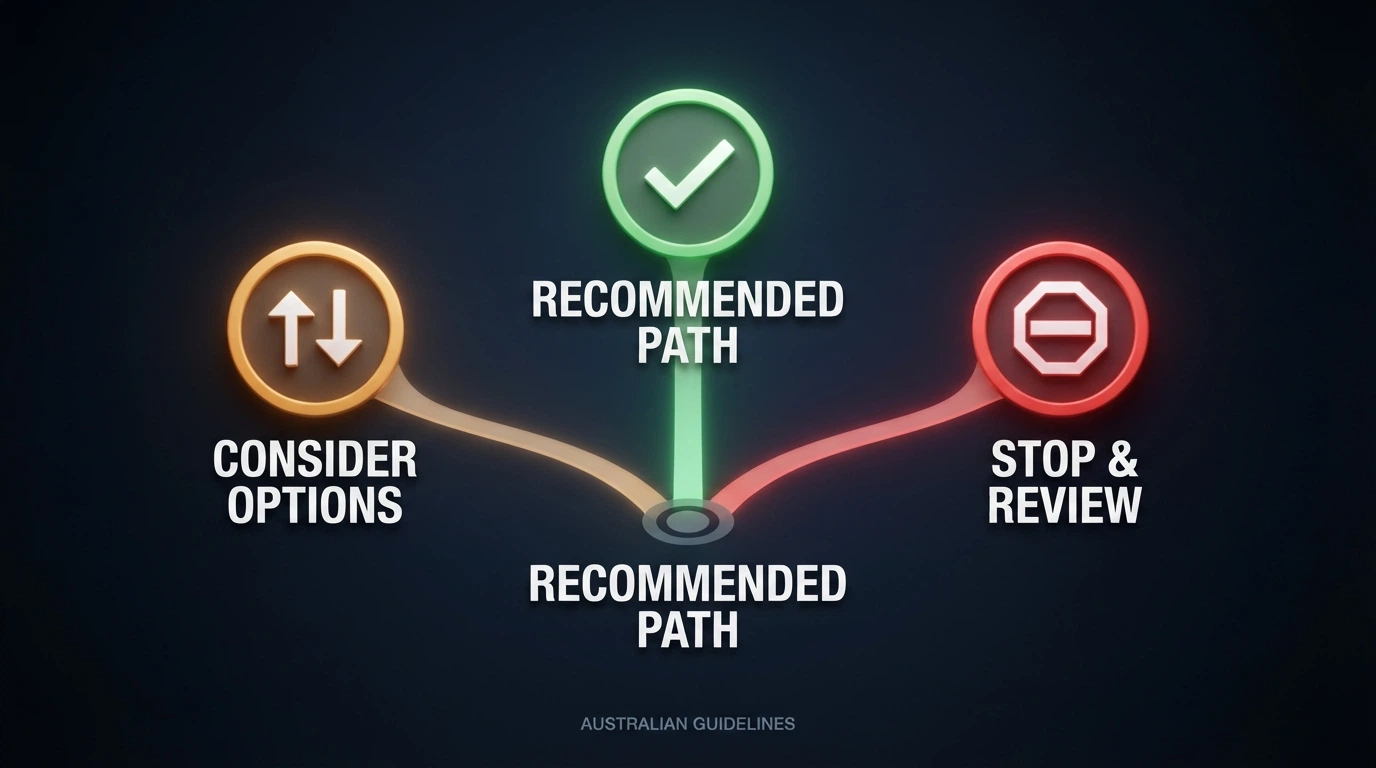
The first path is to claim the offer knowing the expected-value maths. A 25-spin offer at A$0.20 per spin, run through 40× wagering at 96% RTP, costs roughly A$7.82 in expected house edge from the playthrough alone — more than the A$5 face value of the spins themselves. The expected return on the spins is A$4.80. The net expected position is approximately negative A$3. A punter who claims the offer knowing this is paying A$3 for the entertainment value of the session, and that is a perfectly reasonable transaction. It is not, however, a way to make money.
The second path is to compare the featured operators side by side before committing. The table at the start of the operator section is the comparison; Skycrown is the only verified standing NDB, Royal Reels runs an adjacent cash-chip product, WinSpirit is the only operator whose headline number matches the search term exactly. Every other operator is either a deposit-gated alternative or carries an offer that could not be verified this pass. A punter who wants to claim should pick the operator whose verified terms match what they actually want to play.
The third path is to recognise the offshore-protection gap and decide the risk is not worth it. BetStop does not reach an offshore casino. ACMA can block the domain with a balance on it. The 2027 reform gives banks the power to decline transactions to illegal operators. The help services are free and confidential regardless of where the player plays, but the protection architecture does not extend to the casino carrying the offer. For a punter who values that architecture, the path is to step away from the offshore free-spins market altogether.
The one action that applies to all three paths: set a personal loss limit before the first spin. The number is up to the punter, but the act of setting it — and committing to it before the bonus credits — is the single most useful player-side decision in any bonus claim. The offer has terms; the punter has their own. The latter is the only one the operator cannot change.
The decision is personal, and this page takes no position on which operator, if any, the punter should choose. The page lays out the offer, the maths, the legal frame and the protection gap; the punter takes it from there.
Frequently asked questions about 25 free spins no deposit in Australia
How many times do I have to bet my free spins winnings before I can cash out?
The market standard on AU-facing 25-free-spins offers in 2026 is 40× the bonus amount, with the range running from 30× to 50×. A A$5 bonus at 40× requires A$200 of qualifying bets — almost all of it on pokies, since table games contribute 0–20% toward wagering and live dealer games are usually excluded.
Do I need to verify my identity before I can withdraw free spins winnings?
Yes. Every AU-facing offshore casino in this guide requires identity verification before processing a withdrawal — usually a government ID, a selfie, and sometimes a proof of address, prompted during or shortly after the wagering. The KYC step is the operator’s licence check and bonus-abuse screen; a punter who cannot verify cannot withdraw.
Are offshore operators that give Australians free spins safe to use?
Offshore operators hold foreign licences (usually Curaçao, sometimes Anjouan or Malta) and sit outside the Australian regulatory regime. No BetStop coverage, no consumer protection, no formal dispute resolution — and ACMA can block the domain at any time with a balance on it. A punter using one accepts the protection gap in exchange for the offer.
What happens if I win more than the maximum cashout cap from free spins?
Anything above the cap is forfeited. AU-facing NDB offers in 2026 cap cashout between A$50 and A$200, with A$100 as the market standard. The cap applies to net bonus winnings, not to the balance mid-session — a 5,000× win climbs the balance briefly, but the eventual withdrawal is capped to the published figure.
What is the real cash I can pocket from a no-deposit 25 free spins offer?
Less than the marketing suggests. At 25 spins at A$0.20 with 40× wagering at 96% RTP, the bonus is A$5 face value, expected return about A$4.80, and expected loss from the playthrough about A$7.82. Players who clear the wagering pocket the cashout cap (A$50–A$200). The average is small and negative; any single claim varies.
No-wagering free spins: do they actually exist for Australian players?
The holy grail of the NDB market is the no-wagering free spins offer — spins that credit, are played, and any winnings are immediately withdrawable as cash. They exist on UK-facing and EU-facing casinos in modest numbers; for Australian players, the picture in 2026 is far less generous.
No operator in the featured set of this page carries a confirmed no-wagering 25-free-spins offer for Australian traffic. The market-standard 40× wagering is exactly what every verified offer applies, and the no-wagering variant is the kind of edge case that an AU-facing affiliate roundup would lead with if it existed. It does not appear in any source consulted for this guide. A punter searching for “25 free spins no deposit australia no wagering” is searching for an offer that, on current evidence, no operator is actually serving.
That is not the same as saying no-wagering offers are impossible in the AU market. The offshore operator set rotates offers quickly, and what is absent this month can appear the next. A punter chasing the no-wagering variant should treat its absence as a feature of the current market, not a permanent exclusion — but should also assume that if it does appear, the spin value, the cashout cap and the eligible pokie will all be calibrated to keep the offer profitable for the operator. Nothing about the no-wagering label changes the underlying house edge; it just means the player is not paying it back through a 40× playthrough.