
What an offshore no-deposit free-spin offer really costs an Australian player in 2026
A “no deposit free spins” promotion sounds like the rare casino bonus with no cost attached. There is no such thing. Every Australian-facing no-deposit spin offer in 2026 sits behind three filters — wagering requirements, a maximum cashout ceiling, and a short expiry window — and the offshore channel that delivers them sits outside Australian law.
Current as of 16 October 2026 — verified against the ACMA register, BetStop quarterly statistics, and the Interactive Gambling Act 2001.
Table of Contents
- Why Australian players chase no-deposit free spins — and where they actually come from
- Best no-deposit free spins for Australian players — 2026 ranked list
- SkyCrown — 20 no-deposit spins with the lowest wagering in the set
- RocketPlay — 20 free spins on Book of Pyramids, 40× on the deposit match
- Royal Reels — A$10 free sign-up credit instead of spins
- WinSpirit — 35 no-deposit free spins at A$0.20 each
- Stake — no no-deposit free spins, but a crypto rakeback model worth knowing
- FairGO — A$15 free chip with a steep 60× playthrough
- Bizzo Casino — 10–25 free spins at the lower end of the wagering spectrum
- Rocket Casino — 30× wagering and a A$300 cashout ceiling
- Rainbet — deposit-based free spins on Sweet Bonanza, and an AU restriction in its own T&Cs
- Scream Casino — thin data this run, so here is what to check before signing up
- Why your 2026 free spins bonus is worth less than the ad promises
- Free-play pokies vs no-deposit bonuses — two kinds of free, one costs you the cashout
- Crypto casinos and free spins — the hidden cost of anonymity
- The legal reality Australian casino sites do not tell you about
- When free stops being free — gambling harm and the safety nets Australian players can reach
- How we chose and ranked these no-deposit free spins offers
- What to do with your no-deposit free spins — a verdict without a promo code
- Frequently asked questions
Why Australian players chase no-deposit free spins — and where they actually come from
The marketing line is short. “Free spins on sign-up, no deposit, keep what you win.” It reads like the one casino offer in the world with no edge on it, and once an Australian types those words into a search bar, every organic result the page returns leads to the same destination: an offshore operator running outside Australian licensing. None of the affiliate review pages that dominate the top results disclose that fact in their headlines. Most soften it to “grey area.” None lead with the statute.
How offshore casinos hand out free spins to Australian players
A no-deposit free-spin offer works the same way wherever it appears. The player registers an account, confirms an email address, and — in some cases — passes a basic identity check before any spin credit lands. The credit appears as a fixed bundle of spins on a named pokie, or sometimes as a free chip redeemable across the catalogue. No payment is taken at this stage. That is what “no deposit” means.
What “free” means is another matter. The typical bundle runs 20 to 50 spins, with some operators advertising 100; the validity window — the time the player has to use the spins and clear any winnings — is short, ranging from 24 hours to 14 days; the per-spin value is modest, usually A$0.10 to A$0.20; and the maximum amount the player can withdraw from any winnings is capped at A$50 to A$100 at most offshore brands. Once the offer is in the player’s account, the rules that govern it have very little to do with the headline.
The mechanics of claiming look transparent because they are. The terms that govern what a player walks away with are buried three clicks deeper, and they are the only part that costs money.
Free spins vs play-money demo spins — the difference that costs you nothing (or everything)
The pokie reel looks identical in both cases. The difference sits behind the spin button. A demo-mode spin costs nothing, pays nothing, and is funded by a play-money balance that the casino tops up indefinitely. A no-deposit bonus spin costs nothing to start, pays real money if the player meets the terms, and is funded by the casino as a deliberate customer-acquisition expense. Casinos blur the two because both carry the word “free,” and the player who arrives at an offer expecting the demo-mode outcome is the one the casino most wants.
A demo-mode session ends with a zeroed-out play-money balance and no further commitment. A no-deposit bonus session ends when the player has either met the wagering requirement and withdrawn whatever the cashout cap allows, or watched the bonus balance expire inside a window that was set to be too short for almost anyone to clear.
Online casinos, land-based venues, and crypto platforms — who actually offers free spins
Three channels reach an Australian player with a free-spin offer, and only two of them are legal to operate.
Land-based venues — pubs and clubs across the country — run loyalty programmes that award free spins on electronic poker machines through their player-rewards schemes. Those are legal. They are also physically bound to the venue and cannot be redeemed for cash at the bar.
Online casinos and crypto platforms both reach Australian players via offshore servers, and the Interactive Gambling Act 2001 prohibits both from providing interactive gambling services to a person physically in Australia. The credit card and crypto payment ban that commenced 11 June 2024 closed most of the deposit routes an Australian might use to fund an offshore account; it did not stop the marketing. The offshore sector still captures a substantial slice of Australian gambling demand — a record 68.96% in April 2025, falling to roughly 22% by November 2025 after enforcement intensified, and edging back toward 30% in early 2026.
The only legal online gambling an Australian can do sits with operators licensed under a state or territory wagering regime — sport and racing wagering, lotteries, keno. None of those offer free spins on pokies. The offshore channel exists because the legal market deliberately left the product out.
Best no-deposit free spins for Australian players — 2026 ranked list
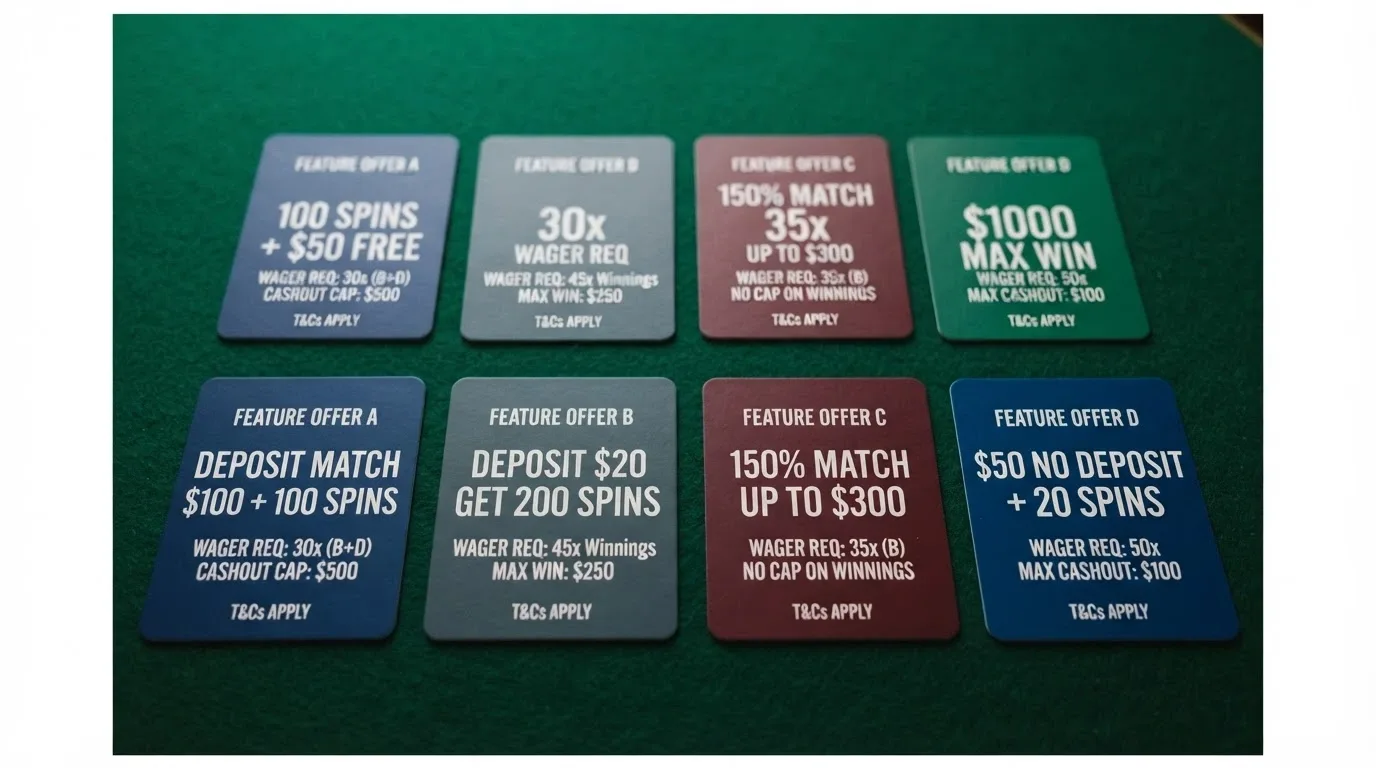
Every operator on this page is offshore and unlicensed in Australia. Online casino is prohibited under the Interactive Gambling Act 2001 — no Australian licence exists for the product. The ranking is built on the same criteria the affiliate reviews use: spin count, wagering multiple, maximum cashout, eligible games, and licence transparency. The difference is that this ranking is built on the assumption that the player needs to know the offer’s real value, not its banner value.
| Casino | No-Deposit Offer | Wagering on NDB | Max Cashout | Licence |
|---|---|---|---|---|
| SkyCrown | 20 free spins on Aztec Clusters (BGaming) | 25× on winnings | A$50–A$100 | Curacao |
| RocketPlay | 20 free spins on Book of Pyramids | 40× on winnings | ~A$85 | Curacao |
| Royal Reels | A$10 free sign-up credit (not spins) | 30–40× | Up to A$200 | Curacao |
| WinSpirit | 35 free spins at A$0.20 per spin | 40× on winnings | A$50 | Curacao |
| Stake | No standard NDB surfaced | — | — | Curacao |
| FairGO | A$15 free chip (not spins) | 60× | A$180 | Curacao |
| Bizzo Casino | 10–25 free spins | 30–40× on winnings | — | Curacao |
| Rocket Casino | Free-spin offer not surfaced | 30× | A$300 on FS winnings | Curacao |
| Rainbet | No standard NDB; deposit-based 60 FS | 40× | — | Not confirmed; AU restricted |
| Scream Casino | Offer not surfaced this run | — | — | Not confirmed |
Two of the ten (Royal Reels and FairGO) do not offer free spins at all on sign-up — they offer a free chip that the player wagers on the catalogue. Two (Stake and Rainbet) do not run a standard no-deposit free-spin offer and are included because the player comparing offshore options needs to see them and understand why they sit outside the pattern. Two more (Rainbet and Scream Casino) carry data gaps that should send the player to the operator’s own terms page before signing anything.
SkyCrown — 20 no-deposit spins with the lowest wagering in the set
SkyCrown runs 20 free spins on Aztec Clusters from BGaming after sign-up, with 25× wagering on winnings only and a maximum cashout of A$50 to A$100. The 25× multiple is the lowest in the featured set and the single feature that lifts SkyCrown above the others on the no-deposit comparison.
The welcome package underneath the no-deposit offer is large. Up to A$8,000 plus 400 free spins across four deposits, with 40× wagering on the deposit bonus and a 14-day validity per stage. The big number is not the same as the good number: A$8,000 in bonus funds at 40× on deposit plus bonus is A$640,000 of required turnover, which is several orders of magnitude beyond what any reasonable player will generate in 14 days. Treat the welcome package as a separate product with its own terms; the no-deposit offer stands on its own.
The licence is Curacao. The audit, the cashout cap and the eligible-game list all need to be checked at the operator’s terms page before claiming — bonus terms at offshore operators change without notice, and what looked generous at the affiliate review page may have shifted by the time a player arrives.
Verdict: Best wagering multiple on a NDB in the set. The 25× number is the one that matters and it stands.
RocketPlay — 20 free spins on Book of Pyramids, 40× on the deposit match
RocketPlay offers 20 free spins on Book of Pyramids at sign-up, with a stated NDB cashout of around A$85 and the standard 40× wagering on winnings applied to the no-deposit bundle. The deposit welcome package is layered: a 100% first-deposit match up to A$500 plus 100 free spins, and a 200% second-deposit match up to A$500, with a minimum deposit of A$25 and 40× on the bonus.
The catalogue claims 3,000-plus games from Pragmatic Play, BGaming, NetEnt and Evolution. The breadth is real and it shows in the range of eligible titles for the no-deposit spins — though Book of Pyramids is the named game at sign-up, the deposit-bonus free spins usually open to a wider selection.
A$85 as the maximum cashout on the NDB is on the higher end of the bracket. The 40× wagering is the market standard and sits in the “acceptable” tier for free-spin offers — achievable on a lucky session, steep on anything average. The licence is Curacao.
Verdict: A reasonable middle-of-the-set offer. The deposit package is bigger than SkyCrown’s terms make obvious; the NDB is a step behind SkyCrown because of the higher wagering multiple.
Royal Reels — A$10 free sign-up credit instead of spins
Royal Reels does not run a free-spin no-deposit offer. Instead, new accounts receive an A$10 free sign-up credit that can be used across the catalogue. The wagering requirement is 30× to 40× on the credit, with a maximum cashout of up to A$200 — the highest cashout ceiling in the featured set for a no-deposit bundle.
The deposit welcome package is a 100% match up to A$500, with a A$30 minimum deposit. The catalogue claims 2,000-plus games from 30-plus providers, including Pragmatic Play, Evolution, Yggdrasil and Hacksaw Gaming. A free chip gives the player more flexibility than a free-spin bundle tied to one pokie, and the higher cashout ceiling makes Royal Reels worth a look for a player who plans to use the credit on a high-RTP pokie rather than chase a headline spin count.
A$10 is small. The A$200 cashout ceiling is large for a no-deposit bundle. The trade-off is between per-spin value and withdrawal room, and on that trade-off Royal Reels is the most generous of the featured brands on the ceiling side.
Verdict: Right offer for the player who plans to play a few hands at a high-RTP pokie and would rather have withdrawal room than spin count.
WinSpirit — 35 no-deposit free spins at A$0.20 each
WinSpirit offers 35 free spins on sign-up at A$0.20 per spin, with 40× wagering on winnings and a maximum cashout of A$50. The seven-day validity window is tight but workable. The catalogue runs into the hundreds of eligible titles across NetEnt, Evolution and Pragmatic Play.
The deposit welcome package is a 200% bonus plus 25 free spins, with a 14-day validity on the deposit bonus. The 200% match is unusually high for a first deposit and is the kind of headline number that warrants a careful read of the fine print — high match percentages almost always carry higher wagering or tighter caps than the headline suggests.
A$0.20 per spin is the upper end of the typical NDB per-spin range, and 35 spins is on the high end of the typical NDB count — so the notional starting value is A$7, comfortably above the A$5 floor of a 50-spin bundle at A$0.10. The A$50 cashout cap is the standard ceiling and remains the binding constraint on anything the player wins.
Verdict: Good spin count, generous per-spin value, otherwise a standard offer. Right for a player who wants more spins than the 20-spin offers on the others.
Stake — no no-deposit free spins, but a crypto rakeback model worth knowing
Stake does not advertise a traditional no-deposit free-spin offer to Australian players. The platform is crypto-first and runs a deposit-based rakeback and reload promotion structure instead. Rakeback returns a percentage of the house edge on each bet to the player over time, which is structurally different from a one-off sign-up bundle — it rewards volume rather than rewarding sign-up.
The crypto-first design is the reason Stake sits on this list despite the missing NDB. Australia’s payment ban on digital currency for online wagering has been in force since 11 June 2024, and Stake’s payment routes do not include fiat options. An Australian player signing up at Stake is doing so via a route the IGA and its 2024 amendment explicitly forbid. The licence is Curacao.
Game providers include Pragmatic Play, Hacksaw and Evolution, plus Stake’s own proprietary originals. The catalogue is large. The acquisition model is different from the rest of the set, and so is the regulatory exposure for the player who funds an account.
Verdict: A different product for a different player. Worth naming here because an Australian googling “no-deposit free spins” will find Stake ranked alongside the rest; the absence of a traditional NDB is the point, not the gap.
FairGO — A$15 free chip with a steep 60× playthrough
FairGO offers an A$15 free chip on sign-up rather than free spins, with 60× wagering and a maximum cashout of A$180. The 60× multiple is the steepest in the featured set, and the rule that governs a player’s ability to claim successive NDBs is unusually punitive: a real-money deposit is required between any two no-deposit claims, which closes off the “claim, lose, claim again” pattern the player might otherwise run.
FairGO is an RTG-only casino — every game on the platform comes from RealTime Gaming. That is a deliberate choice and it cuts the catalogue down to a few hundred titles from one provider, which in turn cuts the eligible-pokie list for the free chip down to RTG’s library. The catalogue is the trade the player makes for the A$180 cashout ceiling, which is generous against the rest of the set.
The deposit welcome package is a 100% match up to A$200 across five deposits — up to A$1,000 total — with a A$20 minimum deposit and 30× on deposit plus bonus. The deposit wagering is at the reasonable end of the market; the no-deposit wagering is at the steep end. The licence is Curacao.
Verdict: The right offer for a player who knows RTG’s catalogue and plans a short, high-variance session. The 60× wagering is the constraint, not the ceiling.
Bizzo Casino — 10–25 free spins at the lower end of the wagering spectrum
Bizzo offers between 10 and 25 free spins on sign-up, with 30× to 40× wagering on winnings. The 30× floor is at the reasonable end of the market and matches SkyCrown on the multiple, but the absence of surfaced data on eligible games, per-spin value, maximum cashout and validity window means the player needs to confirm those numbers directly at the operator’s terms page before claiming.
Bizzo is a multi-provider aggregator, which gives the player a wider eligible-titles list than the single-provider brands in the set. The wagering floor is competitive. The data gaps are not.
Verdict: A reasonable offer at the wagering level, but the player should not claim until the missing numbers — eligible pokie, cashout cap, expiry — are filled in from the operator’s own page.
Rocket Casino — 30× wagering and a A$300 cashout ceiling
Rocket Casino runs 30× wagering on free-spin winnings with a A$300 maximum cashout cap on those winnings — the highest disclosed cashout ceiling in the featured set. The specific no-deposit offer was not surfaced in this round of research, and the player should check the current promotion at the operator’s site before signing up.
The A$300 ceiling is the standout number. A player who runs a hot session at Rocket Casino and runs the wagering to completion can walk away with three to six times what the SkyCrown or WinSpirit cap allows. The 30× multiple makes that outcome more likely than at the 40× brands. The unknown is the spin count and the eligible pokie, both of which the player needs to confirm before committing.
Verdict: Potentially the best cashout ceiling in the set, conditional on the player finding an active no-deposit bundle at the current terms.
Rainbet — deposit-based free spins on Sweet Bonanza, and an AU restriction in its own T&Cs
Rainbet does not run a standard no-deposit free-spin offer. The headline promotion is a 250% welcome match up to A$2,100 plus 60 free spins across three deposits — 100% up to A$700 plus 20 free spins per stage — with 40× wagering and the free spins tied to Sweet Bonanza from Pragmatic Play.
The line that matters sits in Rainbet’s own terms. Australia is listed as a restricted territory. An Australian account opening with Rainbet is doing so against the operator’s own rules, which means any dispute over a withdrawal starts from a position the player chose to be in. The licence was not confirmed in this round of research.
Rainbet is included on this list because the comparison reader needs to see what a deposit-based welcome structure looks like alongside a no-deposit sign-up bundle, and because the AU restriction is the most concrete warning on any featured operator. The crypto-first design and the AU restriction compound the regulatory exposure for an Australian player.
Verdict: A clear pass for Australian players. The terms page itself closes the door. Worth including for the comparison reader who needs to see the alternative structure.
Scream Casino — thin data this run, so here is what to check before signing up
Scream Casino appeared in the featured set with very limited information surfaced in this round. No no-deposit offer was confirmed. No specific wagering multiple or cashout cap was surfaced. No licence was confirmed. The catalogue and game providers were not visible.
For a player who arrived at Scream Casino through an affiliate review, the absence of confirmed data is itself the message. Before signing up at any unfamiliar offshore brand — and especially before handing over identity documents at sign-up — the player should verify five things: the licence number and the licence authority (a Curacao or Anjouan number that can be checked at the regulator’s register), the current no-deposit offer terms at the operator’s own page, the wagering multiple and which games contribute 100%, the maximum cashout cap, and the country restriction list.
Verdict: Do not claim until the offer terms are visible at the operator. The data gap is the offer.
Why your 2026 free spins bonus is worth less than the ad promises
The headline says “20 free spins.” The footnote says 25× wagering on winnings, 7-day validity, A$50 max cashout. Three numbers — wagering multiple, cashout cap, expiry window — decide what a free-spin offer is actually worth. Every other figure on the offer page is decoration.
A worked example, using the inputs research hands us: 50 spins at A$0.20 per spin is a A$10 notional starting value; if the player wins A$8 across those spins and the wagering multiple is 35×, the required turnover before withdrawal is A$8 × 35 = A$280. The player is now playing through A$280 to clear an A$8 win, and the expected cost of that turnover — using the Starburst return-to-player of 96.09% as the house-edge reference — is roughly A$10.95. That is the offer’s real price tag: the player pays about A$11 in expected losses to attempt to withdraw an A$8 win, and most sessions will not even reach the cashout. The “free” spins cost the player roughly what the spins were notionally worth to begin with.
That is a statistical estimate across many spins and many players. It is not a guaranteed loss for any single session. It is the average the house edge implies, and it is the number the player should have in mind before sitting down with the offer.
No-deposit free spins and sign-up spins — what “free” actually means at an offshore casino
“No deposit” means no deposit required to claim. It does not mean no deposit required to clear. The bonus arrives in the player’s account as a credit that the player wagers on the operator’s terms, and the terms almost always include a wagering multiple, a maximum cashout cap, and a validity window that defines when the bonus must be cleared or it expires.
A standard no-deposit free-spin offer in 2026 runs 20 to 50 spins with a maximum cashout of A$50 to A$100, a wagering multiple of 30× to 60× on winnings, and an expiry of 3 to 7 days. The biggest divergence between brands is the wagering multiple: 25× at SkyCrown is roughly half of the 60× at FairGO, and the difference between those two numbers is the difference between an offer that is achievable on a hot session and one that is mathematically hostile to the player.
The registration flow is the same at most offshore brands: an email address, a password, a name, and sometimes a phone number. Some operators run a basic identity check before the spins land; others wait until withdrawal. The first impression is fast and friendly. The first obstacle sits inside the terms.
Wagering requirements — the multiplier that turns a A$8 win into a A$280 obstacle
A wagering requirement is the multiple the player must play through before winnings from a no-deposit bonus become withdrawable. The multiple applies to the winnings from the spins, not to the spin value itself. That distinction matters: an A$8 win on 40 free spins at 35× wagering means the player must wager A$280, not A$1,400 (which would be the 35× multiple on the A$40 notional value of the 40 spins).
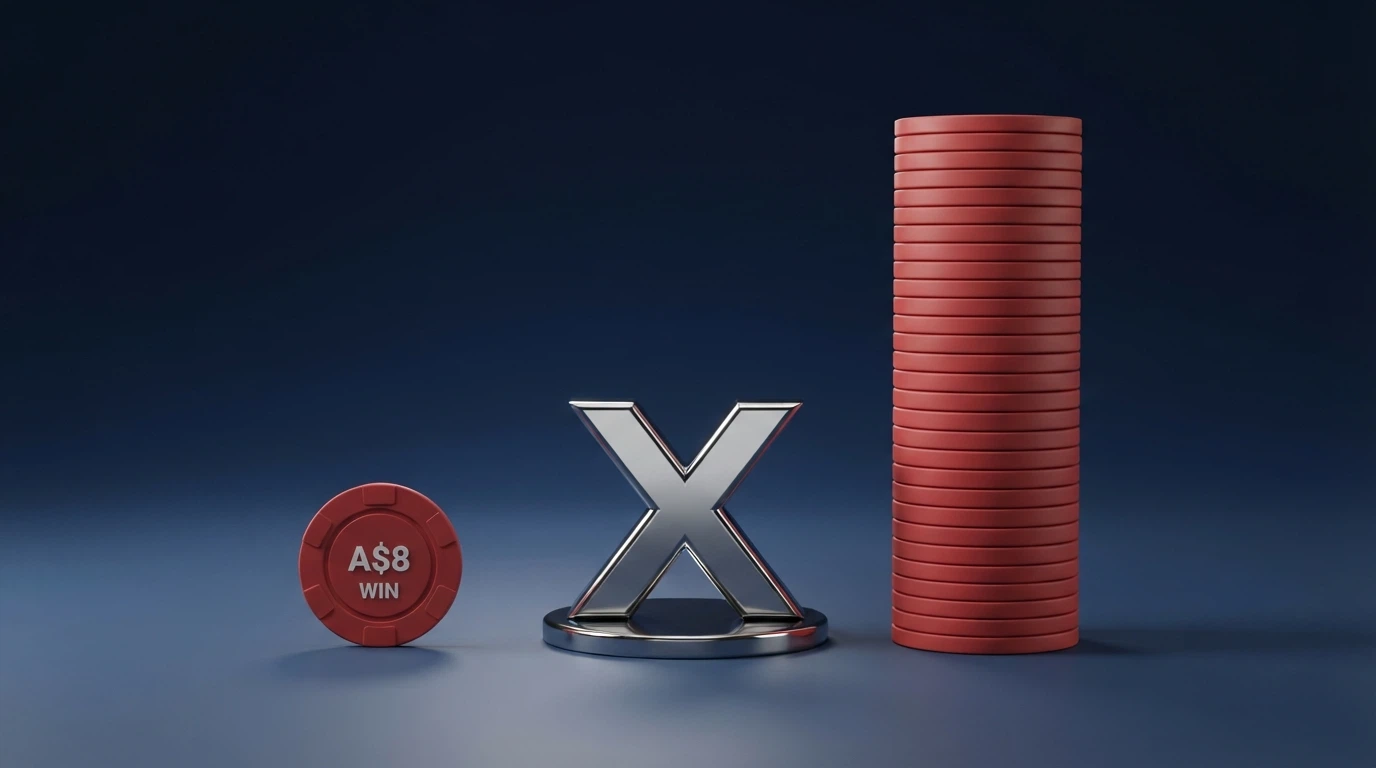
A reasonable wagering multiple for an NDB free-spin offer is 30× to 35× on winnings. 40× is acceptable. 45× to 50× is steep. Anything above 50× makes the offer practically unclearable for most players, because the volume of play required to clear the bonus exceeds what a reasonable session will generate inside the validity window. Pokies contribute 100% toward the wagering requirement at every offshore brand in the featured set — table games and live casino typically contribute 10% to 20%, which makes clearing the bonus on anything but pokies functionally impossible.
The wagering multiple is the single most important number on any no-deposit offer page, and it is the number an affiliate review is least likely to put at the top of its summary.
Which pokies carry the weight — and which are window dressing
The eligible-pokies list is where the offer’s real worth gets decided. Twenty spins on a 97% RTP game beat fifty spins on a 90% RTP game. The maths is straightforward: a higher return-to-player means a smaller house edge, and a smaller house edge over more spins means more of the notional value lands in the player’s balance.
The pokies that surface most often as eligible titles for Australian NDB offers are well-known, high-RTP releases. Starburst from NetEnt runs 96.09%. Book of Dead from Play’n GO runs 96.21%. Big Bass Bonanza from Pragmatic Play runs 96.71%. Gates of Olympus from Pragmatic Play runs 96.50%. Wolf Gold from Pragmatic Play runs 96.01%. Sweet Bonanza from Pragmatic Play is the named pokie for Rainbet’s deposit-bundle free spins. The differences between those titles are small in absolute terms — half a percentage point here, a full point there — but over a free-spin session they decide whether the player clears wagering or runs out of clock.
A player who has any choice about which pokie to use the spins on should pick the highest-RTP title on the eligible list. A player whose spins are locked to a single named pokie should know what that pokie’s RTP is before claiming, because the offer’s value depends on it.
Free-play pokies vs no-deposit bonuses — two kinds of free, one costs you the cashout
The “free” in “free pokies” has two distinct meanings in the Australian market, and they lead to different outcomes. A player who arrives at a pokie expecting demo-mode behaviour from a no-deposit bonus is the player the marketing most wants.

Demo mode is a software feature: the pokie runs on a play-money balance that the casino tops up indefinitely, no registration required, no identity check, no wagering requirement, no cashout. Demo mode is how a player learns a pokie’s rhythm before committing any money, and it is genuinely free.
A no-deposit bonus is a marketing offer: the casino credits the player’s account with spins or a free chip, the player wagers the credit on the operator’s terms, and any winnings that survive the wagering multiple and the cashout cap become real money. The casino funds the offer as an acquisition expense — it is paying to introduce the player to the platform in the hope the player will deposit later.
The two use the same reels, the same buttons, and the same visual presentation. They differ in everything that happens after the spin stops.
Playing pokies for free without registering — what demo mode actually delivers
A demo-mode session requires no registration, no email address, no identity check, and no payment method on file. The player navigates to the pokie in their browser, the game loads, and a play-money balance appears. The balance tops up when it runs out, and the session ends when the player closes the tab.
There is no real-money payout possible from a demo session. There is no wagering requirement. There is no cashout cap. The session has no commercial relationship between the player and the operator — the operator cannot contact the player after the session, cannot market to them, and cannot convert them into a depositing customer unless the player chooses to register.
For a player who wants to learn a pokie’s volatility, get a feel for the bonus feature frequency, or just play for entertainment value with no financial exposure, demo mode is the right tool. It is not a substitute for a no-deposit bonus and it is not advertised as one — though the affiliate pages that rank no-deposit offers often list demo access as a feature, because the two words share the same “free” framing.
No-download instant-play spins and what they cost in RTP
Browser-based instant-play pokies are convenient and they are the default for almost every offshore brand in the featured set. No download, no client software, no installation. The same pokie plays on the same account on a phone, a tablet, or a desktop.
The return-to-player figure is set by the pokie’s mathematics and does not change between demo and real-money modes on the same title — the help file inside the game is the authoritative reference. What does sometimes change is the operator’s configuration of the pokie, particularly at offshore brands that run multiple RTP variants of a single title. Some NetEnt and Pragmatic Play titles ship in 96%, 94%, and 92% variants, and the operator picks which one to load. The player should check the help file inside the specific pokie on the specific operator before committing volume.
The other thing instant play costs is session integrity. A slow connection, a dropped browser session, or a phone locked mid-spin can all cost the player a bonus-round trigger or a free-spin retrigger. None of that is the operator’s problem under the terms — the game’s server is the source of truth on outcomes.
Crypto casinos and free spins — the hidden cost of anonymity
Crypto casinos look like any other offshore brand on the surface. The bonus offers are similar. The pokie catalogue is similar. The wagering terms are similar. The difference is the payment rail and the regulatory exposure that comes with it.
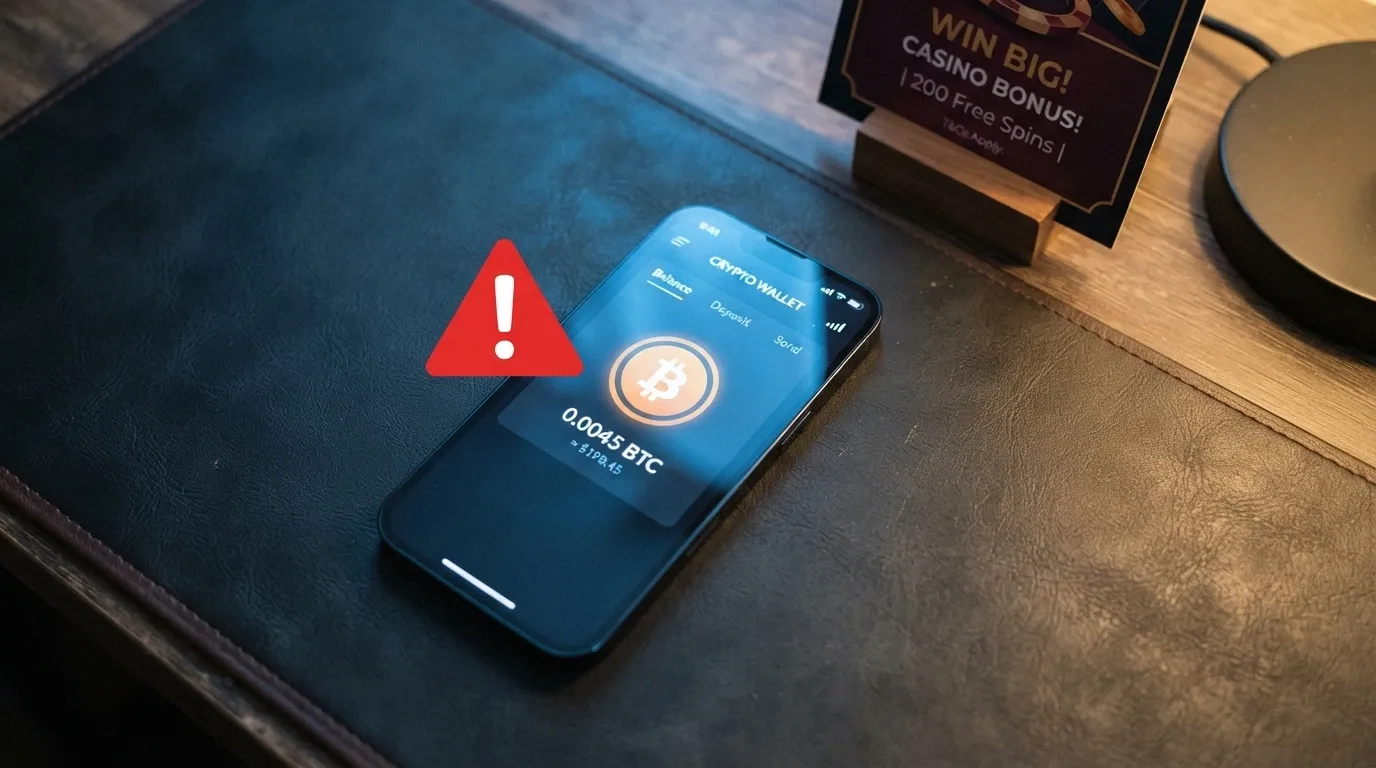
Australia’s payment ban on credit cards, credit-related products and digital currency for online wagering has been in force since 11 June 2024. The penalty for an operator that fails to enforce the ban is up to A$247,500 per breach. The ban does not stop an offshore crypto casino from accepting deposits from an Australian player — the operator is outside Australian jurisdiction — but it does stop any Australian bank or payment provider from processing the transaction through legal rails, and from 1 January 2027 banks and payment providers gain express authority to block transactions to illegal gambling operators.
The crypto route therefore reaches the Australian player through exchanges and wallet transfers that sit outside the formal banking system. The same anonymity that makes the deposit frictionless becomes the problem the moment a withdrawal is blocked, a bonus is voided, or an account is closed without explanation.
Bitcoin free spins — what the crypto casinos are advertising to Australians
The crypto-specific NDB offers in the current market follow the same pattern as the fiat offers: a small bundle of spins at sign-up, a wagering multiple on winnings, a maximum cashout cap, a short expiry. The headline numbers — 20 to 50 spins, 30× to 50× wagering, A$50 to A$100 cashout caps — are not meaningfully different from the fiat equivalents.
What is different is the deposit route. A crypto-funded account cannot use a credit card, and the Australian player funding the account is doing so through a wallet or exchange transfer that the Australian payment system has explicitly banned for online wagering since June 2024. The operator advertising Bitcoin free spins to Australian players is breaking Australian rules to do so, and the player accepting them is on the wrong side of the same prohibition.
For a player who already has a crypto-funded offshore account, the NDB terms at a crypto casino are not materially different from a fiat-funded account at a fiat-only brand. For a player who is funding an account specifically to claim the crypto NDB, the regulatory exposure is the headline.
No-KYC casinos and withdrawals — what anonymity costs when things go wrong
A no-KYC — know your customer — casino is an operator that does not verify the player’s identity at sign-up or withdrawal. The pitch is speed: register, deposit, play, withdraw, no document upload, no waiting period. The reality is what happens when something goes wrong.
If the operator blocks a withdrawal — for a bonus terms dispute, a “suspicious activity” flag, a maximum-cashout-cap application, or an account review — the player with no verified identity has no paper trail to support a complaint. The ACMA cannot recover money from an unlicensed offshore operator. There is no Australian complaints body for disputes with offshore providers. The ombudsman route that exists for licensed Australian wagering operators does not exist for offshore brands.
The trade is between friction at the front and recourse at the back. The player who chooses the frictionless sign-up chooses the unrecoverable loss. The ACMA’s own position is that offshore gambling websites lack the consumer protections required under Australian law, and that users of those platforms risk losing their money without access to regulatory safeguards or dispute resolution mechanisms.
For an Australian player, the no-KYC offer is the worst deal on the page. It looks like the best deal until the moment it stops being one.
The legal reality Australian casino sites do not tell you about
Online casino is prohibited in Australia — not a grey area, not unregulated, but illegal to provide. The Interactive Gambling Act 2001 makes it an offence to provide online casino games, online pokies, and in-play sports betting to a person in Australia. There is no licence for online casino anywhere in the country, not federally, not in any state or territory. The Interactive Gambling Amendment Act 2017 strengthened the regime. The Interactive Gambling Amendment (Gambling Reform) Bill 2026 passed Parliament on 19 August 2026 and its measures commence on 1 January 2027.
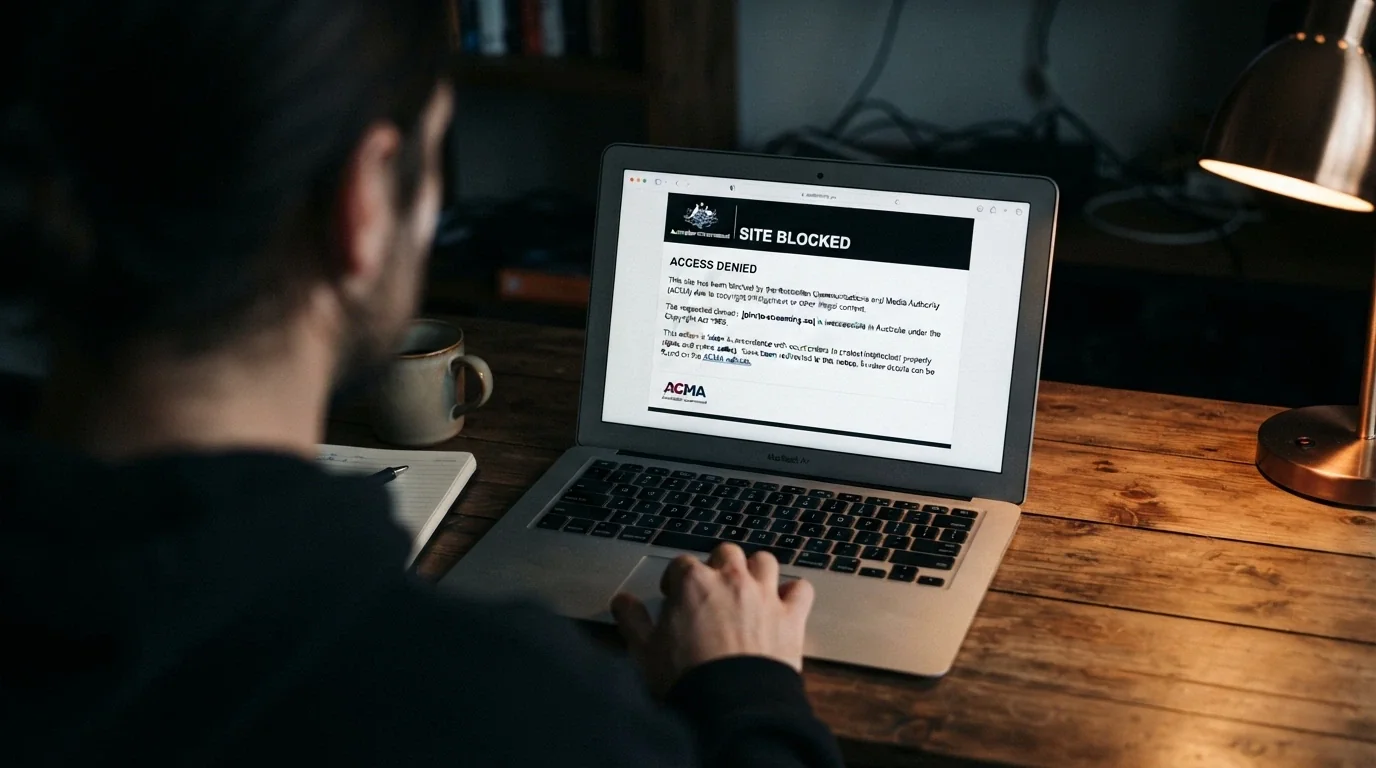
Every free-spin offer reaching an Australian player arrives via an offshore operator running outside this prohibition. The affiliate review pages that rank those offers either omit the legal context entirely or soften it to “grey area.” It is not a grey area.
The Interactive Gambling Act 2001 — why online casino has no Australian licence
The Interactive Gambling Act 2001 prohibits the provision of online casino games and online pokies to a person in Australia. The offence sits with the provider of the service, not with the individual player — the Act targets the operator, and an Australian player using an offshore casino is not personally liable under the statute. What the player loses is not legal exposure but consumer protection.
There is no federal licence for online casino. There is no state or territory licence. The Northern Territory Racing and Wagering Commission issues licences for online wagering on sport and racing, and that regime does not cover casino games. A “licensed Australian casino” for online pokies does not exist; every brand claiming to offer one to Australian players is misrepresenting its position.
The ACMA enforces the prohibition. Since its first blocking request in November 2019, the regulator has ordered Australian ISPs to block 1,751 illegal gambling and affiliate websites (as of March 2026). More than 230 illegal gambling services have withdrawn from the Australian market since 2017. In Q1 2026 alone, the ACMA received 422 enquiries and complaints, launched 25 formal investigations covering 60 websites, and identified at least one IGA breach in 23 of those cases.
Licensed wagering vs offshore casino — what the two worlds actually offer Australian players
The bright line sits between product and product. Australian-licensed wagering operators — SportsBet, TAB, Ladbrokes, Bet365 and the rest of the NTRWC-licensed cohort — offer wagering on sport and racing before the event begins, lotteries, and keno. They do not offer online pokies, online casino table games, or in-play sports betting. They will never carry a free-spins bonus on a pokie, because the product those bonuses would fund does not exist on a licensed Australian platform.
The legal payment routes for licensed Australian wagering are debit card, bank transfer, PayID, Osko and BPAY. Credit cards, credit-related products, and digital currency are banned as payment for online wagering since 11 June 2024. The payment method an operator asks for is itself a signal: an offshore brand asking for a credit card or a crypto transfer is not locally licensed.
What this means for a player comparing options: there is no licensed Australian alternative to a no-deposit free-spin offer, because the licensed market does not sell the product the offer funds. The choice is between claiming the offshore bonus on its terms and walking away from the product category entirely.
BetStop, ACMA blocking, and the protection registers — what they cover and what falls outside
Australia’s player-protection architecture works for the licensed market. It stops at the border.
BetStop — the National Self-Exclusion Register — launched on 21 August 2023. As of 31 March 2026, 59,830 people had registered to self-exclude from all licensed online and phone wagering providers, and 37,247 of those exclusions were active. The remaining 22,583 registrants had either completed their exclusion period or cancelled it early. One BetStop registration excludes a person from every Australian-licensed wagering provider simultaneously, which is the structural strength of the register.
The structural weakness is that BetStop binds licensed wagering services only. An offshore casino is not licensed in Australia, is not connected to BetStop, and will continue accepting bets from a self-excluded person. The most concrete single harm of the offshore channel is that the Australian self-exclusion system does not reach it.
The ACMA’s blocking regime has reached 1,751 sites since November 2019, with another 230-plus illegal services having withdrawn from the market voluntarily since 2017. From 1 January 2027, banks and payment providers gain express authority to block transactions to illegal operators, and the ACMA will have 24 months rather than 12 to issue infringement notices. The 2026 reform strengthens both the supply-side enforcement and the payment-side controls.
When free stops being free — gambling harm and the safety nets Australian players can reach
The numbers are blunt. The Roy Morgan Gambling Harm Index for March 2026 shows 15.1% of Australian adults — an estimated 3.32 million people — are experiencing some level of harm from their own gambling or from someone close to them. Of those, 13.0% — approximately 2,857,000 people — are experiencing harm from their own gambling behaviours. Roy Morgan’s August 2025 estimate put 2.9% of adults — about 622,000 people — at or above the Problem Gambling Severity Index threshold. The Australian Institute of Health and Welfare’s 2022 figure was 1.8% of adults at high-risk gambling.
The no-deposit bonus is not a gift. It is an acquisition funnel. The casino pays for the spin bundle, the player signs up and tries the platform, and the conversion from no-deposit to deposit is what the bonus was always buying. For most players the funnel does not lead to harm. For some it does, and the offshore channel sits outside every Australian safeguard designed to catch that transition.
Deposit limits, loss limits, and play-breaks — the tools licensed operators must offer
Australian-licensed wagering operators are required to offer responsible-gambling tools: deposit limits, loss limits, activity statements, take-a-break features, and BetStop self-exclusion. The deposit limits can be set by the player at any time and are enforced by the operator. The activity statements give the player a transparent record of their wagering activity. The take-a-break feature suspends the account for a chosen cooling-off period.
Offshore operators are not required to offer any of these tools. Some do. Most do not. None are connected to BetStop. The player who registers with an offshore brand gets the casino’s own self-exclusion feature, which the casino can revoke at its discretion and which does not extend to sister sites on the same platform. For a player who has self-excluded from the Australian licensed market, the offshore channel is the route that remains open after BetStop — and that is precisely the harm the register was not designed to close.
From 1 January 2027, the 2026 reform adds a marketing-side protection: direct marketing of inducements is banned for 14 days after a customer signs up with a licensed operator, for three months after a person deregisters from BetStop, and indefinitely for customers identified as at risk of gambling-related harm. The protection binds licensed operators. The offshore channel remains untouched by it.
Self-exclusion, 1800 858 858, and Gambling Help Online — support that reaches beyond the licensed market
The help infrastructure that works for Australian players does not require the player to have played at a licensed operator. The National Gambling Helpline on 1800 858 858 is free, confidential, and staffed 24 hours a day, 7 days a week. Online chat and counselling are available through Gambling Help Online at gamblinghelponline.org.au. State-based counselling services run through each state’s gambling help program.
These services work for a player at an offshore casino the same way they work for a player at the pub poker machine. The intervention does not depend on the operator. It depends on the person reaching out.
BetStop, by contrast, does not reach the offshore channel. A player who registers with BetStop is excluded from every Australian-licensed wagering service; an offshore casino is not on that list. The 37,247 active exclusions on BetStop as of 31 March 2026 reflect the licensed market’s coverage, not the offshore market’s reach. The 22,583 registrants who completed or cancelled early are a reminder that self-exclusion is a tool, not a cure, and that the tool only works where the player goes.
From 1 January 2027 the 2026 reform strengthens BetStop’s operation and extends the inducement ban to three months after BetStop deregistration — both measures bind the licensed market, neither touches the offshore channel.
How we chose and ranked these no-deposit free spins offers
The ten operators on the ranked list are offshore brands surfaced in this round of research. None is licensed in Australia — the product they sell is prohibited under the Interactive Gambling Act 2001 and no Australian licence exists for it. The ranking uses five criteria, in this order of weight: wagering multiple on the no-deposit offer, maximum cashout cap, spin count or equivalent free-credit value, eligible-pokie RTP where disclosed, and licence transparency.
Data was drawn from third-party review pages verified during the research pass, cross-referenced where possible against the operator’s own terms pages. The data is current as of the date stamped at the top of this page and is subject to change. Bonus terms at offshore operators are revised frequently — sometimes weekly — and the terms in force at the moment a player arrives at the operator are the terms that govern, not the terms that appeared in any review.
This is not an endorsement. It is a comparison of offers the player will find if they search for them. Every operator on this list operates outside Australian law. Every offer carries a wagering requirement and a cashout cap. The legal baseline is the IGA 2001, the enforcement baseline is the ACMA’s blocking record, and the consumer-protection baseline is zero for the offshore channel.
What to do with your no-deposit free spins — a verdict without a promo code
Three numbers decide whether any no-deposit free-spin offer is worth claiming: the wagering multiple, the cashout cap, and the per-spin value. The right offer for a player with a small bankroll is the one with the lowest combination of those three — SkyCrown’s 25× on a 20-spin bundle, Royal Reels’ A$200 cap on an A$10 free chip, Rocket Casino’s A$300 ceiling at 30× if the player can find an active NDB on the current terms page. The wrong offer is the one with a 60× multiple and a seven-day clock, which is built to expire before the player clears it.
The terms on the offer page tell the reader how to read the offer in 60 seconds. The wagering multiple is at the top of the relevant paragraph. The cashout cap is one line below. The expiry is the deadline that decides whether the player has time to clear the wagering at all. The eligible-pokies list tells the reader what RTP they are playing against. The affiliate review tells the reader nothing the operator has not already decided to advertise.
The honest framing is that every no-deposit free-spin offer at an offshore casino is a one-time test drive, and the safest way to treat it is as money the player has accepted they may never see again. The wagering multiple, the cashout cap, and the offshore operator’s discretion over withdrawals mean that even a cleared bonus can stall at the payout stage — and the ACMA cannot recover money from an unlicensed operator, because there is no Australian complaints body for disputes with offshore providers.
For a player who wants to keep their gambling inside the protections Australian law actually offers, the route is to stick to the licensed market. Sport and racing wagering, lotteries, keno — none of those carry a free-spins offer, and that is the structural reason the offshore channel exists. The licensed market does not sell the product. The offshore market does, on terms that favour the house.
The National Gambling Helpline on 1800 858 858 is free, confidential, and staffed 24/7. It works regardless of whether the player is using a licensed or an offshore operator. For a player who has self-excluded via BetStop and is still gambling, the helpline is the next step. For a player who has not self-excluded and is starting to feel the wagering cycle tighten, the helpline is the step before self-exclusion. Neither step depends on the bonus they claimed or the offshore brand they claimed it from.
Frequently asked questions
Can I get in trouble for claiming no-deposit free spins at an offshore casino in Australia?
No, not personally. The Interactive Gambling Act 2001 targets the provider of a prohibited interactive gambling service, not the individual player using one. The legal exposure sits with the offshore operator offering the service to Australians. What the player loses by using an offshore casino is not legal liability but consumer protection — there is no Australian complaints body that can recover money from an unlicensed operator if a withdrawal is blocked, a bonus is voided, or an account is closed.
How do wagering requirements work on no deposit free spin bonuses?
A wagering requirement is the multiple of any winnings the player must play through before the winnings become withdrawable. For an A$8 win on 40 free spins at 35× wagering, the player must stake A$280 before the A$8 becomes cash. The multiple applies to winnings only, not to the spin value itself. Pokies contribute 100% toward the requirement at every offshore brand in this comparison, while table games and live casino typically contribute far less.
What is the maximum amount I can cash out from no deposit free spins in Australia?
Most no-deposit free-spin offers at offshore casinos cap withdrawals from the bonus at A$50 to A$100. Royal Reels sets its free-credit cap at up to A$200. Rocket Casino discloses an A$300 cap on free-spin winnings. A player who wins more than the cap can clear the wagering requirement and still only withdraw the capped amount — the excess is forfeit by the terms. The cap is binding regardless of the size of the win.
Are no deposit free spin winnings taxable in Australia?
No. Betting and gambling winnings are not assessable income under section 6-5 of the ITAA 1997, and gambling losses are not deductible under section 8-1 — unless the person is carrying on a business of betting or gambling. The typical recreational player at an offshore casino has no Australian tax liability on free-spin winnings, regardless of size. The tax position is independent of the operator’s licence status, the player’s location, or the payment method used to fund the account.
What happens if an offshore casino blocks my withdrawal — do I have any recourse as an Australian player?
Effectively none through Australian channels. The ACMA cannot recover money from an unlicensed offshore operator, and no Australian disputes body exists for complaints about offshore providers. The operator’s own internal complaint process is the only route available, and the operator’s discretion governs the outcome. A player who funds an offshore account is accepting that the worst-case scenario — a blocked withdrawal, a voided bonus, a closed account — has no Australian remedy. The licensed Australian wagering market, by contrast, offers an ombudsman route through state and territory regulators, which is one of the structural reasons the licensed market exists.
No-wagering free spins — do they exist for Australian players?
A no-wagering free-spin offer is the one configuration where the player keeps what the spin wins, full stop, with no playthrough multiplier and no bonus-to-cash conversion step. They exist as a category; in the current 2026 Australian-facing offshore market, they are not the default offer at any of the brands in the featured set.
The trade-off a player accepts to get no-wagering spins is usually one of three: a smaller spin count (10 or 15 rather than 50), a lower per-spin value (A$0.05 or A$0.10 rather than A$0.20), or a tighter cashout cap. The economics force the brand to compensate for the absence of the wagering filter by reducing the offer on another axis.
For the Australian player comparing offers, a no-wagering bundle of 10 spins at A$0.10 with no cap is structurally a better deal than a 50-spin bundle at A$0.20 with a 40× wagering multiple and a A$50 cap — even though the latter is the headline that gets clicked. The first one pays out what it wins. The second one pays out only after a clearance the player is most likely to fail.
Real-money spins and the cashout cap — can you actually keep what you win?
The two filters between the spin result and the player’s wallet are wagering clearance and the maximum withdrawal ceiling. Both apply independently, and the more restrictive one is the binding constraint. A A$500 spin win at a brand with a A$100 cashout cap and a met wagering requirement still pays the player A$100, not A$500. The remaining A$400 is forfeit by the terms.
The scenario the marketing uses to sell the offer is the lucky streak: A$20 in free spin winnings turns into A$500 on a hot pokie session. The scenario the terms describe is the A$100 the player actually walks away with once the cap is applied. The expiry window — 24 hours to 14 days — is the third filter, and it is the one that catches the player who does not get to the wagering clearance in time.
A player who wants to maximise the real-world value of an NDB offer picks the brand with the highest combination of cashout ceiling and shortest achievable wagering multiple. In the featured set, Rocket Casino’s A$300 ceiling at 30× is the most generous configuration; SkyCrown’s 25× is the most generous multiple.