Best Casino in Brisbane — The Star at Queen’s Wharf, the Offshore Split, and the Federal Prohibition
 Available in AU
Brisbane has one casino. Just one. The Star Brisbane at Queen’s Wharf opened on 29 August 2024, replacing the Treasury Casino that had run its gaming floor for nearly thirty years, and nothing else has filled the gap since. For a Brisbane resident who wants to sit at a real table or pull the lever on a real pokie, the answer is The Star — full stop.
What sits alongside that single venue, and what most “best casino in Brisbane” pages breeze past, is the legal reality of online play. The Interactive Gambling Act 2001 makes it an offence to provide online casino to a person in Australia. No licence exists for it — not federally, not in any state or territory. The operators Brisbane residents reach when they search for online pokies or live-dealer tables are a split field: five Australian-licensed bookmakers licensed for racing and sport, and five offshore casinos offering casino games without any Australian licence at all. This page covers both halves honestly.
Verified 18 October 2026 against the ACMA register and Queensland Department of Justice records.
Table of Contents
- The Star Brisbane — Brisbane’s Only Casino and a $3.6 Billion Landmark
- Online Casinos Accessible from Brisbane — Ranked and Compared
- Is Online Casino Legal in Brisbane? No — Here Is Why
- Playing Safely — Help That Works and Limits You Can Set
- How We Evaluated and Ranked These Operators
- What Brisbane’s Casino Scene Means for Your 2026 Night Out
- Frequently Asked Questions
The Star Brisbane — Brisbane’s Only Casino and a $3.6 Billion Landmark
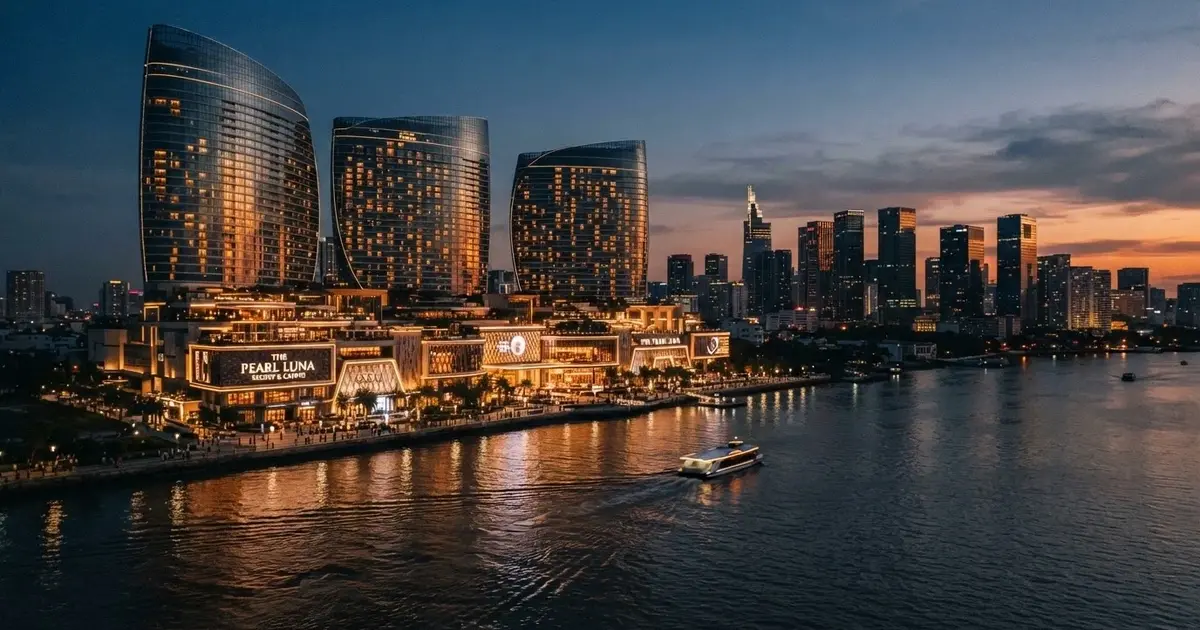
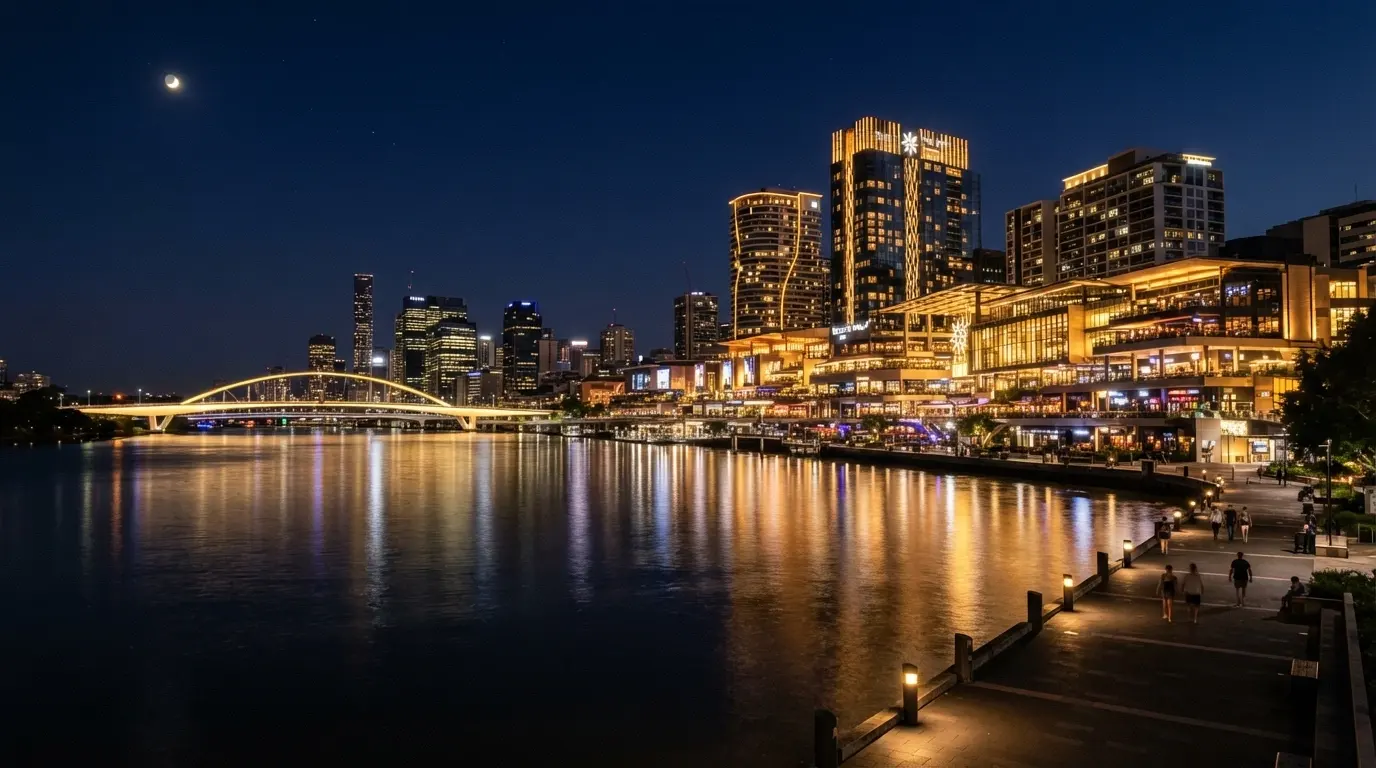
The Star Brisbane is the centrepiece of the Queen’s Wharf precinct — a $3.6 billion integrated resort on the Brisbane River that opened its doors in late August 2024. The venue is described by the operator as “a new star risen on the banks of the Brisbane River, a destination like no other, nestled at the heart of the multi-billion-dollar Queen’s Wharf precinct”, and the scale is what the words suggest. The gaming floors are just five per cent of the overall precinct — the rest is hotel, dining, leisure and a public realm that Brisbane has not had before.
The headline number for a casino visitor is straightforward: 2,500-plus pokie machines and 200-plus gaming tables running 24 hours a day on Levels 5 and 6 of the complex. Few Australian venues operate at this scale, and none of the others are in Brisbane. For a player who has spent years driving past Treasury Casino on George Street and wondering what came next, this is what came next.
The opening is recent enough that the venue is still bedding in, and the operator’s recent financial reporting paints a mixed picture. The Star Entertainment Group recorded AUD 265 million in revenue for Q4 FY26 with AUD 267 million in available cash, but the same period produced an EBITDA loss of AUD 8 million before significant items — an improvement on the AUD 27 million loss in Q4 FY25, but still a loss. The venue has opened at scale, not at scale and profit. None of that is a reason not to visit. It is context for what the place is and how new it still is.
Why Brisbane’s Only Casino Moved Across Town
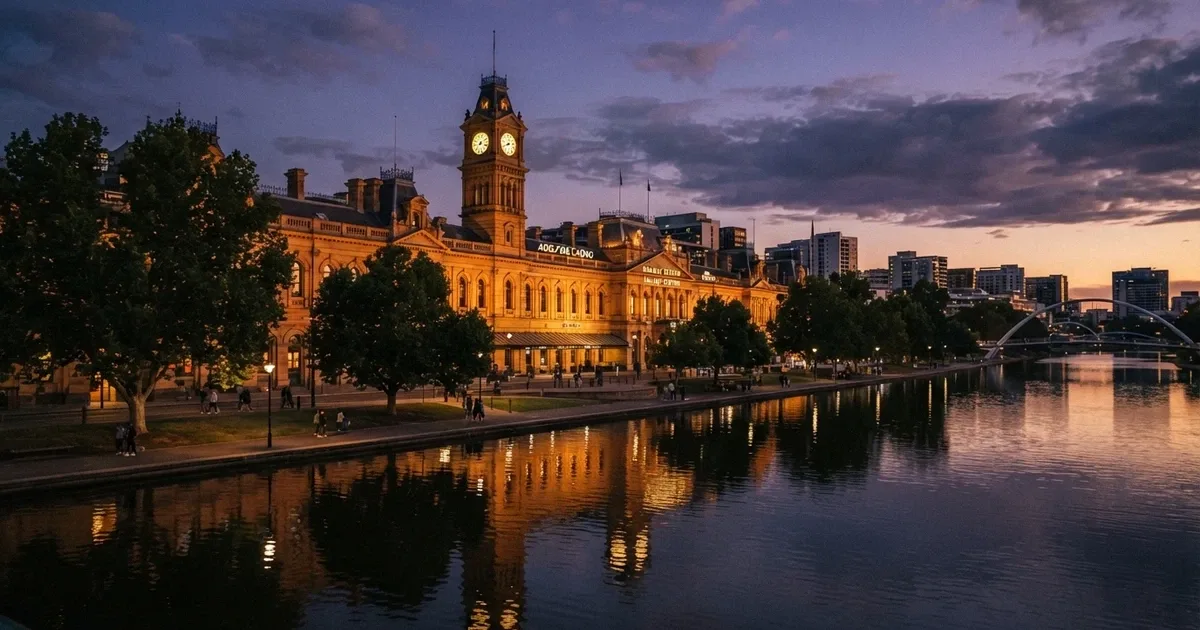
Brisbane did have a casino before The Star. The Treasury Casino closed its gaming floor at midnight on 25 August 2024 after nearly thirty years of operation — a three-level gaming emporium with 80 tables and over 1,300 machines in the heritage Treasury Building at the top of George Street. The State Government’s own materials describe the transition bluntly: “Brisbane’s former Treasury Casino closed in August 2024. It has been replaced by a new purpose-built facility within Queen’s Wharf Brisbane.”
What stayed behind is the Treasury Hotel. The 96 heritage rooms of the old Treasury building remain open and bookable after the casino closure — a smaller piece of the old operation, kept running while the gaming licence moved to Queen’s Wharf. For a visitor who liked the old building and the convenience of the CBD, the hotel is still an option. For the casino floor, there is no longer anything in that building.
The shift was not a renovation. The Treasury Building’s gaming halls went dark and the licence was transferred to a purpose-built floor inside the new precinct, several hundred metres down the river. The same operator runs both, but the venue itself is new. A regular from the Treasury era walks into a different building, on a different site, with a different floor plan and a much larger footprint.
Where to Find It and How to Get There
The Star Brisbane sits inside the Queen’s Wharf precinct on the Brisbane River, in the heart of the Brisbane CBD. Access is off George Street, with the casino floor located on Levels 5 and 6 of the complex. The address is the kind of CBD detail that resolves itself on a map app — the precinct is large enough to see from across the river and signed enough that visitors do not need to memorise a street number.
Parking at Queen’s Wharf is available on-site, though specific rates for casino visitors were not pinned down in this review. The venue operates paid parking at CBD rates and visitors should expect to pay what they would at any comparable inner-city precinct. For anyone who would rather not pay CBD parking, public transport to the CBD drops you within walking distance, and rideshare is straightforward in that part of the city. The river end of George Street is well-served by both options.
Opening Hours and What You Need to Walk Through the Door
The Star Brisbane casino floor runs 24 hours a day, 7 days a week. There is no closing time, no “last bets” call, no overnight pause. For shift workers, early risers and visitors who do their gaming late, the hours are simply always open.
Entry has a few hard rules. The minimum gambling age in Australia is 18 for all commercial gambling, and the venue enforces this. Queensland also requires mandatory carded play, which means a player cannot sit at a machine anonymously — every session is tied to a membership card, with pre-commitments, time limits and enforced player breaks built into the system. These are not optional, and they are not unique to The Star. They are the Queensland rule for every casino operating in the state.
A dress standard exists in the same sense most Australian casinos maintain one — neat, casual, no beachwear or workgear. The venue does not publish a formal dress code text, and the practical expectation is what a Brisbane resident would wear to a CBD bar on a Friday night. The carding and age rules are firm; the dress code is the soft border.
Staying Overnight — 340 Rooms, River Suites and a Heritage Hotel
The Star Grand Hotel Brisbane sits inside the same precinct and offers 340 rooms — 276 of them standard king rooms with river or city views. The room count is not enormous by international resort standards, but it is enough to make The Star a viable base for a weekend visit rather than just an evening out.
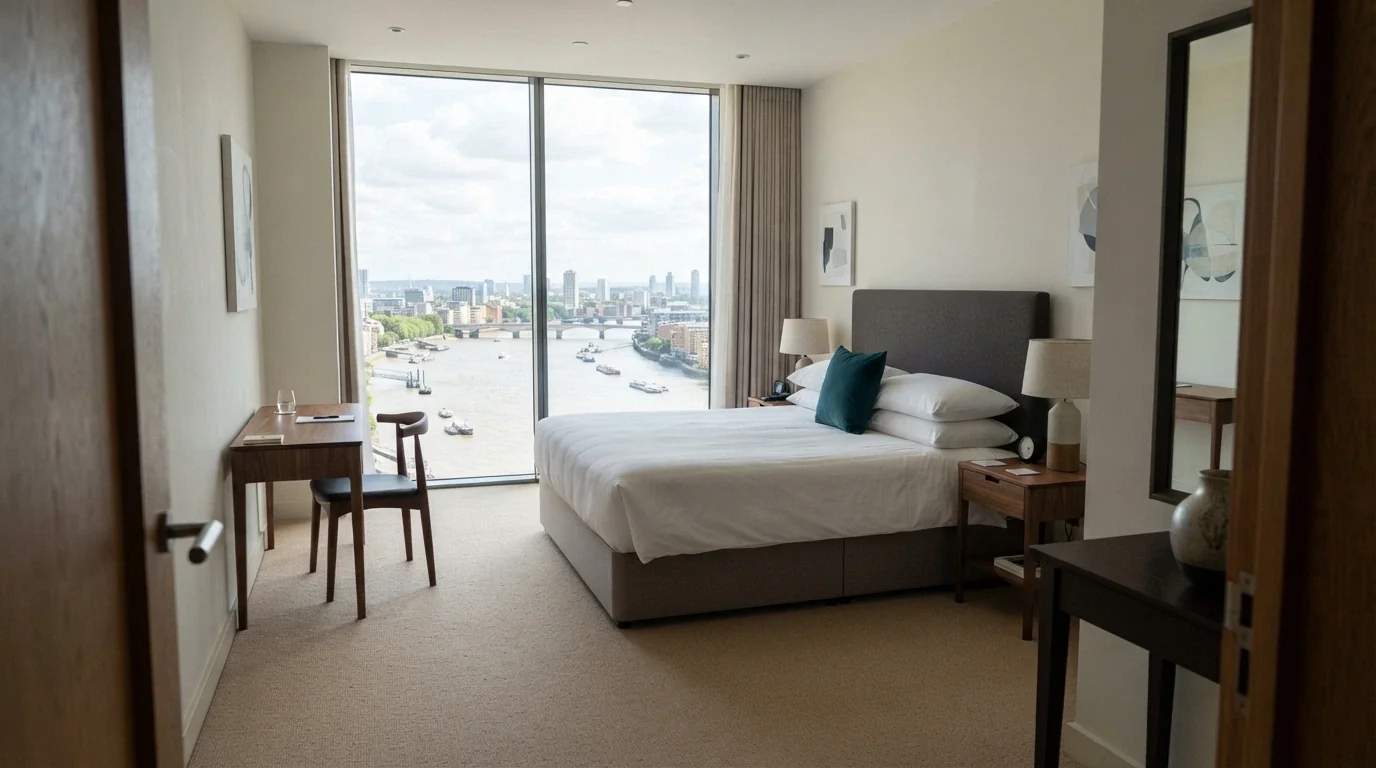
Suite accommodation runs larger. The suite range covers 75 to 113 square metres and includes 56 open-plan River and City Suites plus four Skyline City Suites — the top end of the in-precinct stay. For a visitor who wants the river view and the room to spread out in, the suite tier is where the venue competes with the best Brisbane has to offer.
For anyone who preferred the old Treasury building’s footprint, the Treasury Hotel is still open and bookable — 96 heritage rooms in the heritage Treasury Building, walking distance from the new casino. The hotel kept running through the gaming closure and remains part of the accommodation options for a Brisbane visitor who wants to be in town for a session.
The Leisure Deck — Infinity Pools, a Spa and the Sky Deck 100 Metres Up
Level 7 of The Star Brisbane holds the Isoletto Pool Club — three infinity-style pools, a swim-up spa, sauna, steam room and a gym, all with river views. It is not a large pool deck by resort standards but it is well above what most CBD hotels offer, and the river view from an infinity edge does most of the work.
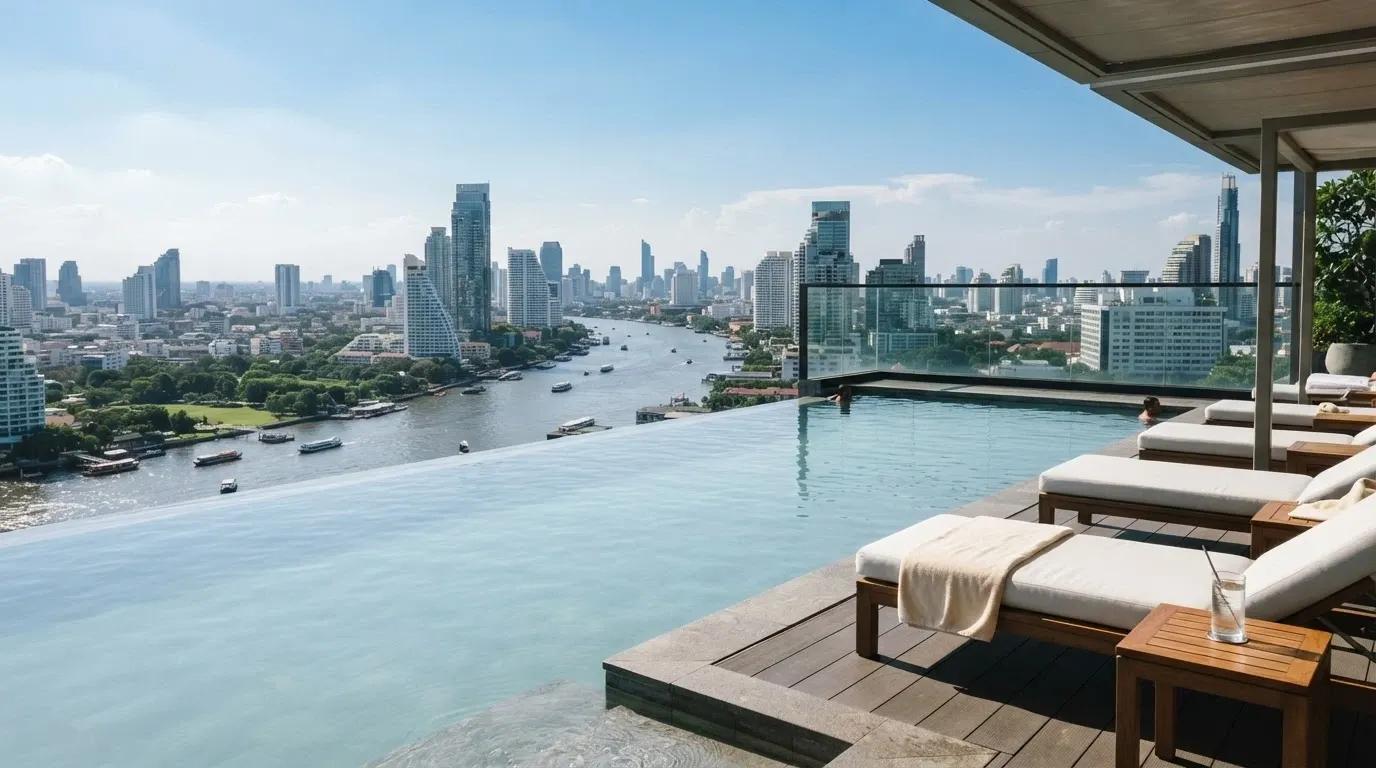
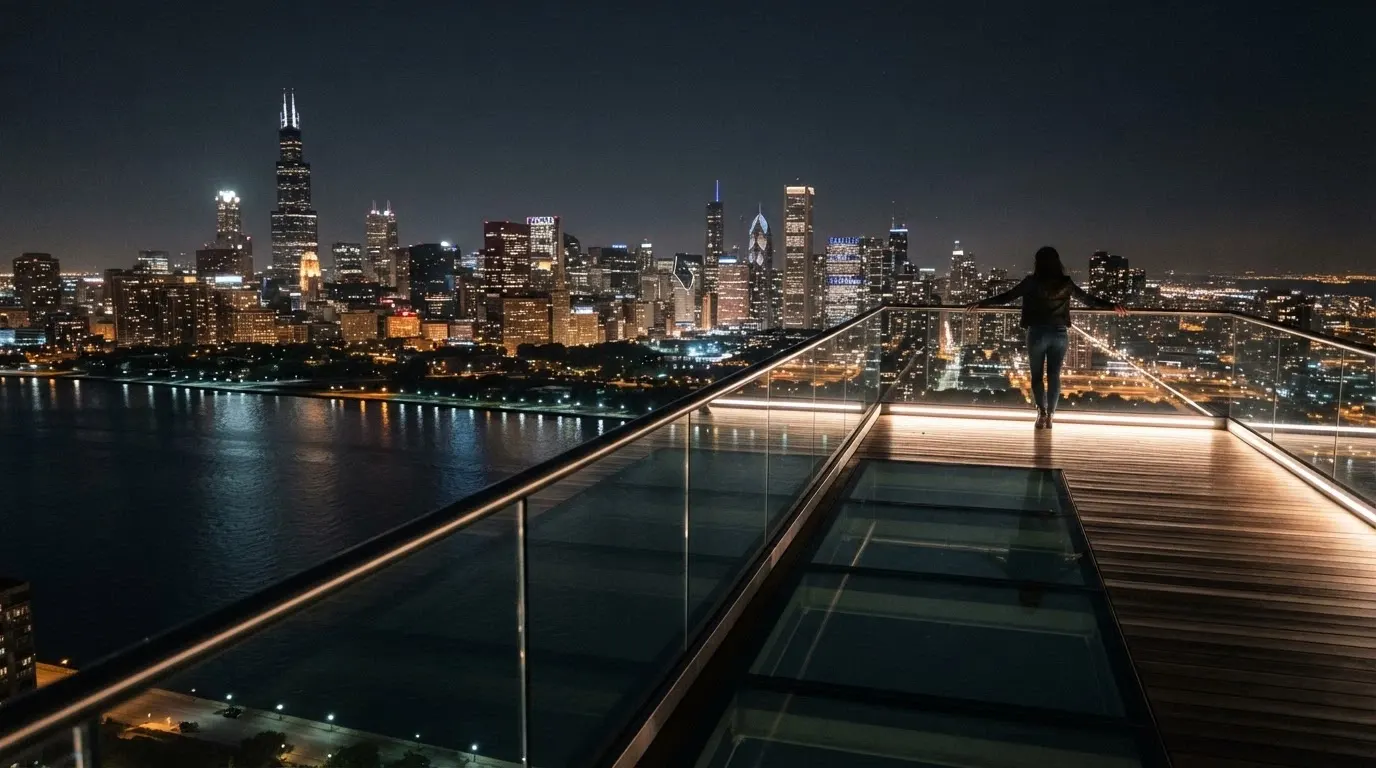
For something more dramatic, the Sky Deck is a suspended viewing platform 100 metres above the Brisbane River. It is one of the defining architectural features of the precinct — a glass and steel cantilever that gives visitors the kind of city-and-river panorama that Brisbane has not had before. The Sky Deck is open to hotel guests and visitors alike, and it sits high enough that on a clear day the view runs past the Moreton Bay islands.
The leisure offering rounds out with a spa and wellness service whose treatment menus were not pinned down in this review — the venue lists a spa operation without specifying the menu, so visitors wanting treatment details should check the operator’s site before booking.
Every Restaurant, from Sokyo to the 24-Hour Food Quarter
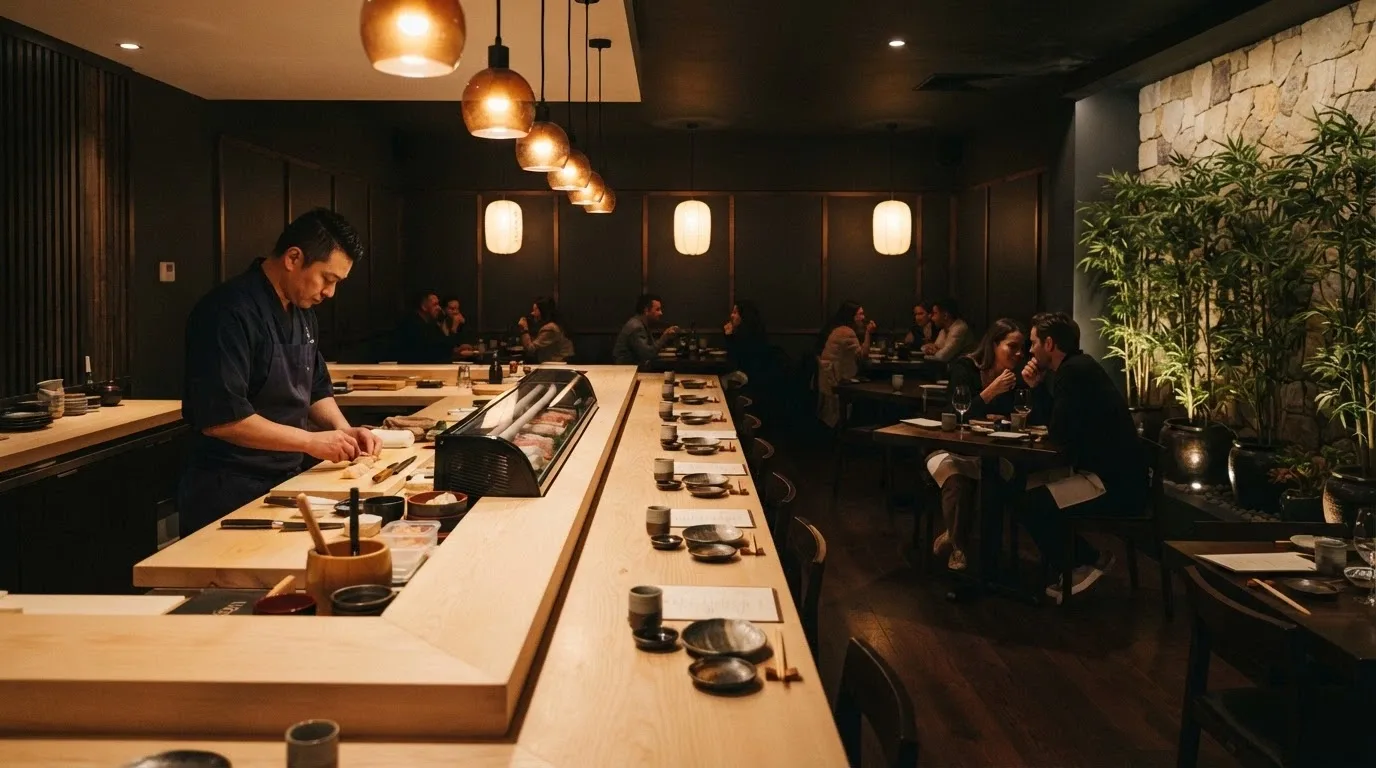
The Star Brisbane houses 11 named dining venues. Sokyo runs the Japanese end of the list — sushi counter, mood-lit dining room, the kind of venue Brisbane had to drive to the Gold Coast or Sydney for before the precinct opened. Fat Noodle covers South-East Asian, Black Hide Steak & Seafood (by Gambaro) handles the steak-and-seafood brief, and Cucina Regina does Italian. The remaining venues — Cicada Blu, Aloria, Babblers, LÚC LẮC, Azteca, Dark Shepherd, Pompette — round out a dining list that covers most of what a visitor would want in a single night out.
The 24-hour eatery is the Food Quarter on Level 5, sitting inside the casino level itself and serving Western, Asian and Australian cuisines around the clock. For a player who does not want to leave the floor for a meal, the Food Quarter is the practical option. For a visitor who treats dining as the main event, the precinct holds enough variety that two nights of different restaurants is achievable.
Eleven venues is a lot for a single integrated resort. Most Australian casinos run half that, and the dining list is one of the dimensions where The Star Brisbane’s new-build scale shows.
The Gaming Floor — 2,500 Pokies and 200-Plus Table Games
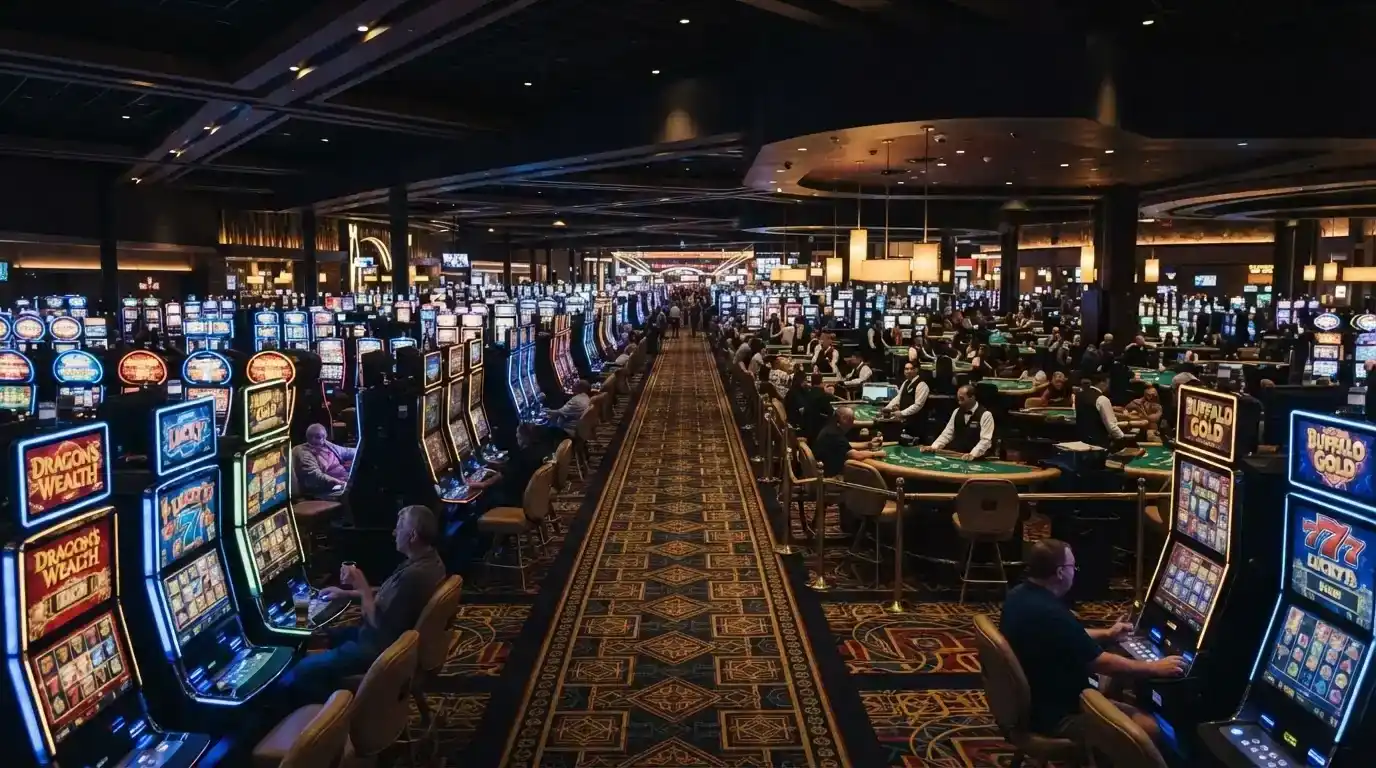
The headline gaming figures are 2,500-plus pokie machines and more than 200 gaming tables, running 24/7 across Levels 5 and 6. The floor also runs 150-plus table games during peak hours, covering blackjack, roulette, baccarat and poker variants. For a Brisbane resident used to the old Treasury footprint, the new floor is several times larger.
Queensland’s gaming regulations set a minimum 85% RTP on gaming machines. The floor does not publish per-machine RTP, but the broader market has shifted well above that floor — newer titles at competitive venues in Australia average 92–94% RTP. The Star Brisbane runs a modern floor, and a player should expect machines in that modern range rather than at the regulatory minimum.
The scale has a practical consequence for visitors. With 2,500 machines and 200-plus tables, the floor is large enough that finding a specific game type or stake level takes a walk. A regular visitor learns the layout; a first-timer should expect to wander. The upside is that during peak hours there is almost always a seat at a machine or a table, which was not always true at the old Treasury.
The Poker Room — Cash Games from $2/$3 and a Digital Waitlist
The Star Poker Brisbane sits inside the gaming floor and runs cash games daily from noon. No Limit Hold’em and Pot Limit Omaha run from $2/$3 up to $25/$50 — a stake spread wide enough to cover a casual player and a serious grinder without forcing either to sit at the wrong table. Tables run to a maximum of 8-handed.
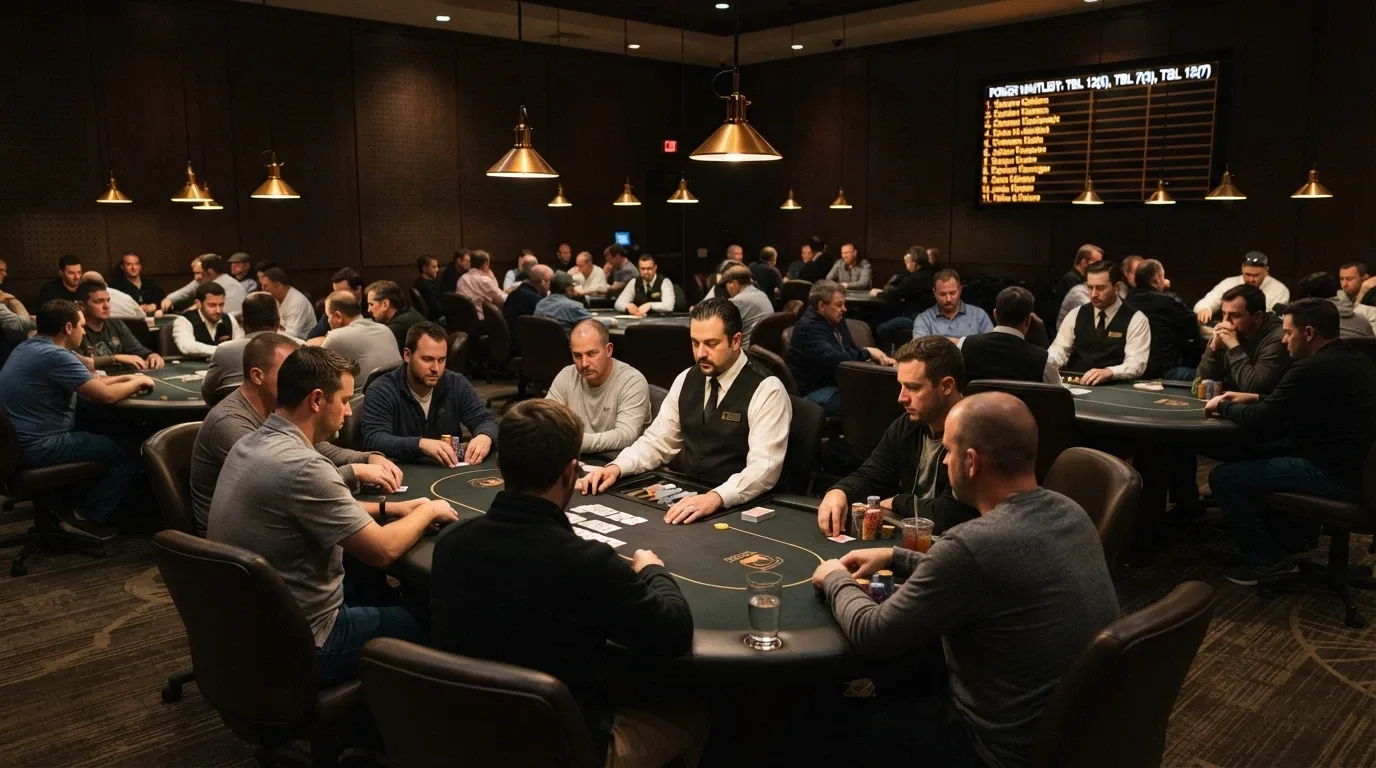
The $2/$3 Turbo format uses a 20-second action clock, which keeps the game moving when a table drags. Regular grinders will recognise the format; recreational players should know that “Turbo” means the decision window is shorter than a standard cash game. The waitlist for poker tables runs digitally through the Star App — players join the queue from their phone and the app tells them when a seat is open. For a venue this size, a digital waitlist is the only way to run a busy poker room without a crowd at the desk.
The room has hosted WPT-branded events and runs the Brisbane Champs series, which gives the local poker community a tournament calendar worth following. Specific event dates and structures were not pinned down for this review, so a player wanting a tournament seat should check the venue’s poker page directly.
Events, Shows and Brisbane’s Largest Hotel Ballroom
The Event Centre at The Star Brisbane is anchored by a 1,440-seat ballroom — the largest hotel ballroom in Brisbane. It seats more than most standalone city venues, and it is the kind of room that lets a single precinct host a conference, a gala dinner and a concert on the same weekend without strain.
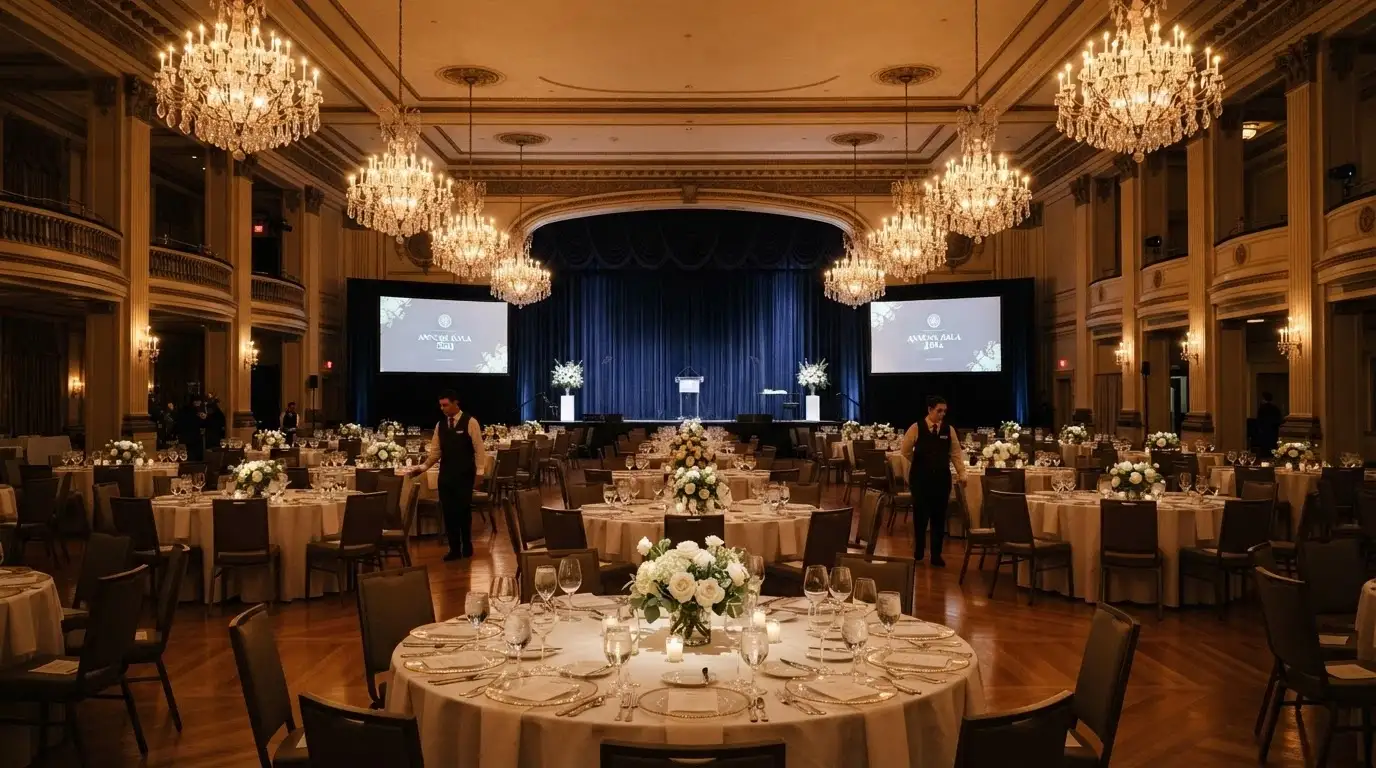
The venue uses the Event Centre for concerts, shows and conferences, and the programming changes through the year. A current event calendar was not pinned down for this review, so visitors planning around a specific show should check the operator’s site directly. The point worth carrying forward is the capability — a 1,440-seat ballroom inside a resort that already runs 11 restaurants and a 24-hour casino gives Brisbane a flexible venue the city did not previously have.
Star App, Membership and What the Rewards Programme Gets You
The Star App ties together several pieces of a visit — poker waitlists, membership rewards and venue-wide information. The digital waitlist for poker is the most concrete piece of functionality, and it is the difference between sitting at a desk waiting and walking around the venue until the app pings.
The rewards programme is the venue’s loyalty offering, and Queensland’s mandatory carded-play rules mean every machine session is already tracked against the membership card. Tier-specific perks and point-redemption rates were not pinned down for this review, so a player weighing sign-up should expect the structure without specific dollar values. The card is required for play anyway, and the rewards are layered on top of a system the state already mandates.
For a Brisbane visitor who plays regularly, the App plus the membership card plus the rewards programme is one connected layer. For a tourist playing once, the App is mostly the waitlist tool. Either way, it is worth installing before the first visit.
Online Casinos Accessible from Brisbane — Ranked and Compared
The online field Brisbane residents reach is not what it looks like at first glance. There is no licensed online casino in Australia — none. The Interactive Gambling Act 2001 makes it an offence to provide online casino to a person in Australia, and no licence for the product exists federally or in any state or territory. The product is prohibited, not merely unregulated.
What that means in practice is a two-tier field. The first tier is five Australian-licensed wagering operators — bookmakers licensed for racing and sport, none of which offer casino games or pokies. The second tier is five offshore casinos serving Australian players without an Australian licence, which offer the prohibited product directly. This section ranks the ten operators by licence status, product type, BetStop connection and market share — the columns research carries a real value for, and the columns that show the split honestly.
The split matters because the two tiers are not interchangeable. A licensed bookmaker offers a regulated product (wagering) with BetStop coverage and Australian consumer protection. An offshore casino offers a prohibited product (casino) with neither. Treating them as one ranked list would erase the difference. This page does not.
How the Operators Compare — At a Glance
| Operator | Type | Licence / Jurisdiction | BetStop Connected | Market Share |
|---|---|---|---|---|
| SportsBet | AU wagering | Northern Territory (NTRWC) | Yes | 19.57% |
| Tab | AU wagering | State-based | Yes | 11.54% |
| Rocket Play | Offshore casino | Not AU-licensed (offshore jurisdiction unconfirmed) | No | 9.40% |
| Skycrown | Offshore casino | Not AU-licensed (offshore jurisdiction unconfirmed) | No | 8.55% |
| Bet365 | AU wagering | Northern Territory (NTRWC) | Yes | 6.56% |
| Ladbrokes | AU wagering | Northern Territory (NTRWC) | Yes | 4.53% |
| Royal Reels | Offshore casino | Not AU-licensed (offshore jurisdiction unconfirmed) | No | 2.51% |
| WinSpirit | Offshore casino | Not AU-licensed (offshore jurisdiction unconfirmed) | No | 1.55% |
| Stake | Offshore casino | Curaçao (commonly cited) | No | 1.28% |
| FairGO | Offshore casino | Not AU-licensed (offshore jurisdiction unconfirmed) | No | 0.80% |
The table shows the split at a glance. The five Australian-licensed wagering operators occupy the top, middle and lower-middle of the ranking by market share; the five offshore casinos fill the rest. BetStop connection follows the line exactly — every licensed operator connects, no offshore casino does.
SportsBet — Australia’s Biggest Bookmaker, Not a Casino
SportsBet holds 19.57% of the Australian wagering market, which makes it the largest bookmaker in the country by a wide margin. It operates under a Northern Territory licence through the NTRWC, and its Australian product is racing and sport wagering only — no casino games, no pokies, no live dealer.
For a Brisbane resident searching for online pokies or table games, SportsBet is not the answer to that question. It is a wagering operator, and a reader landing on the site expecting a casino will not find one. That is not a deficiency in SportsBet’s offering — it is the law. The product they want is prohibited in Australia, and SportsBet does not offer a prohibited product.
What SportsBet does offer is the largest pool of Australian racing and sport markets in the country, connected to BetStop, with consumer protection under the Northern Territory regulator. For a punter who wants a licensed Australian bookmaker, SportsBet is the market leader. For a player who wants online casino, the search ends elsewhere — in the offshore tier, with everything that carries.
SportsBet’s market position is the closest thing to a default Australian online wagering brand. It is also a useful benchmark: when an offshore casino claims to be “Australia’s most popular online casino”, the comparison is not against SportsBet, because SportsBet is not a casino.
Tab — the TAB Every Australian Already Knows
Tab holds 11.54% of the Australian wagering market — Australia’s second-largest wagering brand, and the one every Australian over a certain age already recognises. Tab operates under state-based wagering licences (jurisdiction varies by state) and offers racing and sport wagering only. No casino product, no pokies, no live dealer.
The Tab brand carries a different familiarity than the corporate bookmakers. For generations of Australians, the TAB was the local betting shop on the high street, and the brand has carried through to the online product. A reader who thinks “TAB” thinks racing form, sports multis and a Saturday afternoon multi — not a casino floor.
Like SportsBet, Tab is BetStop-connected, regulated under state wagering rules, and consumer-protected under Australian law. It is a wagering operator, not a casino. For a Brisbane resident who wants a licensed Australian bookmaker and prefers the home-brand feel of the TAB network, Tab is the obvious second pick. For casino play, it is the wrong category entirely.
The Tab brand’s market position shows where Australian wagering concentrates. SportsBet and Tab together hold just over 31% of the market between them — the top of a licensed wagering market that, in dollar terms, dwarfs the offshore casino traffic reaching Australia.
Rocket Play — Offshore Casino with Nearly 10% of the Local Market
Rocket Play holds 9.4% of the Australian-facing market — an offshore casino serving Australian players without an Australian licence. The licence jurisdiction was not confirmed for this review, which is itself worth noting: when an offshore operator serving Australians does not have a clearly identified regulator, the question of who oversees the operator is the question worth asking first.
Rocket Play’s Australian-facing market share is close to Tab’s. That is a striking figure. A prohibited product, offered without an Australian licence, reaches roughly the same volume of Australian players as Australia’s second-largest licensed bookmaker. The number does not tell us anything about quality, fairness or protection — only that the traffic is real.
There is no Australian consumer protection on an offshore casino. There is no BetStop coverage. There is no Australian dispute-resolution body if a withdrawal is withheld or an account is closed. The IGA prohibits the provider from offering the service to a person in Australia, and the ACMA has directed ISPs to block 1,564 illegal gambling and affiliate websites (as of March 2026). A Rocket Play account sits inside that blocked-or-blockable universe. The site can be blocked at any time, with a balance still on it.
Rocket Play is, on its own terms, a working online casino for Australian players. That is also the legal problem.
Skycrown — Another Offshore Brand Brisbane Players Reach
Skycrown holds 8.55% of the Australian-facing market — the same tier as Rocket Play, another offshore casino without an Australian licence. The licence jurisdiction was not confirmed for this review. The product is online casino and pokies, which Australia prohibits.
The pattern here matters. Two offshore brands — Rocket Play at 9.4% and Skycrown at 8.55% — together hold close to 18% of the Australian-facing market. Add the other offshore casinos in this ranking and the share rises further. The licensed Australian wagering market is larger in dollar terms, but a meaningful slice of Australian-facing online casino traffic reaches offshore operators the IGA prohibits.
Skycrown offers the same trade-off as Rocket Play: a working casino product, no Australian licence, no BetStop coverage, no Australian consumer protection, and the standing risk of site-blocking. Choosing an offshore casino is a decision to bypass Australian safeguards. With Skycrown, that lack of protection remains a constant factor for anyone playing on its site.
Bet365 — Global Bookmaker, Australian-Licensed for Racing and Sport
Bet365 holds 6.56% of the Australian wagering market under an NT licence through the NTRWC. The global brand is one of the largest bookmakers in the world, and its Australian product is racing and sport only — no casino, no pokies, no live dealer.
Bet365’s Australian operation looks much like its global one in interface and market depth, with the product narrowed to the wagering categories Australia permits. For an Australian punter, Bet365 is a familiar global brand with a fully licensed Australian operation, BetStop-connected, regulated under Northern Territory rules. For a player wanting casino games, it is the wrong product category.
The 6.56% market share puts Bet365 mid-table among Australian-licensed bookmakers. SportsBet, Tab, Ladbrokes and the other major corporate bookmakers all sit ahead. Bet365’s value to an Australian user is the depth of its racing and sport markets and the global reputation behind the brand — not a casino product Australia will not let it offer.
Ladbrokes — NT-Licensed Wagering, a Familiar Name
Ladbrokes holds 4.53% of the Australian wagering market under an NT licence through the NTRWC. Racing and sport only. No casino offering. The Ladbrokes name is older than most of its competitors — a UK heritage brand that has operated in Australia for decades.
Ladbrokes’ Australian product is a corporate bookmaker’s racing and sport offering, BetStop-connected, Northern Territory-regulated. For a punter wanting a licensed Australian operator with a long brand history, Ladbrokes is one of the obvious picks. For a player wanting online casino games, it is the wrong product category entirely.
Ladbrokes’ 4.53% market share places it in the lower half of the licensed bookmaker field, ahead of smaller operators and behind SportsBet, Tab, Bet365 and the other large corporate brands. The ranking matters less than the category: a Ladbrokes account is a wagering account, not a casino account, and a reader who wants the second has not found it on the first.
Royal Reels — Offshore Casino at 2.5% Share
Royal Reels holds 2.51% of the Australian-facing market — an offshore casino serving Australian players without an Australian licence. The licence jurisdiction was not confirmed for this review. The product is online casino and pokies, which Australia prohibits.
Royal Reels sits in the same offshore tier as Rocket Play and Skycrown: no Australian licence, no BetStop coverage, no Australian consumer protection, and the standing risk of site-blocking with a balance on the account. Its market share is smaller than the two leaders but still meaningful — 2.51% of the Australian-facing market is not a marginal position.
For a player already inside the offshore tier, the brand-to-brand differences within the tier are mostly about product surface area, game library and promotional structure. The underlying legal exposure is the same across all five offshore operators in this ranking. Royal Reels carries the same trade-off as the rest: a working product, no Australian protection.
FairGO — RTG-Powered Offshore Casino with a No-Deposit Spins Offer
FairGO holds 0.8% of the Australian-facing market — the smallest share in the ranking, but the only operator where research surfaces a specific bonus. FairGO is powered by RealTime Gaming (RTG) — a long-established offshore casino software provider — and offers 30 free spins no-deposit on the pokie title Fu Long Treasures, with the offer valid until 25 August 2026. FairGO is still an offshore casino without an Australian licence. The product is online casino and pokies, which Australia prohibits. The offer is real, the licensing status is not changed by it.
The trade-off FairGO presents is the clearest version of the offshore trade-off. A specific, named bonus — a tangible thing — sits on top of an offshore operation with no Australian protection. While the offer might attract interest, it does not alter the underlying risk profile of playing on an unlicensed site. The absence of regulatory oversight cannot be filled by a promotional incentive.
Stake — Curaçao-Licensed Crypto Platform Serving Australia
Stake holds 1.28% of the Australian-facing market under a Curaçao licence (commonly cited). Stake is a crypto-gambling platform, which puts it in a particular corner of the offshore tier — operators that run on cryptocurrency rather than fiat payment rails.
The crypto angle is the reason Stake’s position is distinctive. Credit cards, credit-related products and cryptocurrency are banned as payment for online wagering in Australia, effective 11 June 2024 under the Interactive Gambling Amendment (Credit and Other Measures) Act 2023. A licensed Australian wagering operator cannot accept crypto. An offshore casino can, because the operator is not licensed in Australia. Stake is the visible end of that gap — a crypto platform reaching Australian players that licensed Australian operators cannot replicate.
The legal exposure is the same as the rest of the offshore tier: no Australian licence, no BetStop coverage, no Australian consumer protection, and the standing risk of site-blocking. The product is real and working. The protection is not.
WinSpirit — Offshore Casino at 1.6% Share
WinSpirit rounds out the ranking at 1.55% of the Australian-facing market — an offshore casino without an Australian licence, the smallest of the offshore brands by share. Information on its specific licensing is unavailable.
WinSpirit carries the same profile as the rest of the offshore tier. No Australian licence. No BetStop connection. No Australian consumer protection. No dispute-resolution body if a withdrawal stalls. The product works; the legal exposure is the same.
For a player choosing within the offshore tier, WinSpirit is one of the smaller options by reach. The differences across the offshore set are mostly commercial — game libraries, bonus structures, payment options. The legal position is identical, and that is the position worth carrying into the decision.
Is Online Casino Legal in Brisbane? No — Here Is Why
The short answer to the legal question is short. No. Online casino is not legal in Brisbane because online casino is not legal anywhere in Australia. The Interactive Gambling Act 2001 makes it an offence to provide online casino, online pokies, or in-play sports betting to a person in Australia. There is no licence for the product — not federally, not in any state or territory. The product is prohibited in terms, not merely unregulated.
The regulator that enforces the prohibition is the Australian Communications and Media Authority (ACMA). ACMA investigates complaints, issues formal warnings, refers operators for enforcement and directs ISPs to block illegal sites. The number of blocked sites is real: 1,564 illegal gambling and affiliate websites blocked by Australian ISPs as of March 2026, and more than 225 illegal gambling services have withdrawn from the Australian market since enforcement was strengthened in 2017.
The IGA targets the provider, not the individual player. A Brisbane resident using an offshore casino is not personally prosecuted under the IGA. That distinction is real, and it is also incomplete. “Not illegal for you” is not the same as “safe” — offshore play carries no Australian consumer protection, no BetStop coverage, no recourse for withheld withdrawals, and the standing risk of site-blocking with funds on the account.
This section unpacks what the IGA actually bans, what ACMA has done about it, what IS licensed, how Queensland’s land-based casino rules differ from the federal online prohibition, and what the practical risk looks like for a player using an offshore casino.
What’s Legal and What’s Not — At a Glance
| Activity | Legal in Australia? | Regulator | Key Restriction |
|---|---|---|---|
| Online casino | No | ACMA (federal prohibition) | Provider offence under IGA 2001 |
| Online pokies | No | ACMA (federal prohibition) | Provider offence under IGA 2001 |
| In-play sports betting | No | ACMA (federal prohibition) | Provider offence under IGA 2001 |
| Pre-match sports betting | Yes | State / territory | Credit cards and crypto banned as payment (from 11 June 2024) |
| Racing wagering | Yes | State / territory | Credit cards and crypto banned as payment (from 11 June 2024) |
| Land-based casino | Yes | OLGR (Queensland) | Mandatory carded play, pre-commitments, time limits, enforced breaks |
| Lotteries | Yes | State / territory | State-specific rules |
| Keno | Yes | State / territory | State-specific rules |
The table shows where the legal lines fall. The federal prohibition covers online casino, online pokies and in-play betting. Everything else on the list — racing, pre-match sport, land-based casinos, lotteries, keno — is licensed and regulated under state or territory rules. The same column for “legal in Australia” hides a meaningful detail: licensed wagering and licensed land-based casinos are different products, regulated by different bodies, with different player protections.
What the Interactive Gambling Act 2001 Actually Bans
The Interactive Gambling Act 2001 bans three products outright when provided to a person in Australia: online casino, online pokies, and in-play sports betting. The offence sits with the provider — the operator offering the service — not with the individual player using it. That structure has been in place since 2001 and was tightened by the Interactive Gambling Amendment Act 2017, which closed loopholes and gave ACMA its enforcement and site-blocking powers.
The current shape of the law has two further pieces worth carrying forward. The Interactive Gambling Amendment (Credit and Other Measures) Act 2023, effective from 11 June 2024, banned credit cards, credit-related products and cryptocurrency as payment for online wagering in Australia — the change that closed the credit-card deposit route at licensed Australian bookmakers. An operator failing to enforce the ban faces penalties up to $247,500.
The 2026 reform wave passes the next round of restrictions. The Interactive Gambling Amendment (Gambling Reform) Bill 2026 passed Parliament on 19 August 2026, with its measures commencing 1 January 2027. The reforms cap wagering advertising at no more than three ads per hour between 6:00 am and 8:30 pm, with a live-sport blackout from 15 minutes before to 5 minutes after a live event. Radio wagering ads are barred during school drop-off and pick-up times. Broadcasting sporting odds is banned outright. Online wagering ads will only reach logged-in, age-confirmed users with opt-out. Athletes, celebrities and influencers are barred from promoting wagering products. And from 1 January 2027, banks and payment providers gain express authority to block transactions to illegal gambling operators — the financial choke point that the offshore tier has so far avoided.
The reforms do not change the underlying prohibition on online casino. They change the surface around it — advertising, payments, promotion, financial access — but the product itself remains banned.
ACMA Enforcement — 1,564 Sites Blocked and Counting
ACMA enforcement is the operational edge of the IGA prohibition. Since November 2019, the ACMA has had 1,564 illegal gambling and affiliate websites blocked by Australian ISPs, as of March 2026. The number is not a one-off — it is the running total of an enforcement regime that has been operating for over six years and continues to add to it. More than 225 illegal gambling services have withdrawn from the Australian market since enforcement was strengthened in 2017.
The mechanism is administrative. ACMA investigates complaints, issues formal warnings and infringement notices, refers matters for civil penalty proceedings, and — most visibly — directs Australian ISPs to block illegal services at the network level. Site-blocking is the most concrete enforcement tool, and it is the one a player is most likely to encounter directly: an offshore casino that worked yesterday can be unreachable tomorrow.
For a player with funds on a blocked site, site-blocking creates a practical problem the prohibition does not address. The operator remains outside Australian jurisdiction. The Australian regulator has no power to compel a withdrawal. The site being blocked does not undo the deposit. It does, however, make recovery harder — the player can no longer reach the operator’s cashier. This is the operational risk an offshore player carries in addition to the legal one.
What IS Licensed — Wagering, Lotteries and Keno
Australia does licence gambling — it just does not licence online casino. Pre-match sports and race wagering, lotteries and keno are legal, regulated by state or territory bodies. The Northern Territory Racing and Wagering Commission (NTRWC), administered through Licensing NT, is the de facto national licensor for large online bookmakers — SportsBet, Bet365, Ladbrokes and about fifty others hold NT wagering licences with terms of up to 20 years.
The tax structure sits underneath the licensing regime. The Northern Territory levies a 5% wagering tax on wagers minus payouts, plus a 0.05% racing levy. Each state sets its own point-of-consumption tax on wagering revenue, typically 10–15% of net wagering revenue. The dual structure — NT as federal-style wagering licensor, states as revenue collectors — is the reason an Australian punter can hold an account with a global brand under Australian regulation.
The licensed market is the contrast that makes the offshore tier’s position visible. Licensed wagering operators are BetStop-connected, regulated under Australian consumer law, and subject to state-level dispute resolution. Offshore casinos are none of these. The two tiers look similar on the surface — both offer real-money gambling online — and are different in almost every respect that matters to a player with a problem.
Queensland’s Casino Rules — the OLGR, Carded Play and $100 Million Fines
Queensland’s land-based casino regulation sits with the Office of Liquor and Gaming Regulation (OLGR) under the Casino Control Act 1982. Queensland regulates all four of its casinos — The Star Brisbane, The Star Gold Coast, the closed Treasury Casino site, and one further regional venue — and the framework is among the strictest in Australia.
The 2022 reforms strengthened the disciplinary toolkit. The Queensland government can fine casinos up to $100 million and appoint a special manager to oversee operations. The Star Entertainment Group — operator of The Star Brisbane — has been on the receiving end of that authority. On 9 December 2022, Queensland’s Department of Justice issued $100 million in fines and appointed a special manager for 12 months. The Star Brisbane and The Star Gold Coast licences were suspended for 90 days (deferral) in the same action, and the Star Sydney licence remains suspended with the Manager’s appointment continuing through 30 September 2026.
The Star’s recent financial reporting shows the venue operating at scale. The Star Entertainment Group recorded AUD 265 million in revenue for Q4 FY26 (period ended 30 June 2026) with AUD 267 million in available cash. The same period produced an EBITDA loss of AUD 8 million before significant items, an improvement on the AUD 27 million loss in Q4 FY25. The financial picture is mixed — revenue and cash position healthy, profitability still negative — and the regulatory supervision continues.
From 2024, Queensland casinos must operate mandatory carded play, pre-commitments, time limits and enforced player breaks. These are not optional, and they apply at The Star Brisbane today. A player sits at a machine with their membership card inserted; the system tracks time and spend; pre-commitment limits trigger; breaks are enforced. The regime is the venue-level safeguard sitting alongside the national BetStop register — two layers, one at the state venue level and one at the federal licensed-operator level.
What the Player Risks Using an Offshore Casino
The IGA targets the provider. The individual player is not prosecuted. That is the one piece of comfort the offshore tier offers, and it is also the piece that gets overused. A player using an offshore casino faces the following, which licensed Australian operators do not face:
- No Australian consumer protection. Australian law does not apply to the operator’s conduct.
- No BetStop coverage. A BetStop registration does not block an offshore casino.
- No recourse for withheld withdrawals or closed accounts. There is no Australian dispute-resolution body to escalate to.
- No guaranteed access. The site can be blocked by Australian ISPs at any time, with a balance on the account.
- No Australian regulator to complain to. ACMA can investigate the operator; it cannot order a withdrawal.
- No tax clarity on large wins. The ATO’s ordinary position is that punter winnings are not assessable income under section 6-5 of the ITAA 1997, but offshore-operator winnings outside that framework are murkier.
“Not illegal for you” is true. “Safe” is a different claim, and the offshore tier does not back it.
Playing Safely — Help That Works and Limits You Can Set
Australia has the consumer-protection infrastructure most offshore casinos do not offer. BetStop — the National Self-Exclusion Register — has 67,480 registrations by 31 July 2026, with 41,290 exclusions still active. 78% of registrants were under 40, and 38% chose lifetime exclusion. The figure is more than a compliance statistic — it is the visible size of the demand for self-exclusion in a regulated market.
Queensland casinos add venue-level safeguards on top. Mandatory carded play ties every machine session to a membership card. Pre-commitments set spend limits in advance. Time limits cap session length. Enforced breaks pull a player out of the chair whether they want to leave or not. The regime is not gentle — it is built to interrupt play, not enable it.
Help is reachable. The National Gambling Helpline is 1800 858 858, free, confidential, staffed 24/7. Gambling Help Online (gamblinghelponline.org.au) runs online chat and counselling. The service infrastructure is real, Australian, and built for someone who has decided to talk.
BetStop — One Registration, Every Licensed Service Blocked
BetStop is the National Self-Exclusion Register, live since August 2023. One registration excludes a person from every Australian-licensed online and phone wagering service. The mechanism is single-sided from the user’s perspective: register once, the licensed operators do the rest.
The figures say where the demand sits. 67,480 registrations by 31 July 2026, with 41,290 active exclusions. 78% of registrants were under 40 — younger than the stereotypical problem-gambling demographic, and a reminder that the population using self-exclusion is broader than the public conversation suggests. 38% chose lifetime exclusion rather than a fixed period — the strongest form of the register, and a meaningful fraction of the total.
BetStop binds licensed wagering services only. Offshore casinos are not connected. A BetStop registration does not block Rocket Play, Skycrown, Royal Reels, FairGO, Stake or WinSpirit. The exclusion is as strong as the regulator behind it, and offshore operators have no Australian regulator to answer to. For a player whose problem behaviour has moved offshore, the national register does not reach it.
Helplines, Chat and Where to Go
The National Gambling Helpline — 1800 858 858 — is the front line. Free, confidential, staffed 24 hours a day, 7 days a week. The number is the same in every state, and the service is built for someone who is ready to talk right now or someone who is just deciding whether to call.
Gambling Help Online runs the chat and counselling side — gamblinghelponline.org.au, with online chat, email counselling and self-help resources. For someone who would rather type than talk, the chat service is the front door. Brisbane-based face-to-face counselling options exist through the same provider network, though specific clinic addresses were not pinned down for this review. A reader looking for face-to-face support in Brisbane should contact Gambling Help Online or call the helpline for a local referral.
The scale of the need sits behind these services. About 2.1% of Australian adults — roughly 430,000 people — experience problem gambling. The Australian Institute of Health and Welfare put high-risk gambling at 1.8% in 2022. The numbers are not just statistics — they are the population the helpline and the register are built for.
Limits at the Venue — Carded Play, Pre-Commitments and Enforced Breaks
Queensland’s venue-level safeguards run inside the casino building. Mandatory carded play means every machine session is tied to the player’s membership card; anonymity at the pokie floor is no longer possible. Pre-commitments let a player set spend limits in advance — before they sit down, before the first spin. Time limits cap session length. Enforced breaks pull a player out of the chair on a schedule, regardless of whether they wanted to keep playing.
The interaction with BetStop is layered. BetStop is national and covers every Australian-licensed online and phone wagering service. The Queensland venue-level safeguards cover land-based play at The Star Brisbane and the state’s other three casinos. A player using both channels — wagering online and gaming at the casino — gets both layers of protection. A player using an offshore casino gets neither.
For a Brisbane resident who wants the safeguards to bite, the venue is where they sit. The Star Brisbane’s carded-play system, pre-commitments and enforced breaks are the safeguards the state mandates; they are not optional features the venue adds for marketing. They are part of the licence.
How We Evaluated and Ranked These Operators
This page ranks ten operators against four columns of research: licence status in Australia, product type (wagering or casino), BetStop connection and market share. The ranking is not a ranking of bonus quality, game library or promotional generosity. Those columns are absent because research does not carry real values for most operators on them, and a ranking that invented those values would be a ranking of guesses.
The sources behind the four columns are public and verifiable. ACMA enforcement data provides the blocked-site count and the offshore-service-withdrawal count. Queensland’s Department of Justice provides the casino regulatory framework and the disciplinary record against The Star. The NTRWC register provides the wagering-licence data. Market-share figures are drawn from publicly reported Australian wagering and online-gambling data, covering the share of the Australian-facing market each operator reaches.
The featured set is ten operators that Brisbane residents reach in practice. It is not an exhaustive census of the Australian wagering market — the licensed field runs to around fifty NT-licensed bookmakers and a similar number of state-licensed operators, most of which are not in this ranking because their Australian-facing market share is small. The offshore tier is similarly larger than five names, and the operators chosen here are the ones Brisbane readers actually search for and reach.
The split between tiers is the page’s organising principle, and the split is the honest one. A ranking that put SportsBet and Rocket Play on the same continuum without flagging that one is a licensed Australian bookmaker and the other is an offshore casino serving a prohibited product would tell the reader nothing useful. The split is the ranking.
What Brisbane’s Casino Scene Means for Your 2026 Night Out
Brisbane has one casino. For a real gaming floor — pokies, tables, poker, the whole venue — The Star Brisbane at Queen’s Wharf is the only answer in the city, and it is the answer at scale. 2,500-plus machines, 200-plus tables, 340 hotel rooms, 11 restaurants, a pool deck, the Sky Deck, the Event Centre. The resort opened in August 2024 and is still bedding in, but the floor is open 24/7 and the regulatory framework is the strictest in the country.
Online, the picture is different and worth carrying clearly. No licensed online casino exists in Australia. The product is prohibited under the Interactive Gambling Act 2001. The operators Brisbane residents reach online are a split field: five Australian-licensed bookmakers licensed for racing and sport, and five offshore casinos offering the prohibited product without an Australian licence. Licensed operators connect to BetStop and answer to Australian regulators. Offshore operators do neither. ACMA has blocked 1,564 illegal sites as of March 2026.
The choice the page has laid out is not between operators — it is between categories. For a Brisbane resident who wants to play casino games online, the licensed Australian option does not exist. The only doors open are offshore, and offshore doors have no Australian consumer protection, no BetStop coverage and the standing risk of being blocked with funds on the account. That is the trade-off, and it is the trade-off regardless of brand.
For a night out at the casino, the decision is simpler. The Star Brisbane is Brisbane’s only casino, and the venue delivers what the new-build scale promises. For online play, the reader’s decision is theirs to make, with the page’s facts in front of them.
Frequently Asked Questions
What are the opening hours of The Star Brisbane casino?
The Star Brisbane casino floor operates 24 hours a day, 7 days a week. There is no closing time, no overnight pause and no last-bets call. The 24/7 operation covers the gaming floor on Levels 5 and 6, including the pokie machines, table games and the poker room.
How much does parking cost at The Star Brisbane?
The Star Brisbane’s Queen’s Wharf precinct operates paid parking at CBD rates, but a specific casino-visitor parking rate was not pinned down for this review. Visitors should expect to pay what they would at any comparable inner-city precinct. Public transport and rideshare are workable alternatives that avoid CBD parking altogether.
What is the dress code for The Star Brisbane casino?
The venue does not publish a formal dress code text. The practical expectation is what a Brisbane resident would wear to a CBD bar on a Friday night — neat, casual, no beachwear or workgear. The carded-play and age-18 rules are firm; the dress standard is the soft border.
What happened to Treasury Casino Brisbane?
Treasury Casino closed its gaming floor at midnight on 25 August 2024 after nearly thirty years of operation. The Treasury Building’s 80 tables and over 1,300 machines went dark and the licence transferred to The Star Brisbane at Queen’s Wharf. The Treasury Hotel remains open with 96 heritage rooms, but the casino itself is closed.
Where can I get help if I have a gambling problem in Brisbane?
The National Gambling Helpline is 1800 858 858 — free, confidential and staffed 24/7. Gambling Help Online (gamblinghelponline.org.au) runs online chat and email counselling. BetStop, the National Self-Exclusion Register, covers every Australian-licensed wagering service with a single registration, though it does not reach offshore casinos. Queensland casinos also offer on-site responsible-gambling support through the venue’s player-services desk.
Written by the editors at Online Pokies Real Money.