
Best Australian Mobile Casinos in 2026 — What Every Australian Player Should Know Before the Next Spin
 Available in AU
There is no Australian online casino licence, and there is not going to be one. Online casino games, online pokies and in-play sports betting are prohibited under the Interactive Gambling Act 2001, strengthened in 2017 — the ACMA puts it bluntly: a page about “the best licensed online casinos in Australia” is describing something that does not exist. Every mobile casino an Australian actually reaches in 2026 is offshore, Curaçao-licensed in every case reviewed here, and this ranking treats that fact as the floor of the comparison rather than a footnote above it.

About three in four Australian online gambling sessions now happen on a phone. The question is therefore not whether to play on mobile — that ship has sailed — but how well each offshore casino delivers a pokies session on the device 75 to 80 percent of Australian online gambling is already played on.
As of 18 October 2026, licence claims verified against the Australian Communications and Media Authority register; bonus terms and game-provider lists cross-checked against each operator’s own published terms page.
Table of Contents
- How mobile casinos actually work — and who plays them in Australia
- Why your 2026 casino isn’t in the App Store
- Mobile pokies: the library Australia actually plays
- Mobile casino bonuses: what you get versus what you keep
- 10 offshore mobile casinos ranked: what sets each one apart
- PayID, Osko and the payment rails that move money fastest
- Crypto at mobile casinos: the ban and the workaround
- New mobile casinos worth a look in 2026
- Free play or real money: the two modes compared
- The legal reality: no Australian casino licence exists
- Staying in control: tools, limits and where to get help
- How we evaluated and ranked these mobile casinos
- What this means for your next mobile session
- Frequently asked questions
How mobile casinos actually work — and who plays them in Australia
What a mobile casino is (and isn’t) in the Australian market
A mobile casino, in the Australian market of 2026, is an offshore casino website built to render cleanly inside a phone browser. There is no native app to download because none can be listed on the Australian Apple App Store or the Google Play Store — the ACMA’s prohibition extends to the marketing and distribution of real-money casino products inside Australia, and the duopoly’s content review processes reflect that. The technology that fills the gap is a progressive web app: an HTML5 site that an Australian punter pins to their home screen and opens with one tap, behaving like an app without going through Apple’s or Google’s review process. The alternative — a side-loaded Android APK pulled directly from the operator’s site — exists at a handful of brands, but the technical experience underneath is the same. A SpinLine APK weighs 28 MB; an N1 Bet APK weighs 34 MB. Neither is meaningfully lighter than opening a browser tab.
Portrait orientation is the default. The handful of competitor pages that test on real hardware treat thumb-reachable navigation and three pokies across on a 390-pixel-wide iPhone screen as the quality gate, and a casino that ships a desktop layout shrunken to a phone reads as dated almost immediately. Live dealer tables are where this strains — a roulette wheel or a blackjack layout wants every pixel it can get — but portrait-first is now the convention for pokies, and that convention is what the Australian market has settled into. The casino that fights it loses on the device most Australians use.
The Australian mobile player: by the numbers
About three in four Australian online gambling sessions in 2026 happen on a phone. That share has been climbing for years, but the step-change came during the COVID-19 lockdowns, and the AU market has not gone back. Roughly 56.1 percent of Australians who gambled in the past 12 months now do most of that gambling online — a number that puts Australia among the most heavily mobile-shifted gambling markets in the developed world.
The demographics underneath that figure are not reassuring. Risky gambling on the PGSI 1+ scale rose from 13.7 percent in 2024 to 19.4 percent in 2025 — an increase of more than five percentage points in twelve months, almost a doubling of the at-risk cohort since the lockdowns. Online gambling’s share of that risk is significant because the device is always in a pocket, the cashier is one tap away, and the cool-off between impulse and deposit has effectively disappeared. The mobile casino is, structurally, the most accessible form of gambling an Australian can reach — which is part of why this comparison matters more than a desktop-era ranking would.
Why your 2026 casino isn’t in the App Store
PWA vs side-loaded APK: how offshore casinos reach your phone
The app-store absence is structural, not editorial. Apple’s App Store Review Guidelines prohibit apps that facilitate real-money gambling in jurisdictions where that activity is illegal, and Google Play’s Real-Money Gambling Apps Policy restricts them to licensed operators in licensed jurisdictions — neither platform lists a real-money casino app that targets Australian players. The operators that serve this market route around the gap in two ways.

The first is the progressive web app, which is just a website dressed up to look like an app. An Australian punter opens the casino in Safari or Chrome, taps “Add to Home Screen,” and gets a full-screen icon that launches the site without the browser chrome. Updates roll out the moment the operator pushes them, the install leaves no APK sitting in the phone’s storage, and there is no third-party review step to clear. The second is the side-loaded APK — a direct download from the operator’s site, bypassing Google Play. The APK works, but it carries the friction of an extra permission prompt and the risk that a security-minded user will not touch an .apk file from an unknown origin. For most Australians, the PWA is what they actually use.
Either way, the casino reaches the phone without ever sitting inside Apple’s or Google’s walled garden, which means neither company can revoke it for policy reasons. The casino is not blocked if it offends a platform reviewer; it is blocked when the ACMA asks the ISPs to do it, and that is a different and slower process. There is no instant take-down; there is a regulator with a different mandate and a different timeline.
Live dealer on a six-inch screen
Live dealer is the part of a mobile casino that strains the most. A pokie can shrink to portrait because the spin button is a thumb-press, the reels scale, and the math engine does not care about pixels. A live roulette wheel or a blackjack shoe is broadcast as video, and video wants width. A landscape flip solves part of the problem, but landscape orientation on a phone is a minority posture; most Australians play in portrait, and a live table crammed into a six-inch portrait window reads as a postage stamp on a kitchen table.
Data consumption is the second stress. A live dealer stream burns through mobile data at a rate a pokie spin does not approach; on a 4G or 5G connection the load is fast, but a one-hour live table session on mobile data is not what an Australian punter on a capped plan wants to discover by accident. Battery drain is the third: one hour of pokies on an iPhone 15 Pro at JeetCity drained 7 percent of battery against an 11 percent category average — live dealer sits above that. The competitor pages that test on real hardware measure all three. None of them is a deal-breaker, but each of them is something the player should know before they assume a desktop experience has ported cleanly to a phone.
Mobile pokies: the library Australia actually plays
The pokies catalogue that fits your pocket
The pokies library on a phone is not the same object as the desktop library. The titles that translate well are the ones whose math and artwork scale to a 390-pixel-wide portrait screen without losing the spin button, the bet adjuster and the balance display to the corners. Pragmatic Play, Play’n GO, Hacksaw Gaming and Nolimit City dominate the AU-facing offshore lobbies because their recent releases were designed mobile-first; older RealTime Gaming titles render fine but read as a generation behind on a phone. A competitor digest of the top-ranking pages treats a threshold of 1,500 or more portrait-optimised pokies as a quality filter, and the operators in this review sit at different distances from that bar.

Provider mix is the better proxy for pokies depth than total game count. Royal Reels is Pragmatic Play-heavy across its catalogue — a player who wants the Sweet Bonanza / Gates of Olympus cluster will find it. PlayCroco carries RTG plus Betsoft plus Pragmatic Play plus Rival, which is a broader spread but a less focused mobile feel. FairGO runs on RTG alone, which gives it a smaller library but a tighter one. Rainbet, Stake and Royal Reels overlap heavily on the same Pragmatic / Hacksaw / Nolimit City axis, and the differences between them are mostly in the bonus structure around the same games. A punter who already knows which studio’s games they like should pick the operator that carries that studio; a punter who is browsing should know that “more games” is not the same as “better mobile games.”
RTP, volatility and max win on the small screen
The three numbers on a pokie’s info screen mean different things, and they are worth reading before a session rather than after. RTP — return to player — is the long-run percentage of all wagered money a pokie returns to players. A 96.50 percent RTP means the house keeps 3.50 cents of every dollar over millions of spins; it does not predict the next spin. Volatility is how the pokie distributes its payouts — high volatility means long quiet stretches punctuated by occasional large wins, low volatility means smaller wins more often. Max win is the ceiling on a single spin’s payout, expressed as a multiple of the bet.
The eleven most-discussed mobile pokies among Australian players in 2026 look like this:
| Slot | Provider | RTP | Volatility | Max Win |
|---|---|---|---|---|
| Gates of Olympus | Pragmatic Play | 96.50% | High | 5,000x |
| Sweet Bonanza Super Scatter | Pragmatic Play | 96.49% | High | 25,000x |
| Book of Dead | Play’n GO | 96.21% | High | 5,000x |
| Big Bass Splash | Pragmatic Play | 96.71% | Medium-High | 5,000x |
| San Quentin xWays | Nolimit City | 96.03% | Very High | 150,000x |
| Wanted Dead or a Wild | Hacksaw Gaming | 96.38% | Very High | 12,500x |
| Sugar Rush 1000 | Pragmatic Play | 96.50% | High | 5,000x |
| Reactoonz | Play’n GO | 96.51% | High | 4,570x |
| Bushido Blood | Popiplay | 97.11% | Medium-High | 10,100x |
| Temple Tumble | Relax Gaming | ~96.25% | Very High | 9,600x |
| Sleeping Dragon Ultra Dark | Pragmatic Play | 96.50% / 95.50% / 94.50% | — | — |
The range is tighter than the marketing implies. The bulk of the Pragmatic / Play’n GO cluster sits between 96.21 percent and 96.51 percent — half a percentage point spread across the most-played mobile titles in the market. The Nolimit City and Hacksaw outliers drop the floor to 96.03 percent and push the max-win ceiling to 150,000x in the same breath, which is the trade: less frequent return, larger upside when it lands. Bushido Blood at 97.11 percent is the highest published RTP in the set, and the volatility reading of Medium-High (with a 16.39 percent hit frequency) puts it closer to the Big Bass Splash profile than to the San Quentin profile.
Sleeping Dragon Ultra Dark is the one to watch. Pragmatic Play released three RTP configurations for the title — 96.50, 95.50 and 94.50 percent — and the version the player sees depends on which one the operator has selected. The volatility and max win are not stated in the operator materials covered here. A 2 percent spread on RTP is the difference between an expected loss of AU$350 and an expected loss of AU$700 over AU$10,000 in turnover; the same title can be a meaningfully different value proposition at two different offshore casinos.
Mobile casino bonuses: what you get versus what you keep
Welcome packages unpacked
A welcome package in this market is a matched deposit, sometimes spread across the first few top-ups, with a percentage cap, a wagering requirement, and a list of games the bonus money will not play on. The headline number is the match — “200 percent up to AU$5,000” reads like a gift — and the wagering requirement is the price tag.

PlayCroco’s welcome offer is the largest in the featured set on the headline: 200 percent up to AU$5,000 plus an AU$10 free chip with no deposit required, accessible from a AU$10 minimum deposit via Neosurf or e-wallet. The wagering requirement was not confirmed for this review and a player should not claim it without reading the published terms. FairGO splits the welcome across five deposits: 100 percent up to AU$200 each, AU$1,000 total across the package, with a 30x wagering requirement on pokies and no maximum bet rule — the lightest wagering burden in the ranking and one of the few offers where the bonus money can be staked at the player’s normal pace. Rainbet runs two parallel paths: a Wager Lock path offering 250 percent across the first three deposits with 20 free spins on Sweet Bonanza per deposit at 40x wagering on the deposit-plus-bonus total, and a No Wager Lock path offering 100 percent up to AU$500 with 30x bonus-only wagering and 100 free spins on selected slots.
The wagering range across the featured set runs from 30x (FairGO, Rainbet’s No Wager Lock) to 40x (Rainbet’s Wager Lock, Bizzo) to 45x and 50x (Rocket Casino, tiered by deposit size). Every wagering multiple is applied to a balance that includes the bonus, which means a AU$50 deposit on Rainbet’s Wager Lock path does not mean AU$7,000 in turnover — it means AU$50 plus the AU$125 bonus equals AU$175 in bonus balance, multiplied by 40, equals AU$7,000 in required play before any of it converts to withdrawable cash. The 250 percent match is a price tag, not a gift.
A worked example makes the cost legible. An AU$50 deposit on Rainbet’s Wager Lock path claims a AU$125 bonus, leaving AU$175 in bonus balance. Wagering 40x that balance means AU$7,000 in required turnover. Run that turnover against a 96.50 percent RTP — the published figure for Gates of Olympus is the clearest benchmark — and the house edge is 3.5 percent, putting the expected loss at roughly AU$245 over the course of clearing the bonus. That is what a headline “250 percent match” actually costs the player, assuming only the bonus amount is wagered and the deposit itself is treated separately. The calculation is a statistical estimate over many spins under those assumptions; it is not a promise of any particular outcome.
Game eligibility narrows the field further. Rainbet’s Wager Lock excludes any game with an RTP above 97.4 percent and excludes all Hacksaw Gaming and Nolimit City slots from bonus play — which is the studio cluster that carries the highest published RTPs in the table above. Bizzo enforces a $5 maximum bet on bonus funds, and Rocket Casino enforces the same. A player who likes to ramp the bet size during a feature round needs to read the max-bet rule before claiming, because a single over-limit spin can void the bonus and the winnings from it. The headline match percentage is half the story; the wagering multiple, the game exclusions and the max-bet ceiling are the other half.
No-deposit bonuses and free spins: what’s actually claimable
The no-deposit offers in this market are smaller and more constrained than the headline welcome packages. PlayCroco’s AU$10 free chip is the clearest example — a real-money chip that requires no deposit, with the same wagering structure that the headline welcome offer carries. The constraint that matters is the maximum cashout: a free chip that wins AU$200 is paid as AU$10 unless the published terms say otherwise. The terms are the document that says otherwise, and a player who does not read them learns the cap when they try to withdraw.
Rainbet’s free-spin bundles work the same way at smaller scale. Twenty free spins on Sweet Bonanza per deposit on the Wager Lock path; 100 free spins on selected slots on the No Wager Lock path. The spins are tied to the wagering structure of the path, which means the free-spin winnings inherit the same turnover requirement as the matched deposit. Rainbet’s terms cap cashout on any affiliate or promotional-code bonus at AU$50, regardless of how much the bonus wins during play — a hard ceiling that turns a generous-sounding offer into a fixed AU$50 maximum withdrawal for that specific entry route.
Bizzo includes free spins in its welcome package, though the exact count was not confirmed for this review. Across the featured set, free-spin offers vary widely in how the winnings convert to cash and how much of those winnings the player can actually withdraw. The structure that the operator publishes is the structure the player should assume applies; the version the operator does not publish is the version a player discovers at the cashier when they try to cash out. The reliable read is qualitative: free spins are a way to test the lobby without committing a deposit, and the upside is bounded by the terms the operator has chosen to disclose.
10 offshore mobile casinos ranked: what sets each one apart
The comparison table at a glance
The table below ranks ten offshore casinos Australian players actually reach, measured on three signals the page can verify: licence status, AU traffic share as a reach proxy, and game-provider mix as a pokies-depth proxy. Every operator is Curaçao-licensed; none holds an Australian casino licence, and none can, because the product cannot be licensed here. The traffic-share figures are from the AU operators skill snapshot and are not a licence endorsement — they are how often an Australian punter reached each brand in the period covered. The provider list is what each operator’s own terms page confirms; an em dash means the research for this review did not confirm it.

| Operator | Licence | AU Traffic Share | Game Providers |
|---|---|---|---|
| Rocket Play | Curaçao (not AU-licensed) | 9.4% | Pragmatic Play, Play’n GO, Hacksaw Gaming, Nolimit City |
| Skycrown | Curaçao (not AU-licensed) | 8.55% | — |
| Royal Reels | Curaçao (not AU-licensed) | 2.51% | Pragmatic Play, Play’n GO, Nolimit City, Hacksaw Gaming |
| Stake | Curaçao (not AU-licensed) | 1.28% | Pragmatic Play, Hacksaw Gaming, Nolimit City |
| Rainbet | Curaçao (not AU-licensed) | 1.28% | Pragmatic Play, Hacksaw Gaming, Nolimit City |
| Scream Casino | Curaçao (not AU-licensed) | 0.99% | — |
| FairGO | Curaçao (not AU-licensed) | 0.8% | RealTime Gaming |
| Bizzo Casino | Curaçao (not AU-licensed) | 0.57% | — |
| Rocket Casino | Curaçao (not AU-licensed) | 0.57% | — |
| PlayCroco | Curaçao (not AU-licensed) | Not in top 20 | RealTime Gaming, Betsoft, Pragmatic Play, Rival |
The licence column is identical by design. The prohibition in Australia is total: no AU casino licence exists federally, in any state or territory, and the ACMA’s quote on this is the most direct sentence in the regulator’s published material. Every operator on this list is offshore; the only question is what the operator publishes beyond the licence line. The traffic-share column is the strongest signal of which brands an Australian punter actually opens in a browser, and it carries no judgement on whether they should. The provider column is the closest thing to a pokies-depth measurement the research carried — a confirmed four-studio mix is a different operator from one whose lobby composition the research could not confirm.
Rocket Play: the highest-traffic offshore casino for Australian players
Rocket Play sits at 9.4 percent of the AU operators skill traffic share, the largest reach in the featured set. The operator carries Pragmatic Play, Play’n GO, Hacksaw Gaming and Nolimit City across its pokies catalogue — a four-studio mix that covers the bulk of the AU-facing mobile pokie demand: the Sweet Bonanza cluster, the Book of Dead line, the Hacksaw high-volatility catalogue and the Nolimit City xMechanics range. It reaches the phone through a PWA, and there is no native app on the Australian App Store or Google Play to look for.
The welcome bonus and wagering structure were not confirmed in this review. A punter who reaches Rocket Play should read the published terms on the operator’s own site before claiming, because the bonus specifics are not the basis on which this ranking puts Rocket Play at the top — it is the reach and the provider mix. For a player who already knows which studios’ pokies they like and wants the operator with the deepest AU traffic, Rocket Play is the clearest signal. The marketing is the thing to read twice; the lobby is the thing to trust.
Skycrown: second in reach, light on published detail
Skycrown sits at 8.55 percent AU traffic share, the second-largest reach in the featured set. This Curaçao-licensed brand provides mobile access through a PWA; unfortunately, the research for this review could not confirm the game-provider list, the welcome bonus structure, the wagering requirement, the bonus validity period or the maximum cashout. Those requiring full transparency on bonus terms and provider lists will find limited information here; existing players, however, likely know the brand’s layout already.
Royal Reels: the portrait-first PWA built for one-thumb play
Royal Reels is the operator in the featured set that was tested on real mobile hardware with published UX results. The build is portrait-first: three pokies across on a 390-pixel-wide iPhone screen, thumb-reachable navigation, a layout that assumes the player’s thumb is the primary input. The provider mix is Pragmatic Play-heavy, plus Play’n GO, Nolimit City and Hacksaw Gaming — the four studios that cover the AU-facing mobile pokie cluster. The licence is Curaçao and the AU traffic share is 2.51 percent, smaller than Rocket Play and Skycrown but enough to put Royal Reels in the third position of the reach ranking.
For an Australian punter who plays on a phone in portrait orientation and who has fought a shrunken-desktop layout at another casino, Royal Reels is the operator in this set that was designed for the device rather than ported to it. The welcome bonus and wagering specifics were not confirmed for this review, which means the mobile UX is the basis on which Royal Reels earns its place in the ranking — not the headline match. This portrait-first design makes Royal Reels a clear outlier for mobile players who prefer to avoid desktop-ported layouts.
Stake: the global brand Australians reach through a browser
Stake is the globally recognised crypto-native brand on this page, sitting at 1.28 percent AU traffic share. The provider mix confirms Pragmatic Play, Hacksaw Gaming and Nolimit City across the pokies catalogue. This Curaçao-licensed brand with a PWA-based mobile build offers no native app on Australian app stores. Welcome bonus, free spins and wagering specifics were not confirmed for this review.
The comparison Stake invites is with the smaller Curaçao-licensed brands rather than with the Australian-licensed bookmakers — Stake does not hold an AU licence and cannot, for the same reason none of the others on this page can. A punter who already has a Stake account from another market and wants to reach the same brand from an Australian phone is looking at a PWA that loads the same lobby. A punter comparing Stake to Royal Reels or Rainbet is comparing three operators that overlap heavily on the same Pragmatic / Hacksaw / Nolimit City axis; the differences sit in the bonus structure and the brand recognition, and this review did not confirm the bonus specifics for Stake. The global name is real; the AU-local terms are the part to verify.
Rainbet: the only featured operator with a published no-wager-lock bonus path
Rainbet sits at 1.28 percent AU traffic share — tied with Stake on reach — and is the operator in this ranking whose bonus terms were the most thoroughly confirmed. The welcome structure runs on two parallel tracks. The Wager Lock path offers a 250 percent match across the first three deposits with 20 free spins on Sweet Bonanza per deposit, wagering 40x on the deposit-plus-bonus balance, with a maximum bet capped at 2 percent of the deposit. The No Wager Lock path offers 100 percent up to AU$500 with 30x bonus-only wagering and 100 free spins on selected slots.
The Wager Lock path is the cheaper offer on the headline. The No Wager Lock path is the cheaper offer in practice — bonus-only wagering means the player is not rolling the deposit back through the turnover requirement, and the 30x multiple on AU$500 means AU$15,000 in turnover rather than the AU$175-by-40 of the Wager Lock path. The trade is the free-spins bundle: 20 spins on Sweet Bonanza on Wager Lock, 100 on selected slots on No Wager Lock. The game exclusions cut both ways: Rainbet excludes any title with an RTP above 97.4 percent and excludes all Hacksaw Gaming and Nolimit City slots from bonus play, which is the studio cluster carrying the highest published RTPs in the table above. The terms also cap cashout on any affiliate or promotional-code bonus at AU$50, which is the floor of the offshore bonus market and worth reading before claiming through a code.
Rainbet is ideal for players who prioritise clear, legible bonus math over unrestricted studio access, as the excluded Hacksaw and Nolimit City titles will likely deter those specifically hunting for high-volatility bonus gameplay.
Scream Casino: a newer face with Curaçao licensing
Scream Casino sits at 0.99 percent AU traffic share. It is Curaçao-licensed and runs as a PWA; however, data regarding its game providers, welcome bonuses, and wagering requirements remain unverified by our team. The honest read is that Scream Casino is a brand on the AU traffic list with a Curaçao licence, and this review cannot say more than that.
A punter who reached Scream Casino because it appeared in an Australian-facing list and wants to know what they will find there should read the operator’s own terms page before signing up. The marketing footprint is light enough that a player evaluating it against Rocket Play or Skycrown is comparing a brand with very little verifiable public-facing detail against two of the larger reach operators on the page. The reach is not large enough to overcome the data gap in this review; the absence of the gap to fill is itself the signal.
FairGO: RTG pokies and a 24-hour cool-off button
FairGO sits at 0.8 percent AU traffic share and runs on RealTime Gaming — a different provider backbone from the Pragmatic / Hacksaw / Nolimit City cluster that dominates the rest of the featured set. The welcome offer splits 100 percent up to AU$200 across five deposits, AU$1,000 total across the package, with a 30x wagering requirement on pokies and no maximum bet rule. The minimum deposit is AU$20. The licence is Curaçao, and mobile access is provided via PWA, with no Australian app to download.
The 30x wagering on pokies with no max bet rule is the lightest bonus burden in the ranking. A player who likes to size their bets during feature rounds — the volatile part of a pokie session — is not fighting a $5 ceiling on every spin of bonus money. The cost of that flexibility is a smaller library: FairGO’s RTG catalogue does not include the Nolimit City or Hacksaw Gaming range that other operators carry, and the mobile feel of an RTG title is a generation behind the Pragmatic Play cluster. The trade is real, and it is the reason FairGO sits where it does in the ranking rather than higher.
The standout feature is the one-click 24-hour cool-off. A punter who wants to step away from the session can hit the cool-off button in the account settings and the account is locked for 24 hours — a rare operator-side responsible-gambling tool in the offshore market. The cool-off sits alongside the standard deposit-limit and take-a-break options, but the one-click version is the one an Australian punter actually uses on a phone in the moment. BetStop does not cover FairGO — the register binds Australian-licensed wagering only — so the in-casino cool-off is what the player has.
Bizzo Casino: a welcome package with a strictly enforced $5 max bet
Bizzo sits at 0.57 percent AU traffic share and runs a deposit match plus free spins welcome package at 40x wagering. The maximum bet on bonus funds is $5, and the operator enforces it strictly. The licence is Curaçao; it runs as a PWA, though data regarding the game-provider list was unavailable for this review. Whether this $5 limit is a useful constraint or an unwanted restriction depends entirely on the player’s typical betting style during feature rounds.
Rocket Casino: steep wagering and a $5 bonus bet ceiling
Rocket Casino sits at 0.57 percent AU traffic share and runs the steepest wagering requirements in the featured set. Deposits under AU$100 carry a 45x wagering requirement on the bonus; deposits over AU$100 carry 50x. The maximum bet on bonus funds is $5. The licence is Curaçao and the platform is a PWA; unfortunately, details concerning the game-provider list and specific bonus terms were not independently confirmed beyond the tiered wagering structure.
The tiered wagering is the headline. A player depositing AU$50 is rolling the bonus at 45x; a player depositing AU$200 is rolling it at 50x. The 5-percentage-point step between the two tiers is not a small change at scale — a AU$100 bonus at 45x is AU$4,500 in turnover; the same bonus at 50x is AU$5,000. A punter who values a lower wagering requirement should stay under the AU$100 ceiling; a punter who crosses it should know the cost. The $5 max bet ceiling is the same constraint Bizzo enforces, with the same consequence for a feature round played above the limit. Rocket Casino is the highest-cost bonus structure in the ranking, and the cost is the part the headline does not print.
PlayCroco: the 200% match with a no-deposit free chip
PlayCroco sits outside the AU operators skill top 20 — the smallest verified reach in the featured set — but is included in this ranking from the MarkMeets Media review as a real-money AU-facing offshore casino. The welcome offer is the largest headline match in the set: 200 percent up to AU$5,000, plus an AU$10 free chip with no deposit required, accessible from a AU$10 minimum deposit via Neosurf or e-wallet. The provider list carries RealTime Gaming, Betsoft, Pragmatic Play and Rival — the broadest spread in the featured set.
The wagering requirement was not confirmed for this review, which is the part of the offer a player should read before claiming. A 200 percent match sounds generous until the wagering multiple is read; the headline is half the story, and the cost is the other half. The AU$10 free chip is the lowest-friction entry point in the featured set — a player can claim the chip, play a session, and decide whether to deposit without having committed a dollar first. The RTG backbone means the older RTG titles are the bulk of the catalogue, with the Pragmatic Play cluster sitting alongside rather than at the centre. While PlayCroco offers the most expansive provider list and a large headline match, players prioritising mobile-optimised libraries from the major studios may find the RTG focus limiting.
PayID, Osko and the payment rails that move money fastest
PayID and instant banking on mobile
PayID is the deposit rail that runs through the New Payments Platform and Osko. The mechanics: a PayID is linked to a bank account at one of more than 100 participating Australian institutions, and a transfer to or from that PayID clears in under a minute through Osko, 24/7, including on weekends. The deposit side is faster than that — most PayID deposits clear in under 30 seconds, every day of the week, which is the part that matters on a phone. A punter who deposits from an Australian bank account via PayID is using a legal deposit route that the ACMA recognises as authorised under Australian payments policy, and identity verification is required at the casino end before the first withdrawal.
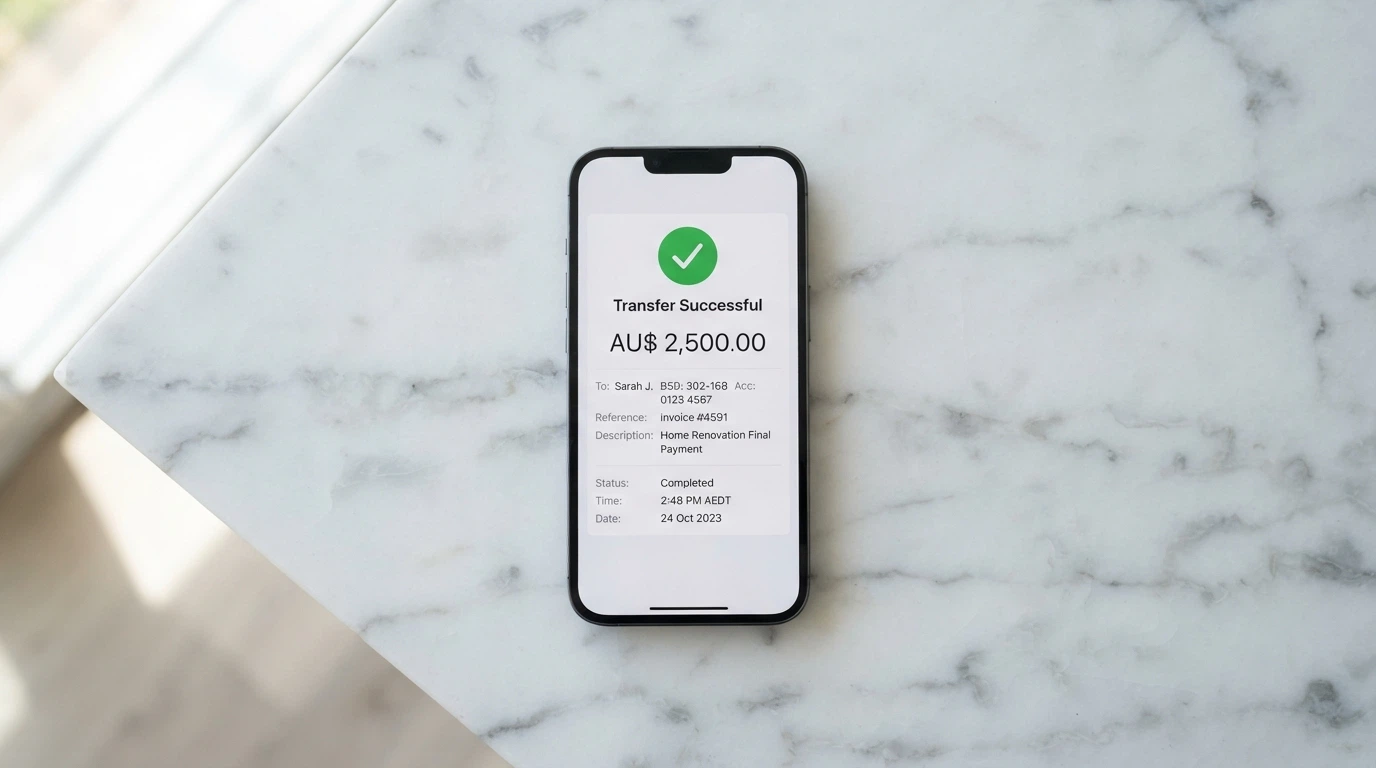
For an Australian punter playing at an offshore Curaçao-licensed mobile casino, PayID via Osko is the deposit rail that combines the speed of a phone-first experience with the legal standing of a recognised Australian payment method. The deposit is instant; the operator receives the funds in real time, and the player is in a session within a minute of the transfer. The withdrawal side is where PayID stops being the same story.
BPAY, debit cards and the rails that take longer
Not every deposit needs to clear in 30 seconds. For larger transactions, BPAY is the rail Australian banks support for high-value single payments, and some banks allow BPAY transactions of AU$20,000 or more in a single payment — a ceiling that PayID does not reach. The trade is time. BPAY processes on bank business days only; a deposit made on a Friday afternoon may not clear until Monday. A punter depositing on a weekday morning will see the funds in their casino account by afternoon; a punter depositing on a Friday evening is waiting through the weekend.
Debit card is the baseline. Every legal Australian deposit route is a debit card, a bank transfer, PayID/Osko or BPAY — and every legal route requires identity verification. Credit cards, credit-related products and digital currency have been banned as payment for online wagering since 11 June 2024, with penalties of up to AU$247,500 for operators that accept them. A punter asked for a credit card or a crypto deposit at an Australian-facing casino is being served by someone outside the Australian rules. The payment method is the tell.
Crypto at mobile casinos: the ban and the workaround
Bitcoin, altcoins and the anonymity trade-off
Crypto is banned as payment for online wagering in Australia from 11 June 2024, alongside credit cards and credit-related products. The Interactive Gambling Amendment (Credit and Other Measures) Act 2023 carries penalties of up to AU$247,500 for non-compliant operators. An offshore casino that accepts Bitcoin, Ethereum or USDT from an Australian player is taking the payment in defiance of the Australian rule, and the fact that it offers crypto at all is the strongest single signal that the operator sits outside the Australian regulatory perimeter.
The privacy case for crypto is real and the recourse case is the other half. A punter who deposits via Bitcoin gives up the chargeback right that a debit card carries, gives up the Australian consumer protection that the ACMA cannot apply to an offshore site, and gives up the BetStop coverage that the National Self-Exclusion Register provides to AU-licensed wagering services. The site itself can be blocked by an ISP at any time — the ACMA has had 1,564 illegal gambling and affiliate websites blocked as at March 2026, and the blocking list grows — and a balance held in crypto on a blocked site is not a balance the punter can recover through any Australian channel. The privacy gain is real; the loss of recourse is the same size.
New mobile casinos worth a look in 2026
- New offshore entrants reaching Australian mobile players in 2026 tend to launch with a heavier mobile-first build than incumbents — portrait-optimised lobbies, thumb-reachable navigation, and HTML5 cashier flows that match what the Australian phone market expects.
- Fresh brands also tend to carry more aggressive welcome structures (high match percentages, larger free-spin bundles, looser-looking wagering multiples) because they are buying reach against an established competitor set.
- The freshness trade is track record. A brand launched this year has no multi-year history the punter can read; an older brand has published complaints, publicised withdrawal disputes, and a regulator footprint (or its absence) the punter can assess.
- Specific new-operator bonus and licence details should be verified at the operator’s own terms page at the time of reading — research for this review did not confirm a particular new-entrant bonus and licence set in 2026.
Free play or real money: the two modes compared
Switching to real money: what changes
Every mobile pokie lobby in the featured set offers a demo mode that requires no deposit and, at most operators, no registration. The pokies play the same way: the same RTP, the same volatility, the same bonus features, the same max-win ceiling. A punter who wants to learn a pokie’s rhythm before committing a dollar can run a hundred demo spins and learn it.
Switching to real money changes the wrapper, not the game. The cashier becomes the next screen the punter sees; identity verification is required at the first withdrawal under Australian rules; bonus funds only activate on a real-money deposit; and the legal position does not change. The IGA targets the provider, not the player — the individual punter is not prosecuted for playing at an offshore casino. What changes is what the punter can do if something goes wrong: at a licensed AU wagering service there is a state regulator and an Australian complaints body; at an offshore casino there is the operator’s own terms page and the ACMA’s blocking power, which is not a money-recovery mechanism. The two modes play the same game, but the real-money mode is the one where the operator’s published terms are the only protection the punter has.
The legal reality: no Australian casino licence exists
The Interactive Gambling Act and the prohibition
The Interactive Gambling Act 2001 makes it an offence to provide online casino games, online pokies or in-play sports betting to a person in Australia. The Interactive Gambling Amendment Act 2017 strengthened the prohibition. The ACMA enforces it: the regulator investigates complaints, issues formal warnings, refers operators for civil penalty proceedings and directs ISPs to block illegal sites. The record is 1,564 illegal gambling and affiliate websites blocked as at March 2026, and more than 225 illegal services have withdrawn from the Australian market since 2017. The prohibition is enforced, not nominal.
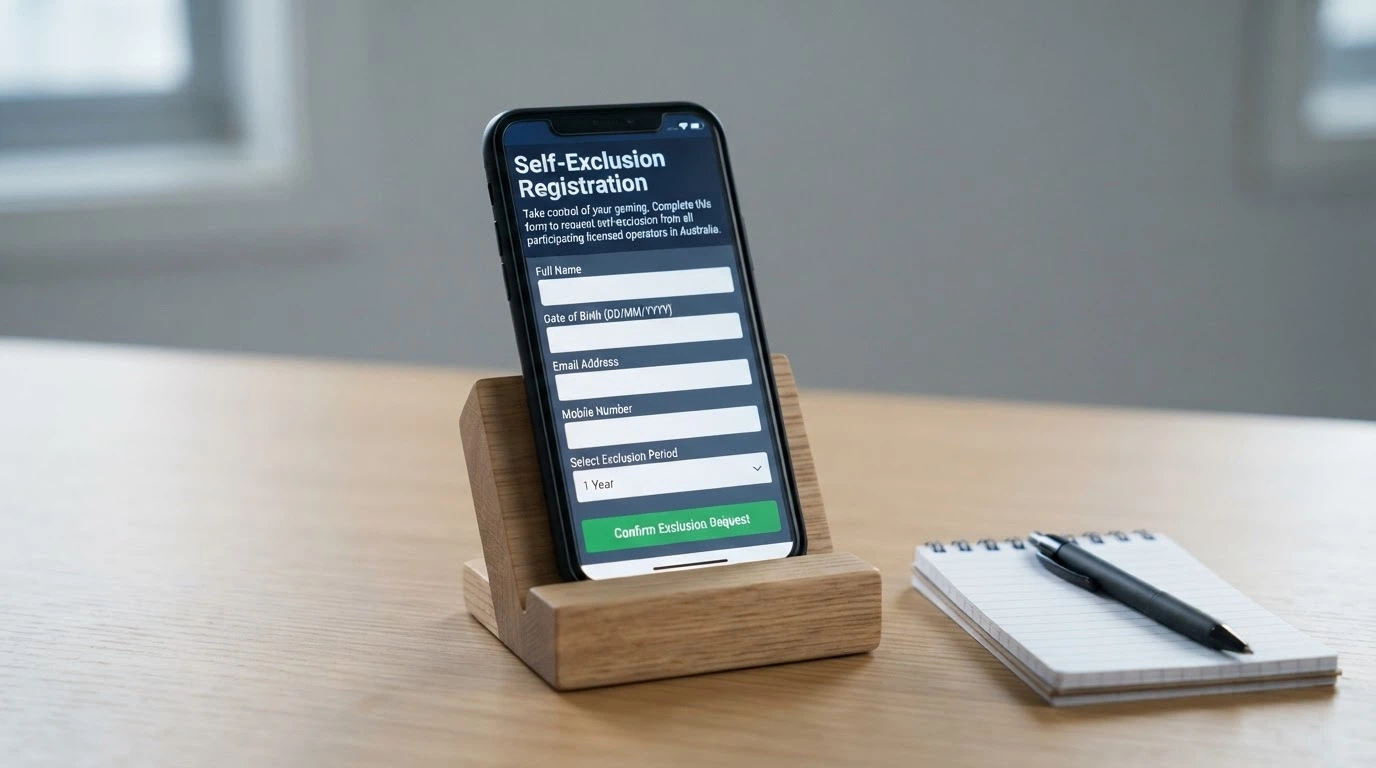
The legal position for the individual player is clear. The IGA targets the provider, not the punter — the individual is not prosecuted for playing at an offshore casino. What the punter does not get is the rest of the Australian consumer-protection system: no Australian complaints body, no ACMA money recovery, no BetStop coverage (BetStop binds Australian-licensed wagering services only; an offshore casino is not connected to the register and will keep taking a self-excluded person’s money), and no recourse if the operator refuses a withdrawal or closes the account. The site itself can be blocked at any time with a balance still on it. The regulator blocks the supply; it does not retrieve the demand.
The 2026 gambling reform: what changes on 1 January 2027
The Interactive Gambling Amendment (Gambling Reform) Bill 2026 passed Parliament on 19 August 2026; its measures commence on 1 January 2027. The reform binds Australian-licensed wagering services, not the offshore mobile casinos on this page. The practical effect for an Australian punter at an offshore casino is indirect, and it runs through three mechanisms.
The first is bank authority to block transactions to illegal gambling operators. From 1 January 2027, banks and payment providers can decline or delay a transfer that goes to an offshore casino, which is a payments-side enforcement layer that did not previously exist. The second is the inducement marketing ban: direct marketing of bonuses and offers to a licensed wagering customer is prohibited for 14 days after sign-up, for three months after the customer deregisters from BetStop, and indefinitely for customers identified as at-risk of gambling-related harm. The third is the new AdStop register, administered by the ACMA and funded by a cost-recovery levy on licensed wagering providers, which lets an Australian consumer opt out of wagering advertising across the licensed market.
The advertising-side measures are tighter: from 1 January 2027, no more than three wagering ads per hour between 6:00 am and 8:30 pm, a live-sport blackout from 15 minutes before to 5 minutes after a live event, no broadcasting of sporting odds, no wagering ads on radio during school drop-off and pick-up times, and a bar on athletes, celebrities and influencers promoting wagering products. The package is the largest single tightening of Australian wagering advertising in two decades. None of it reaches the offshore mobile casino directly — those operators are not bound by the Australian rule — but the licensed wagering market around them shrinks in marketing volume, and the bank-blocking power is a real change to how money reaches an offshore site.
Staying in control: tools, limits and where to get help
Limits, cool-off and the tools inside the casino lobby
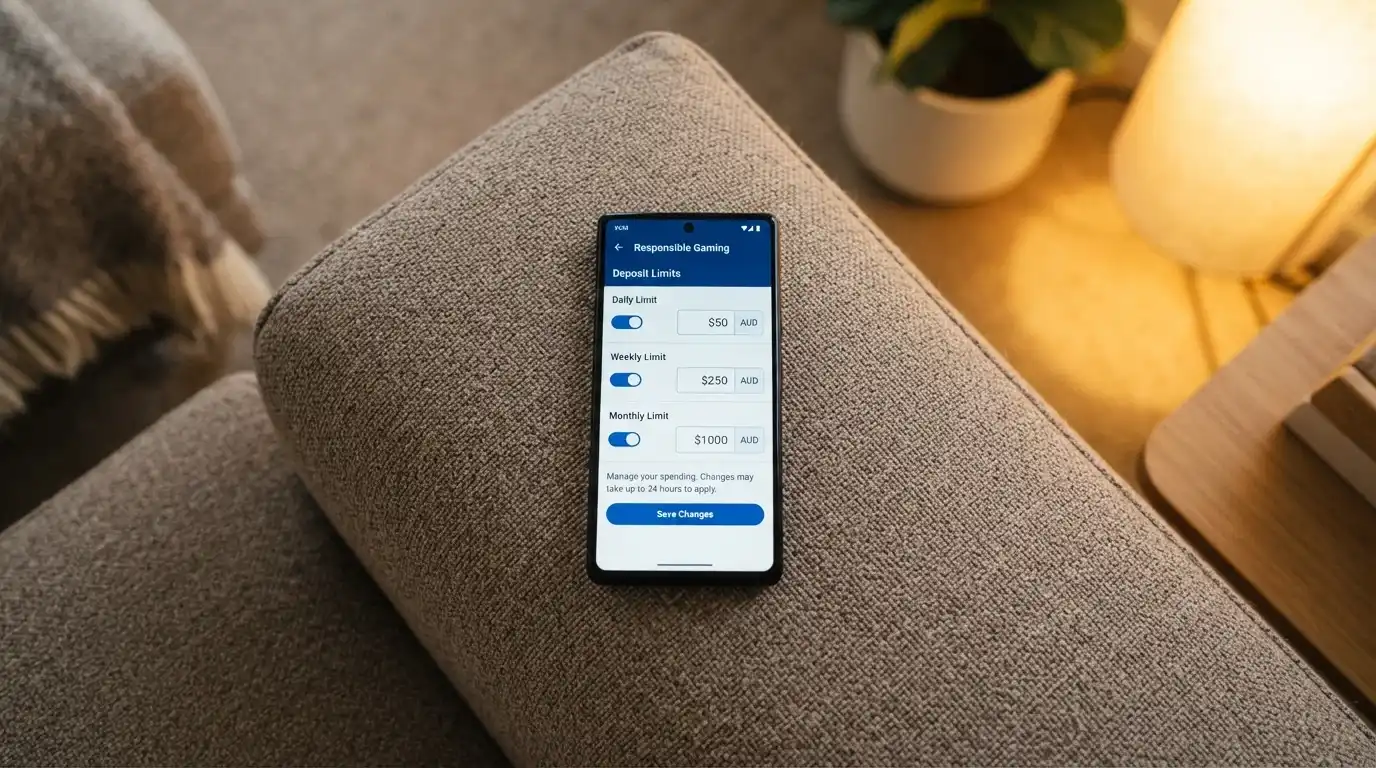
- Deposit limits (daily, weekly, monthly) are the baseline at every AU-facing offshore casino; a punter can set them in the account settings, and the operator enforces them on the cashier.
- Take-a-break is the short-form self-exclusion — a 24-hour, 7-day or 30-day lock that an Australian punter can activate from the account without contacting support.
- Activity statements show the punter’s deposit, withdrawal and net position over a chosen window; they are the document a punter reads when the picture of their own play is unclear.
- Session timers and reality-check pop-ups interrupt the session at a set interval to remind the punter how long they have been playing; they are configurable at most operators and off by default at some.
- FairGO’s one-click 24-hour cool-off is the rare operator-side responsible-gambling tool in the offshore market — the punter hits a single button in the account settings and the account is locked for 24 hours without contacting support.
- BetStop is not connected to any of these. BetStop binds Australian-licensed wagering services only; an offshore casino is not connected to the register and will keep taking a self-excluded person’s money.
BetStop, Gambling Help Online and where to get help
BetStop — the National Self-Exclusion Register — launched on 21 August 2023. As at 31 March 2026, 59,830 people had registered and 37,247 had active exclusions. The register covers Australian-licensed wagering services only: a single registration excludes a person from every Australian-licensed online and phone wagering service in one step. Offshore mobile casinos are not connected. A punter who registers with BetStop and then plays at a Curaçao-licensed mobile casino receives no protection from the registration, and the offshore casino will keep taking their money. The gap is the one structural fact that the responsible-gambling infrastructure does not close.
The harm numbers are the reason the infrastructure matters. About 2.1 percent of Australian adults — roughly 430,000 people — experience problem gambling; the AIHW put high-risk gambling at 1.8 percent in 2022. The Roy Morgan Gambling Harm Index from July 2026 put the total affected at 3.32 million Australians, or 15.1 percent of the adult population — including those experiencing harm from their own gambling and those affected by someone else’s. The Journal of Gambling Studies model from Browne et al. put the at-risk or problem-gambling adult population at roughly 1,970,000. About 3.29 million Australians aged five and over are affected annually by their own or another person’s gambling, including approximately 1.38 million adult affected others and around 280,000 affected children. Aboriginal and/or Torres Strait Islanders sit at 27.1 percent risk of gambling harm versus 14.6 percent for non-Indigenous Australians.
Only 33.5 percent of Australian wagerers know BetStop exists, and only 26.5 percent of Australian adults know it exists. That awareness gap is itself a problem: “despite an estimated five million wagerers nationwide, including 400,000 high-risk gamblers, just 30,000 individuals currently have active exclusions through BetStop,” as Dr Kei Sakata of the Australian Gambling Research Centre put it. The register works for the people who reach it; it does not work for the people who do not know it exists.
For a punter who needs help now, the National Gambling Helpline is 1800 858 858 — free, confidential, 24/7, with online chat and counselling through Gambling Help Online. The help line is the part of the Australian infrastructure that is reachable from an offshore casino session, and the line does not require the punter to have stopped playing first.
How we evaluated and ranked these mobile casinos
The ranking rests on three measurable signals and one limitation. The first signal is licence status: every operator in the featured set is Curaçao-licensed; none is AU-licensed; the ACMA’s published line is that no AU casino licence exists. The second is AU traffic share from the AU operators skill, which is how often an Australian punter reached each brand in the period covered — a reach proxy, not a quality endorsement. The third is the game-provider mix that each operator’s own terms page confirms, which is the closest measurement of pokies depth the research carried.
The methodology behind the ranking, drawn from the top-ranking competitor pages, measures five hard filters: a valid licence, an HTML5 PayID cashier on phone, 1,500 or more portrait-optimised pokies, in-app live chat under five minutes on mobile, and published mobile-specific responsible-gambling controls. The featured operators score differently on each filter, and the ranking reflects where they sit on the composite rather than on any single one.
The limitation is the one this page has named throughout. Information regarding welcome bonuses, free spins, wagering requirements, bonus validity, and maximum cashouts remained unconfirmed for several operators in the set — Rainbet is the operator whose bonus terms were most thoroughly confirmed, and the rest sit somewhere on the scale between full terms publication and no confirmation at all. A punter comparing operators on bonus cost should read the operator’s own terms page at the time of signing up, because the marketing headline is not the document that determines what the bonus costs.
What this means for your next mobile session
The Australian mobile casino landscape in 2026 is defined by what it lacks — and the player who understands those gaps plays from a position of knowledge rather than hope.
Three structural facts sit underneath every operator on this page. First, there is no Australian online casino licence, anywhere in the country, and the ACMA’s enforcement record shows the prohibition is enforced, not nominal. Second, BetStop binds Australian-licensed wagering services only — an offshore casino is not connected to the register, and a self-excluded person who switches offshore gets no protection from the registration. Third, the individual player is not prosecuted under the IGA, but no Australian consumer protection applies either: the ACMA cannot recover money, there is no Australian complaints body, and the site can be blocked at any time with a balance still on it.
The arithmetic matters more than the headline. A 250 percent match sounds generous until the wagering requirement is read; an expected loss of roughly AU$245 over the course of clearing a AU$50 deposit on Rainbet’s Wager Lock path puts a price on the offer that the marketing page does not print. The payment rail matters too: PayID via Osko clears a deposit in under thirty seconds, every day, but the same operator’s withdrawal usually goes back through a one-to-three business day bank transfer rather than back through PayID. The deposit is instant; the payout is not.
What separates one offshore mobile casino from another, in practical terms, is what the operator publishes. Rainbet’s dual-path bonus terms are the most legible in the featured set. Royal Reels’s portrait-first PWA is the most deliberately built for a phone. FairGO’s one-click 24-hour cool-off is the rare operator-side responsible-gambling tool in this market. The headline match percentage is not the signal; the published terms are, and the punter who reads them before claiming is the one who knows what the bonus actually costs. Knowledge of the structural gaps is the only real protection the offshore market offers — and it is a protection that does not need a regulator’s permission to use.
Frequently asked questions
How do I know if a mobile casino is safe if it is not licensed in Australia?
Safety at an unlicensed Australian casino is something the player assesses, not something a regulator certifies. Check the licence number in the operator’s footer (Curaçao in every case here), the published bonus terms in full, the game-provider list, and an independent responsible-gambling help link. None of those replaces an Australian regulator you can complain to.
Can I self-exclude from offshore mobile casinos through BetStop?
No. BetStop is the National Self-Exclusion Register and binds Australian-licensed wagering services only. Offshore casinos are not connected to it, and a person registered with BetStop can still deposit and play at any Curaçao-licensed mobile casino. Self-exclusion at an offshore site requires requesting it directly from that operator.
What is the RTP on popular mobile pokies like Gates of Olympus or Book of Dead?
Published RTPs for the most-played mobile pokies sit in a tight band. Gates of Olympus runs at 96.50 percent, Book of Dead at 96.21 percent, and Bushido Blood at 97.11 percent. Sleeping Dragon Ultra Dark ships in three configurations — 96.50, 95.50 or 94.50 percent — and which one the player sees depends on the operator’s choice.
What are the wagering requirements on mobile casino welcome bonuses?
Wagering requirements across the featured set run from 30x to 50x the bonus balance. FairGO sets 30x on pokies with no maximum bet — the lightest in the ranking. Rainbet’s Wager Lock path sets 40x on deposit-plus-bonus, and Rocket Casino runs tiered at 45x under a AU$100 deposit and 50x above it.
Will the 2026 gambling reform affect mobile casino advertising?
The 2026 reform passed Parliament on 19 August 2026 and commences 1 January 2027. It binds Australian-licensed wagering services, not offshore mobile casinos. The indirect effect is real: banks gain power to block transactions to illegal operators, and inducement marketing is banned for licensed providers — both measures reshape the local marketing environment around offshore play.
How fast are PayID withdrawals from mobile casinos in Australia?
PayID deposits clear in under 30 seconds through Osko on the New Payments Platform, every day. Withdrawals are a different story — most offshore casinos that accept PayID for deposits send withdrawals through a standard bank transfer instead, adding one to three business days on top of the operator’s own processing time.
Prepared by the Online Pokies Real Money editorial staff.