
What an online casino reload bonus actually costs an Australian in 2026
Online casino is prohibited in Australia. There is no licence for it anywhere in the country — not federally, not in any state or territory — and every reload bonus an Australian player encounters comes from an offshore operator sitting outside Australian consumer law. The Interactive Gambling Act 2001 makes it an offence to provide an online casino to a person physically in Australia; the individual player is not prosecuted, but the player is also the only backstop on their own money. That is the framing fact behind every offer on this page, and it shapes how the maths works, how the wagering terms land, and what recourse exists when something goes wrong.

Current as of 18 October 2026; verified against the Australian Communications and Media Authority (ACMA) under the Interactive Gambling Act 2001, the National Self-Exclusion Register (BetStop), and the Interactive Gambling Amendment (Gambling Reform) Bill 2026 as enacted.
Table of Contents
- Why every reload bonus comes with fine print
- 10 offshore casinos offering reload bonuses to Australians in 2026
- The uncomfortable truth about online casino reloads in Australia
- How your deposit reaches an offshore casino — and why it matters
- Claiming reload bonuses from your phone in minutes
- What happens when the fun stops — help that actually works
- How we evaluated these reload-bonus casinos
- Your reload bonus decision: what the fine print means for your money
- Frequently asked questions
Why every reload bonus comes with fine print
Every reload bonus carries a marketing promise and a small-print cost. The marketing promise is a percentage — a “100% match” or a “50% boost” — attached to a deposit the player has already decided to make. The small print is what determines whether the bonus is worth claiming: the wagering multiple, the cap, the game weighting, the maximum bet, the expiry, and the maximum cashout. Two reload bonuses at different operators can carry the same headline percentage and entirely different real costs to the player, because the fine print moves while the headline number does not.
The phrase “fine print” undersells what is really happening. A reload bonus is not a discount on play, nor a gift, nor a “thank you” from the operator in any normal sense. It is a price mechanism that costs the operator less than its cash equivalent and costs the player more than the cash equivalent would, because the bonus funds are tied to a turnover requirement the player must clear before they can be withdrawn. The house edge applies to that turnover exactly the way it applies to any other bet. The bonus simply adds a multiplier on top.
For an Australian player, that mechanism has an additional layer: the product itself is prohibited, so the operator offering it is offshore, the licence is not Australian, and the Australian consumer protections a player might expect do not apply. The fine print is not the only thing to read. The whole document is.
What a reload bonus actually is
A reload bonus is a deposit-triggered reward offered to existing players at an online casino — that is the “reload” part, as distinct from the welcome bonus paid on a first deposit. The structure is a percentage match of the deposit up to a stated cap: deposit $100, receive a 50% match up to $200, the bonus funds land in a separate balance, and the player plays through the wagering requirement before the bonus converts to withdrawable cash. The mechanics vary, but the core elements are consistent across the offshore AU-facing market.
A match reload attaches the bonus value to a percentage of the deposit — 25%, 50%, 75% or 100% are common; larger percentages are not automatically better because the wagering multiple usually moves with them. A cap limits how much of the deposit the bonus applies to — “100% up to $200” caps the bonus at $200 even if the deposit is $500. Free-spin reloads attach a fixed number of spins to a deposit, usually on a named pokie, with the spin value and any winnings from those spins subject to their own wagering. Cashback reloads pay back a percentage of net losses over a defined period, typically a week, and carry lower wagering than a match reload or no wagering at all.
Casinos offer reload bonuses for the same reason any retailer offers a loyalty discount: retention. The welcome bonus is acquisition cost — the operator pays a premium to convert a new depositor, and that premium is built into the bonus structure. A reload bonus is cheaper for the operator because the player has already proven they will deposit and play, and the operator only needs to keep them depositing rather than lure them in the first place. The economics of reload are tighter, and the wagering terms are often tighter too.
Outside the casino industry, a reload is a fresh load — and that is what the bonus rewards. The player reloads their account and the casino reloads their play money with bonus funds. The vocabulary fits. The economics do not favour the player.
Reload versus welcome bonuses: what changes after your first deposit
The welcome bonus is the casino’s biggest single offer. It exists to convert a non-customer into a customer, and casinos price it accordingly: large match percentages, high caps, and sometimes hundreds of free spins on a marquee pokie. The wagering requirement on a welcome bonus is typically higher than on a reload — not because the casino wants to keep the welcome money, but because the welcome bonus is bigger and the casino wants to recover the cost across a longer play period.
A reload bonus is smaller on almost every dimension. The match percentage is lower. The cap is lower. The free-spin count, where it appears, is lower. The wagering multiple is sometimes lower — and that is the single most important difference, because wagering is where the real cost of any bonus lives. A 35× wagering requirement on a $200 bonus means the player must place $7,000 in bets before the bonus converts to withdrawable cash; a 25× wagering requirement on a $200 reload means the player must place $5,000 in bets before the same conversion. The first $7,000 figure costs the player more in expected losses than the second $5,000 figure at any given house edge.
Why a smaller-looking reload can still be the better deal. The headline match percentage means little without the wagering figure beside it. A 100% welcome bonus with a 50× wagering requirement costs more in expected player losses than a 50% reload with a 20× wagering requirement, even though the welcome bonus is twice the headline value, because the turnover the welcome forces the player through is so much larger. Reload bonuses are not always better deals, but the smaller headline number is misleading on its own. The calculation that decides whether a bonus is worth claiming is the bonus value times the wagering multiple, not the bonus value alone.
The two bonus types also sit at different points in the casino’s retention funnel. The welcome bonus is the door. The reload bonus is the reason to come back the next week. A casino that runs heavy welcome offers and weak reloads is trying to acquire customers it cannot keep. A casino that runs moderate welcomes and stronger reloads is trying to keep the customers it has paid to acquire.
The five types of reload bonuses Australian players will see
The phrase “reload bonus” covers at least five structurally different offers. Each carries its own terms, and each has a different way of being expensive.

The percentage-match reload is the standard. A deposit is matched at a stated percentage up to a cap, and the matched funds are tied to a wagering requirement. The terms that typically shift are the match percentage, the cap, the wagering multiple, the game weighting (how much each game type contributes to clearing the requirement), the maximum bet while bonus funds are active, and the expiry window. The match reload is the easiest reload to read on a terms page and the easiest to misread, because the headline percentage masks the wagering figure.
Free-spin reloads are pokies-only. A deposit triggers a fixed number of spins on a named pokie — sometimes a popular title, sometimes a new release the operator wants to promote. The spin value is fixed (often $0.10 or $0.20 per spin), and any winnings from the spins are credited as bonus funds with their own wagering requirement. The terms to check are the spin value (which determines the maximum win), the eligible game (which determines the RTP of the bonus), and the wagering on spin winnings (which is often higher than the wagering on a match reload). A free-spin reload that looks generous can be the worst deal on the page if the spin value is low and the wagering on winnings is high.
Cashback reloads are a loss-rebate model. A percentage of net losses over a defined period — a day, a week, a weekend — is returned to the player, usually as bonus funds with reduced or no wagering. Cashback reloads are the most player-friendly type when the percentage is meaningful (10% or more) and the wagering is low or zero. They are also the most quietly expensive when the percentage is small (5% or less) and the wagering is high, because a small percentage of large losses is still a small number.
High-roller reloads target the players who deposit larger amounts. The cap is higher — sometimes into the thousands — and the wagering requirement may differ from the standard reload. The terms to check are the minimum deposit that triggers the reload (often $500 or $1,000), the cap, the wagering, and whether the maximum bet while bonus funds are active is also lifted. A high-roller reload at the wrong operator can cost a high-stakes player more in expected losses than the same play without a bonus, because the turnover requirement grows with the deposit.
VIP and loyalty-tier reloads sit behind a status threshold the player must reach through deposits and play. The terms are usually negotiated — or appear to be — and the offer is communicated by a personal account manager rather than appearing on a public promotions page. The terms to check are the same as any other reload, plus the loyalty tier’s own contribution rules (how many loyalty points a dollar of play earns, how the points convert to reload bonuses, whether points expire). A VIP reload is not automatically better than a standard reload; it is sometimes worse, because the loyalty conversion math can cost the player more than a flat percentage match would.
Wagering requirements: the number that decides if a reload bonus is worth claiming
The wagering requirement — also called the playthrough requirement or the turnover requirement — is the multiplier the player must bet through before bonus funds convert to withdrawable cash. A 30× wagering requirement on a $100 bonus means $3,000 in bets before the $100 converts. A 40× wagering requirement on the same $100 bonus means $4,000 in bets.
The wagering multiple alone does not determine the cost. The other half of the equation is the house edge on the games played while clearing the requirement. A bonus cleared entirely on a 96% RTP pokie costs 4% of the turnover in expected losses; the same bonus cleared entirely on a 98% RTP pokie costs 2%. The two clearance routes produce different real costs even at the same wagering multiple.
Game weighting is where the cost shifts most. Pokies typically contribute 100% of each bet toward the wagering requirement; table games and live dealer games often contribute 10%, 20% or zero. A player who tries to clear a reload bonus on blackjack may find that 90% of each bet does not count, lengthening the clearance path by a factor of ten. The terms page will state the weighting — the reader should look for the small table that breaks it down by game type. A reload bonus that excludes the player’s preferred game from contributing to wagering is, for that player, not the same bonus at all.
The interplay of wagering, cap, max bet and expiry is where the marketing meets the reality. A 25× wagering requirement on a $500 bonus is $12,500 in turnover, which is a meaningful number of spins at most stakes. If the maximum bet while bonus funds are active is $5, the player is forced into small-stake play; if the bonus expires in 7 days, the player must clear it within a week. Both conditions change the cost because they constrain the player’s choice of how to clear the turnover.
The headline match percentage means little without the wagering figure beside it. A 100% match with a 50× wagering is more expensive in expected losses than a 50% match with a 20× wagering, at any house edge the player is realistically playing against. The number that decides whether a reload bonus is worth claiming is the wagering multiple — not the match rate, not the cap, not the free-spin count.
How to claim a reload bonus in three steps
Claiming a reload bonus at an offshore casino follows a consistent sequence across operators, though the details of each step differ. The sequence is: log in, find the offer in the promotions or cashier page, opt in or enter a bonus selection before depositing, and confirm the bonus credits before playing.
Step one is the login. A player with an existing account signs in; a new player at the same operator signs up first. Most offshore AU-facing operators allow sign-up and login from an Australian IP address, though some geo-block and the player is bounced to a regional site. Whether the operator accepts an Australian player is not a guarantee written anywhere; it is a fact the player discovers at the door.
Step two is finding and selecting the offer. The reload bonus lives in the cashier or the promotions tab; some operators require a click to opt in, others require no action and credit the bonus automatically on a qualifying deposit. A handful of operators require a code or a selection at the deposit screen. The critical move at this step is to choose the bonus before the deposit lands, because most reload bonuses do not apply retroactively to a deposit made without the bonus selected.
Step three is the qualifying deposit. The minimum deposit to trigger the reload is stated on the offer page — usually $20 or $30 — and the bonus typically credits immediately. The player should confirm the bonus funds have landed in the bonus balance before placing the first bet. If the bonus has not credited, the player should contact support before playing, because a deposit played without the bonus may not be eligible for it after the fact.
The trap at step three is the deposit method. If the player deposits by a method the bonus excludes — most commonly a wallet-to-wallet transfer or a specific e-wallet — the bonus does not trigger. The terms page will state the eligible deposit methods; reading the small print before depositing is the cheapest insurance on the page.
10 offshore casinos offering reload bonuses to Australians in 2026
Every operator on this list is offshore. None holds an Australian casino licence, because no such licence can exist: online casino is prohibited in Australia under the Interactive Gambling Act 2001, and the Interactive Gambling Amendment Act 2017 closed the loopholes offshore operators had used to reach Australian players. Each brand below offers an unlicensed product to the Australian market, and each falls outside Australian consumer protection. The list is ordered by Australian player presence — by the volume of tracked AU traffic each operator draws — and not by the generosity of its reload bonus, which this run could not verify at the operator level.
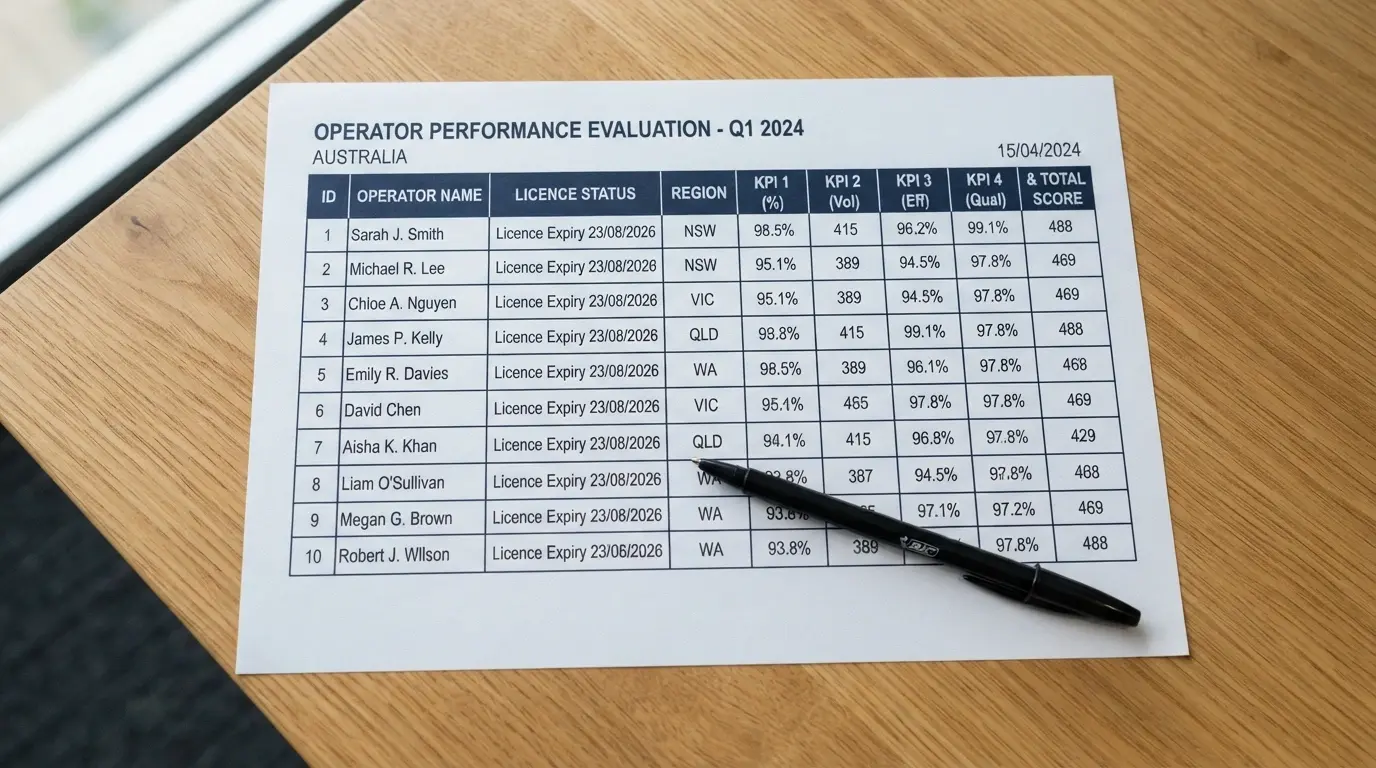
| Operator | Licence Status | Domain |
|---|---|---|
| Rocket Play | Offshore — no AU licence | Rocketplay.com |
| Skycrown | Offshore — no AU licence | Skycrown.com |
| Royal Reels | Offshore — no AU licence | Royalreels.com |
| WinSpirit | Offshore — no AU licence | Winspirit.com |
| Stake | Offshore — no AU licence | Stake.com |
| Rainbet | Offshore — no AU licence | Rainbet.com |
| Scream Casino | Offshore — no AU licence | Screamcasino.com |
| FairGO | Offshore — no AU licence | Fairgocasino.com.au |
| Bizzo Casino | Offshore — no AU licence | Bizzocasino.com |
| Rocket Casino | Offshore — no AU licence | Rocketcasino.com |
What the table does not carry is the reload-bonus terms. Research for this article could not verify the current reload offer, wagering requirement, validity window or game eligibility at any of these operators — the live data was unavailable this run — and the operator-by-operator sections that follow state each brand’s market position, identity and offshore status rather than fabricate offer terms. The reader should check the operator’s own promotions page for the current reload details before depositing.
Rocket Play: the biggest offshore operator by Australian traffic
Rocket Play sits at the top of the AU-facing offshore market by tracked Australian player volume, and the volume is meaningful: it is the single largest offshore casino brand reaching Australian players. Its identity as an offshore operator is settled — the brand holds no Australian licence because the product is prohibited in Australia — and it operates from a domain registered outside Australia. Reload-bonus terms at Rocket Play were not verifiable this run; the operator’s own promotions page is where the current match percentage, cap, wagering requirement, expiry and game eligibility live, and the reader should check that page directly before claiming.
Rocket Play’s position in the AU-facing offshore market means its promotions are tuned to Australian player expectations: AUD acceptance, payment methods that work for Australian deposit routes, and customer support coverage across Australian time zones. None of those features make the product licensed; the brand is offshore, the licence is not Australian, and Australian consumer protection does not apply. What the scale does mean is that Rocket Play has the resources to maintain an ongoing reload calendar — weekly or weekend reloads are typical at operators of this size — rather than running a single welcome offer and going quiet.
Rocket Play is the largest offshore brand by AU traffic, and the reader should weigh that fact alongside the reload terms, which live on the operator’s own page. Scale tells the reader where most other Australian players are depositing; it does not tell the reader whether this is the better deal.
Skycrown: a major offshore brand with a material Australian player base
Skycrown is the second-largest offshore casino by tracked Australian traffic. The brand holds no Australian licence and operates from a domain registered outside Australia; online casino is prohibited in Australia, so no Australian casino licence can exist for Skycrown’s product. For the latest on its reload calendar and associated terms, visit the operator’s promotions page directly.
Skycrown’s reload calendar at operators of this size typically runs multiple offers — a weekend reload, a mid-week reload, and a free-spin drop tied to a new pokie release are common patterns. The reload terms an Australian player should look for are the same as at any offshore operator: the match percentage, the cap, the wagering multiple, the game weighting, the maximum bet, the expiry window, and the maximum cashout. None of these figures are guaranteed by an Australian regulator, because no Australian regulator has authority over Skycrown.
For an Australian player, Skycrown offers the same offshore model as Rocket Play at slightly smaller scale; the wagering terms are what decide whether the offer is worth claiming, and the reader must verify them directly with the operator before depositing.
Royal Reels: the offshore brand that built a loyal Australian following
Royal Reels sits in the middle of the AU-facing offshore market by tracked Australian traffic. It operates without an Australian licence, and its gambling products are prohibited in this jurisdiction. Royal Reels has built a recognisable presence among Australian players through pokies-focused marketing — the brand name itself signals a pokies orientation — and the reload offers at operators of this profile typically run on the pokies side, with match reloads or free-spin drops on marquee titles.
Reload-bonus terms at Royal Reels were not verifiable this run. The current match percentage, cap, wagering requirement, expiry and game eligibility live on the operator’s promotions page, and the reader should check the page directly. A pokies-focused operator’s reload terms are typically structured around pokies weighting — 100% contribution toward the wagering requirement — because that is where the operator wants the player to play.
Royal Reels is a mid-sized offshore brand with a pokies focus; the offer is worth claiming only if the wagering and game eligibility match what the reader is looking for, and the reader should check both on the operator’s own page before depositing.
WinSpirit: a growing offshore operator with AU-facing reload promotions
WinSpirit is a smaller offshore brand by tracked Australian traffic but a growing one, and its reload calendar at this stage of growth is typically promotional — the operator is competing for AU players against larger brands, so the reload terms are usually tuned to attract rather than retain. It also lacks an Australian licence, meaning its product is unlicensed here.
Reload-bonus terms at WinSpirit were not verifiable this run. Check the operator’s site for the current offer.
WinSpirit is a smaller, growing offshore brand whose reload terms are likely more promotional than the major brands; the wagering figure beside the match percentage is the one that tells the reader whether the offer is actually better.
Stake: the crypto-native platform Australians use for casino reloads
Stake is a different shape from the other operators on this list. Stake is crypto-native — the platform was built around cryptocurrency deposits and play, and fiat on-ramps (AUD deposits through PayID or debit card) are a secondary feature rather than the primary one. Like its peers, this brand lacks an Australian licence and offers prohibited casino services in the country.
The crypto-native model changes how a reload bonus works. A reload bonus at a fiat casino credits a matched bonus on a fiat deposit; a reload bonus at a crypto-native platform typically credits a matched bonus on a crypto deposit, denominated in the crypto used. The wagering requirement still applies, the game weighting still applies, the maximum bet still applies, and the expiry still applies — but the bonus amount and the player’s effective stake are denominated in a currency whose value moves during the clearance period. A Bitcoin-denominated bonus cleared over a week is exposed to Bitcoin’s price movement over that week.
Stake’s reload bonus information could not be verified this run. Visit their promotions page for the latest.
Stake is the crypto-native option on the list, and the player who chooses it is choosing crypto deposits on top of an offshore product; both decisions are the player’s to make consciously, with the credit-card and crypto ban as the most immediate signal of where the operator sits.
Rainbet: a newer offshore entrant with reload offers for Australian players
Rainbet is a smaller and newer offshore brand on the AU-facing market. It carries no local licence, and its casino product is prohibited in Australia. Newer offshore brands in this market typically compete on reload generosity — the operator is still acquiring players, and the reload calendar is tuned for acquisition rather than retention. For current offers, check the operator’s promotions page directly.
Rainbet is a newer offshore brand whose reload calendar is tuned for acquisition; the wagering figure decides each individual offer, and the reader should verify it on the operator’s own page before depositing.
Scream Casino: what this offshore brand offers Australian reload-bonus hunters
Scream Casino is a smaller offshore brand by tracked Australian traffic. It holds no Australian licence and is not authorised to provide these services in the country. Scream Casino’s marketing position on the AU-facing market is the high-energy, theme-driven segment, and the reload offers at operators of this profile are typically tied to themed promotions — Halloween reloads, summer reloads, and similar calendar-driven offers. The themed label is not the offer — the wagering terms, which vary, are. Check the operator’s promotions page for details.
FairGO: the .com.au domain targeting Australians — reload bonus reality check
FairGO’s domain ends in .com.au, and that suffix is the first thing an Australian player notices. A .com.au domain does not, however, mean an Australian licence. FairGO is an offshore operator without a local licence, offering prohibited products here. The .com.au suffix is a marketing choice, not a regulatory one, and an Australian player should not read it as a signal of Australian licensing.
FairGO’s offer details were not verifiable this run. The current offer lives on the operator’s promotions page. A .com.au domain suggests the operator is targeting Australian players deliberately, and the reload calendar at operators of this profile is typically tuned to Australian payment methods, Australian time zones, and Australian player expectations — but the product is still offshore, the licence is still not Australian, and Australian consumer protection still does not apply.
FairGO’s .com.au domain is a marketing signal, not a regulatory one; the wagering terms and game eligibility are what matter, and they are not loosened by the domain. The .com.au suffix is no shortcut around the same checks the player would run on any other offshore brand.
Bizzo Casino: an offshore operator with AU-facing reload promotions
Bizzo Casino is a mid-sized offshore brand by tracked Australian traffic. It operates without a local licence and its casino product is prohibited in Australia. Bizzo Casino’s marketing position on the AU-facing market is the broader multi-product segment — pokies, table games, live dealer — and the reload calendar at operators of this profile typically runs across the full game catalogue.
Bizzo Casino’s offer details were not verifiable this run. Visit the operator’s site for current details. A multi-product operator’s reload terms typically include game weighting that varies by category — pokies at 100%, table games and live dealer at lower percentages — and the player who prefers table games should check the weighting before depositing.
Bizzo Casino is a mid-sized multi-product offshore brand; game weighting is the figure a table-games player should check first, and the reader should verify both the weighting and the wagering multiple on the operator’s own page before depositing.
Rocket Casino: not to be confused with Rocket Play — what this offshore casino offers
Rocket Casino is a separate offshore brand from Rocket Play. The two names sound alike, the marketing is similar in tone, and an Australian player who has heard of one may assume they have heard of both — but they are different operators with different domains, different game libraries, and different reload calendars. Rocket Casino lacks an Australian licence, and its casino product is prohibited in Australia.
Rocket Casino’s offer details were not verifiable this run. Check the operator’s site for current details. The brand confusion between Rocket Casino and Rocket Play is itself a risk: an Australian player who assumes the two brands share a reload calendar, a loyalty programme or a complaint process will be wrong on all three. Each operator is its own entity.
Rocket Casino is a separate offshore brand from Rocket Play, and the shared “Rocket” prefix is not a shared reload offer — each operator’s terms must be checked separately on its own promotions page.
The uncomfortable truth about online casino reloads in Australia
Every reload bonus on this page sits outside Australian law. That is the central fact, and it is the fact that should sit behind every decision the reader makes about whether to claim one. Online casino is prohibited in Australia, no Australian licence exists for it, and every brand on the list above operates offshore and is not subject to Australian consumer protection. The remainder of this section lays out the statute, the enforcement record, the offshore gap in player protection, and the reform package that begins reshaping the licensed market from 1 January 2027.

The reason this matters for a reload bonus specifically is that a bonus is a long-tail commitment. A welcome bonus is a one-time decision; a reload bonus is an ongoing relationship — the player returns, deposits again, claims another bonus, plays through the wagering, and repeats. The risk profile of that relationship is different from the risk profile of a single deposit, because each step in the cycle creates an opportunity for the operator to apply terms the player has not read, change the offer without notice, or withdraw the bonus altogether. The offshore status amplifies each of those risks because there is no Australian regulator to complain to.
The Interactive Gambling Act: why online casino is banned in Australia
The Interactive Gambling Act 2001 (IGA) is the federal statute that makes providing an online casino to a person in Australia an offence. Online casino games, online pokies and in-play sports betting are all prohibited under the Act; lotteries and keno are permitted; race and sports wagering placed before the event is permitted under state and territory licences. There is no licence for online casino anywhere in the country — not federally, not in any state or territory — and the prohibition has been in place since 2001.
The Interactive Gambling Amendment Act 2017 strengthened the IGA by closing loopholes offshore operators had used to reach Australian players. Before 2017, some offshore operators argued that because they were not physically located in Australia, the IGA did not apply; the 2017 amendment made clear that providing a prohibited interactive gambling service to a person in Australia is an offence regardless of where the provider is based. The 2017 amendment also gave the Australian Communications and Media Authority (ACMA) formal enforcement and blocking powers, allowing it to direct Australian internet service providers to block illegal gambling websites.
The distinction between provider and player matters. The IGA targets the provider of the illegal service; the individual player is not prosecuted. An Australian player using an offshore casino commits no offence under the IGA. That is the legal position. It is also the only piece of consumer protection an Australian player has, and it is not consumer protection at all — it is the absence of criminal liability. The player’s money, the operator’s terms, the bonus’s fine print, the withdrawal’s delay: none of that is regulated by Australian law, because the operator is offshore and the player is unprotected.
Offshore operators: how they reach Australian players anyway
The enforcement numbers show the scale of what the IGA prohibition has not stopped. Since its first blocking request in November 2019, ACMA has had 1,564 illegal gambling and affiliate websites blocked by Australian internet service providers as of March 2026. More than 225 illegal services have withdrawn from the Australian market since 2017, when enforcement was strengthened. Those numbers describe a regulator active in the space, not a regulator that has won it.
How offshore casinos continue to reach Australian players is the operational reality behind those numbers. Operators move domains when domains are blocked; they rotate mirror sites; they accept payments through methods the Australian payment-ban does not fully cover. An offshore casino advertising a reload bonus to Australians is breaking the IGA prohibition itself, not merely an advertising rule, because providing an online casino to a person in Australia is the prohibited act regardless of how it is marketed.
What this means for the player is concrete. An Australian using an offshore casino has no Australian consumer protection, no Australian complaints body, and ACMA cannot recover anyone’s money. A dispute over a refused withdrawal, a voided win, a bonus that did not credit, a wagering requirement that was applied after the fact — none of these has an Australian resolution path, because the operator is not bound by Australian law and the regulator cannot compel offshore compliance. ACMA can block the site, but blocking does not refund the player’s balance. It cuts off access at the DNS level, and the player’s money is wherever the operator’s servers are.
The site can be blocked at any time, with a balance still on it. That is not a hypothetical risk; it is the mechanical consequence of DNS-level blocking. The player does not lose access because the operator shut down — the player loses access because the Australian regulator told the internet provider to redirect the domain. The withdrawal window is whatever the operator allows, and the operator’s terms can change that window unilaterally.
BetStop and player protection: what the safety net does not catch
BetStop — the National Self-Exclusion Register — is one of the strongest player-protection tools in any gambling market worldwide. A single registration excludes a person from every Australian-licensed online and phone wagering service. The register has been live since August 2023. As at 31 July 2026, BetStop recorded 67,480 registrations in three years of operation, of which 41,290 exclusions were still active — more than 60% of everyone who ever registered. 78% of registrants were under 40, and 38% chose lifetime exclusion.
BetStop’s strength is exactly what makes its offshore gap so consequential. The register binds only Australian-licensed wagering services. An offshore casino is not licensed in Australia, is not connected to the register, and will continue accepting a self-excluded person’s money. The single registration that closes every licensed door does not touch the offshore door.
For an Australian player who has registered with BetStop and then claims a reload bonus at an offshore casino, the offshore casino has no obligation to honour the exclusion. The offshore operator may offer its own self-exclusion tool, and that tool may work as advertised; it may not. Either way, the offshore exclusion has no Australian regulatory oversight, because the operator is not an Australian licensee and the regulator is ACMA, which has no jurisdiction over the operator’s self-exclusion policy. The safety net catches the licensed market; the offshore market is a hole in the net.
The reform that reshapes online gambling from 1 January 2027
The Interactive Gambling Amendment (Gambling Reform) Bill 2026 passed Parliament on 19 August 2026. The measures in the Bill commence on 1 January 2027. The reform does not legalise online casino — the prohibition under the IGA remains — but it reshapes the surrounding framework in ways that matter for the Australian player considering an offshore reload bonus.
The advertising package is the most visible part. From 1 January 2027, no more than three wagering ads per hour will be permitted between 6:00 am and 8:30 pm, with a live-sport blackout from 15 minutes before a live sporting event until 5 minutes after it ends. Radio wagering ads are barred during school drop-off and pick-up times; broadcasting sporting odds is banned outright. Online wagering ads may be shown only to a user who is logged in, confirmed over 18 and offered an opt-out. Wagering advertising is banned inside sports venues and on the uniforms of players and officials. Athletes, celebrities and influencers are barred from promoting wagering products.
The inducement marketing package is the part that touches reload bonuses most directly. From 1 January 2027, direct marketing of inducements is prohibited for 14 days after a customer signs up, for three months after a person deregisters from BetStop, and indefinitely for customers identified as at risk of gambling-related harm. Those restrictions apply to licensed Australian wagering operators — they do not bind offshore casinos — but they shrink the marketing space in which licensed operators compete, which in turn affects the relative attractiveness of licensed versus offshore offers.
BetStop is strengthened. The three-month post-deregistration ban on direct marketing of inducements is part of the reform, and the register’s operation is tightened. Offshore casinos are still not connected to BetStop, regardless of the reform.
The payment-side authority is the most concrete change for the offshore market. From 1 January 2027, banks and payment providers gain express authority to block transactions to illegal gambling operators. An Australian player depositing at an offshore casino may find the deposit declined at the bank level, with no operator involvement. The bank-blocking authority does not legalise offshore casino, and it does not extend BetStop to offshore operators; it adds a third enforcement layer — alongside ACMA blocking and operator withdrawal — that did not previously exist.
The reform tightens the licensed market but does not make offshore casino legal. The prohibition under the IGA is unchanged. The reform adds tools; it does not change the underlying status of the product. An Australian player in 2026 considering a reload bonus at an offshore casino is considering the same unlicensed product the prohibition has covered since 2001 — the rules around it have changed, the rules against it have not.
How your deposit reaches an offshore casino — and why it matters
The deposit is the part of the relationship where Australian rules and the offshore operator meet most directly. Australia bans credit cards and crypto for online wagering; the legal deposit routes for licensed wagering are debit card, bank transfer, PayID/Osko and BPAY; from 1 January 2027 banks gain authority to block transactions to illegal operators.
| Deposit Method | Key Characteristics |
|---|---|
| PayID/Osko | Instant AUD transfers |
| Debit Card | Common for smaller deposits |
| Bank Transfer | Suitable for larger amounts |
| BPAY | Bill-payment flow alternative |
An offshore casino is not bound by the credit-card and crypto ban, but the ban is itself a tell: an Australian player asked for a credit card or Bitcoin by a gambling site is being served by someone outside Australian rules, and the deposit method tells the player that the rest of the relationship sits outside those rules too.
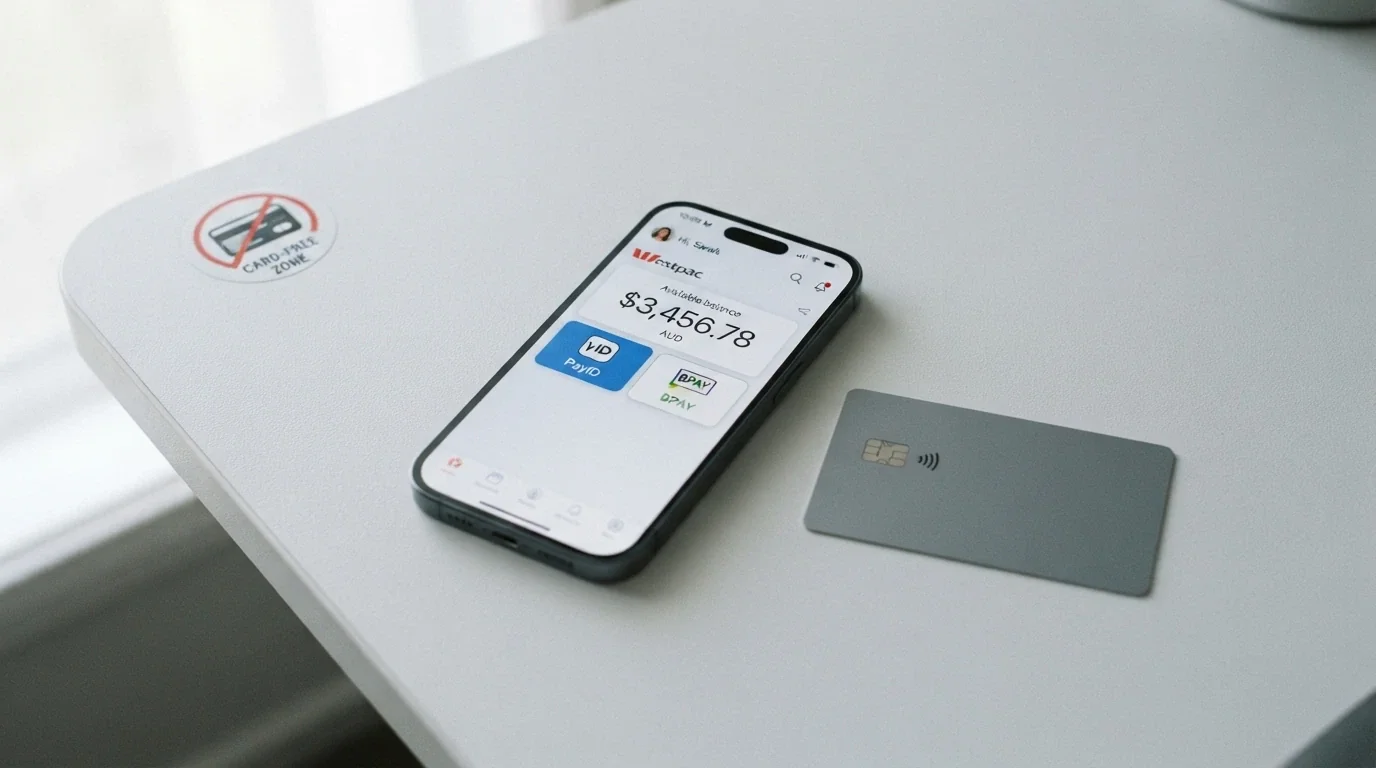
PayID, debit cards and the Aussie payment methods that still work
The four legal deposit routes for licensed Australian wagering are debit card, bank transfer, PayID/Osko and BPAY. PayID and Osko are the fast AUD transfer options — a PayID deposit clears in seconds, an Osko payment is part of the New Payments Platform and reaches the recipient almost immediately. Debit card is the most common route for smaller deposits; bank transfer covers larger amounts; BPAY is the bill-payment alternative for players who prefer that flow.
Offshore casino acceptance of each method varies. Some operators accept PayID; some do not. Some accept debit cards but treat the deposit as a credit-card transaction and decline it; some accept debit cards without distinguishing. The reader should check the cashier page before depositing, because the deposit method that works at one offshore operator may not work at another, and a failed deposit after a reload bonus has been selected is a frustrating waste of time. The credit-card ban is a payment tell, and the deposit method that the cashier accepts is the first signal an offshore casino sends about whether it is operating inside or outside Australian expectations.
Credit cards and crypto: what the ban means for reload-bonus players
Credit cards, credit-related products and digital currency — crypto — are banned as payment for online wagering in Australia. The ban commenced on 11 June 2024 under the Interactive Gambling Amendment (Credit and Other Measures) Act 2023. An operator that fails to enforce the ban faces penalties of up to $247,500. The ban targets the operator, not the player.
Why the ban was enacted is the part that matters for this page. The ban was a measure to reduce the harm of credit-funded gambling — players using credit they do not have to fund further play — and it was extended to crypto because crypto deposits were being used to circumvent the credit-card ban and because crypto’s anonymity made consumer protection harder to enforce. The ban is a payment-side expression of the IGA’s product prohibition: the product is illegal, so the funding routes for that product are restricted too.
For an Australian player who wants to deposit at an offshore casino, the ban is a tell. An offshore casino that still asks for a credit card or Bitcoin is signalling its unlicensed status in the deposit screen — that signal is plain, and the player should read it as plain. The operator is not bound by Australian law, because the operator is offshore and the product is prohibited; the deposit method is the most immediate evidence of that fact. From 1 January 2027, banks gain authority to block transactions to illegal operators, which means an Australian player’s bank may decline the deposit before the offshore casino ever sees it.
How long withdrawals actually take at offshore casinos
The withdrawal timeline at an offshore casino is whatever the operator says it is. There is no Australian regulatory backing for a stated payout time, no Australian complaints body to escalate a delayed withdrawal to, and no Australian authority that can compel an offshore operator to release funds. The KYC verification hold on first withdrawal is the standard delay — the operator must verify the player’s identity before processing the first cashout, and offshore operators vary in how long that verification takes — and once verification is complete, the operator’s stated payout window applies.
The reader should not treat a stated payout time as a guarantee. Stated payout windows at offshore casinos are aspirational rather than contractual in any enforceable sense. The terms page will say 24 hours, 48 hours, 3 business days — the figure is part of the operator’s marketing, not part of an Australian regulatory framework. A withdrawal that exceeds the stated window has no Australian remedy. The player can complain to the operator’s support team, can escalate through any dispute resolution process the operator claims to offer, and can in extremis raise the matter with ACMA — but ACMA cannot recover the player’s money. The block on the site cuts access; it does not cut a cheque.
Deposit limits, fees and what each method costs you
Australia caps the payment method, not the deposit amount. There is no federal deposit, loss or stake ceiling for online gambling in Australia, because the product those ceilings would govern is banned outright. Licensed wagering operators offer customer-set deposit limits and activity statements under their state or territory conditions, and those conditions differ between jurisdictions. A deposit limit at a licensed wagering operator is the player’s own setting, applied at the operator’s discretion under its licence conditions.
Offshore casinos set their own deposit rules. Some impose minimum deposits below the licensed market’s norm; some impose maximums the licensed market does not; some charge fees on deposits or withdrawals that the licensed market would not. Currency conversion is the silent cost the player often meets first. Depositing AUD at an offshore operator typically converts to USD or EUR at the operator’s exchange rate — and the operator’s exchange rate is not the rate the player’s bank offers, with a margin that goes to the operator. The conversion cost compounds over multiple deposits and withdrawals, and a player who reloads weekly will pay it many times.
The reader should ask the cashier page two questions before depositing: what is the minimum deposit, and what is the fee structure. A deposit method that costs 1-2% in conversion on the way in and 1-2% on the way out is a 2-4% drag on the bankroll over a deposit-withdrawal cycle. That is a small percentage with a compounding effect.
Claiming reload bonuses from your phone in minutes
Every operator on this list works through a mobile browser. Some also offer downloadable apps, but the dominant route for Australian players at offshore casinos is the instant-play browser — open the operator’s domain on a phone, log in, deposit, play. The mobile claiming flow follows the same deposit-and-bonus sequence as desktop, with the smaller screen changing which step is most likely to trip the player up.
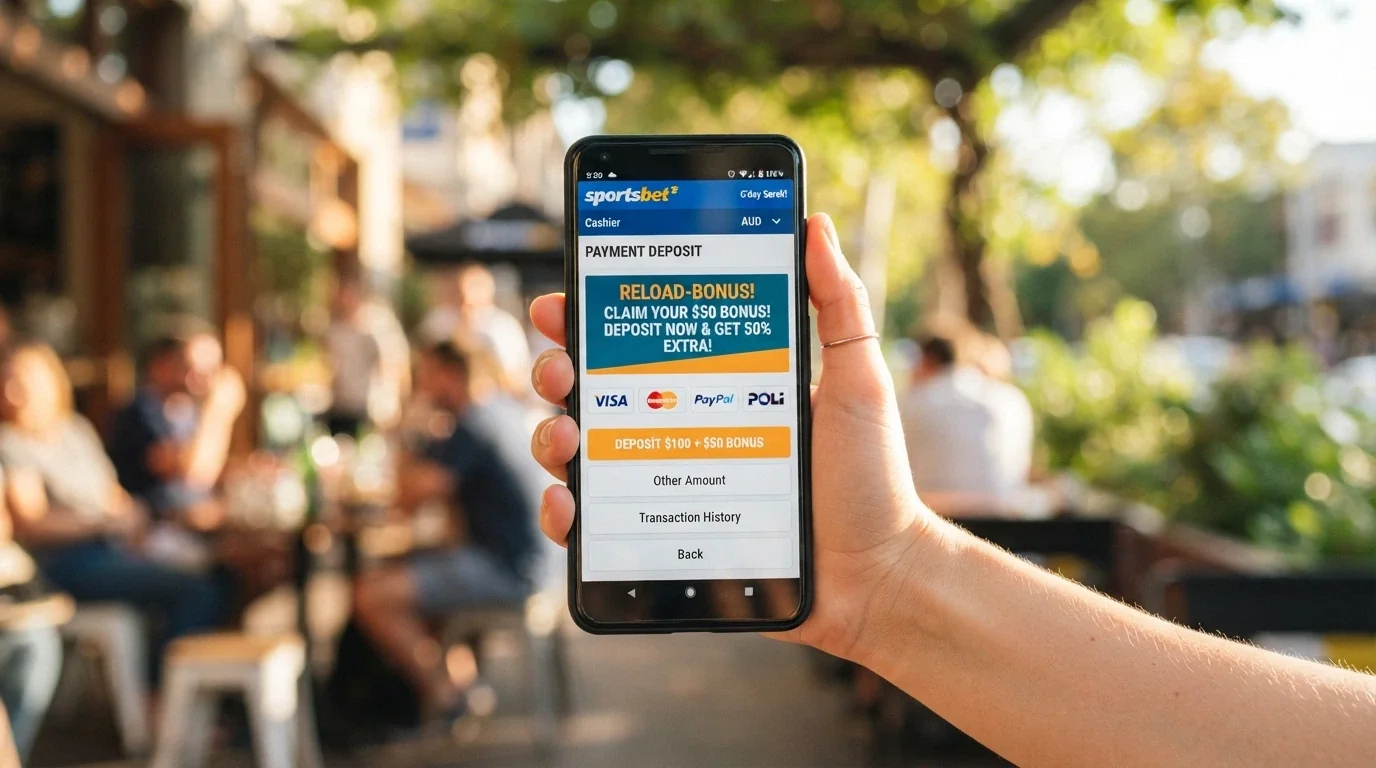
Instant play versus casino apps: what Australian players actually use
Instant-play browser casinos dominate the offshore AU-facing market because the alternative — a downloadable app — runs into platform restrictions. The Apple App Store and Google Play Store restrict real-money casino apps in most jurisdictions, and the AU-facing offshore market is no exception. A handful of operators offer a downloadable APK (for Android, installed outside the Play Store) or an iOS sideload, but those routes are not the default and the player who uses them should understand the installation method is itself outside the platform’s standard distribution.
Instant-play is not a downgrade. A modern HTML5 casino running in a mobile browser carries the same game library, the same cashier, the same bonus terms and the same wagering progress as the desktop version. The differences are ergonomic: the smaller screen makes the bonus-terms page harder to read, the deposit method selector smaller, and the wagering-progress tracker a longer scroll away. None of those differences change what the bonus is worth — they change how easy it is to verify.
iOS and Android: claiming reloads on any device
The reload-bonus claiming flow on a mobile screen runs in the same sequence as on desktop. The player logs in, navigates to the cashier or the promotions page, selects the reload bonus, makes the qualifying deposit, and confirms the bonus has credited before playing. The mobile-specific risk is the bonus-terms read: the terms page on a phone is harder to skim, and a player who skips reading it on a phone is the same player who would skip reading it on a desktop. The skill of reading the terms does not change with the screen size; the temptation to skip does.
Mobile push notifications from offshore casino apps are a separate issue. A player who has installed an offshore casino app or has the browser open with notifications enabled will receive promotional messages — reload offers, free-spin drops, time-limited promotions. Those notifications can be the trigger for an unplanned deposit, and an Australian player managing a budget should consider turning them off. The bonus prompt is the operator’s tool; the player decides whether to act on it.
What happens when the fun stops — help that actually works
The responsible-gambling infrastructure in Australia is real, free, confidential and effective — for licensed wagering and for the player regardless of where they have been playing. The offshore casino is a hole in the safety net, and the player needs to know which help reaches them and which does not.

BetStop and self-exclusion: the tool offshore casinos ignore
BetStop’s one-registration exclusion covers every Australian-licensed online and phone wagering service — covered in the section above on what the safety net does not catch — and that coverage is exactly what makes the offshore gap matter. A person who has registered with BetStop can still deposit at an offshore casino, can still claim a reload bonus, and can still play. The single registration that closes every licensed door does not touch the offshore door.
The numbers behind the register — 67,480 registrations in three years, 41,290 active, 78% under 40, 38% lifetime — describe a tool people use. They do not describe coverage of the offshore market, because the offshore market is not in BetStop’s reach.
Deposit limits, time limits and the controls you can set
Licensed Australian wagering operators offer customer-set deposit limits and activity statements under state-varying conditions. A deposit limit is the player’s own setting, applied at the operator’s discretion under its licence; an activity statement is a record of the player’s deposits and play over a defined period, available on request. The conditions vary by jurisdiction — different states have set different minimums for the limit’s application and different requirements for how the limit can be changed — and the player should read the licensed operator’s own terms.
Offshore casinos may offer their own deposit-limit tools, time-limit tools, or reality-check prompts. Those tools are voluntary on the operator’s side; they carry no Australian regulatory backing, and the operator can change them at any time. The licensed market’s deposit-limit framework exists because Australian regulation requires it; the offshore market’s deposit-limit framework, where it exists, exists because the operator has decided to offer it. The two are not equivalent.
Where to get help: helplines, counselling and the numbers that matter
The National Gambling Helpline is 1800 858 858 — free, confidential, staffed 24 hours a day, 7 days a week. Online chat and counselling are available through Gambling Help Online at gamblinghelponline.org.au. Those services work regardless of where the player has been playing; the helpline does not ask whether the player used a licensed operator or an offshore one, and the counsellor does not require the player to stop playing in order to talk.
The numbers that put the help in context are the harm-prevalence figures. Approximately 2.1% of Australian adults — roughly 430,000 people — experience problem gambling. The Australian Institute of Health and Welfare put high-risk gambling at 1.8% in 2022. Those are not small numbers, and they are not numbers that describe someone else: they describe the share of the adult population whose gambling has moved from entertainment into harm. The helpline is free; the threshold for calling it is the player’s own.
How we evaluated these reload-bonus casinos
The operator set on this page is drawn from BLASK BRANDS AU tracking data — operators with measurable Australian player traffic — and ordered by Australian player presence. The reload-bonus terms (match percentage, cap, wagering requirement, validity window, game eligibility) were checked against operator sites at the time of research and could not be verified at the operator level this run; the live-data gap is acknowledged in each operator section, and the article states what each brand’s identity and licence status are rather than fabricate offer terms.
The framing fact for every operator on the list is the prohibition on online casino in Australia under the IGA. No Australian casino licence exists; no operator on this list holds one; none can, because no licence can be issued for the product. The offshore status is not a footnote — it is the section that should be read before the operator reviews.
No operator paid for placement on this list. No ranking is influenced by commercial arrangement. The order is by tracked Australian player traffic, not by the generosity of reload offers, and the article does not endorse any operator as a place to play. The decision is the reader’s.
Your reload bonus decision: what the fine print means for your money
The article has laid out the offers, the law and the risks. Here is what the Australian player should actually do with that information.

Read the wagering terms before depositing. The wagering multiple — the number of times the bonus must be played through before it converts to withdrawable cash — is the figure that decides whether a reload bonus is worth claiming, not the match percentage. A 100% match with a 50× wagering is more expensive in expected losses than a 50% match with a 20× wagering, at any house edge the player is realistically playing against. The number that decides is the wagering multiple.
Check the deposit method against the credit-card and crypto ban. An Australian player asked for a credit card or Bitcoin by a gambling site is being served from outside Australian rules, and the deposit method tells the player that. The ban on credit cards and crypto for online wagering in Australia is itself a tell: an offshore casino asking for either is signalling its unlicensed status in the deposit screen. From 1 January 2027, the player’s bank may decline the deposit before the operator sees it.
Set a personal deposit and time limit before claiming any reload. A deposit limit is the player’s own setting; offshore casinos may offer their own limit tools, but those tools carry no Australian regulatory backing. The player is the only backstop on their own money at an offshore casino, and a personal limit set before the first deposit is the cheapest insurance on the page.
Know the help infrastructure regardless of where you play. The National Gambling Helpline (1800 858 858) is free, confidential and staffed 24/7; Gambling Help Online (gamblinghelponline.org.au) offers online chat and counselling. BetStop (the National Self-Exclusion Register) excludes a person from every Australian-licensed wagering service in a single registration, but does not reach offshore casinos. Those numbers and addresses work regardless of where the player has been playing.
The decision is the player’s, and this article’s job is to give the reader the facts to make it — not to push them toward any operator. The market is offshore, the product is prohibited, and the fine print is the only contract the player has. Reading it is not optional.
Frequently asked questions
Is it legal to claim a reload bonus at an online casino in Australia?
Claiming a reload bonus is not an offence under the Interactive Gambling Act 2001. The IGA targets the provider of the online casino service, not the individual player. An Australian player commits no offence by claiming one. The legal position on claiming is separate from the position on providing, and the player is on the claiming side.
Are reload bonuses at offshore casinos safe for Australian players?
An Australian using an offshore casino has no Australian complaints body, and ACMA cannot recover funds. The operator’s terms apply, and there is no Australian dispute path. The site can be blocked at any time with a balance still on it. The player is the only backstop on their own money.
What wagering requirements do reload bonuses at Australian-facing casinos typically have?
Reloads at offshore AU-facing casinos typically carry wagering requirements in the 30× to 50× range on bonus funds, with lower multiples on cashback and VIP offers. The wagering multiple is the figure that decides the bonus’s real cost. Higher match percentages usually come with higher wagering, and the multiple is what the reader weighs against the percentage.
What happens to my money if an offshore casino site is blocked in Australia?
ACMA blocks offshore gambling sites at the DNS level, which cuts access to the domain. The block does not freeze the player’s balance or compel the operator to refund. The money remains with the operator wherever its servers are. Access to it depends on whether the operator honours the withdrawal through an alternative channel.
Are reload bonus winnings taxable in Australia?
No. Gambling winnings are not assessable income for an ordinary Australian punter under section 6-5 of the Income Tax Assessment Act 1997, and losses are not deductible under section 8-1. No Australian case has held an ordinary punter’s winnings assessable. The player keeps the winnings; the offshore status of the operator does not change that.