
No Deposit Bonus Casinos in Australia: The Real Cost Behind the Free Money
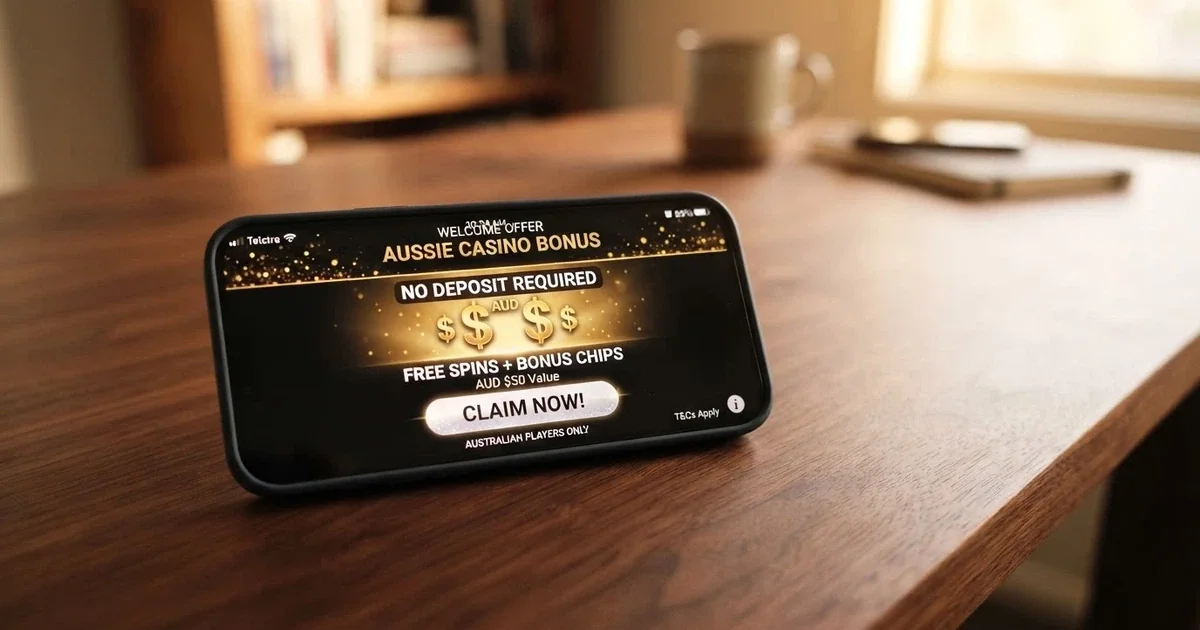
A no-deposit bonus is the cheapest sales tool an offshore casino has. The casino hands you a fistful of free spins or a small credit on sign-up, the wagering requirement turns the offer into a sieve, and almost nobody walks away with cash. That is not cynicism about the industry; it is arithmetic. The typical Australian no-deposit offer sits between A$20 and A$50 in free credits, or twenty to fifty free spins, with a wagering multiple averaging 50x to 65x, and a maximum cashout cap of A$50 to A$100. Those are the figures carried by 40-plus offers in the most recent review sweep. The page that follows ranks the offshore casinos currently reaching Australian players with those offers, spells out what each one costs you to clear, and surfaces the legal context that every bonus on this list shares.
Data current as of 16 October 2026, verified against Curaçao Gaming Control Board licence records, ACMA enforcement registers, and the named affiliate reviews cited throughout.
Table of Contents
- Why Your 2026 No-Deposit Bonus Is Smaller Than It Looks
- No-Deposit Casino Bonuses Australian Players Can Claim in 2026 — Ranked
- Skycrown
- Royal Reels
- Fair Go Casino
- RocketPlay
- BitStarz
- Stake
- Bizzo Casino
- WinSpirit
- Rainbet
- Rocket Casino
- New Casinos with No-Deposit Bonuses — Fresh Hype or Real Value?
- Is Any No-Deposit Casino Bonus Legal in Australia?
- No-Deposit Bonus Codes — Where They Come From and Why They Expire
- Sign-Up No-Deposit Bonuses vs Welcome Packages — What You’re Really Getting
- PayID No-Deposit Bonuses — Your Payment Method Changes the Deal
- Crypto and No-KYC Casinos — The No-Deposit Bonus Trade-Off
- Pokies, Free Spins and Real-Money Play — What No-Deposit Bonuses Actually Deliver
- How We Selected and Ranked These No-Deposit Casino Offers
- What Australian Players Should Actually Do About No-Deposit Casino Bonuses
- Frequently Asked Questions
Why Your 2026 No-Deposit Bonus Is Smaller Than It Looks
What a No-Deposit Bonus Actually Is — and Isn’t
The promise of a no-deposit bonus is registration without a deposit. You create an account, the casino credits your balance with something — twenty free spins on a named pokie, or a chip worth A$10 in bonus money — and you play without ever wiring AUD to the cashier. The marketing frames that as “free money” or a “risk-free trial.” Both phrases are doing work they should not have to do.
The bonus sits in a separate balance from your cash. Wagering requirements apply before that balance becomes withdrawable. Game restrictions apply. A maximum cashout applies. An expiry window applies. What looks like a gift is a marketing cost the operator prices into its acquisition funnel. One affiliate review of the segment puts the casino’s expected cost of a 100-free-spin no-deposit bonus at around A$0.40 after RTP. That figure is the floor of what the casino is willing to lose in exchange for getting you through the door.
The thing to read before you click “claim” is not the bonus headline. It is the wagering multiplier, the cashout cap, the eligible games, and the expiry. Everything else is packaging.
Free Chips vs Free Spins — the Two Faces of No-Deposit
Two formats dominate the Australian no-deposit market, and they are not interchangeable.
A free-chip bonus gives you a fixed AUD credit — typically A$10 at the small end, A$30 or A$50 at the larger — usable on any eligible game the casino lists. The chip is flexible; you choose the pokie, sometimes the table game, sometimes anything at all. A free-spin bonus locks you to one or a few specified pokies at a fixed spin value. The spin values at AU-facing casinos sit between A$0.10 and A$0.20 each. One hundred spins at the A$0.10 floor carry a notional A$10 in wagered value before a single reel stops.
The chip gives you control over what you play. The spins hand the casino control over both the game and the stake. On pure expected-value grounds the chip is the better deal because you can pick the highest-RTP eligible pokie and run the bonus through it. On convenience grounds the spins are easier to claim: you do not have to think about which game to load. The maths does not care about convenience.
The Catch: Wagering, Caps, and Why Most Players Never Cash Out
Three terms turn the offer into a funnel.
Wagering requirement is the multiplier the casino applies to your bonus before it converts to cash. Industry-standard no-deposit wagering sits between 30x and 60x, with most Australian offers clustering at 50x to 65x. Below 30x is a strong deal. Above 50x is a hard slog. One industry review puts the realistic clearing rate on a 60x bonus near zero for the median player.
Max cashout cap is the ceiling on what you can withdraw from bonus-derived winnings. Australian no-deposit caps typically run A$50 to A$200, with most clustering around A$50 to A$100. The cap does not care how much wagering you complete; it caps the final payout. A player who turns A$10 of free spins into A$800 of bonus balance cannot withdraw A$800; the offer stops at A$100.
Game weighting decides which bets count toward the wagering requirement and at what percentage. Standard pokies contribute 100%. Progressive jackpot pokies contribute 0–10%. Table games contribute 10% or are excluded entirely. Live dealer games are almost always excluded. Video poker sits at 10–20%. So a bonus player who tries to grind through wagering on blackjack contributes roughly one-tenth of their stake — meaning a 50x requirement becomes a 500x requirement in practice. The casino does not advertise this weighting in the headline; it lives in the bonus terms.
Expiry windows run 24 to 72 hours from credit. Unused bonuses lapse. Wagering applies to free-spin winnings before withdrawal, and the window starts the moment the spins hit your account. A player who plans to “come back later” usually comes back too late.
No-Deposit Casino Bonuses Australian Players Can Claim in 2026 — Ranked
The table below ranks the ten featured offshore casinos by no-deposit offer value and the fairness of the surrounding terms. Every licence on this list is offshore; none of these operators holds an Australian online casino licence, because none can. The Interactive Gambling Act 2001 prohibits the issuance of such a licence anywhere in the country. The Curaçao Gaming Control Board is the dominant regulator cited; MGA licences appear less frequently in the AU-facing segment.
| Casino | Licence (Offshore Authority) | No-Deposit Offer | Wagering Requirement |
|---|---|---|---|
| Skycrown | Curaçao (offshore) | 100 FS via phone verification, or 20 FS on Aztec Clusters via profile completion | 25x (Meet & Spin) |
| Royal Reels | Curaçao (Digibrite S.R.L.) | A$10 free chip | 30x |
| Fair Go Casino | Curaçao (Deckmedia N.V.) | A$5–A$15 free chip or 15 FS on Bubble Bubble 2 | 60x |
| RocketPlay | Curaçao (offshore) | 20 FS on Book of Pyramids (verified review) | 40x |
| BitStarz | Curaçao (offshore) | 100 FS via promo code | — |
| Stake | Curaçao (offshore) | — | — |
| Bizzo Casino | Curaçao (offshore) | — | — |
| WinSpirit | Curaçao (offshore) | A$20 NDB via promo code | 40x |
| Rainbet | Curaçao (offshore) | — | — |
| Rocket Casino | Curaçao (offshore) | — | — |
The ranking leans hardest on wagering multiplier and max cashout, because those are the two terms that decide whether a bonus is worth claiming at all. A A$10 chip at 30x is a fairer offer than a A$50 chip at 60x with a A$100 cap, because the first one costs less to clear and pays out the same ceiling.
How We Compared These Offers — the Criteria That Actually Matter
Five criteria ordered the ranking. Wagering multiplier carries the most weight, because it is the term that determines the time and the bet volume required to convert bonus balance to cash. A 25x multiplier on a A$20 bonus means A$500 in qualifying bets; a 60x multiplier on the same bonus means A$1,200. The volume difference is the difference between a cleared bonus and an expired one.
Max cashout cap is the real ceiling. A bonus with a high wagering requirement and a tight cap is harder to clear than its nominal value suggests, because even a successful run stops at the cap.
Game contribution rates decide which bonuses are clearable in practice. A player restricted to standard pokies has the full 100% contribution. A player who tries to grind on table games sees that contribution drop to 10% — and the wagering requirement balloons accordingly.
Licence transparency ranks operators by whether the licence holder is named and verifiable. Royal Reels is registered to Digibrite S.R.L. under Curaçao; Fair Go is registered to Deckmedia N.V. Other operators hold Curaçao licences without the licence number confirmed this run. The named and verifiable licence holder is a stronger signal than the unnamed one.
Offer availability — automatic versus code-gated versus action-gated — affects how easy the bonus is to claim. A code-gated bonus that requires a fresh promo code expires faster than an automatic credit on profile completion.
Most no-deposit offers in this segment carry 50x to 80x wagering, max cashout caps of A$50 to A$100, and game restrictions that make clearing them nearly impossible for the median player. That characterisation comes from the affiliate reviews surveying the segment, not from any single operator’s terms.
Skycrown
Skycrown runs the largest no-deposit bonus in the featured set, and it offers two paths to claim it.
The first path activates 100 free spins through phone verification. The second — branded “Meet & Spin” — credits 20 free spins on Aztec Clusters by BGaming as soon as the player completes a profile. Meet & Spin carries 25x wagering on bonus winnings and a A$40 max win cap. The 25x multiplier is the lowest in the segment, which is what places Skycrown at the top of the ranking despite the A$40 ceiling.
Behind the no-deposit offer sits a deeper library than any other operator on the list: 10,400-plus games from more than fifty providers, including Pragmatic Play, NetEnt, Microgaming, Play’n GO, BGaming, Hacksaw Gaming and Nolimit City. The breadth means a player who wants to spend the bonus on a specific pokie category will usually find it.
The welcome package behind the no-deposit teaser is four tiers, running up to A$8,000 plus 400 free spins at 40x wagering across the board. The first deposit starts at A$30 minimum and rises to A$50 by the fourth tier. That welcome is the real acquisition funnel. The no-deposit bonus is the door.
For a player who wants the lowest wagering burden in the segment and a library large enough to shop around on, Skycrown is the strongest fit. The A$40 cap on the Meet & Spin offer keeps the upside modest; the 100-spin phone-verification path is the larger notional offer, though its terms were less granular this round.
Royal Reels
Royal Reels runs a single no-deposit offer: an A$10 free chip, no deposit required, at 30x wagering.
The chip is small by segment standards. The 30x multiplier is on the low end. Combined, the offer costs roughly A$300 in qualifying bets to clear — a fraction of what a 60x offer demands. Royal Reels sits second in the ranking on the wagering criterion alone.
The welcome package behind the chip is a 100% match up to A$500 plus 50 free spins, with a A$30 minimum deposit and 30x wagering. The 30x multiplier on the welcome matches the no-deposit, which is unusual; most operators ease the welcome terms while stiffening the no-deposit terms.
The licence is held by Digibrite S.R.L. under Curaçao, named on the affiliate verification rather than left as an unregistered shell. For a player who wants a small but fair no-deposit offer with a named licence holder, Royal Reels is the cleaner pick.
Fair Go Casino
Fair Go has the longest track record in the segment, having launched in 2017, and it carries the heaviest no-deposit terms.
The no-deposit offer runs A$5 to A$15 in free chips, or 15 free spins on Bubble Bubble 2, with 60x wagering and a max cashout of A$150 to A$180. The 60x multiplier is at the upper end of the segment; clearing a A$15 chip at 60x means A$900 in qualifying bets. The 5x cashout multiplier on the bonus received is generous relative to most of the segment — most operators cap at A$100 or less — but the wagering burden cancels much of that generosity.
Fair Go is licensed under Curaçao (Deckmedia N.V.) and uses RTG / SpinLogic Gaming software. AUD deposits flow through Visa, Mastercard, Apple Pay, Google Pay, Neosurf, CashtoCode, eZeeWallet, Wire Transfer, USDT, Bitcoin, Ethereum, Lightning Bitcoin, Bitcoin Cash and Litecoin. Withdrawals via Bitcoin, eZeeWallet and Bank Transfer settle in 24 to 48 hours.
For a player who values an Australian-facing cashier and a long operating history over the lowest wagering multiplier, Fair Go is a defensible pick. The bonus terms are stiff; the payout infrastructure is not.
RocketPlay
RocketPlay’s no-deposit offer is review-gated: twenty free spins on Book of Pyramids, earned by writing a verified review of the casino, with 40x wagering on the bonus winnings and a maximum payout cap of 50 EUR — roughly A$85.
The action-gating is unusual. Most no-deposit offers credit on registration or after a phone or profile step; RocketPlay asks the player to publish a review before the spins drop. That mechanism filters for engaged players, which is presumably why the operator bothers with it.
Behind the no-deposit teaser sits a standard deposit welcome: 100% match up to A$200 plus 50 free spins on Starburst, 30x wagering, max cashout A$500, valid for 30 days. The 30x welcome matches Royal Reels’ welcome on the wagering criterion, with a smaller cap.
For a player who wants a mid-tier wagering burden on a bonus paid in Australian dollars and is willing to write a review to claim it, RocketPlay is a serviceable fit. The A$85 cap on the no-deposit is competitive against the A$40 Skycrown cap and the A$50–A$100 segment default.
BitStarz
BitStarz sits in the ranking on the strength of one no-deposit offer: 100 free spins, activated by promo code, no deposit required. The spin count is the largest in the featured set on the no-deposit path. The exact wagering multiple, max cashout cap and validity window were not confirmed at the time of review.
The lack of confirmed terms is the reason BitStarz sits in the middle of the ranking rather than at the top. A 100-spin no-deposit offer is meaningful only if the surrounding terms let a player clear it within the validity window and walk away with something. Where those terms are not published, the offer sits between Skycrown’s confirmed 25x and the segment’s typical 50x-plus, and a player should read the live terms before claiming.
BitStarz supports AUD deposits alongside crypto, holds a Curaçao licence, and runs a multi-tier welcome package behind the no-deposit teaser. For a player comfortable reading the bonus terms before claiming and willing to verify the current figures, the 100-spin offer is competitive on the notional-value side.
Stake
Stake has no no-deposit bonus confirmed at the time of review. The operator is built around deposit-based promotions and crypto-first payment rails, with Bitcoin, Ethereum, Litecoin and USDT as the primary methods. Limited fiat options exist; the platform’s identity is as a crypto casino, not as a no-deposit-touting site.
For a reader searching specifically for a no-deposit bonus, Stake is not the right fit. For a reader who values crypto-native cashier infrastructure and a different promotional model — deposit matches, reload bonuses, rakeback — Stake is one of the better-known names in the segment.
The absence of a no-deposit bonus is itself information. It tells the reader that the operator’s acquisition model does not lean on free-credit signups, which is consistent with a crypto-first operation where the marketing channel is community-driven rather than affiliate-driven.
Bizzo Casino
Bizzo Casino has no no-deposit bonus confirmed at the time of review. The operator runs a multi-currency cashier that accepts both fiat and crypto, holds a Curaçao licence, and operates in the same offshore segment as the rest of the featured set.
A reader searching for a no-deposit bonus will not find one at Bizzo at this time. The operator’s positioning — broad payment-method coverage, established Curaçao licence — is serviceable for a player who has already decided to deposit and is shopping for cashier flexibility.
The absence of a verifiable no-deposit offer is the reason Bizzo sits in the second half of the ranking. Where the offer cannot be confirmed, the rank is qualitative.
WinSpirit
WinSpirit runs an A$20 no-deposit bonus activated by promo code at 40x wagering, with an expiry running to January 2027.
The A$20 chip is mid-segment — between Royal Reels’ A$10 and the A$30–A$50 chip offered elsewhere. The 40x multiplier sits in the middle of the segment range. The expiry is unusually long for a no-deposit offer; most run 24–72 hours from credit. A multi-month window gives a player room to clear the wagering without time pressure.
The maximum cashout cap was not published at the time of review. Without a published cap, the offer’s real ceiling cannot be assessed. A reader comparing WinSpirit against Skycrown or Royal Reels should check the live bonus terms before claiming, because the cap is what determines whether the cleared bonus is worth withdrawing.
Rainbet
Rainbet has no no-deposit bonus confirmed at the time of review. The operator is crypto-first — specific deposit methods were not confirmed this round — and holds a Curaçao licence.
For a reader who came to this page looking for a no-deposit bonus, Rainbet is not the right fit at this time. The operator’s positioning — crypto-native cashier, deposit-based promotional structure — places it in the same category as Stake: a different acquisition model, not a no-deposit destination.
Rocket Casino
Rocket Casino is a separate operator from RocketPlay, despite the similar name. No no-deposit bonus was verifiable at the time of review.
The naming overlap causes confusion in affiliate lists; some pages aggregate the two operators under a single entry. They are distinct brands, distinct licences, and distinct bonus structures. A reader who reads about “Rocket” on a comparison page and arrives at the wrong site has likely landed at one of the two, but the offers differ.
New Casinos with No-Deposit Bonuses — Fresh Hype or Real Value?
The “new casino” angle in the Australian segment is a marketing label, not a regulatory milestone.

No Australian register of online casino licences exists, because no such licence can be issued. The product is prohibited under the Interactive Gambling Act 2001. A “new” offshore casino is a brand that has recently launched under a Curaçao or other offshore licence, served an affiliate marketing push, and is competing for signups against established operators. There is no launch-date verification available to a reader; the only signal is what the operator publishes about itself.
The ACMA blocking record offers a rough proxy. Since November 2019 the regulator has had 1,564 illegal gambling and affiliate websites blocked, with more than 225 illegal services withdrawn from the Australian market since enforcement strengthened in 2017. The list includes both new and established brands; being new does not protect an operator from blocking, and being established does not insulate it either. The roughly 50 operators removed from one affiliate aggregator over the past twelve months for withdrawal complaints or unreliable bonus terms cuts across both categories.
What “new” actually delivers, where it delivers anything, is an aggressive no-deposit offer to build a player base. The casino accepts a higher per-bonus loss in exchange for the chance that some percentage of signups convert to depositors. For the reader, the offer is bigger than the established brand’s offer but the track record is shorter. Community payout reports and user complaints forums are the only check available, because the regulator does not hold the operator to a published standard.
What “New” Actually Means for an Offshore Casino
A new offshore casino is a brand that has recently appeared on affiliate lists, holds a Curaçao or MGA licence, and is running acquisition promotions. There is no Australian launch-date register, no ASIC registration, and no Australian Business Number requirement that distinguishes a new operator from an established one in the reader’s view.
What separates a new brand from a rebrand is harder to verify than the marketing suggests. Operators re-skin themselves under new names when enforcement pressure mounts, and the same corporate entity can sit behind several sequential brands. The reader cannot tell from the homepage whether a “new” casino is a genuine startup or a rebrand.
The practical check is community payout reports. Affiliate aggregators such as AskBonus publish withdrawal-complaint tallies and have removed roughly 50 operators over twelve months for that reason. A new casino with no community footprint and no payout reports is a brand whose first reader complaint will land in a forum that the operator may not be reading.
Is Any No-Deposit Casino Bonus Legal in Australia?
No. The Interactive Gambling Act 2001 prohibits online casino games, online pokies and in-play betting for people in Australia. No licence for online casino exists in the country; the product is banned, not unlicensed. Every no-deposit bonus on this page sits inside that prohibition. The operator is offshore, the bonus is offered to Australian players, and the offer itself is part of a service the IGA forbids from being provided to Australians.

The ACMA enforces the prohibition. Since November 2019 the regulator has had 1,564 illegal gambling and affiliate websites blocked by Australian ISPs as of March 2026. More than 225 illegal services have withdrawn from the Australian market since 2017. The blocking is DNS-level — Australian readers cannot reach the blocked sites through the major ISPs without a VPN — and the blocking list updates as ACMA moves.
Australia has no federal online casino licensing framework. Most casinos accepting Australian players operate under Curaçao, MGA or similar international licences. Player protections vary significantly between operators. That last sentence is the load-bearing one: there is no Australian complaints body, no Australian consumer protection, and no ACMA recourse to recover funds if an offshore operator refuses a withdrawal or voids a bonus.
The Interactive Gambling Act — Why No Australian Casino Licence Exists
The Interactive Gambling Act 2001 was strengthened by the Interactive Gambling Amendment Act 2017, which closed loopholes offshore operators had used and gave ACMA its enforcement and blocking powers. What is prohibited: online casino games, online pokies, and in-play sports betting once an event has started. What is permitted and licensable: wagering on races and sport placed before the event begins, lotteries, keno, through operators licensed by a state or territory.
Licensing for online wagering is state and territory business; in practice it concentrates in the Northern Territory Racing and Wagering Commission (NTRWC), administered through Licensing NT, the de facto national licensor for wagering. Licences run for terms of up to twenty years. The NT levies a 5% wagering tax on wagers minus payouts plus a 0.05% racing levy; each state sets its own point-of-consumption tax, typically 10–15% of net wagering revenue. None of this applies to offshore casino, because offshore casino is not a licensable product.
The minimum age for all commercial gambling in Australia is 18. The age requirement binds the licensed operators; it does not bind an offshore casino that does not verify age.
Offshore Licensing — What a Curaçao Licence Does and Doesn’t Give You
The Curaçao Gaming Control Board is the dominant offshore regulator cited by operators in this segment. Royal Reels sits under Digibrite S.R.L.; Fair Go sits under Deckmedia N.V. The licence is real, in the sense that the regulator exists and the named entities are recorded. It is not equivalent to an Australian licence.
What a Curaçao licence does not give a player: ACMA recourse, an Australian complaints body, an Australian consumer law framework, BetStop coverage, a guarantee of payout if the operator declines to honour a withdrawal, or a regulator that will compel the operator to release funds. ACMA cannot recover player funds from offshore operators. The blocking power exists; the recovery power does not.
What a Curaçao licence does require: a basic level of corporate registration, segregation of player funds in some form, and a complaint mechanism at the regulator — none of which an Australian player can readily access. Player protections vary significantly between operators. That variation is the entire reason a player on this page is being told to read the terms, check the community payout reports, and treat the licence as a weak signal rather than a guarantee.
BetStop, Self-Exclusion and the Protection Gap
BetStop, the National Self-Exclusion Register, is the federal self-exclusion system for Australian wagering. As at 31 July 2026, it had recorded 67,480 registrations, of which 41,290 exclusions were still active. Seventy-eight per cent of registrants were under 40, and thirty-eight per cent chose lifetime exclusion. Around 150 licensed wagering providers are connected to the register.
The offshore casinos on this page are not connected. A person who has registered with BetStop and excluded themselves from every Australian-licensed wagering operator can still deposit at every offshore casino listed. That is the most concrete harm of the offshore route, and it is the gap that no bonus terms can fill.
When an individual registers with BetStop, wagering providers have a maximum of seven days to close the account and pay the individual any credit balance. That rule applies to the licensed operators. It does not apply offshore. The 2026 reform strengthens BetStop and, from 1 January 2027, prohibits direct marketing of inducements for three months after a person deregisters — but the offshore casino is not subject to Australian marketing law, and the inducement ban will not reach the no-deposit bonus emails that arrive in an excluded player’s inbox.
Responsible Gambling: Help That Actually Exists for Australian Players
The help infrastructure that does exist is free, confidential, and reachable regardless of where a player has been gambling.
The National Gambling Helpline is 1800 858 858, free, confidential, staffed 24 hours a day, seven days a week, with online chat and counselling through Gambling Help Online. The 2026 reform expands financial counselling support for gambling harm, recognising that problem gambling is as much a financial problem as a behavioural one.
About 2.1% of Australian adults — roughly 430,000 people — experience problem gambling, and the Australian Institute of Health and Welfare put high-risk gambling at 1.8% in 2022. Those figures predate the offshore expansion; the real prevalence is almost certainly higher because offshore play is not captured in the licensed-operator datasets the AIHW draws on. The 1.8% high-risk figure and the 2.1% problem-gambling figure are the floor, not the ceiling.
No-Deposit Bonus Codes — Where They Come From and Why They Expire
The code ecosystem around no-deposit bonuses is the same machinery that drives affiliate marketing in the segment.
Code-based offers require the player to paste a string — usually a casino brand plus a campaign identifier — into a redemption box at registration or in the cashier. Affiliate pages publish fresh codes tied to specific campaigns; casinos email codes to dormant accounts; forum threads circulate codes that have leaked from one channel to another. The code is the attribution mechanism: it lets the casino know which affiliate drove the signup, and it lets the affiliate claim the commission.
Why codes expire: the no-deposit offer itself expires within 24 to 72 hours after credit if unused, and the code that triggers it expires when the campaign ends. A code published last month may be dead this week; a code published yesterday may be region-locked or already over its redemption cap. The freshness of the publication date matters more than the specificity of the code.
Code-Based vs Automatic No-Deposit Bonuses
Three claim mechanisms appear in the featured set, and they differ in friction.
Automatic credit: the bonus appears on registration or after a verification step with no code required. Skycrown’s Meet & Spin drops 20 free spins on Aztec Clusters as soon as the player completes a profile. The friction is near zero.
Code-gated: the player must paste a code at registration or in the cashier to trigger the bonus. WinSpirit’s A$20 no-deposit bonus activates this way. The friction is low; the failure mode is a stale code.
Action-gated: the player must complete a specific action to trigger the bonus. RocketPlay’s 20 free spins on Book of Pyramids requires a verified review. The friction is higher; the failure mode is a player who completes the action incorrectly.
The mechanism does not change the wagering burden, but it changes how often a player fails to claim. A code-gated offer with a fresh code is competitive. A code-gated offer with a stale code is a dead end.
Sign-Up No-Deposit Bonuses vs Welcome Packages — What You’re Really Getting
The no-deposit bonus is the teaser. The deposit-match welcome is the main event.
A no-deposit welcome costs the casino almost nothing in expected value — roughly A$0.40 per 100 free spins after RTP, on industry figures — and is designed to get the player through the door. The deposit match costs orders of magnitude more, because it scales with the player’s deposit and the wagering applies to a larger sum.
The chain runs from the NDB to the welcome to the reload offers that follow. The NDB is the cheapest step in that chain for the operator, and it is the one most heavily marketed. The player who sees an A$8,000 welcome package and a 100-spin no-deposit bonus should understand which one the casino is trying to move.
The value gap is enormous. Skycrown’s no-deposit runs to 100 free spins at 25x wagering; the welcome runs to A$8,000 plus 400 free spins at 40x. Royal Reels’ A$10 chip at 30x sits in front of a A$500 match plus 50 free spins at 30x. Fair Go’s A$5–A$15 chip at 60x sits in front of a 100% match up to A$200 redeemable five times. In each case, the NDB is the smaller number by a wide margin.
Why a No-Deposit Welcome Is a Teaser, Not the Main Event
The casino’s acquisition maths makes the structure plain. A 100-free-spin no-deposit bonus at A$0.10 per spin carries A$10 in notional wagered value; the casino’s expected cost after RTP is around A$0.40. That is the price of acquiring a player. A 100% deposit match up to A$500, on the other hand, costs the casino the bonus amount times (1 minus RTP) over the wagering requirement — orders of magnitude higher, but the operator recoups it from the deposit itself and from the player’s continued play.
NDB wagering averages 50x to 65x; deposit welcome wagering averages 35x to 45x. The gap is deliberate. The casino makes the NDB harder to clear than the deposit match, because the NDB is the loss-leader and the deposit match is the profit centre. A player who treats the NDB as the main event is being treated as the loss-leader target. A player who understands the chain can decide whether to walk through it.
PayID No-Deposit Bonuses — Your Payment Method Changes the Deal
PayID is the AU-native instant bank-transfer rail, built on the New Payments Platform and reachable through any major Australian bank. It settles in seconds, identifies the recipient by a registered detail rather than a BSB and account number, and is treated by most casinos as equivalent to a direct bank transfer for bonus eligibility purposes.
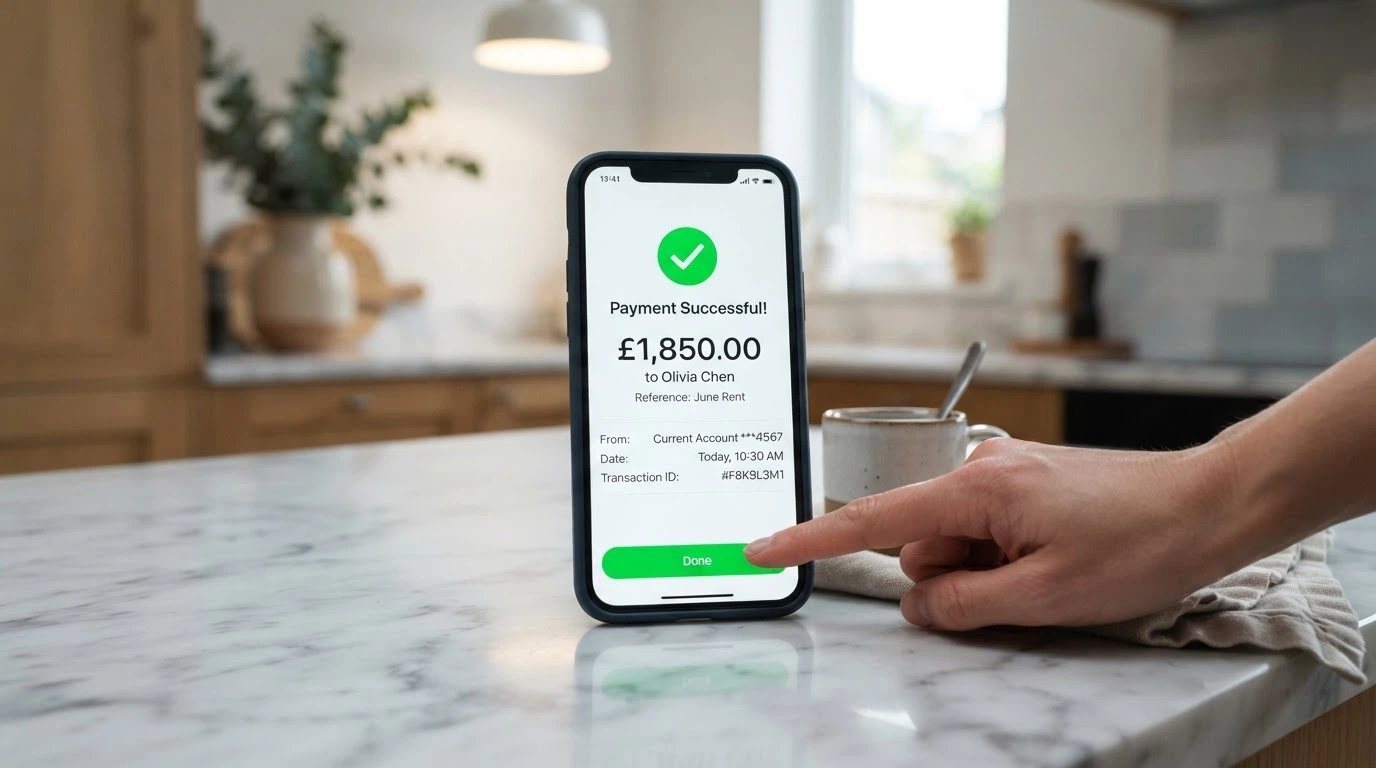
PayID deposits are bonus-eligible with no restrictions at most offshore casinos. That is the headline. A player depositing through PayID at a casino that excludes Skrill or Neteller from welcome bonuses will not be excluded themselves.
The broader principle: a payment method that the casino cannot easily reverse or chargeback is treated differently from a payment method that the casino can. E-wallets such as Skrill and Neteller are commonly excluded from welcome bonuses because the casino sees higher abuse rates through those rails. PayID and direct bank transfer are not e-wallets in the relevant sense; they settle into the casino’s bank account like any other deposit and carry the same bonus treatment as a Visa or Mastercard deposit would.
The check before depositing: read the bonus T&Cs for payment-method restrictions. Skrill and Neteller exclusions are the most common. A player who intends to deposit via an e-wallet and claim the welcome bonus should verify the casino’s policy first.
E-Wallets and Bonus Eligibility — What Gets Excluded
The fine print that voids a bonus because of how the player deposited is one of the more common reader surprises in the segment.
Common exclusions in AU-facing offshore casino bonus terms: Skrill, Neteller, and sometimes ecoPayz. The exclusion usually applies to welcome bonuses specifically, with reload bonuses treated more leniently. The reasoning on the operator side is straightforward — e-wallet deposits carry lower processing cost and higher abuse risk, and the casino prices that risk into a bonus exclusion rather than into a higher wagering requirement.
Where the casino’s terms do not exclude an e-wallet, the bonus is usually claimable. Where the casino’s terms do exclude, no appeal is available. The bonus T&Cs are the only place this is stated, and most players do not read them until after they have deposited.
Crypto and No-KYC Casinos — The No-Deposit Bonus Trade-Off
Crypto deposits buy speed and a degree of pseudonymity. They cost every Australian consumer protection the player would otherwise have.
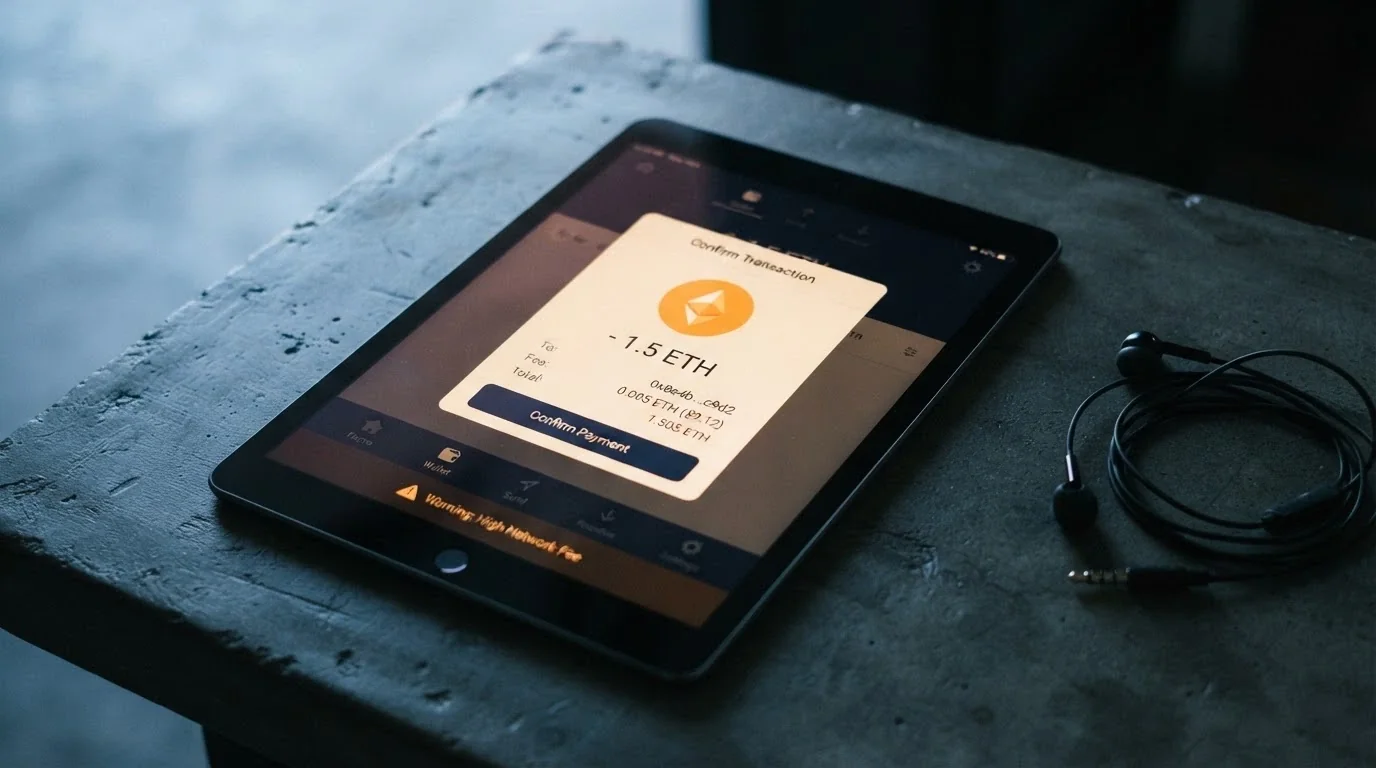
Bitcoin, Ethereum, Litecoin, USDT and a handful of other coins are accepted at most offshore casinos in the featured set. The exchange-to-casino step takes 1 to 15 minutes depending on the chosen coin, with AUSTRAC-registered exchanges CoinSpot and Swyftx handling the Australian side of the conversion. SkyCrown paid out a USDT TRC-20 withdrawal in 12 minutes during testing, and Litecoin network fees run under A$0.10 per transaction. The rails are fast and cheap.
The legal signal cuts the other way. Credit cards, credit-related products and digital currency are banned as payment for online wagering in Australia; the ban commenced 11 June 2024 under the Interactive Gambling Amendment (Credit and Other Measures) Act 2023, with penalties up to A$247,500 for operators that fail to enforce it. An Australian who is asked for a credit card or a crypto deposit by a gambling site is being served by someone outside the Australian rules. The payment method is itself a tell.
From 1 January 2027, banks and payment providers gain express authority to block transactions to illegal gambling operators. The crypto route will not close on that date — blockchain transactions are not bank-blocked in the same way — but the regulatory pressure on centralised exchanges is increasing, and the practical risk of an offshore casino declining a crypto withdrawal under “AML review” remains.
Anonymity vs Protection — What You Lose When You Skip KYC
KYC — Know Your Customer — is the identity verification step a regulated casino performs before processing a withdrawal. It exists to satisfy anti-money-laundering regulation and to tie the player account to a real person.
A no-KYC casino skips this step. The onboarding is faster: no passport scan, no utility bill, no selfie with the ID document. The withdrawal is faster too, in theory: no verification delay, no manual review. The trade is in what happens when something goes wrong.
A casino that does not verify identity can decline a withdrawal on grounds it does not have to disclose. A player with a disputed payout has no identity record to anchor a complaint. A regulator — even a Curaçao regulator — cannot compel payout to an unverified account the way it can compel payout to a verified one. The anonymity is fast; the recourse is thin. Zero recourse, in the Australian case, because ACMA cannot recover funds from offshore operators in any event.
The trade-off is real. A player who values speed and anonymity above all else will choose no-KYC and accept the trade. A player who values payout security above all else will choose a casino that verifies identity and accepts the onboarding friction.
Pokies, Free Spins and Real-Money Play — What No-Deposit Bonuses Actually Deliver
Free spins are the dominant no-deposit format because pokies carry the house edge the bonus is designed to feed.
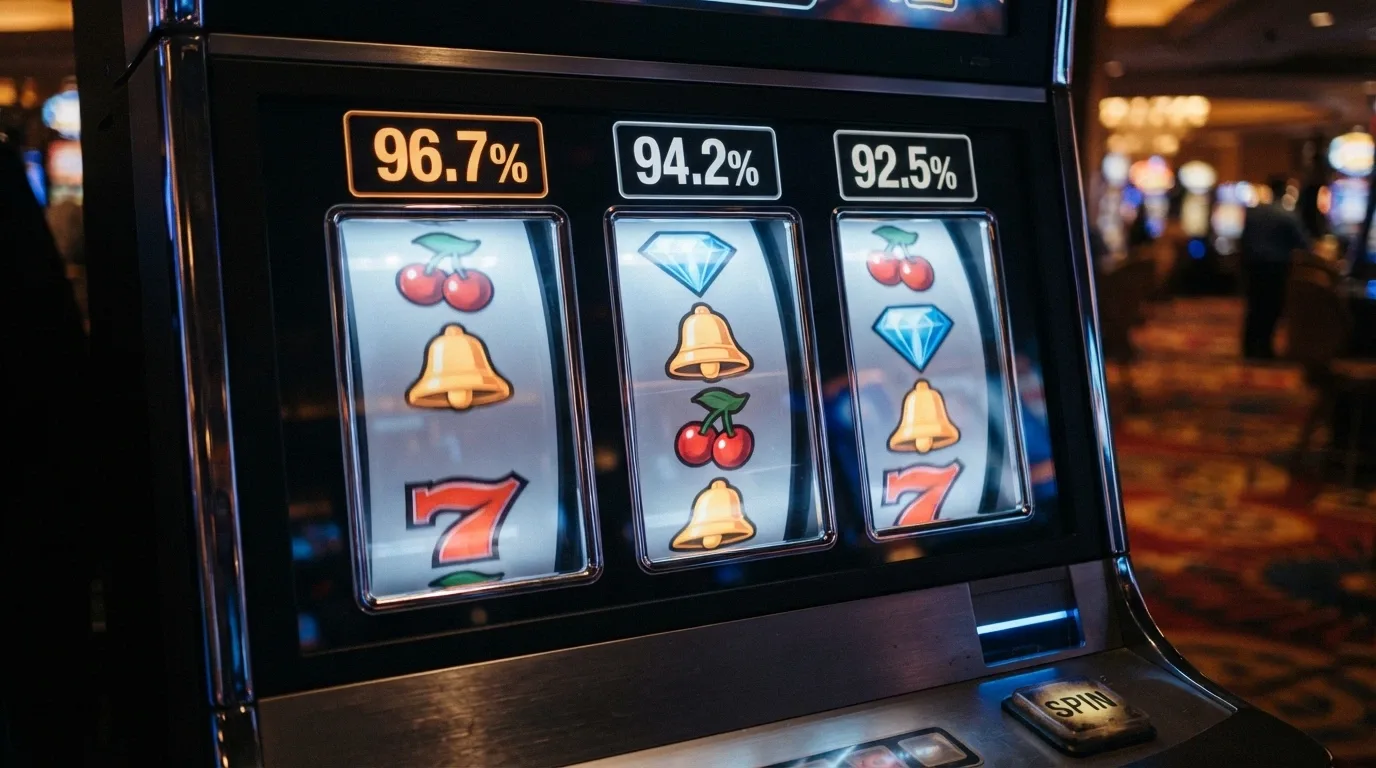
A free-spin no-deposit bonus is locked to one or a few specified pokies at a fixed spin value. The casino chooses the game because the casino knows the RTP build of that game on its own platform — and that build may differ from the developer’s headline figure. Starburst (NetEnt) has an RTP of 96.09% with low volatility. Book of Dead (Play’n GO) has an RTP of 96.21% with medium-high volatility. Wolf Treasure (iGTech) has an RTP of 96% with medium volatility. Sweet Bonanza (Pragmatic Play) has an RTP of 96.51% with high volatility. Thunderstruck II (Games Global / Microgaming) has an RTP of 96.65% with medium-high volatility. Bonanza Megaways (Big Time Gaming) has an RTP of 96.00% with high volatility. Moon Princess (Play’n GO) has an RTP of 96.50% with medium-high volatility. Big Bass Bonanza (Pragmatic Play) has an RTP of 96.71%. Those are the headline figures from the developer. They are not always the figures the player sees.
Free-Play vs Real-Money — the Demo Has No Payout
Two things called “free play” exist in the Australian pokies vocabulary, and they are not the same.
Demo mode, sometimes called fun mode, gives a player unlimited fake credits to play a pokie with no real money at stake. The reels spin, the features trigger, the bonus rounds fire — and the winnings disappear when the player closes the game. Demo mode is a tool for learning a game before risking real money. It is not a bonus.
A no-deposit real-money free-spin offer gives a player a fixed number of spins at a real-money stake, with real AUD winnings subject to the bonus T&Cs. The spins cost the casino real money to provide; the winnings can be withdrawn if the player clears the wagering. The two formats are distinct in mechanism and distinct in payout.
The vocabulary blurs because both involve “free” spins, and a player who treats them as interchangeable will be disappointed by the demo’s lack of payout. The casino offers both because both serve a purpose: demo brings the player in, the no-deposit real-money offer brings the player’s wallet in.
RTP and Why the Same Pokie Can Pay Differently on a Bonus
The same pokie title can run at different RTP builds on different casinos, and the player usually cannot tell which build is loaded until they check the in-game information panel.
Gates of Olympus (Pragmatic Play) has a standard RTP of approximately 96.50%. Some operators configure the same title at 94.5%. Book of Dead (Play’n GO) has a standard RTP of 96.21%. Some casinos deploy a 94.25% build. Many casinos use the lower RTP configuration for bonus play. The 2% to 2.5% gap between standard and reduced RTP is the difference between a player who breaks even on a bonus and a player who loses the bonus amount and the wagering volume on top.
The check is mechanical: open the pokie, open the information or help panel, and read the RTP. If the figure is below the developer’s standard, the bonus is being played at the operator’s preferred configuration. Wagering will be harder to clear at the reduced build than at the standard one.
The Pokies That Matter — RTP, Volatility and Game Weighting
The table below lists the slot titles for which research confirms an RTP, alongside the developer and the volatility band. Titles not in this table did not have a confirmed RTP at the time of review and take the no-data marker.
| Slot Title | RTP | Provider | Volatility |
|---|---|---|---|
| Starburst | 96.09% | NetEnt | Low |
| Book of Dead | 96.21% | Play’n GO | Medium-High |
| Wolf Treasure | 96% | iGTech | Medium |
| Sweet Bonanza | 96.51% | Pragmatic Play | High |
| Thunderstruck II | 96.65% | Games Global / Microgaming | Medium-High |
| Bonanza Megaways | 96.00% | Big Time Gaming | High |
| Moon Princess | 96.50% | Play’n GO | Medium-High |
| Big Bass Bonanza | 96.71% | Pragmatic Play | — |
Volatility is a session-risk factor, not a return factor. A high-volatility pokie produces fewer wins on average but pays larger amounts when it does. A low-volatility pokie produces more frequent but smaller wins. For bonus clearing, low-volatility games produce more qualifying bets per unit time; high-volatility games produce fewer. The player’s risk appetite decides which fits.
Game weighting decides how much of each bet counts toward wagering:
| Game Type | Wagering Contribution |
|---|---|
| Standard video pokies | 100% |
| Progressive jackpot pokies | 0–10% |
| Table games | 10% or excluded |
| Live dealer games | Excluded |
| Video poker | 10–20% |
The standard pokie weighting is what makes the bonus clearable at all. A player who tries to clear a 50x wagering requirement on table games faces an effective 500x requirement because of the 10% contribution. The bonus T&Cs state the weighting in small print; the implication is not small.
How We Selected and Ranked These No-Deposit Casino Offers
The evaluation framework that ordered the ranking combined regulatory checks against the ACMA enforcement record and Curaçao licence registries, an assessment of the offer’s net value after wagering burden and cashout cap, a review of community payout reports and affiliate complaint tallies, and a qualitative assessment of licence transparency and offer availability.
The ACMA enforcement record was checked for each operator. The ~50 operators removed from AskBonus over twelve months for withdrawal complaints or unreliable bonus terms served as a quality filter: any operator whose complaint profile matched that removal rate was excluded from the ranking.
Criteria that drove the order, in priority: wagering multiplier as the primary cost driver, max cashout cap as the real ceiling, game contribution rates as the practical determinant of clearability, licence transparency as a weak-but-real signal of operator accountability, and offer availability as a friction measure.
No weightings or numerical scores were applied. The ranking is a qualitative ordering based on the combined criteria, and a reader who weights the criteria differently — for example, who values a named licence holder above a low wagering multiplier — would produce a different ordering. The qualitative basis is the one honest way to rank offers whose underlying data is incomplete on several operators.
What Australian Players Should Actually Do About No-Deposit Casino Bonuses
The arithmetic gives a reader enough to make a decision without further research.

A no-deposit bonus is a low-stakes way to test an offshore casino’s payout behaviour, not a path to meaningful winnings. The expected cost of a 100-free-spin no-deposit offer to the casino is around A$0.40 after RTP. The expected cost to the player, in time and in the wagering volume that 80% of players will not complete, is much higher in opportunity cost than the casino’s price tag suggests. The bonus is a doorway; the deposit-match welcome behind it is the casino’s real target.
Three non-negotiable checks before claiming any NDB. First, licence: is the licence holder named and verifiable under Curaçao or MGA, or is the licence a placeholder? Second, wagering and cap: what is the multiplier on the bonus, and what is the maximum cashout? A 25x wagering with a A$40 cap is a different proposition from a 60x wagering with a A$150 cap. Third, RTP build: open the pokie the spins are locked to and confirm the RTP in the information panel. If the figure is below the developer’s standard, the bonus is being played at the operator’s reduced configuration.
The concrete risk on the legal side is straightforward. There is no BetStop coverage at any offshore casino on this page; a self-excluded player can deposit at every operator listed. There is no ACMA recourse if the operator refuses a withdrawal, voids a bonus, or closes the account with a balance still on it. The 2026 reform gives banks and payment providers express authority to block transactions to illegal gambling operators from 1 January 2027, but the blocking is forward-looking; balances already on deposit at the time of a block are not protected.
The deposit-match welcome is the casino’s acquisition funnel and the player’s real spend. The NDB is the door. A player who understands the chain — NDB to welcome to reload to ongoing play — can decide at which step to walk through and at which step to walk away. The no-deposit bonus is a serviceable way to test whether an offshore casino pays out, and that is its strongest honest pitch.
The help infrastructure that exists regardless of where a player has been gambling is one call away. The National Gambling Helpline is 1800 858 858, free, confidential, 24/7, with online counselling through Gambling Help Online. The ~430,000 Australian adults who experience problem gambling, and the larger cohort who experience high-risk gambling, do not need to clear a wagering requirement before they call.
Frequently Asked Questions
What are the wagering requirements for no deposit bonuses in Australia?
Industry-standard wagering on Australian no-deposit bonuses sits between 30x and 60x, with most offers clustering at 50x to 65x. Below 30x is a strong deal. Above 50x is a hard slog for the median player. The wagering multiple applies to bonus funds or to free-spin winnings before they convert to withdrawable cash.
Can I win real money from a no deposit bonus without making a deposit?
Yes, with conditions. Real AUD winnings from a no-deposit bonus can be withdrawn once the wagering requirement is complete and the maximum cashout cap is honoured. The cap on Australian no-deposit bonuses typically sits between A$50 and A$200, with most clustering around A$50 to A$100. A player who clears the wagering but exceeds the cap does not receive the excess.
Which payment methods can I use at no deposit bonus casinos in Australia?
PayID, Visa, Mastercard, Bitcoin, Ethereum, Litecoin, USDT, Apple Pay, Google Pay, Neosurf, CashtoCode, eZeeWallet and wire transfer appear across the featured set. PayID is bonus-eligible at most casinos and treated like a direct bank transfer. Skrill and Neteller are commonly excluded from welcome bonuses and should be checked in the bonus T&Cs before depositing. Credit cards and crypto are banned for licensed Australian wagering and signal an offshore operator.
What happens to my money if an offshore casino blocks access to Australian players?
The ACMA blocks offshore gambling sites at the DNS level through Australian ISPs. A blocked site cannot be reached without a VPN. Balances already on deposit at the time of a block are not protected by any Australian consumer protection framework. ACMA cannot recover player funds from offshore operators, and the offshore regulator’s complaint mechanism is not Australian. The practical position is that funds on deposit at a blocked site are inaccessible.
Are free spin winnings from no deposit offers subject to different wagering than free chip bonuses?
Typically, yes. Free-spin winnings often carry a separate wagering multiple from free-chip bonuses, and the multiple is usually higher. Skycrown’s Meet & Spin (20 free spins on Aztec Clusters) carries 25x wagering and a A$40 max win cap. Fair Go’s free chips carry 60x wagering and a A$150–A$180 max cashout. The two formats are priced differently by the operator because the casino’s exposure differs — the spin value is fixed and small; the chip value can be larger and is player-directed.