
Solana Casinos for Australian Players: An Offshore Comparison for 2026
Data current as of 30 October 2026, verified against ACMA enforcement records, operator terms pages, and the Casipto and Slotozilla structured tests.
A “Solana casino” is an offshore gambling site that takes SOL — and often USDC, USDT and a dozen other coins — as deposit and withdrawal currency. The phrase covers everything from Curaçao-licensed platforms running thousands of pokies to a single blackjack table built on a Solana smart contract with no house, no account and no email address. What they share is the rail: the Solana blockchain settles the payment, and a 400-millisecond finality time means the deposit lands before the cashier page finishes loading.
That speed matters more in Australia than almost anywhere else. Since 11 June 2024 the Interactive Gambling Amendment (Credit and Other Measures) Act 2023 has banned credit cards and digital currency for any licensed Australian wagering operator. There is no licensed Australian online casino to ban it from in the first place — the IGA has prohibited online casino games, online pokies and in-play sports betting since 2001, and no state or territory has ever issued a licence for one. The crypto ban simply removed the last fiat-shaped gap. Australian players who want a pokie reel or a blackjack hand online have no legal domestic route. Every casino on this list sits on the other side of that line.
This page ranks the ten offshore Solana casinos Australian players most actively use in 2026 — measured by traffic, by verified test data, and by the depth of their Solana integration. The comparison covers licence, welcome bonus, custody model and tested withdrawal speed. The verdict on each operator stays separate from the rankings: a strong ranking column does not make an operator safe to play at.
Two things the table below does not show. First, none of these operators holds an Australian licence — none exists. Second, the product is prohibited under Australian law — the law targets the provider, not the player, but the offshore status removes every Australian consumer protection the player might otherwise rely on. The legal section below sets this out in full.
Table of Contents
- What a Solana Casino Actually Is — and Why Australians Are Using Them
- The 10 Solana Casinos Australian Players Use in 2026 — Ranked and Compared
- Solana’s Hidden Edge: NFT Casinos, Tokens and On-Chain Games
- Crypto-Native vs Traditional: Where Anonymity Actually Holds
- What You Can Actually Play with SOL: Pokies, Dice and the Full Catalogue
- The Legal Reality for Australian Solana Players in 2026
- Staying in Control: Responsible Gambling Tools and Their Limits
- How We Selected and Ranked These Solana Casinos
- Should You Use a Solana Casino from Australia in 2026?
- Frequently Asked Questions
What a Solana Casino Actually Is — and Why Australians Are Using Them
The Solana casino category is small, fast-moving and easy to confuse. The terminology that follows — solana online casino, solana casino sites, casino on solana, solana gambling — all describe the same shape of product: a place to wager where Solana is one of the accepted rails. What changes between them is whether the casino holds the player’s funds or whether the player keeps custody of them, and whether the games run on a server or on a smart contract.
The Solana Casino, Defined
The custodial and non-custodial split is the single most important distinction inside the category, and no comparison page on the market makes it cleanly.
A custodial casino runs the offshore model most players already know. The casino holds an account in the player’s name, takes the deposit into a house wallet and credits the balance in SOL or a converted currency. BC.Game is the clearest example among the operators profiled here — Curaçao-licensed, with a house wallet, a Casipto trust score of 8.7 out of 10, and the SOL withdrawal tested at 28 seconds for an 8.2 SOL transfer. The player’s balance is an IOU from the house, redeemable on the house’s terms.
A non-custodial casino does not hold the balance. Zeebit, described by MadeOnSol as Solana’s first fully on-chain non-custodial casino, takes no deposit to a house account. The player connects a Web3 wallet — Phantom or Solflare — and the funds stay in that wallet until each bet. LootXX runs the same pattern, harder: no email, no password, no KYC, and the wallet is the player’s identity. The casino’s role collapses to running the game logic and settling the result. If the site vanishes tomorrow, the wallet balance does not vanish with it.
That distinction costs nothing at the cashier and pays off if anything goes wrong. A site closure traps a custodial balance; a non-custodial closure traps nothing — because there is no balance to trap. The trade-off is operational. Non-custodial sites carry a smaller game catalogue, and a single-game product like LootXX is not a substitute for a full casino floor.
How a SOL Deposit Reaches the Casino Floor
The deposit flow runs through three steps and takes roughly the time it takes to blink. A Web3 wallet generates a deposit address for the casino. The player sends SOL from the wallet to that address. The Solana network confirms the transfer in around 400 milliseconds under normal conditions, and Casinozoid measured the average confirmation at 2.3 seconds across 14 test deposits in 2026.
What the player sees on screen depends on the casino. BC.Game credits the balance in SOL directly. SolCasino, with 25+ supported cryptocurrencies, accepts SOL alongside USDC, USDT, BTC, ETH and others. Some platforms convert to a house currency the moment the deposit confirms, so a 5 SOL deposit becomes a balance of “5 SOL equivalent” rather than 5 SOL itself — a subtle but real change if the SOL price moves between deposit and withdrawal.
The withdrawal mirror takes longer, but not much. The Casipto structured test of 15 offshore platforms across January 2026 measured the average SOL withdrawal at 43 seconds across 89 withdrawals. BC.Game’s own test cleared in 28 seconds for an 8.2 SOL transfer, with an average of 31 seconds. LootXX’s wallet-to-wallet settlement completes in under 5 seconds because there is no house step — the smart contract pays out directly to the player’s wallet once the result resolves. The fastest SOL payouts measured in this category are faster than a bank card refund.
The Australian Angle: Why SOL Speaks to Local Players
For an Australian offshore player, three Solana properties stand out, and they are not all about speed. Speed is real — sub-5-second settlement beats anything BTC or ETH can offer, and network fees sit near zero rather than several dollars per transaction during congestion. But the second property matters at least as much: the rail is open. After 11 June 2024 no Australian-licensed operator accepts crypto, and the offshore alternative accepts only what the player can route. Solana is one of the cheaper coins to acquire through Australian exchanges and one of the easier ones to move off them once the player is done.
The third property is operational. SOL’s 400-millisecond finality means the casino and the player see the same balance at the same moment, which removes the deposit-pending screen that BTC casinos still carry. The phrase “casino on Solana” captures a deeper Australian appeal. The IGA does not stop at the casino — it stops at the coin. The 2023 amendment closed credit and crypto payments at licensed operators, and the 2026 reform, commencing 1 January 2027, gives banks and payment providers express authority to block transactions to illegal gambling operators. A fiat deposit from an Australian bank to an offshore casino is becoming a transaction a bank may refuse. SOL, settled peer-to-peer, sits one step further out of that reach.
This is the same property that makes the offshore route risky, read the other way. The frictionlessness that lets a player fund a casino also lets the casino keep its doors open regardless of what ACMA does. The legal section below traces that tension in full. For the rest of this page, assume the reader is choosing between offshore operators, not between offshore and licensed — there is no licensed option to choose from.
The 10 Solana Casinos Australian Players Use in 2026 — Ranked and Compared
The ranking is built from three layers of evidence. The first is operational: does the casino actually accept SOL, and does it integrate with the Solana ecosystem at a level deeper than a logo on a payments page. The second is tested: where a structured speed test exists, that test goes in. The third is the term sheet — licence type, KYC burden, withdrawal conditions and the wagering language the bonus page uses. Where the term sheet is missing, and it is missing for several operators in this set, the cell stays empty and the gap is named in the operator profile.
Every operator below is offshore and unlicensed in Australia. The list is ordered by relevance to the Solana/crypto angle, from the broadest offshore platform with the deepest tested record down to the most Solana-native on-chain products. None holds an Australian casino licence because no such licence exists.
| Operator | Licence | Welcome Bonus | Model |
|---|---|---|---|
| BC.Game | Curaçao (claimed) | Not confirmed this run | Custodial, SOL support |
| SolCasino | Tobique Gaming Commission (claimed) | Not confirmed this run | Custodial, mandatory Sumsub KYC |
| GoldSpin | Curaçao Gaming Control Board | 100% up to AU$2,250 + 100 Free Spins | Custodial |
| ShakeBet | — | 300% up to AU$7,000 + 350 Free Spins | Custodial, sportsbook |
| BetFourU | — | 410% up to AU$5,000 | Custodial |
| Caswino | — | 600% up to AU$7,560 + 255 Free Spins | Custodial |
| Wild.io | Costa Rica | Not confirmed this run | Custodial, crypto-native, rakeback |
| Anon Casino | — | Not confirmed this run | Custodial, no-KYC claim |
| Zeebit | — | Not confirmed this run | Non-custodial on-chain |
| LootXX | — | Not confirmed this run | Non-custodial on-chain blackjack |
The columns are the ones research backs. The licence column is partly filled: BC.Game, SolCasino, GoldSpin and Wild.io disclose a jurisdiction, and the rest either do not or sit outside a regulator framework (Zeebit and LootXX are not licensed in any jurisdiction because they do not hold player funds). The welcome bonus column carries the headline-heavy bonus platforms where research confirmed the figures (GoldSpin, ShakeBet, BetFourU, Caswino) and stays empty where research could not verify the specific terms this round. The custody column is full because every operator can be classified by model whether or not its bonus sheet is on file.
Best Solana Casino Overall for Australian Players
Among the ten operators reviewed, the strongest all-rounder is BC.Game. The combination of a disclosed Curaçao licence, a Casipto trust score of 8.7 out of 10, tested SOL withdrawal times of 28 seconds on an 8.2 SOL transfer and 31 seconds average across the structured test, and confirmed SPL token support carries more verifiable data than any other operator in the set. BC.Game is the broadest in game catalogue too — 47 slots and 12 live dealer tables were tested in the Casipto run.
“All-rounder” is a narrow claim. The same Casipto test the trust score is built from tested other operators in the same window and produced different numbers; the trust score is one input among several, not a verdict. The wagering language for BC.Game’s welcome bonus was not confirmed this round, and Curaçao-licensed operators do not bind themselves to Australian consumer law. Strongest in the featured set is not the same as safe — no operator in this list is safe in the Australian-law sense, because none of them can be.
Best Crypto-Native Solana Casino
The crypto-native question is not about which casino accepts the most coins. SolCasino accepts 25+ — BTC, ETH, SOL, MATIC, SUI, BNB, AVAX and others — but the deposit still passes through a house wallet, and the bonus still pays in a house currency. The crypto-native question is whether the casino treats the blockchain as the rail or as the front door.
Two operators in the set treat the blockchain as the front door. Zeebit runs the fully on-chain non-custodial model with USDC, USDT and SOL settled through smart contracts and no house account at all. LootXX runs the same model for blackjack only, with the wallet itself as identity — no email, no password, no KYC. Both are Solana-native in the strict sense, and both sit at the opposite end of the catalogue from a 9,000-game platform.
Between those poles sit the multi-coin custodial operators. SolCasino is the deepest — 25+ cryptos and a sportsbook — but it sits inside the Sumsub KYC pipeline, so the SOL deposit reaches an account that has already been verified by ID, selfie and proof of address. BC.Game accepts SPL tokens with a Curaçao licence and an established trust score. Anon Casino claims 100% no-KYC with Ethereum, Solana and TRON web3 wallets. Players who demand that their wallet remain their only identity verification will find that only the non-custodial options truly satisfy this requirement.
Best Solana Casino for Pokies and Games
The catalogue spread inside the ten is wider than any other dimension in this comparison. SolCasino carries 9,000+ games across casino, live dealer, sportsbook and crypto futures. BC.Game tested 47 slots and 12 live dealer tables, with the wider catalogue visible but not measured. GoldSpin carries thousands of video slots and live dealer games. The crypto-native platforms at the bottom — Zeebit and LootXX — run their own games only, one each.
The right answer depends on what the player is buying. For raw breadth, SolCasino is the strongest by an order of magnitude. For game providers specifically, the Casipto structured test surfaced a specific count for BC.Game but did not break out providers for the rest, and per-provider data was not confirmed this round for most operators. Live dealer availability is confirmed for BC.Game (12 tables) and SolCasino. Sportsbook integration sits at SolCasino, ShakeBet and the multi-product tier.
For on-chain games the breadth gap reverses. LootXX has blackjack. Solette has roulette. AP3X-Dev has Coin Flip, Dice Roll, Slots and Roulette on the open-source Solana Casino repository. The total game count is low and the house edges are transparent — every game in the open-source set runs at 5% with SHA256 provably fair verification. The trade-off is catalogue for verifiability, and a player who wants both needs to hold accounts at multiple tiers.
Single-Product Sites vs Full Casino Platforms
The Solana casino category splits cleanly along a product-shape line. At one end sit the single-product on-chain sites: LootXX for blackjack, Solette for roulette, the AP3X-Dev repository for Coin Flip, Dice Roll, Slots and Roulette as separate smart contracts. At the other end sit the full-platform offshore casinos: BC.Game, SolCasino, GoldSpin and the rest. The right choice depends on what the player is optimising for.
A single-product on-chain site does one thing and does it transparently. Every wager is a transaction on the Solana blockchain. The casino’s balance sheet is the smart contract’s balance sheet. The player can audit the house edge from the contract source rather than the marketing page. The catalogue is one game. The wallet is the identity, and KYC is structurally impossible because there is no account to attach it to.
A full-platform offshore casino does everything and proves it less. The catalogue runs into thousands of games across multiple providers, the bonus page reads like a small country’s tax code, and the licence sits in Curaçao or Tobique or Costa Rica. KYC, where it applies, runs through Sumsub or an equivalent — selfies, ID, proof of address. The trust the player is asked to extend is larger because the surface is larger.
The honest answer to “which is right” is that the two serve different readers. A player who wants non-custodial security and can live with one game at a time picks the on-chain end. A player who wants the full casino floor accepts the custodial trade-off and picks a platform with the cleanest term sheet. Mixing them — opening a custodial account for the catalogue and an on-chain account for the privacy — is what most serious players on this rail actually do.
BC.Game
BC.Game is the operator in this set with the deepest public test record. The Casipto run placed 127 deposits and 89 withdrawals across 15 platforms in January 2026, and BC.Game came back with the highest trust score the test produced — 8.7 out of 10. The 8.2 SOL test withdrawal cleared in 28 seconds, the fastest of any Curaçao-licensed operator in the run, and the average across BC.Game’s withdrawals sat at 31 seconds.
The licence is Curaçao, claimed by the operator and visible on BC.Game’s terms page. The custody model is custodial: the player’s SOL lands in a BC.Game house wallet and the balance is credited in SOL or a converted currency. SPL token support is confirmed. The tested game surface includes 47 slots and 12 live dealer tables.
Welcome bonus specifics were not confirmed this round — wagering multiplier, bonus validity and free-spin terms were outside the data this comparison could verify. A player reading the BC.Game bonus page should treat the headline figure as the starting point and read the terms for the wagering language, the max-cashout cap and any game-weighting before depositing.
BC.Game leads the set for readers prioritising verifiable test data and a disclosed Curaçao licence. Those seeking non-custodial security should instead review Zeebit or LootXX.
SolCasino
SolCasino is the breadth play in this set. The DappRadar profile places the catalogue above 9,000 games across casino, live dealer, sportsbook and crypto futures. The supported coins run to 25+ — BTC, ETH, SOL, MATIC, SUI, BNB, AVAX among them — and the bonus system is built around house currencies (USDB, freeUSD) rather than fiat.
The licence is Tobique Gaming Commission, claimed by the operator. SolCasino’s KYC pipeline runs through Sumsub and is mandatory by terms — selfies, ID documents, proof of address. The OptiHax review noted that the marketing carries a “no-KYC” message that the terms contradict. A player signing up should expect to verify identity before the first withdrawal clears.
The withdrawal conditions sit at a 1× deposit turnover requirement, with the casino targeting payouts within one hour. The free bonus carries a $100 winnings cap, slots contributing 100% to wagering and house games 10–50%. The breadth is real; the friction is also real.
SolCasino is the top choice for those prioritising game volume and variety, provided they are comfortable completing a standard identity verification process.
GoldSpin
GoldSpin is a Curaçao-licensed platform with a clean welcome offer and a catalogue of thousands of video slots and live dealer games. The welcome bonus is 100% up to AU$2,250 with 100 Free Spins, and SOL is accepted at the cashier.
Wagering multiplier and bonus validity were not confirmed this run. A player reading the GoldSpin bonus page should treat the welcome figure as the headline and check the wagering language, the max-bet cap during bonus play and the game weighting before committing the deposit.
GoldSpin offers a standard Curaçao-licensed experience with a solid match bonus. It is a straightforward option, though those specifically seeking the deepest test data or non-custodial features might prefer other operators.
ShakeBet
ShakeBet is the headline-heavy bonus option in this set: 300% up to AU$7,000 with 350 Free Spins. SOL is accepted. The operator is crypto-focused and runs an added sportsbook alongside the casino floor.
Licence, game providers, wagering multiplier and bonus validity were not confirmed this run. The 300% match is large by any standard and worth reading the small print for — wagering on a 300% match usually runs higher than on a 100% match, and the headline figure is not the cost. The sportsbook integration is a useful add for a multi-product player but not a substitute for the casino catalogue at SolCasino or BC.Game.
For those prioritising the largest headline bonus figure and integrated sports wagering, ShakeBet stands out. Readers who require a more transparent licence disclosure or established test record are better served by BC.Game or GoldSpin.
BetFourU
BetFourU carries the highest percentage match in the featured set at 410% up to AU$5,000. SOL is accepted. Game providers, licence, wagering multiplier and bonus validity were not confirmed this run.
A 410% match is a marketing number before it is anything else. The cost of clearing it depends entirely on the wagering multiplier, the max-bet cap, the game weighting and the validity window — none of which this comparison can quote. A player attracted by the headline should weigh it against the absence of any verifiable term sheet.
BetFourU targets players looking for a high percentage match. Success here requires a thorough review of the bonus terms; those needing verifiable, transparent conditions should explore other options in the list.
Caswino
Caswino carries the largest headline bonus in the featured set at 600% up to AU$7,560 with 255 Free Spins. SOL is accepted. Data regarding specific game providers, licensing status, and bonus terms like wagering multipliers or validity periods remains unavailable for this operator.
A 600% match is large enough to bend the cost calculus sharply. Without a wagering multiplier to anchor the calculation, the offer’s real cost is unknown to anyone outside the casino’s terms page. The comparison names the bonus and stops there.
Caswino’s headline offer is the largest in the set. Prospective players should be prepared to perform their own due diligence on the terms; for those seeking a more complete summary, other featured operators may be a better starting point.
Wild.io
Wild.io is the Costa Rica-licensed crypto-native in the set. The bonus model is rakeback-based — automatic rakeback at multiple loyalty levels rather than a single deposit match. Crypto-native is the operator’s own framing, and SOL is accepted.
Game providers, specific rakeback percentages and withdrawal speed data were not confirmed this run. A rakeback model pays a percentage of house edge back to the player over time rather than front-loading a deposit match; the comparison points the reader to the loyalty page for the actual percentages rather than guessing them.
Wild.io is the preferred option for players who favour a rakeback-based loyalty system over a standard welcome bonus. If a verified welcome offer or Curaçao licence is a priority, alternative operators may be more suitable.
Anon Casino
Anon Casino is the anonymity play in the set. The operator claims 100% anonymous operation with no KYC verification required, and supports Ethereum, Solana and TRON web3 wallets. The marketing reads like the privacy-first end of the offshore market.
Licence, game providers, welcome bonus, wagering multiplier, bonus validity and withdrawal data were not confirmed this run. A 100% no-KYC claim is only as good as the terms page that backs it, and Anon Casino’s terms were outside the data this comparison verified. The KYC section below sets out what the absence of KYC actually means for a player — privacy in one direction, no Australian consumer protection in the other.
A player who wants wallet-only access and accepts the verifiable record is thin gets the strongest fit. A player who wants documented terms and a tested cashier should look elsewhere.
Zeebit
Zeebit is Solana’s first fully on-chain non-custodial casino by MadeOnSol’s profile. The model is structurally different from every custodial operator in the set: the player connects a Web3 wallet, and the funds stay in that wallet until each bet. There is no house account, no account creation, no KYC, and no balance to lose if the site vanishes. Accepted tokens are USDC, USDT and SOL.
There is no welcome bonus, no wagering language and no free spins — by design. The non-custodial model removes the house from the position of offering credit to the player. The trade-off is a smaller game catalogue than the full-platform custodial sites and a learning curve for players who have never connected a Web3 wallet before.
The custody property is the differentiator: the house never holds the player’s funds, so a site closure does not trap a balance. A player who wants that safety and is comfortable with a smaller catalogue gets the strongest fit in the set. A player who wants a 9,000-game floor or a deposit match reads SolCasino or GoldSpin first.
LootXX
LootXX is the on-chain blackjack product: one game, wallet-as-identity, sub-5-second SOL withdrawals at ~400-millisecond Solana finality. There is no email, no password, no KYC and no welcome bonus. The wallet is the player’s identity in the strict sense — LootXX cannot request a selfie because it has no account to attach it to.
LootXX is not a casino platform. It is a single-game product that happens to sit on the Solana rail. A player reading the bonus-rich sections of this comparison for a full casino floor will not find one here.
LootXX is the wrong shape for a casino comparison and the right shape for non-custodial blackjack with the fastest possible SOL settlement. A player who wants the fastest wallet-to-wallet play and is comfortable with one game at a time gets the strongest fit. A player who wants a casino platform reads Zeebit or any of the custodial operators first.
Solana’s Hidden Edge: NFT Casinos, Tokens and On-Chain Games
Solana’s speed and fee structure have opened a category no competitor comparison page covers for Australian players: NFT-based casinos, token-based casino economies, and on-chain games built on open-source repositories. The category is small. It is also the most genuinely Solana-native segment of the market, and the segment where the rail shows what it can do.
NFT-Based Casinos on Solana
An NFT casino treats a non-fungible token as a membership pass, a stake token or a gaming asset. The holder of the NFT gains access to a private game lobby, a stake pool that pays out to NFT holders, or a slot reel themed around the collection. Solana’s low mint fees — typically a fraction of a US cent per token — make NFT casinos viable where Ethereum gas prices would not, and the speed means an NFT-based access check confirms in the same window as a SOL deposit.
Interest in NFT-based casinos is rising among Australian players looking for new ways to engage with the Solana ecosystem. While the category is growing, verifiable operator-level data remains limited. This comparison acknowledges that gap, focusing on what is currently known about NFT casino platforms rather than speculating on unavailable data.
For a player curious about the category, the entry points are the same as for any NFT project: a Solana wallet, a marketplace like Tensor or Magic Eden, and a willingness to read the smart contract before staking. For those primarily seeking a massive library of pokies or clearly stated bonus conditions, this category should be treated as informative rather than an actionable recommendation.
Token and Coin-Gaming Platforms
Casino-native tokens are a parallel gaming economy: the casino issues its own SPL token, players buy in with SOL or USDC, the balance credits in the house token, and rewards pay in the same token. SolCasino’s USDB and freeUSD currencies are the clearest example in this set. The model reduces the casino’s exposure to coin-price moves on the player side while keeping the rail on Solana.
The legal shape of the model matters more than the marketing. Under the Interactive Gambling Act, the test is substance, not form — and the Federal Court made that explicit in ACMA v Jones FCA 860, where it held that a virtual token purchased with money and convertible back into money is gambling in substance, whatever the interface calls the chips. A casino that issues its own token and lets the player convert back to SOL has crossed the same line. The Australian operator’s name on the front end does not change what the back end is doing.
For a player who wants a token-based economy for its own sake — house tokens, rewards tokens, SPL-based gaming credits — SolCasino is the clearest example in the featured set. For a player who wants to understand what the token model costs under Australian law, the answer is the same as for every other product in this comparison: the law targets the provider, not the player, but no Australian protection applies on the offshore side.
Solana-Native Mechanics: Flip, Club and Provably Fair Games
The on-chain game category runs on provably fair verification. Every wager generates a hash before the result resolves, the player can check the hash against the result after the round, and the house edge is visible in the smart contract rather than on the marketing page. The AP3X-Dev/Solana-Casino repository is the open-source reference for the format, and four games sit on it.
| Game | House Edge | Max Payout | Provably Fair Mechanism |
|---|---|---|---|
| Coin Flip | 5% | 1.95× | SHA256 |
| Dice Roll | 5% | Variable | SHA256 |
| Slots | 5% | Up to 25× | SHA256 |
| Roulette | 5% | Up to 36× | SHA256 |
| Mines (Solana Mines Game) | 1–5% (configurable) | Variable | Switchboard VRF |
The AP3X-Dev set runs at a fixed 5% house edge across Coin Flip, Dice Roll, Slots and Roulette. The Mines game on the separate casinocutup/Solana-Mines-Game repository runs through Switchboard’s Verifiable Random Function instead, which lets the operator configure the house edge between 1% and 5%. The verification mechanism is the same in principle — the player can audit the round after it resolves — but VRF adds a randomness source outside the SHA256 chain.
For a player who wants to see the house edge in the source code rather than on the bonus page, the open-source Solana repositories are the strongest fit. For a player who wants a casino with thousands of games, the on-chain set is the wrong shape and the comparison points back to the custodial tier.
Crypto-Native vs Traditional: Where Anonymity Actually Holds
The privacy story across the Solana casino category is not binary. The operators profiled here sit on a spectrum from fully non-custodial on-chain products with no possible KYC, through wallet-only custodial platforms that claim no KYC, to licensed operators that run Sumsub verification on every signup. A reader who picks based on the marketing alone will end up at the wrong end of the spectrum.
Crypto-Native Operations vs Fiat-Linked Platforms
The cleanest way to think about the rail is what happens to the coin. In a fully crypto-native stack, SOL enters from the player’s wallet, sits in SOL through the wager, and leaves in SOL to the player’s wallet. No fiat conversion happens at any point. The casino’s house edge is paid in SOL, the player’s balance is denominated in SOL, and the only tax-relevant event is the AUD-to-SOL conversion at deposit (if any) and the SOL-to-AUD conversion at withdrawal (if any).
In a fiat-linked stack, the SOL deposit converts to AUD or USD at the cashier, the balance credits in AUD or USD, the wager runs in fiat, and the withdrawal converts back to SOL on the way out. The conversion spread belongs to the casino, not the player, and the speed advantage of SOL evaporates inside the conversion step.
The CGT exposure question sits on top of this. Under Australian tax law, gambling winnings are not assessable income for ordinary punters under section 6-5 of the ITAA 1997 — the same is not true of the AUD-to-SOL conversion. Each conversion may trigger a capital gains tax event, and the casino’s house edge is paid in a currency the ATO treats as property. A player who runs SOL through a crypto-native stack without converting back to AUD never trips that rule. A player who converts back pays CGT on any gain.
For a player who wants to keep the SOL in SOL through the wager, Zeebit and LootXX are the only platforms in the set that genuinely deliver that. For a player who accepts the fiat conversion at the cashier, the rest of the custodial tier is available — and the CGT cost is theirs to track.
No-KYC and Wallet-Only Access — What It Really Means
The KYC spectrum across the ten operators runs from LootXX and Zeebit at one end to SolCasino and its Sumsub pipeline at the other. In between sit the operators whose KYC terms were not confirmed this round — Anon Casino’s 100% no-KYC claim sits on its terms page, and the comparison takes it at face value without confirming it against the bonus page or the cashier.
What no-KYC gives a player is straightforward: no ID upload, no proof of address, no selfie. The wallet is the identity. ACMA does not know who is on the other end because the casino does not know either. The privacy property is real.
What no-KYC does not give a player is also straightforward. No Australian consumer protection applies, because no Australian licence exists. No complaints body has jurisdiction. There is no chargeback path through a bank card, because there is no bank card in the loop. BetStop does not reach the account, because BetStop binds only Australian-licensed services. If the casino refuses a withdrawal, voids a win or simply closes, the player has no Australian legal lever to pull.
The trade-off is the same trade-off, named both sides. The same absence of KYC that protects the player’s identity removes every protection the player would otherwise rely on if the operator acts in bad faith. For a player who weighs privacy first and accepts the absence of recourse, the non-custodial end of the spectrum delivers. For a player who wants recourse, no operator in this set delivers it — because no Australian licence exists to deliver it under.
What You Can Actually Play with SOL: Pokies, Dice and the Full Catalogue
The catalogue spread across the ten operators is wider than any other dimension in this comparison, and the right answer to “what can I play” depends entirely on which platform the player picks. SolCasino carries 9,000+ games across casino, live dealer, sportsbook and crypto futures. BC.Game’s tested surface is 47 slots and 12 live dealer tables, with the wider catalogue visible but not measured. GoldSpin carries thousands of video slots and live dealer games. The crypto-native platforms at the bottom run their own games only.
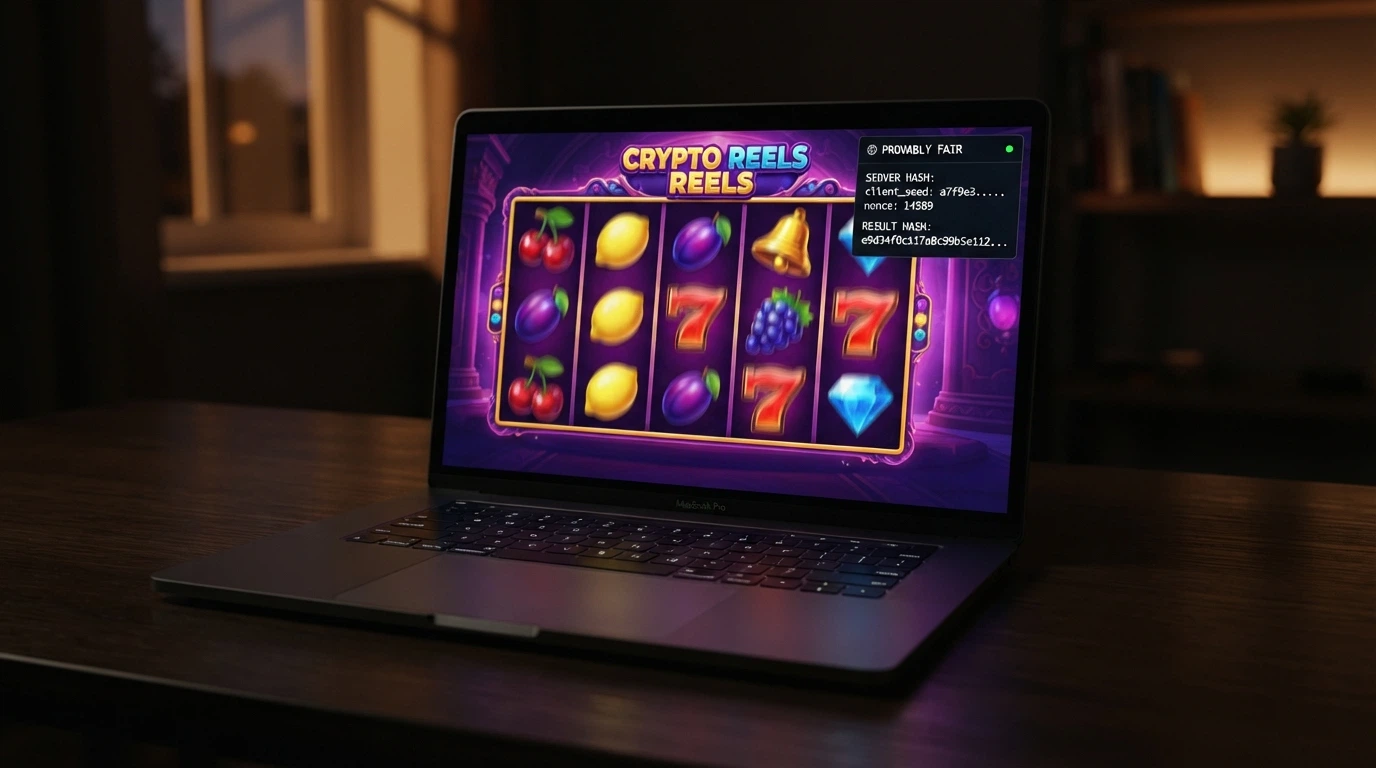
Solana Pokies and Slot Machines
The pokie and slot category at the largest platforms runs into thousands of titles. SolCasino’s 9,000+ games include the bulk of the slot catalogue, with live dealer and table games taking the rest. BC.Game’s tested 47 slots is a fraction of the full catalogue and should not be read as a ceiling.
Two things are missing from the picture, and the comparison names both. First, no per-title RTP data was confirmed this run for any slot at any featured operator — the offshore market does not publish per-title RTP the way a UK or Maltese licensed operator does. Second, no per-title volatility data was confirmed. A player who picks a slot by theme rather than by verified RTP is picking on the marketing.
The on-chain slots are different. The AP3X-Dev Slots game runs at a 5% house edge with SHA256 verification, and the player can audit the round after it resolves. The payout ceiling is 25× the wager. The catalogue is one game. The trade-off is breadth for verifiability, and a player who wants both needs to hold accounts at multiple tiers.
Dice Games and Provably Fair Mechanics
Dice is the proving ground for provably fair mechanics on Solana. The player picks a number or a range, the wager confirms on-chain, the result resolves, and the SHA256 hash verifies the round after the fact. The AP3X-Dev Dice Roll game runs at a 5% house edge with variable max payout depending on the range chosen. The Mines game on the casinocutup repository runs through Switchboard VRF and lets the operator configure the house edge between 1% and 5%.
Verification is the differentiator that traditional online casinos cannot match. The dice result is a hash the player can check before and after the round. The traditional casino asks the player to trust the server; the Solana dice game lets the player verify the server. That asymmetry is real, and it is the reason a player who cares about provably fair play picks the on-chain end of the spectrum even at the cost of catalogue breadth.
The Broader Game Catalogue: Live Dealer, Table Games and More
Beyond the pokie reels, the full-platform casinos carry live dealer tables, table games and sportsbooks. BC.Game tested 12 live dealer tables. SolCasino carries live dealer, sportsbook and crypto futures. GoldSpin carries live dealer games alongside its slot library. The on-chain alternatives are narrower — LootXX for blackjack, Solette for roulette — and they do not extend to live dealer.
For a player who wants the full casino floor, the custodial tier is the only fit. For a player who wants the verifiable mechanics of a single game on-chain, the on-chain set is the only fit. The two serve different readers, and the comparison does not flatter either into pretending to be the other.
The Legal Reality for Australian Solana Players in 2026
The legal position for Australian players is unambiguous, and the comparison opens with it because the rest of the page only makes sense against this backdrop. Online casino games, online pokies and in-play sports betting are prohibited under the Interactive Gambling Act 2001. The IGA was strengthened by the Interactive Gambling Amendment Act 2017, the Interactive Gambling Amendment (Credit and Other Measures) Act 2023 banned credit and crypto payments at licensed operators from 11 June 2024, and the Interactive Gambling Amendment (Gambling Reform) Bill 2026 passed Parliament on 19 August 2026 with measures commencing 1 January 2027.
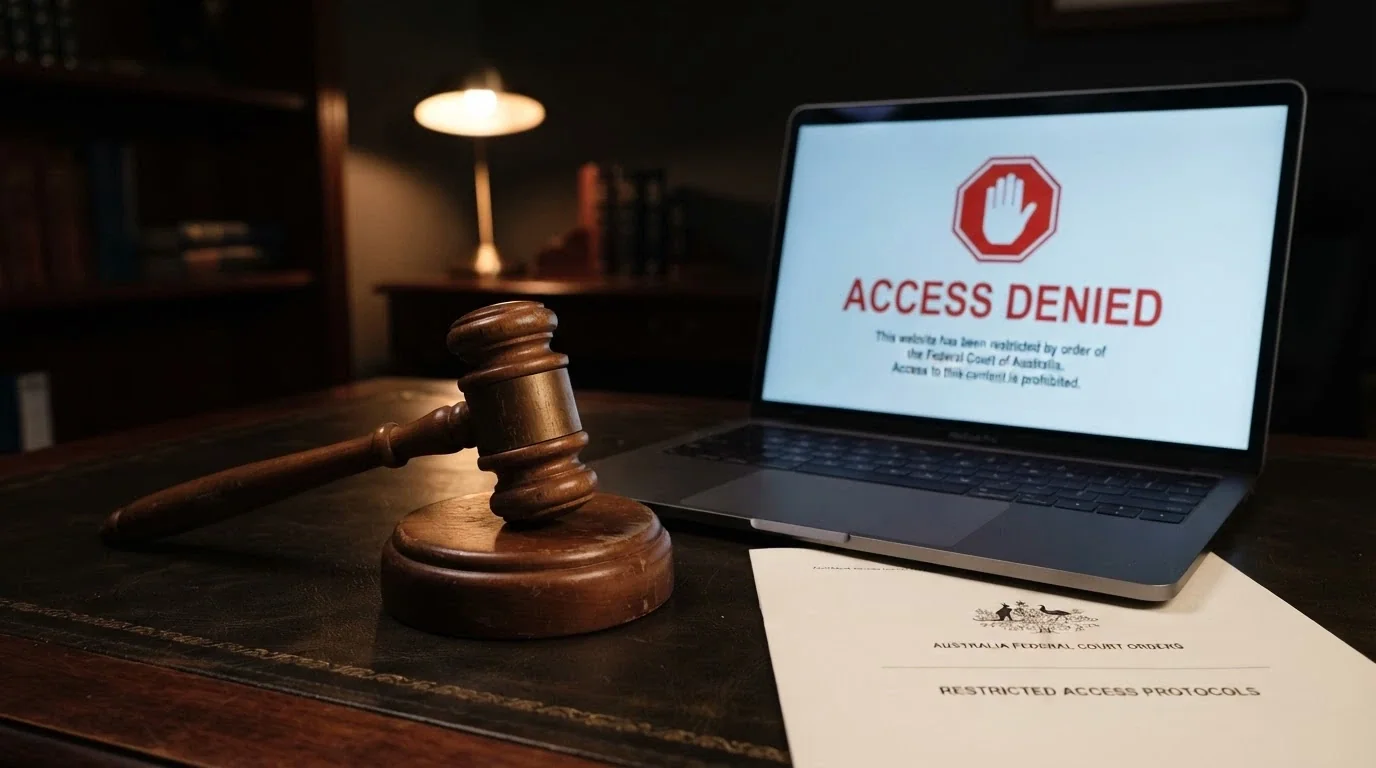
ACMA, the IGA and Why No Solana Casino Holds an Australian Licence
The Australian Communications and Media Authority (ACMA) enforces the online prohibition. ACMA investigates complaints, issues formal warnings and civil penalty proceedings, refers operators for enforcement, and directs ISPs to block illegal sites. Since the first blocking request in November 2019, ACMA has had 1,564 illegal gambling and affiliate websites blocked by Australian ISPs as of March 2026. More than 225 illegal services have withdrawn from the Australian market since enforcement was strengthened in 2017.
The penalty regime is severe. Civil penalties for bodies corporate run up to $12,375,000 per day for continuing contraventions. In ACMA v Jones (No 7) FCA 860, the Federal Court ordered pecuniary penalties totalling $24.24 million against operators and a promoter of prohibited online poker services marketed to Australians — PPPfish, Shuffle Gaming and Redraw Poker. The combined penalties across the ACMA v Jones litigation now stand at $29.24 million, including $5 million against Diverse Link Pty Ltd in March 2023.
The virtual-chip precedent is the closest legal test for token-based and NFT-based casino products. The Court held that where a virtual token is purchased with money and is convertible back into money, the “game” is gambling in substance under the IGA, whatever the interface calls the chips. An NFT casino that mints a token a player can sell back, or a token-based casino economy that pays out in a convertible house currency, sits inside the same precedent. The product is prohibited under Australian law whether the chips are called SOL, USDB, freeUSD or anything else.
The 2026 reform expands the toolkit. From 1 January 2027, banks and payment providers gain express authority to block transactions to illegal gambling operators. The reform also restricts wagering advertising — three ads per hour maximum between 6am and 8:30pm, a live-sport blackout, and a bar on athletes and celebrities promoting wagering — streamlines ACMA blocking powers, strengthens BetStop operations and prohibits online keno and foreign matched lotteries. The compliance burden shifts from the regulator asking ISPs to block to the regulator asking banks to refuse.
Offshore Operators vs the Licensed Market: What the Gap Means for You
What IS licensed in Australia is narrow: wagering on races and sport placed before the event begins, lotteries and keno, through operators licensed by a state or territory — typically through Licensing NT or the Northern Territory Racing and Wagering Commission. Online casino, pokies, live dealer, in-play betting and crypto gambling are not on that list. They are not on any list, because no licence exists for them to sit on.
The practical risks of the offshore route sit on top of the legal prohibition. No Australian consumer law protection applies, because no Australian licence exists. No Australian complaints body can recover money, because no Australian regulator has jurisdiction. BetStop does not cover offshore casinos — the operator is not licensed, not connected to the register, and will keep accepting a self-excluded person’s money. There is no chargeback path through a bank card, because no bank card is in the loop. ACMA can block the site at any time, with a balance on it. The 2027 bank-payment blocking adds deposit friction risk from the player’s own bank.
The projected scale of the offshore market tells its own story: the illegal offshore gambling market in Australia is projected to reach $5 billion by 2029. The size is the gap between what the law prohibits and what the market offers, and the comparison does not soften either side of it.
The individual player is not prosecuted under the IGA — the Act targets the provider. That fact is worth naming because it is the legal answer to the question every Australian reader is asking. It is not the same answer as “safe”. No Australian consumer protection applies, no Australian complaints body has jurisdiction, and the site can be blocked at any time. The legal position is not the same as the protective position, and a player who treats them as the same is reading one sentence of the law and skipping the next ten.
Staying in Control: Responsible Gambling Tools and Their Limits
The prevalence data is real and the comparison opens with it because these are the numbers that put a sharp edge on the rest of the page. Approximately 2.1% of Australian adults — roughly 430,000 people — experience problem gambling, with high-risk gambling at 1.8% in 2022. More than 500,000 Australians are estimated to be at risk of gambling-related harm. Behind those numbers are individual readers, and behind the readers are households that have paid for a habit that started as a choice.
Self-Exclusion, Deposit Limits and Why BetStop Has a Blind Spot
BetStop is the National Self-Exclusion Register, live since August 2023. By the end of June 2026, BetStop carried 65,430 registrations, with 40,160 active exclusions and 25,155 lifetime exclusions. People aged 30 or younger accounted for 30,081 registrations; people aged 31–40 accounted for 20,719 — together making up 78% of all registrations. The age skew is not a footnote. The bulk of self-excluded players are young enough to have decades of wagering exposure ahead of them.
The blind spot is structural. BetStop binds Australian-licensed wagering services — the operators licensed by state and territory regulators to take bets on races and pre-event sport. An offshore casino is not licensed, not connected to the register, and will keep accepting a self-excluded person’s money. The 2026 statutory review of BetStop, published 25 February 2026, made 10 recommendations focused on improving community awareness, reducing circumvention and improving user experience. None of those recommendations closes the offshore gap, because the gap sits outside BetStop’s jurisdiction.
What a player can do instead is operator-level. Some offshore casinos carry deposit-limit tools, take-a-break functions and self-exclusion at the account level — the same names as the Australian tools, with the same intent, but binding only that operator. A player who wants the discipline of a hard limit needs to use the tool the operator offers and accept that moving to a second operator resets the limit. The player who needs the discipline across operators does not find it offshore.
Awareness is the other gap. Only around 34% of Australians are aware of BetStop — a register that has been live for three years and carries 65,000 registrations. The 2026 reform addresses marketing directly: from 1 January 2027, the reform bans direct marketing of inducements for 14 days after a customer signs up, for three months after a person deregisters from BetStop, and indefinitely for customers identified as at risk. The ban does not reach offshore marketing, but it does tighten what licensed operators can send.
Where to Get Help: Australian Support Services That Actually Apply
The support infrastructure that works regardless of where the gambling occurs is Australian and free. The National Gambling Helpline — 1800 858 858 — is staffed 24/7, confidential and free. Gambling Help Online provides online chat and counselling for players and families. Both services apply whether the play is at a licensed Australian bookmaker, an offshore Solana casino or anywhere else.
For a player reading this page from a position of concern, those two numbers are the most important thing on it. They apply across every operator in this comparison and across every operator not in it. The rest of the page is information; these are action.
For a player reading from a position of curiosity, the same numbers apply. The 500,000 Australians at risk and the 430,000 already in problem gambling are not abstractions. They are readers, and the line between “curious” and “at risk” is shorter than it looks from the outside.
How We Selected and Ranked These Solana Casinos
The selection criterion is straightforward: every operator in this comparison accepts SOL, every operator reaches Australian players, and every operator sits on the offshore side of the line. The ranking layers three inputs. The first is Solana and crypto-native depth — does the casino integrate with the Solana ecosystem at a level deeper than a payments-page logo, or is SOL one coin in a list of twenty. The second is tested performance — where structured speed tests exist, the test result goes in. The third is the term sheet — licence type, KYC burden, withdrawal conditions, and the wagering language on the bonus page.
The sources consulted include Casipto’s structured test of 15 platforms with 127 deposits and 89 withdrawals, Slotozilla’s AU bonus data for the headline-heavy bonus platforms, CryptoNews operator profiles, BitcoinChaser’s profile for Anon Casino, DappRadar’s catalogue count for SolCasino, OptiHax’s terms analysis for SolCasino’s Sumsub KYC and bonus conditions, MadeOnSol for Zeebit’s non-custodial profile, LootXX’s first-party data for the on-chain blackjack product, ACMA’s official enforcement records for the legal backdrop, TechLawyers for the ACMA v Jones analysis, and the GitHub repositories for the open-source Solana casino products.
The limitations are real. Not every operator had full data confirmed this run — the gaps are noted in each profile, and the table cells where research could not confirm a figure use the no-data marker. No operator in the featured set holds an Australian licence, because no Australian online casino licence exists. The ranking is qualitative and built on the data available, and the comparison does not invent a weighting that the data does not support.
What this comparison does not do is recommend a brand to a reader as a place to play. The descriptions, the rankings and the verdicts are descriptive — they set out what each operator is, what it costs and what its verified record looks like. The decision to deposit is the reader’s, and the legal section above is the backdrop that decision is made against.
Should You Use a Solana Casino from Australia in 2026?
The page has established what the category is and what each operator in it costs. SOL is fast and cheap. The non-custodial end of the spectrum offers a genuine safety property the custodial end cannot match. The game catalogues are real and broad at the top of the set. The legal position is unambiguous — online casino is prohibited, every operator is offshore, no Australian consumer protection applies, BetStop does not reach, and banks will gain payment-blocking powers from 1 January 2027.

The decision the page does not make is whether the speed, the privacy and the game catalogue outweigh the absence of protection. The legal section above sets out what the absence costs. The responsible-gambling section above sets out what the support infrastructure looks like if the play stops feeling like a choice. The operator profiles above set out what each operator is worth to which reader.
What the comparison will say is what it has already said. The strongest all-rounder in the featured set is BC.Game, on the strength of its test record and licence disclosure. The strongest crypto-native operators are Zeebit and LootXX, on the strength of their custody model and Solana-first design. The largest catalogue belongs to SolCasino, with the Sumsub friction that comes with it. The largest headline bonus belongs to Caswino, without a verifiable term sheet to anchor it. The strongest non-custodial blackjack is LootXX. The strongest on-chain casino is Zeebit. None of these statements is a recommendation. All of them are what the data on this page supports.
The risk the page will name one more time is the structural one. The product is prohibited. The operators are offshore. The protection is absent. The 2027 bank-payment blocking adds friction to deposits, not to withdrawals. A player who proceeds does so with the full picture, which is what the page is for.
If the player reads this page, understands what offshore means and chooses to play anyway, the strongest operational advice is the obvious one: pick a non-custodial platform where the catalogue fits, set a deposit limit before the first deposit, keep the SOL in SOL to avoid the CGT conversion, and use the National Gambling Helpline on 1800 858 858 before the limit stops feeling like a choice.
Frequently Asked Questions
How fast are Solana casino deposits and withdrawals compared to Bitcoin?
Solana settles in roughly 400 milliseconds, with tested SOL withdrawals averaging 43 seconds across the Casipto structured test and 28 seconds for an 8.2 SOL transfer at BC.Game. Bitcoin’s block time runs around 10 minutes, and BTC operators typically credit after two confirmations — closer to 20 minutes plus manual review. Solana is materially faster end to end, and the gap widens during BTC congestion when fees also rise.
What happens if an offshore Solana casino blocks my withdrawal or closes my account?
No Australian regulator has jurisdiction over the offshore operator, no Australian consumer protection applies, and no complaints body can recover money. BetStop does not cover offshore casinos, chargeback through a bank card is not available, and ACMA can block the site at ISP level at any time. Players who proceed should treat the balance as at risk until the SOL has cleared to their wallet.
Are Solana casino winnings taxable in Australia?
Gambling winnings are not assessable income for ordinary punters under section 6-5 of the ITAA 1997. The AUD-to-SOL conversion is a separate question and may trigger a capital gains tax event on any gain, while the gambling winnings stay tax-free. The Australian Taxation Office treats the conversion as a property transaction, not as part of the wager.
What are the risks of using crypto — including SOL — to gamble online from Australia?
The legal risk sits at the provider: online casino games are prohibited under the Interactive Gambling Act 2001, and every operator here is offshore and unlicensed in Australia. The player is not prosecuted, but no Australian consumer protection applies. From 1 January 2027, banks gain express authority to block fiat transactions to illegal operators, and offshore sites are not connected to BetStop. The crypto-specific risk is CGT exposure on AUD-to-SOL conversion.
Can Australian banks block transactions to Solana gambling sites?
From 1 January 2027, yes. The Interactive Gambling Amendment (Gambling Reform) Bill 2026 passed Parliament on 19 August 2026, and the reform grants banks express authority to block fiat transactions to illegal gambling operators. The blocking applies to fiat, not to peer-to-peer SOL transfers between wallets, but the AUD leg — exchange on-ramps and off-ramps — sits inside the bank’s reach.