
Ethereum casinos accepting Australians: ten offshore rooms, their bonuses, and the law that governs all of them
If you are weighing up an Ethereum casino in Australia, the first thing the marketing will not say is also the most consequential: there is no such thing as an Australian-licensed Ethereum casino, because there is no Australian-licensed online casino of any kind. The Interactive Gambling Act 2001 prohibits providers from offering online casino games, online pokies and in-play sports betting to people physically in Australia, and no licence for online casino exists anywhere in the country. Every Ethereum casino an Australian can actually play at, then, is offshore — registered in Curaçao, Anjouan, or another permissive jurisdiction, serving Australians in the gap between enforcement and consumer protection. That gap is where this page lives.
The ten operators ranked below are the strongest of that set in 2026: ETH deposits confirmed, bonus terms documented, withdrawal times on Layer-1 and Layer-2 networks where research carries them. The ranking is built on network support, bonus transparency, payout speed and game-library depth, in that order of weight. Where research does not carry a figure, the cell or sentence shows the gap rather than a guess.
Current as of 30 October 2026 against the Curaçao eGaming register and operator terms pages.
Table of Contents
- What an Ethereum casino actually is — and why the distinction matters for Australians
- 10 Ethereum casinos Australians can play at in 2026 — and what each one actually offers
- Why your Ethereum casino bonus is smaller than the headline number
- From your ETH wallet to the reels — and back out again
- The pokies, tables and live games you can actually play with Ethereum
- Playing ETH casinos on your phone: dedicated app or mobile browser?
- What “no KYC” at an ETH casino actually delivers — and where it stops
- The Australian legal reality every ETH casino player needs to know
- Staying in control when the casino sits outside every Australian safety net
- How we assessed and ranked the operators on this page
- What the ETH casino landscape actually means for your next session
- Frequently asked questions about Ethereum casinos in Australia
What an Ethereum casino actually is — and why the distinction matters for Australians
An Ethereum casino is an online casino whose cashier accepts ETH as a deposit and withdrawal method, and whose internal balance is denominated in ETH or in a stablecoin pegged to a fiat value. The marketing often calls this “crypto-native.” What it actually means in practice is simpler: the casino is connected to an Ethereum wallet, deposits confirm on the blockchain, and the player moves between games with a balance the casino holds against that wallet. At a fiat casino the deposit hits a payment processor, the bank arbitrates, and the operator sees a cleared payment in AUD. At an Ethereum casino the deposit is the network confirmation itself — there is no intermediary taking a cut between the player’s wallet and the casino’s balance.
The distinction matters for Australians because of what flows from it. Every Ethereum casino open to Australian players is offshore by definition. The Interactive Gambling Amendment (Credit and Other Measures) Act 2023 banned credit cards, credit-related products and digital currency as payment for online wagering from 11 June 2024, with civil penalties of up to A$234,750 for operators that breach it. The ban targets the licensed wagering sector — no Australian licence lets an operator take ETH in the first place. Any site asking an Australian for an ETH deposit is, by that fact, outside the Australian framework: no ACMA complaints recourse, no BetStop coverage, no consumer protection if a withdrawal stalls or a balance is locked.
The two-sentence history is this. Bitcoin-only casinos appeared around 2012–2014 as a small subset of offshore rooms. Ethereum followed as the second wave around 2017–2019, when the broader smart-contract ecosystem made provably fair game verification practical on the casino side. By 2026 the typical Ethereum casino carries 5,000–7,000+ slot titles from Pragmatic Play, Hacksaw Gaming, Nolimit City, Push Gaming, BGaming and Yggdrasil, with slot RTPs running 94–97% across the provider landscape. The rooms are not a fringe phenomenon any longer — they are a parallel market, and a parallel market operating outside Australian law.
How playing with Ethereum at an online casino actually works
- Set up an Ethereum wallet. MetaMask is the default for most Australians — a browser extension or mobile app that holds the keys to your ETH. Alternatives include Trust Wallet, Coinbase Wallet and hardware wallets such as Ledger or Trezor. The wallet generates an address that the casino can read on-chain.
- Buy ETH if you need to. Most Australians move from an exchange (CoinSpot, Swyftx, Independent Reserve) to a self-custody wallet before depositing. The exchange is the fiat on-ramp; the wallet is what the casino sees.
- Copy the casino’s deposit address. Every Ethereum casino gives a unique deposit address, often with a per-user memo or amount. The address is on the cashier page. The memo exists because the casino is reusing one address across many users.
- Send the ETH and wait for confirmation. A standard mainnet transaction confirms in 2–5 minutes at the casino. Layer-2 networks (Arbitrum, Polygon, Optimism) confirm faster and cost a fraction of the gas.
- The balance appears in the casino’s cashier. Some operators auto-convert your ETH to a stablecoin or an internal credit the moment it lands; others let you play in ETH directly.
- Play. The balance moves between games by a single click; the on-chain side of the transaction is the deposit only — in-game wagers are settled on the casino’s internal ledger.
- Withdraw back to your wallet. You paste a withdrawal address, the casino broadcasts a transaction, and the funds arrive in minutes on Layer-2 or 11–30 minutes on mainnet.
The whole deposit-to-play loop is, in operating terms, faster than any Australian fiat route. A PayID deposit on a licensed sports book is near-instant now; a bank transfer can take a business day. An Ethereum deposit on Layer-2 is, fee aside, indistinguishable from a PayID. The legal difference, of course, is the one the casino does not put in its marketing.
“Provably fair” and the real-money framing ETH casinos use
Provably fair is the cryptographic promise most Ethereum casino marketing leads with. The pitch is that the casino cannot rig a spin because the result was committed to before the bet and the player can verify it afterwards. Stake and BitStarz run their own in-house provably fair titles — Stake Originals and BitStarz Originals — that publish a server seed, a client seed and a nonce per round, and let the player check the result against a hashed combination. The mechanism is sound as a maths statement.
What provably fair does not mean is that the casino itself is regulated, licensed or solvent in any consumer-protection sense. The verification is a check on the game; it is not a check on whether the operator will pay out a large win, whether the bonus terms are honoured, or whether the site is licensed anywhere that matters to an Australian. The mechanism proves the spin was not altered; the surrounding operation can still be — and often is — opaque.
The wider picture is more concerning. An audit of 50 crypto casino operators found that 41 displayed an RTP figure for at least one popular slot that did not match the underlying math sheet. In 39 of those cases the displayed RTP was higher than the slot was actually running. The cryptographic promise covers the outcome of a spin; the displayed RTP is the number a player uses to choose a slot in the first place. When the on-screen number does not match the math sheet, the player is being given a picture of the game that the game does not match. Provably fair at the spin level does not repair that gap; it sits one layer above it.
10 Ethereum casinos Australians can play at in 2026 — and what each one actually offers
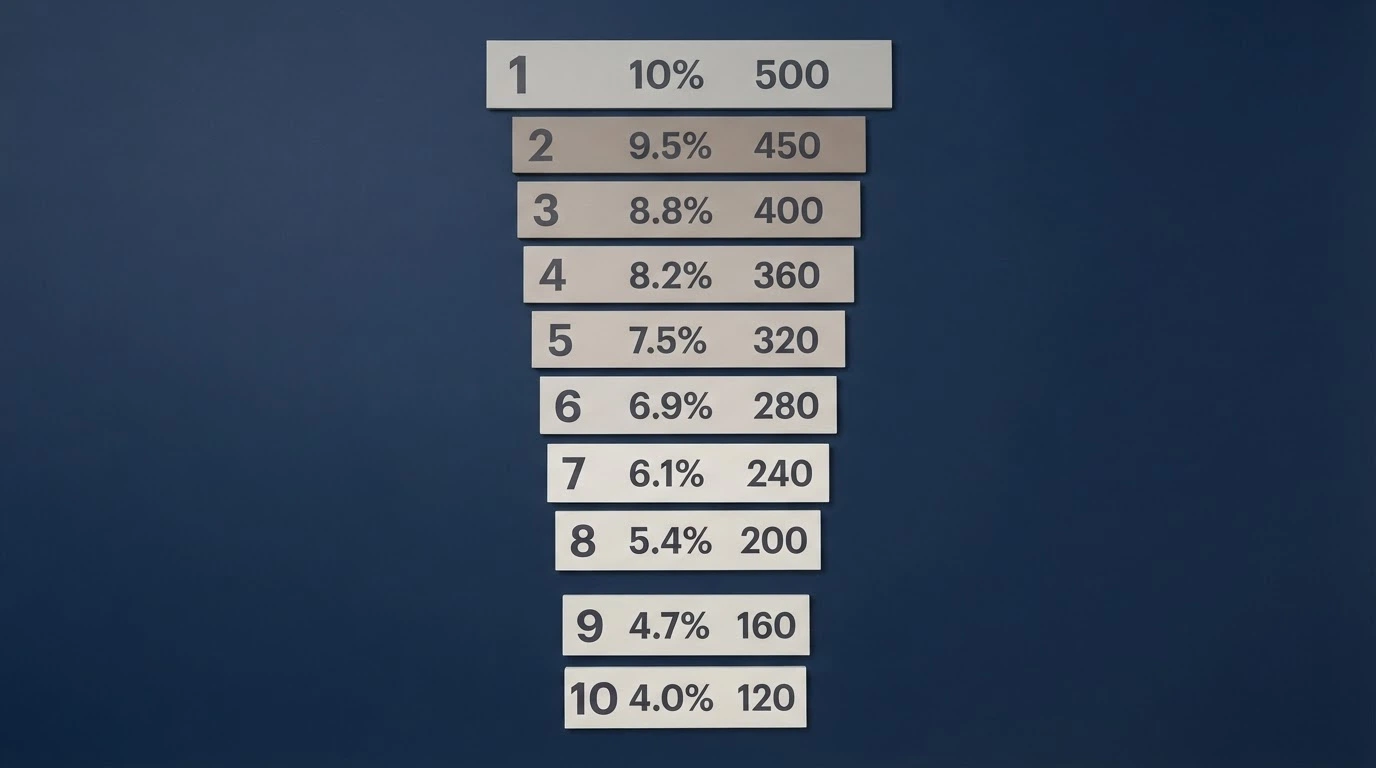
The table below ranks the ten operators by network support, bonus transparency, game-library depth and payout speed, in that order. Three of the ten support four Ethereum networks; others sit on mainnet only. Two publish a clear wagering multiple; most do not in their public-facing copy. Game counts range from roughly 3,000 to 7,000+. Every operator in this table is offshore and not licensed in Australia.
| Casino | AU legal status | Welcome bonus | Free spins | Game library |
|---|---|---|---|---|
| SkyCrown | Offshore · Curaçao | 100% up to A$2,000 | 100 FS | 7,000+ titles, 138 providers |
| LuckyDreams | Offshore · Curaçao | 100% up to A$1,000 | 100 FS | 4,000+ titles, crypto-native mix |
| Stake | Offshore · Curaçao | None — daily race / weekly raffle | — | 3,000+ titles, provably fair Originals |
| Rainbet | Offshore · Curaçao | 250% up to A$1,750 locked, or 100% no-wager drip | 60 FS locked path | 4,000+ titles |
| Royal Reels | Offshore · Curaçao · ACMA-blocked | A$10 no-deposit + 100% up to A$500 | 50 FS | 5,400+ pokies, 40+ providers |
| WinSpirit | Offshore · Curaçao | Up to €400 | 100 FS | 5,000+ titles, casino + sportsbook |
| Bizzo Casino | Offshore · Curaçao | 125% up to €1,250 (1st of 4) | 125 FS (1st) | 5,000+ titles |
| BitStarz | Offshore · Curaçao (since 2014) | Up to A$10,000 across 4 deposits | 180 FS + 50 no-deposit FS | 4,000+ titles, BitStarz Originals |
| NeoSpin | Offshore · Curaçao | 400% up to A$10,000 | 100 FS | 5,000+ pokies |
| CoinCasino | Offshore · Curaçao eGaming (2023) | Not confirmed | Not confirmed | 4,000+ titles, pure crypto |
The shape of the spread is its own finding. The biggest headline match — NeoSpin’s 400% — is also the operator with the least disclosed wagering terms. The cleanest terms in the set are at LuckyDreams and Rainbet, and the smallest headline match in the set is Stake’s, which substitutes a continuous promotion system for a sign-up offer. The fastest withdrawal is at CoinCasino, which is also the only one in the table whose welcome bonus the research did not confirm. Across the ten, the volume of the bonus tells you almost nothing about its value: a 400% match can cost more to clear than a 100% match at half the multiple, and the section on bonus maths below works that out.
SkyCrown: 7,000+ games across three ETH networks
SkyCrown is the multi-network workhorse of the set. It accepts Ethereum on Mainnet, Arbitrum and Polygon, with a minimum deposit of 0.005 ETH (about A$25) and an average ETH payout of three minutes — the fastest in the table alongside CoinCasino. The library runs to more than 7,000 titles across 138 providers, which makes it the widest bench in the comparison: Evolution Gaming for live dealer, Pragmatic Play, Hacksaw Gaming, Nolimit City, BGaming and the rest of the usual high-end mix. The welcome offer is 100% up to A$2,000 plus 100 free spins, on terms research did not pin to a specific wagering multiple in the snippets this run. The two network choices that matter most for a player are Arbitrum and Polygon — both cut the deposit fee to under A$0.10 and the withdrawal to minutes rather than the 11–30 minute mainnet window. The right pick if you want a broad library, three network options and a published min deposit. The bet you are making is on the unstated wagering multiple.
LuckyDreams: four ETH networks and a transparent 35x bonus-only wagering term
LuckyDreams is the operator in this set that actually publishes a wagering multiple, and the term is bonus-only rather than deposit-plus-bonus. That distinction is the one that matters in the bonus maths below. Four Ethereum networks are supported (Mainnet, Arbitrum, Optimism, Polygon) — the widest in the table. The withdrawal time is 4 minutes on Arbitrum and 11 minutes on mainnet. The library leans crypto-native: Aviator-style crash games, Plinko, Elvis Frog in Vegas and the rest of the BGaming / SoftSwiss-stable catalogue. The welcome is 100% up to A$1,000 plus 100 free spins at 35x bonus-only wagering, with a 0.005 ETH minimum deposit. The right pick if you want the bonus terms stated in plain language and the broadest choice of L2 networks. The compromise is a smaller game library than SkyCrown, though the transparency on the wagering terms provides a different sort of value.
Stake: no traditional welcome bonus, but a different kind of reward system
Stake is the operator in the set that does not run a deposit-match welcome at all. The offer is continuous: a A$100,000 daily race, a A$75,000 weekly raffle and a tiered VIP bonus structure that pays out on volume rather than on a sign-up deposit. The library runs to 3,000+ games with provably fair in-house titles — Stake Originals — that publish verifiable seeds per round. The appeal is structural: a player who plays regularly gets more out of the daily race than they would out of a one-shot welcome, and there is no wagering to clear. The cost is the headline: a player evaluating this page by the size of the welcome number will rank Stake near the bottom. A player evaluating by ongoing value, and who has no desire to grind through a wagering requirement, will rank it differently. The right pick if you play volume, not one-shot. You are essentially trading the upfront bonus for a continuous stream of rewards, which suits the high-frequency player better than the one-time bonus hunter.
Rainbet: pick your path — locked bonus with wagering or a no-wager drip
Rainbet is the only operator in the set that lets a player pick between two welcome paths. The locked path is 250% across three deposits up to A$1,750, plus 60 free spins on Sweet Bonanza, at 40x deposit-plus-bonus wagering and 7-day validity. The drip path is a 100% match on the first deposit released as a no-wager credit. Minimum deposit is A$30 either way. The game exclusions are the ones to read first: Rainbet excludes all Hacksaw Gaming and Nolimit City slots, plus any game with RTP above 97.4%, from bonus wagering — a meaningful restriction, since the high-volatility titles most players want to play with bonus credit are precisely the ones excluded. The right pick if you want the choice between a high-multiple bonus and a no-wager alternative. Be mindful of the game-exclusion list, as many high-volatility titles are off-limits for clearing the wagering requirement.
Royal Reels: the one with a real no-deposit bonus — and an ACMA block to its name
Royal Reels carries the only genuine no-deposit offer in the set: A$10 in bonus credit after phone verification, at 40x wagering. The deposit-match path is 100% up to A$500 at 30x, with a A$20 minimum and 5,400+ pokies from 40+ providers. Crypto withdrawals sit at 10–30 minutes, slower than the Layer-2 operators above. The complication is the regulatory one: Royal Reels is on the ACMA’s blocked-sites list, which means Australian ISPs are required to block the primary domain. Players get in via mirror domains that the operator rotates, which is itself a friction point and a sign the operator is operating in active tension with Australian enforcement. The right pick if the no-deposit offer is the draw. The trade-off is the ACMA block, the mirror-domain requirement and the slower withdrawal window.
WinSpirit: 12 cryptocurrencies and a A$60,000 monthly withdrawal ceiling
WinSpirit is the multi-coin shop of the set, accepting BTC, ETH, LTC, DOGE, USDT, TRX, BCH, USDC, SOL, XRP, DAI and BNB — twelve in total. The welcome is up to €400 plus 100 free spins; minimum deposit is €20; crypto withdrawals sit at roughly 20 minutes. The library carries Pragmatic Play and other top-tier providers across a casino-plus-sportsbook split. The number to watch is the withdrawal cap: A$14,000 weekly and A$60,000 monthly. A player who lands a big win above those ceilings is paid in instalments, not in one withdrawal, and the wait between instalments is whatever the operator’s terms specify. The right pick if you want a sportsbook and a casino in one place and many crypto rails. The trade-off is the monthly cap, which is the lowest flexibility in the set for a high-roller scenario.
Bizzo Casino: a four-deposit welcome spread and 175 free spins
Bizzo runs the multi-deposit package play: 125% up to €1,250 plus 125 free spins on the first deposit, 50% up to €300 plus 50 free spins on the second, 30% up to €1,000 on the third, 25% up to €1,000 on the fourth. Total free spins: 175. Total headline match: nearly €3,000. The library is 5,000+ titles from Pragmatic Play and NetEnt; crypto payouts land within 24 hours. A highroller alternative offers 100% up to €750 at a €300 minimum deposit, which is a different path with a different threshold. The right pick if you want a long welcome spread with a lot of free spins and a high-roller option. The trade-off is the four-deposit structure itself, which means the value of the package is contingent on four separate deposits and four separate wagering events.
BitStarz: the veteran with A$10,000 across four deposits and in-house provably fair games
BitStarz is the longest-running name in the set — Curaçao-licensed since 2014, which is older than most of the operators on this page. The welcome is up to A$10,000 plus 180 free spins across four deposits, with 40x wagering on the bonus and 40x on free-spins winnings. The library runs to 4,000+ titles including in-house BitStarz Originals, which carry the same provably fair commitment as Stake’s catalogue. A separate 50 no-deposit free spins offer is available without a deposit, capped at A$100 maximum cashout on the no-deposit winnings. ETH, BTC, LTC, BCH, DOGE and USDT are supported. The right pick if the in-house provably fair games are the draw and you want the longest track record in the set. The trade-off is the parallel 40x on free-spins winnings, which is the harder end of the bonus terms carried in this comparison.
NeoSpin: 400% headline match and Arbitrum L2 from A$15
NeoSpin carries the highest percentage match in the table at 400%, against a A$10,000 ceiling plus 100 free spins. The minimum deposit is 0.003 ETH (about A$15) — the lowest in the set, and a meaningful entry point for a small bankroll. Three networks are supported (Mainnet, Arbitrum, Polygon) and the average ETH payout is six minutes. The library runs to 5,000+ pokies. The percentage is the headline that gets clicked; the wagering term is the number that decides whether the bonus is worth claiming, and research did not pin a multiple to the offer in the snippets this run. The right pick if the lowest deposit floor and the highest percentage match are what you came for. The bet you are making is on the unstated wagering multiple, which on a 400% match is the single most important figure in the entire offer.
CoinCasino: pure crypto, no KYC, instant withdrawals
CoinCasino is the privacy-first room in the set. No KYC is required to play or to withdraw; ETH withdrawals settle instantly via ERC-20; the library runs to 4,000+ titles in a crypto-native catalogue. The Curaçao eGaming licence dates to 2023, which is the newest licence in the comparison. The welcome bonus was not confirmed in the research pass for this page, so the profile sits on the privacy and speed proposition rather than on a sign-up offer. The right pick if the no-KYC and instant-withdrawal features are the priority over a headline welcome match. The trade-off is the absence of a confirmed welcome offer and a newer licence than most of the rest of the set.
Why your Ethereum casino bonus is smaller than the headline number
A 100% up to A$2,000 match sounds like a free A$2,000. The wagering requirement is the cost of turning that credit into withdrawable cash, and the multiple on which it is calculated decides what the bonus actually costs the player who claims it.

The cleanest comparator in the table is LuckyDreams: 100% up to A$1,000 at 35x bonus-only. The math, using a representative slot RTP of 96.39% (NetEnt’s average across 392 qualifying games), works as follows. The player claims a A$1,000 bonus, wagers only that A$1,000 at 35x, and stops — which is the conservative assumption the maths requires. Required turnover is A$35,000. At a 96.39% RTP, the house edge is 3.61%, so the expected loss on that turnover is roughly A$1,264. The player started with a A$1,000 bonus; the expected cost of clearing it is therefore about A$1,264 — a 126% cost against the bonus, before any of the player’s own deposit is touched. That is the “free” bonus in expected-value terms. The expected loss above the A$1,000 bonus is what a player is statistically giving up to convert bonus credit to cash.
Run the same scenario at a higher multiple, and the cost climbs. A 40x deposit-plus-bonus offer on a A$1,000 deposit plus A$1,000 bonus requires A$80,000 of turnover before the bonus is unlocked, and the expected loss on that turnover is A$2,888 — which is more than the bonus itself. This is how a “bigger” bonus at a higher multiple costs more than a smaller one at a lower multiple: the multiple is applied to more than just the bonus, and the turnover at which the house edge is paid scales with it. The bigger the number on the banner, the more the player pays to convert it.
Game weighting is the trap inside the trap. Slots typically count 100% toward wagering, which is the assumption the calculation above uses. Table games often count 10% or 0%, which means the same A$35,000 of blackjack turnover contributes only A$3,500 toward the requirement. Rainbet’s exclusion list shows the operator-side version of this: it excludes all Hacksaw Gaming and Nolimit City slots and any game with RTP above 97.4% from bonus wagering, on the grounds that those games have a lower house edge. The exclusion makes the bonus harder to clear in absolute terms — the player has to find a slot that contributes 100% and is not on the excluded list. The right reading of a wagering requirement is the percentage of the game library that the player can actually play to clear it, and the per-game contribution rate within that library.
No-deposit bonuses and free spins: what is actually available at ETH casinos
No-deposit offers are rare in the Ethereum casino space, because the operators running it tend to be the same operators that already have a low-cost deposit rail. Two of the ten in this set carry a real no-deposit path. Royal Reels offers A$10 in bonus credit after phone verification, at 40x wagering — the player has to verify a phone number to claim, and has to clear A$400 of wagering before the bonus converts to withdrawable cash. BitStarz offers 50 free spins without a deposit, with a A$100 maximum cashout on the winnings from those spins. Neither is generous in expected-value terms; both are, in the strict sense, free to try.
The difference between a no-deposit free spin and a deposit-gated free spin is the stake and the ceiling. A no-deposit free spin is paid by the house, has a hard cap on the winnings the player can withdraw, and carries the operator’s full wagering requirement. A deposit-gated free spin is paid by the house only as a topping on the player’s own deposit, has no withdrawal cap as a rule, and shares the bonus’s wagering requirement. The no-deposit offer is the smaller number on the page and the more honest one to read: the cap is explicit because the cap is the cost. The deposit-gated offer is the bigger number on the page and the one the marketing prefers; the cost is the wagering multiple, which is less visible.
From your ETH wallet to the reels — and back out again
- Copy the casino’s deposit address. Every Ethereum casino gives a per-user address on the cashier page. Most operators display it as both a string and a QR code; both are the same destination.
- Choose your network. The cashier offers a network selector — Mainnet, Arbitrum, Polygon, Optimism, depending on the operator. Match the network on the wallet side. Sending mainnet ETH to a Polygon address is a recoverable but slow mistake; sending Polygon ETH to a mainnet address can be a permanent one.
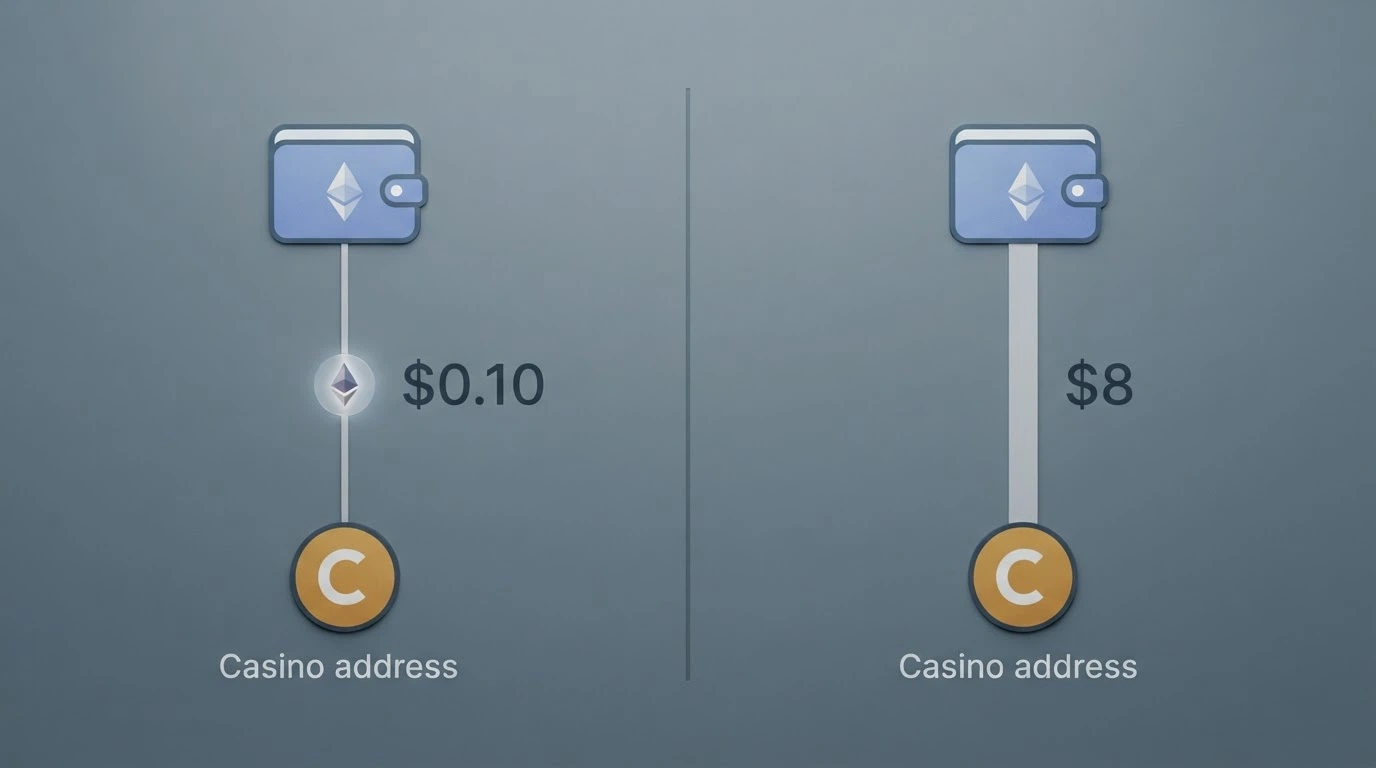
- Set the gas. On Mainnet, set the gas to whatever the wallet suggests; the deposit fee will land between A$3 and A$15. On an L2, the fee is below A$0.10 in most cases.
- Send the deposit. Most operators credit the balance in 2–5 minutes after the first confirmation. Some credit on the first network confirmation, which is faster but slightly riskier on a congested day.
- Play. The balance moves between games by a single click. The on-chain side of the transaction is the deposit only.
- Withdraw. Paste a withdrawal address, confirm, wait. On Layer-2 the funds land in your wallet in 2–5 minutes; on mainnet, 11–30 minutes depending on network conditions.
- Verify if asked. Most operators allow deposits and small withdrawals without KYC. A withdrawal above roughly A$1,000–5,000 is the typical trigger point, and the verification request arrives as a document upload.
Which casinos actually pay out fastest — and which ones have withdrawal caps
The payout ranking in the set, on confirmed data, runs: SkyCrown at three minutes, LuckyDreams at four minutes on Arbitrum, NeoSpin at six minutes, CoinCasino instant on ERC-20, Royal Reels at 10–30 minutes, WinSpirit at roughly 20 minutes, and Bizzo within 24 hours. The Layer-1 versus Layer-2 split is the deciding factor: LuckyDreams at 11 minutes on mainnet falls to four minutes on Arbitrum — a 7-minute difference on the same operator, same offer, same player. The casinos that support L2 networks are not just cheaper to fund; they pay out materially faster.
The cap that can blindside a big winner is WinSpirit’s. The operator’s weekly withdrawal ceiling is A$14,000 and the monthly ceiling is A$60,000. A player who lands a A$80,000 win on a single session is paid A$14,000 the first week and the balance over the weeks that follow, at whatever cadence the operator’s terms specify. The other operators in the table do not publish equivalent caps in the snippets this run, but the absence of a published cap is not the same as the absence of a cap; the operator’s terms page is where this is set out, and the terms page is what a player reads before making a large deposit.
The pokies, tables and live games you can actually play with Ethereum
The shape of the lobby is the same across the set. Pokies dominate: 5,000–7,000+ titles per operator, the bulk of which come from a small set of high-throughput providers. Pragmatic Play, Hacksaw Gaming, Nolimit City, Push Gaming, BGaming and Yggdrasil are the names that recur, and the typical RTP range is 94–97% across those providers. The live-dealer lobby is dominated by Evolution Gaming, with Pragmatic Play Live as a secondary presence at most of the operators that carry Evolution. Table games — blackjack, roulette, baccarat — sit underneath the live-dealer surface as RNG variants, which run faster per round but carry the same house edge.

The provider-level RTP data is the most useful filter for a player choosing where to spend time. NetEnt has the highest average RTP across tracked providers at 96.39% (across 392 qualifying games), followed by Big Time Gaming at 96.25% and Push Gaming at 96.15%. Nolimit City and Relax Gaming have the highest tracked max-win tiers, at up to approximately 150,000x stake. The combination — NetEnt for steady returns, Nolimit City and Relax Gaming for the long-shot ceiling — is the working list a player can build from those figures.
The high-RTP pokies worth knowing by name — and the ones the audit flagged
| Slot title | RTP | Provider | Volatility | Max win |
|---|---|---|---|---|
| Mega Joker | 99% | NetEnt | — | — |
| Blood Suckers | 98% | NetEnt | — | — |
| Oracle of Gold | 96.55% | Pragmatic Play | High | 10,000x |
| Gates of Olympus | 96.5% | Pragmatic Play | Very high | 5,000x |
| Gates of Olympus 1000 | 96.49% | Pragmatic Play | Very high | 25,000x |
| Sweet Bonanza | 96.48% | Pragmatic Play | High | — |
| Dead or Alive 2 | — | NetEnt | — | 111,111x |
The audit finding that sits on top of this table is the one to read first. Of 50 crypto casino operators audited, 41 displayed an RTP figure for at least one popular slot that did not match the underlying math sheet — and in 39 of those cases the displayed RTP was higher than the slot was actually running. The table above is built from RTP figures tied to specific titles; the broader point is that the on-screen RTP is not always the RTP the slot is paying. A player who chooses a slot by its displayed number is choosing on a metric that the operator has, in a substantial minority of cases, presented incorrectly. The honest read is to weight the provider’s track record (NetEnt, Push Gaming, Big Time Gaming) over any individual slot’s displayed number.
Live dealer and table games: blackjack, roulette and baccarat with ETH
Live dealer is the layer above the RNG table games and the part of the lobby that most closely reproduces a land-based casino. Evolution Gaming is the dominant provider across the featured set, and the games run to the standard live format: blackjack with multiple seat counts, roulette (European, American and Lightning variants), baccarat, and game-show titles such as Crazy Time and Monopoly Live. The ETH deposit funds the live table the same way a fiat deposit would — the player buys in at the table, the chips are denominated in the casino’s internal credit, and the cashout is settled back to ETH at the cashier.
The difference between live dealer and RNG table games in an Ethereum casino is the same as the difference anywhere else: live dealer carries a higher minimum bet (often A$5–A$10 per hand on blackjack), plays at real-world pace, and uses a real dealer on a real wheel. RNG tables are the faster, lower-stakes alternative. The ETH funding is irrelevant to the table itself — the blockchain is on the deposit and withdrawal, not on the round.
Free-play and demo mode: trying before you stake at an ETH casino
Demo mode is the part of the lobby that runs without a real-money balance. The pokies are typically available in demo across most of the operators in the set, and the experience is the same as the real-money version except that the wagers are notional. The point of demo is to learn the game’s volatility and hit frequency before staking real ETH. Gates of Olympus, for example, is a very-high-volatility pokie; the difference between that and a low-volatility title is visible inside twenty demo spins, in the size and frequency of the wins.
The limit of demo is that it teaches the game and not the real-money psychology. A player demo-spinning a high-volatility pokie will see the long quiet stretches and the occasional big hit, and will form an expectation accordingly. A player real-money-spinning the same pokie at the same stake is exposed to the same mathematics and to a different emotional context, where the quiet stretches cost actual ETH. The distinction between demo play and a no-deposit bonus is the same point in reverse: a no-deposit bonus pays real money on real wagering, with a real cap on what the player can cash out. A demo is free of all of that and, accordingly, free of the lesson the real-money version is teaching.
Playing ETH casinos on your phone: dedicated app or mobile browser?
The mobile access pattern across the featured set is browser-led, with most operators running a responsive web app that scales to a phone screen rather than a native iOS or Android client. The ETH deposit and withdrawal flow is the same on a phone as on desktop — the cashier generates the address, the wallet signs the transaction, the casino credits the balance. The two are operationally identical; the only difference is the screen size on which the player reads the wagering terms.
The trade-off a phone introduces is UI density. A pokie’s reel sits comfortably on a 6.5-inch screen; a live-dealer lobby with side statistics can be cramped. The bonus terms page, which on desktop is a long scroll, becomes a long pinch-and-zoom on mobile — and the fine print is the part of the bonus a player most needs to read. There is no functional difference in bonus terms or payout speed between a deposit placed on mobile and a deposit placed on desktop, which is the only point that matters operationally.
What “no KYC” at an ETH casino actually delivers — and where it stops
The marketing promise of “no KYC” at an Ethereum casino is that the player can deposit, play and withdraw without submitting identity documents. The reality is closer to “no KYC until a threshold.” Most Ethereum casinos in this set allow deposits and small withdrawals without verification; verification may be triggered for withdrawals above roughly A$1,000–5,000, or for activity the operator’s risk system flags as unusual. The trigger point is a per-operator setting, and the operator’s terms page is where the threshold is set out. CoinCasino is the pure no-KYC operator in the set, with no identity verification required to play or to withdraw, and instant ETH withdrawals via ERC-20.
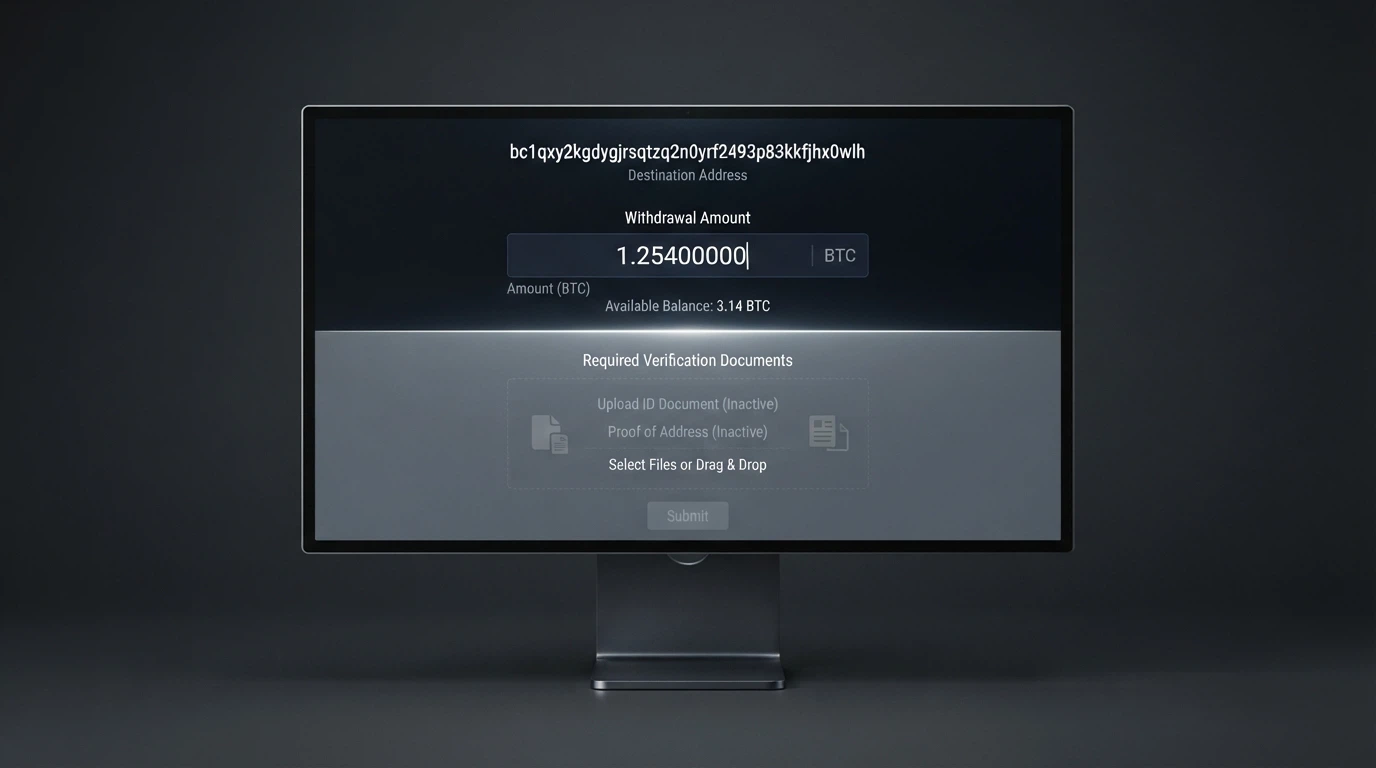
The trade-off is the consumer-protection gap. A KYC process at a fiat-licensed casino is also the casino’s first chance to verify the player, attach a payment method, and enter the regulatory framework that gives the player a complaints route. At an Ethereum casino with no KYC, the player has the privacy and the speed, and does not have the route. A withdrawal that stalls at an AU-licensed casino can be escalated to the regulator; a withdrawal that stalls at an Ethereum casino is a private dispute between the player and the operator. The privacy is real; the protection that comes with giving it up is also real. The choice between them is the central trade-off of the no-KYC offer.
Crypto vs fiat: what using Ethereum changes about the casino experience
The deposit and withdrawal speeds are the obvious difference. A fiat deposit at an Australian-licensed sports book runs through PayID, Osko, BPAY or debit card, and is generally instant or near-instant. An Ethereum deposit on Layer-2 is, fee aside, indistinguishable in speed. The withdrawal is the part where the gap widens. A fiat withdrawal at an Australian-licensed operator takes 1–3 business days in most cases; an Ethereum withdrawal on Layer-2 takes 2–5 minutes, on mainnet 11–30 minutes. The ETH path is faster in absolute terms and faster in variance — the player does not have to wait for a banking system to settle.
The anonymity dimension is the second difference. An Ethereum deposit does not appear on a bank statement, does not require a bank to authorise the transaction, and does not leave a record the player’s accountant will see unless the player themselves reports it. A fiat deposit does all of those things. The AUD value volatility is the third difference: an ETH balance held at a casino moves with the ETH/AUD rate between deposit and withdrawal, and a player who deposits at one price and withdraws at a lower price has lost on the exchange even before the casino’s house edge is taken. The 11 June 2024 crypto payment ban is the fourth, and most consequential, difference: the ban is the reason no AU-licensed operator can take ETH in the first place. The faster deposits, faster withdrawals, anonymity and the offshore status are four facets of the same underlying fact.
The Australian legal reality every ETH casino player needs to know
The Interactive Gambling Act 2001 prohibits providers from offering online casino games, online pokies and in-play sports betting to people in Australia. There is no licence for online casino anywhere in the country — not federally, not in any state or territory. The provider is the target of the prohibition; the individual player is not prosecuted under the IGA, and the Act does not create a player offence. The regulatory pressure lands on the operator, not on the user.
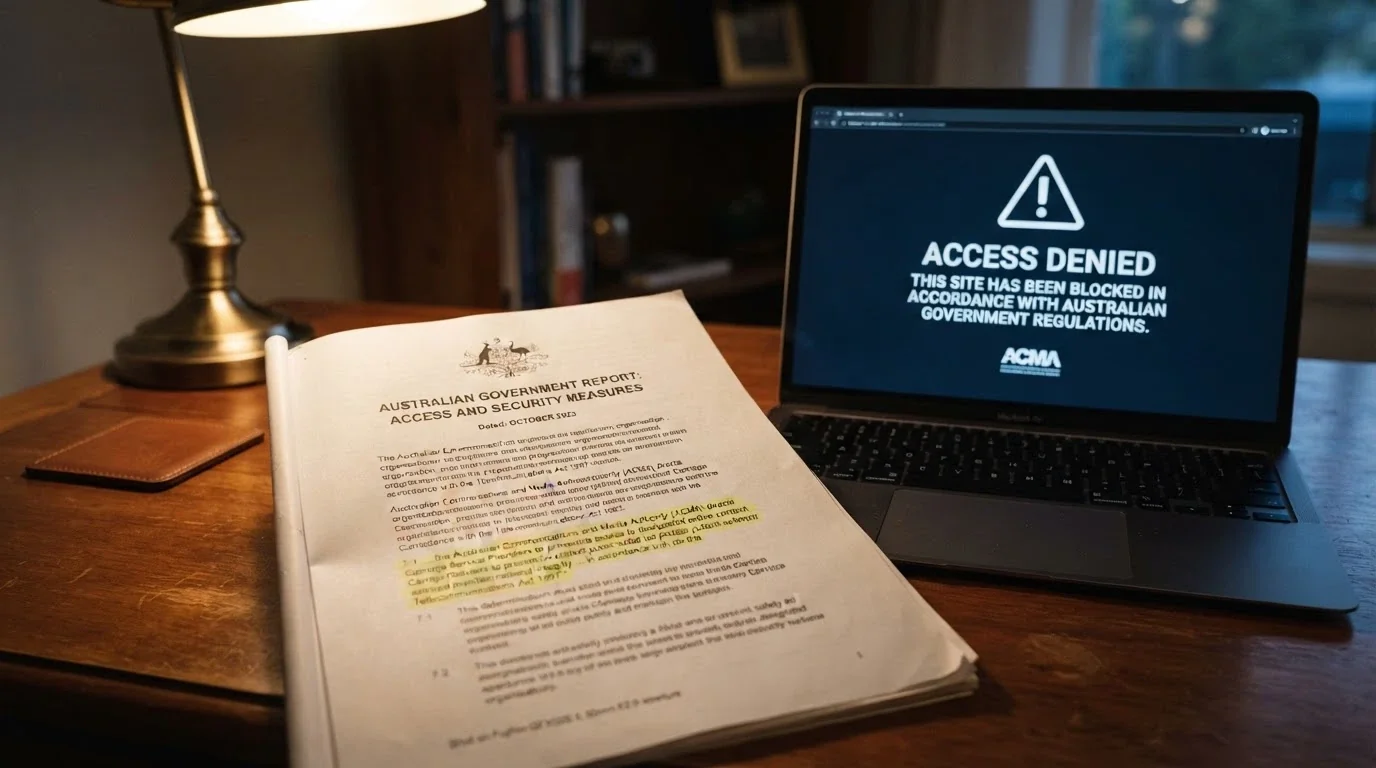
What “offshore and unlicensed in Australia” means in practice is the absence of every safety net an Australian player would otherwise have. There is no Australian consumer protection if a withdrawal stalls or a bonus is not honoured. There is no ACMA complaints recourse, because ACMA’s jurisdiction is the licensed sector. There is no BetStop coverage, because BetStop binds Australian-licensed wagering services only — an offshore casino is not connected to the register and will continue accepting a self-excluded person’s money. There is no compensation scheme if the operator collapses. The 1,564 sites blocked since November 2019 and the 225+ illegal services that have withdrawn from the Australian market since 2017 are the operational record of what the prohibition looks like in practice: the sites disappear, the players with balances on them have a hard time getting those balances back, and the regulator does not have a tool to compel the offshore operator to pay out. Gambling with Ethereum in Australia sits in the same legal position as using a credit card at an offshore casino — the Interactive Gambling Act 2001 prohibits operators from offering online casino services to people in Australia. If crypto is being used for gambling by Australians, it is happening on offshore sites that sit outside the licensed market entirely.
The 11 June 2024 crypto payment ban — and what it means for every ETH casino player
The Interactive Gambling Amendment (Credit and Other Measures) Act 2023 banned credit cards, credit-related products and digital currency as payment for online wagering from 11 June 2024. The ban targets the licensed online wagering sector — operators that breach the ban face civil penalties of up to A$234,750 per offence. The ban does not create a player offence; it does not make it illegal for an Australian to send ETH to an offshore casino. What it does is close the loophole that would otherwise let a licensed operator take crypto. No Australian-licensed operator can take ETH in the first place; the ban formalises that prohibition in the credit and digital-currency category.
The practical consequence for a player is that any site asking an Australian for an ETH deposit is, by that fact, outside the Australian framework. The payment method is the tell. A site that accepts AUD via PayID is, at minimum, licensed to do so in some Australian jurisdiction. A site that asks for ETH is, by definition, offshore — and the consumer-protection regime that the licensing would have brought with it is the thing the player has stepped outside. From 1 January 2027, banks and payment providers gain express authority to block transactions to illegal gambling operators, which means an Australian bank will have a formal power to refuse a transaction it identifies as bound for an offshore gambling site. The bank-blocking power is the next escalation; the crypto ban was the first.
The 2026 Gambling Reform Bill: what changes on 1 January 2027
The Interactive Gambling Amendment (Gambling Reform) Bill 2026 passed Parliament on 19 August 2026, with its measures commencing 1 January 2027. The bill tightens advertising (a maximum of three wagering ads per hour between 6:00am and 8:30pm, a live-sport blackout, no athlete, celebrity or influencer promotions), introduces a Wagering Advertising Opt-out Register, and strengthens BetStop with a three-month inducement marketing ban after a person deregisters. Banks and payment providers gain express authority to block transactions to illegal gambling operators. The Corporations Amendment (Digital Assets Framework) Bill 2025, which passed 1 April 2026, requires crypto exchanges and custody providers to hold an Australian Financial Services Licence — which brings the on-ramp into the regulated sector, but does not change the gambling-side prohibition.
What this means for an Australian trying to deposit ETH at an offshore casino after 1 January 2027 is that the bank side of the payment chain has a new tool. The on-ramp from an AFSL-licensed exchange is documented, the bank can see the destination, and the bank has the authority to refuse a transaction bound for an illegal gambling operator. The offshore casino side does not change: the operator is still offshore, the player is still outside BetStop, and the consumer protection is still absent. What changes is the friction on the deposit. The reform tightens the licensed side; the offshore side continues to operate, and the player is the one navigating both.
Staying in control when the casino sits outside every Australian safety net
BetStop is the National Self-Exclusion Register, live since August 2023. As of 31 July 2026, 67,480 Australians had registered and 41,290 exclusions were still active. Seventy-eight per cent of registrants were under 40, and 38 per cent chose a lifetime exclusion. BetStop binds Australian-licensed wagering services only — an offshore casino is not connected to the register, and the self-excluded person can still deposit, play and withdraw at any of the ten operators on this page. The register is the strongest player-protection tool in the Australian framework, and it does not reach the rooms on this page.
The prevalence numbers put the cost in scale. About 2.1% of Australian adults — roughly 430,000 people — experience problem gambling, and the Australian Institute of Health and Welfare put high-risk gambling at 1.8% in 2022. The numbers are large in absolute terms and small in percentage terms, which is the shape of a problem that affects a minority of players and a large number of people. The help that works regardless of where the casino is licensed is the National Gambling Helpline on 1800 858 858 — free, confidential, staffed 24 hours a day, 7 days a week — and Gambling Help Online at gamblinghelponline.org.au, which offers 24/7 chat and email counselling. The number and the URL work from any phone or browser; they are the only player-protection tools on this page that reach every player on it.
Deposit limits, session tools and the fast-withdrawal trap: self-imposed controls that still work
The deposit limits, session limits, take-a-break and per-site self-exclusion tools that an Ethereum casino offers inside its own cashier are operator-side features that work regardless of Australian licensing. A player who sets a daily deposit limit of A$100 at an offshore casino will be blocked from depositing more that day by the operator’s own system, not by an Australian regulator. The same is true of session time limits and take-a-break timers. These tools do not depend on BetStop, and they do not depend on the casino being AU-licensed. They depend on the operator implementing them honestly, which is the part the player cannot check from outside.
The fast-withdrawal trap is the one crypto introduces. ETH withdrawals settle in 2–5 minutes on Layer-2 networks, and the funds leave the casino’s cashier the moment the transaction is signed. The friction that a slow fiat withdrawal introduces — the cooling-off period, the bank delay, the second chance to reconsider a session — is gone. A player who has hit a stop-loss has the same two-minute window to deposit again and chase the loss, with the funds arriving before the regret does. The speed that makes crypto attractive for legitimate withdrawals is the same speed that removes the friction from a chasing session. Operator-level controls — deposit limits, session timers, take-a-break — are the only friction the player can build back in.
How we assessed and ranked the operators on this page
The ranking was built on confirmed ETH acceptance, verified bonus terms at the time of review, and licence status checked against the Curaçao eGaming register and operator terms pages. No Australian licence exists for online casino, and every operator in the table is offshore by definition. The criteria, in order of weight, were: ETH network support (the range of Layer-1 and Layer-2 networks the operator accepts), bonus transparency (a published wagering multiple, a stated validity window, a clear game-exclusion list), game-library depth (provider count and title volume), and payout speed (verified withdrawal times on Layer-2 networks where research carries them). The ACMA register of blocked sites was checked for enforcement history; the sources drawn on for the operator profiles include Slotspeak, CryptoSlate, BitcoinChaser, CasinoAudit, CasinosJungle, Flush and the Ethereum Wiki, with operator domains checked for current terms.
Where a figure was not carried in the research, the cell or sentence shows the gap. That is the working rule: a missing value is reported as a missing value, not replaced with an estimate. The audit findings — including the RTP-display audit on which the section on high-RTP pokies is built — are reported as the audit reported them, with the same headline number and the same direction of error.
What the ETH casino landscape actually means for your next session
The core trade-off is the one this page has been circling. Ethereum casinos give Australians fast crypto deposits, L2-fee savings, game libraries in the thousands, and bonuses that, in headline terms, are larger than anything the licensed market can offer. They also offer no Australian consumer protection, no ACMA recourse, no BetStop coverage, and a regulatory framework that prohibits the operator from taking the deposit in the first place. The trade-off is not advertised; it is structural, and the player is the one who pays whichever side of it the maths lands on.
The decision framework for a player who chooses to proceed is built from the figures this page has already laid out. The network choice is the deposit fee: Arbitrum, Polygon and Optimism keep the gas under A$0.10; mainnet costs A$3–A$15 per transaction. The bonus terms are the real cost: 35x bonus-only at LuckyDreams versus 40x deposit-plus-bonus at Rainbet, with the expected-loss calculation showing what either costs in statistical terms. The withdrawal cap is the big-win ceiling: WinSpirit’s A$60,000 monthly cap is the most visible figure; the others’ caps live in the operator’s terms. The KYC trigger point is the privacy threshold: deposits and small withdrawals pass without verification, withdrawals above roughly A$1,000–5,000 do not. The one number to carry out of this page is the expected-loss calculation — a 100% up to A$1,000 bonus at 35x bonus-only costs, statistically, more than the bonus itself, before the player’s own deposit is touched.
This is a decision the reader makes with the numbers on the table. The numbers, the legal status, the bonus terms and the withdrawal caps are above. What to do with them is yours.
Frequently asked questions about Ethereum casinos in Australia
Are Ethereum casino bonuses actually better than regular welcome bonuses?
The headline numbers are larger: 100% up to A$2,000 at SkyCrown, 400% up to A$10,000 at NeoSpin, up to A$10,000 across four deposits at BitStarz. The real cost is the wagering multiple, and it can flip the comparison. A A$1,000 bonus at 35x bonus-only (LuckyDreams) costs the player, statistically, more than the bonus itself in expected loss. A A$10,000 bonus at 40x deposit-plus-bonus costs substantially more. Compared with regular welcome bonuses at AU-licensed operators — which are tightly capped and state-by-state restricted — the ETH bonuses are larger in headline and harder to clear in practice.
Do I need to complete KYC verification to play at an ETH casino?
Most Ethereum casinos allow deposits and small withdrawals without KYC. Verification is typically triggered for withdrawals above roughly A$1,000–5,000, or for activity the operator’s risk system flags as unusual. CoinCasino in this comparison is the pure no-KYC operator, with no verification required to play or to withdraw. The trade-off is the absence of the consumer-protection framework that KYC at a licensed casino would otherwise bring.
What are the gas fees for depositing ETH at an online casino?
On Ethereum mainnet, deposit fees run A$3–A$15 depending on network congestion. On Layer-2 networks (Arbitrum, Optimism, Polygon), the same deposit costs under A$0.10. The casino does not set the gas — the player’s wallet does — but the network choice decides the fee. The operators in this set that support Layer-2 (SkyCrown, LuckyDreams, NeoSpin) let the player pick the network at the cashier.
Are Ethereum casinos provably fair?
Some titles are. Stake Originals and BitStarz Originals publish a server seed, a client seed and a nonce per round, and let the player verify the result against a hashed combination. The verification proves the spin was not altered after the bet. It does not prove the casino is licensed, that the bonus will be honoured, or that the displayed RTP matches the underlying math sheet. An audit of 50 crypto casino operators found 41 displayed an RTP figure that did not match the math sheet — in 39 cases, the displayed RTP was higher than the slot was actually running.
Which Ethereum casinos accept Australian players without needing a VPN?
Every operator in this comparison accepts Australian players without a VPN. The trade-off is that none of them are licensed in Australia — the Interactive Gambling Act 2001 prohibits providers from offering online casino to people in Australia, and no licence for online casino exists in the country. Royal Reels is on the ACMA’s blocked-sites list, which means Australian ISPs are required to block the primary domain; access is via mirror domains the operator rotates, which is a different kind of friction.
What happens to my ETH balance if a casino site gets blocked by the ACMA?
The block is an Australian ISP-level action: the domain is added to the ACMA’s blocked-sites list, and Australian ISPs stop resolving it. The casino itself continues to operate, and the player’s balance remains on the operator’s server. Withdrawals are still possible, but the player needs to access the site through a mirror domain or alternative URL to reach the cashier. The 1,564 sites blocked since November 2019 and the 225+ illegal services that have withdrawn from the Australian market are the operational record — some of those withdrawals left player balances in dispute. The risk is not the block itself but what the block reveals about the operator’s relationship with Australian enforcement.