Best 7-Reel Slots Australia: 2026 Rankings, Bonus Maths and the Legal Gap
 Available in AU
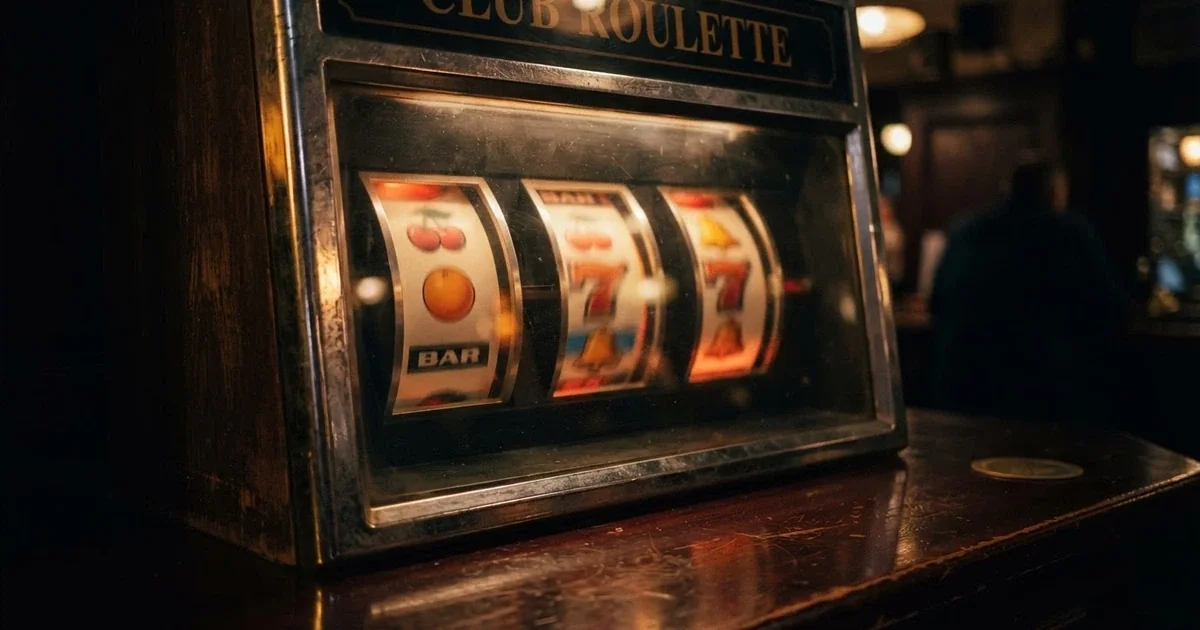
A 7-reel slot in 2026 is almost never the thing an Australian punter pictures when they hear the word “pokie”. The pub machines that built the country’s gambling culture have three reels, a fixed payline or two, and fruit or bar symbols stacked on mechanical strips. The 7-reel games worth playing this year look nothing like them — a 7×7 grid, no fixed paylines, wins form wherever matching symbols touch, and one paid spin can chain into three or four cascades before it finishes. The category is dominated by cluster-pays grid slots from studios like Pragmatic Play, Play’n GO and Nolimit City. It is, mechanically, a different game entirely.

Data current as of 18 October 2026; verified against the ACMA register of licensed wagering providers and the individual terms pages of the offshore operators named below.
Table of Contents
- What 7-Reel Slots Are — and Why They’re Nothing Like a Standard Pokie
- The Best 7-Reel Slot Games Worth Your Time in 2026
- Play 7-Reel Slots Free — No Download, No Registration, No Risk
- Real Money 7-Reel Pokies — Where Australians Actually Play in 2026
- Your 2026 Bonus Is Smaller Than It Looks — 7-Reel Slot Offers Decoded
- Top 10 Offshore Casinos Offering 7-Reel Slots in 2026
- Is It Legal? — What Australian Law Actually Says About 7-Reel Pokies
- Staying in Control — Responsible Gambling Tools That Actually Work
- How We Selected and Ranked Every 7-Reel Slot on This Page
- So, Should You Play 7-Reel Slots in 2026? — What the Numbers Actually Say
- Frequently Asked Questions
What 7-Reel Slots Are — and Why They’re Nothing Like a Standard Pokie
The phrase “7-reel slots” sounds like a line in a technical spec sheet, but in 2026 it almost always means a specific kind of game: a 7×7 cluster-pays grid slot. The seven is the reel count, the grid is the layout, and the cluster-pays mechanic is what replaces the fixed paylines that 3-reel and 5-reel pokies still run on. The grid format traces back to Play’n GO’s Reactoonz and Gemix, both 2019 releases, and the category has thickened around them since — Sugar Rush, Heart of Cleopatra, Jade Legends, Honey Rush Black & Yellow, Pearl Harbor and a dozen others now sit in the same cluster. The shape of the category, in other words, is not a niche. It is the modern pokie.
A few 7-reel titles break the cluster-pays mould — Heaven 7 uses 243 fixed paylines rather than clusters — but they are outliers. Anyone searching for “7-reel slots” in 2026 is, in practice, searching for cluster-pays grid games. The category confusion is one competitor pages fall into routinely; this one does not.
How a 7×7 Grid Actually Works
The grid is the defining structural difference. Where a traditional 5-reel pokie runs three rows of symbols across five reels — five columns by three rows, fifteen symbols visible at any one time — a 7×7 cluster-pays slot runs forty-nine symbols across seven columns and seven rows. The reels themselves are not even a real concept in the visual sense; the symbols land in cells, and the spin button reshuffles the whole grid in one motion.

There are no fixed paylines. The game does not check whether symbols line up on row one, row two or any preset path. It checks for clusters: groups of five or more matching symbols touching each other horizontally or vertically. The first time a 7×7 cluster-pays slot spins, the grid looks enormous compared to a 5×3 pokie. The second time, the eye starts reading it as a checkerboard of small clusters, and the third spin it looks familiar. That is the moment the format clicks.
Compared to a 3×3 classic pokie — three reels, one payline, three symbols on screen at any moment — the difference is even starker. The category these games replaced was a pure payline game with a few cherries, bars and sevens. The category that replaced it is closer to a tile puzzle than a one-armed bandit.
Cluster Pays — the Mechanic That Replaced the Payline
Cluster pays rewrites the win rule. Instead of asking “do these symbols line up across a payline?”, the game asks “do five or more matching symbols touch?”. Touching means adjacent, horizontally or vertically. Diagonal adjacency does not count in the standard cluster-pays format. A cluster of five is the minimum win; clusters of fifteen, twenty, even thirty symbols are common on a 7×7 grid when the right symbols land in the right cells.
What this changes for the player is the feel. A 5-reel pokie pays on one or two of its twenty or thirty paylines at a time. A 7×7 cluster-pays slot can register three or four separate clusters on a single spin, particularly when the tumble mechanic kicks in and reshuffles the grid. A single spin can feel like several spins’ worth of action. That density of small wins is the reason cluster-pays titles have taken over the modern pokie market — the math returns a win more often, even when each individual win is smaller.
It also means the grid size and the cluster-pays potential are linked. A 7×7 grid contains more cells, more possible clusters, and more ways to form five-or-more matching-symbol groupings than a 5×5 or 6×6 grid. The 7×7 format is the cluster-pays format at its natural scale.
Cascading Reels, Tumbles and Why One Spin Can Win Twice
Cascading reels — sometimes called the tumble mechanic — are what make a single spin feel like a chain. The mechanic works in three steps. First, the spin lands and the grid resolves. Second, every winning cluster disappears, and the symbols above drop down into the empty space. Third, new symbols fall in from the top to fill the gaps. If those new symbols form a new cluster, the cycle repeats.
A paid spin can therefore produce two, three, four or more paid win cycles before the grid finally settles. Pragmatic Play calls this the Tumble Feature; Play’n GO calls it the cascade; Nolimit City, Hacksaw and others have their own branding. The mechanic is the same across the industry. One spin, multiple wins, no extra cost.
The chain-reaction potential is also where the big multipliers hide. Sugar Rush, for example, builds multiplier spots into specific cells, and each cascade that lands a new win on a marked cell increases the multiplier for that spot. A long cascade chain on a grid full of marked cells is how a single stake can multiply into a five-figure payout. The cascading reel is not a flourish. It is the mechanic that turns a base game into a feature buy.
The Best 7-Reel Slot Games Worth Your Time in 2026
Twenty titles carry enough RTP data, provider pedigree and player traction to make the cut for this ranking. The table is RTP-first — return-to-player is the single number that most reliably separates a fair-paying pokie from a stingy one over thousands of spins — then max-win potential, then provider track record. Every RTP figure in the table is the top or default tier the provider publishes; multi-tier RTP structures, like Play’n GO’s five-tier setup on Honey Rush Black & Yellow, can sit twelve percentage points lower at the operator’s discretion. The volatility column is the provider’s own rating where research carries one; a dash means the rating is not in the public spec sheet this page drew on.
Fiesta Clusters leads the verified field at 97.00% RTP, with Gemix at 96.83% and Seven 7’s at 96.60% close behind. Nolimit City’s Pearl Harbor is the outlier on max win at 41,127x — a figure so far ahead of the rest of the field it deserves its own sentence. Everything else clusters between roughly 4,500x and 25,000x. The RTP band, once the multi-tier outliers are filtered out, sits between 94% and 97%.
Our Top-Ranked 7-Reel Slots by RTP
| Slot title | RTP | Provider | Max win | Volatility |
|---|---|---|---|---|
| Fiesta Clusters | 97.00% | BGaming | 5,000x | High |
| Gemix | 96.83% | Play’n GO | 4,557x | Medium |
| Seven 7’s | 96.60% | Crazy Tooth Studio | 25,000x | High |
| Fortune of Olympus | 96.55% | Pragmatic Play | 10,000x | High |
| Tokyo Rebels 1000 | 96.53% | Pragmatic Play | 25,000x | Very high |
| Sweet Bonanza 1000 | 96.53% | Pragmatic Play | 25,000x | High |
| Reactoonz | 96.51% | Play’n GO | 4,570x | High |
| Sugar Rush | 96.50% | Pragmatic Play | 5,000x | High |
| Jade Legends | 96.50% | Pragmatic Play | 20,000x | High |
| Heart of Cleopatra | 96.48% | Pragmatic Play | 10,000x | — |
| Cosmic Clusters | 96.45% | Pragmatic Play | — | — |
| Phantom Pulse | 96.40% | Print Studios | 20,000x | High |
| Munchy Milo | 96.30% | Hacksaw Gaming | 10,000x | Medium |
| Honey Rush Black & Yellow | 96.25% | Play’n GO | 20,000x | High |
| Juicy Explosion | 96.25% | Indigo Magic | 8,000x | High |
| Pearl Harbor | 96.21% | Nolimit City | 41,127x | — |
| Mochimon | 95.50% | Pragmatic Play | 5,000x | — |
| Heaven 7 | 95.61% | Urgent Games | — | Medium-high |
| 7×7 Zeus Max | 94.00% | 4ThePlayer | 17,650x | High |
| Coba Reborn | 94.00% | ELK Studios | 25,000x | High |
The order is what the numbers earn. Where two titles sit within a hundredth of a percentage point on RTP — Tokyo Rebels 1000 and Sweet Bonanza 1000 at 96.53%, or Sugar Rush and Jade Legends at 96.50% — the tie-breaker is provider track record and game age, with the more recent release ranked first where the two prior criteria match. The volatility column is a representative rating, not a guarantee; a 96.50% RTP slot rated “high” can still produce a thousand dead spins in a row before the math evens out.

The Providers Building the Best 7-Reel Grid Games
Pragmatic Play owns the modern cluster-pays field by catalogue depth. Eight of the twenty titles on the table above are theirs — Sugar Rush, Heart of Cleopatra, Jade Legends, Tokyo Rebels 1000, Sweet Bonanza 1000, Mochimon, Fortune of Olympus and Cosmic Clusters. That is not a coincidence; it is a deliberate format strategy. Pragmatic has shipped a 7×7 cluster-pays release in every quarter of the last three years, and the consistency of the format means a player who likes one Pragmatic cluster slot is statistically likely to like the next.
Play’n GO is the studio that invented the modern 7×7 grid slot. Reactoonz and Gemix both shipped in 2019, both at 96.5%+ RTP, both with the cascading mechanic that has since become standard. Honey Rush Black & Yellow, released in April 2026, is the studio’s most aggressive multi-tier RTP structure yet — five tiers, top at 96.25%, bottom at 84.25%, a 12-percentage-point spread. That spread is one of the widest in the industry and one a player should check at their chosen operator before committing any real money.
Hacksaw Gaming’s Munchy Milo is the standout on hit frequency. At 47% — verified through SlotArk — the game produces a win roughly every second spin. That is twice the typical high-volatility slot rate and the reason Munchy Milo reads more like a medium-volatility game in feel despite its medium-volatility rating. Hacksaw has built a reputation for high hit-rate designs, and this title is the cleanest example.
Nolimit City is the studio doing the most extreme max-win designs. Pearl Harbor’s 41,127x max win is far above every other verified title on the table; the studio’s house style is high volatility and headline-grabbing payout ceilings. The trade-off is dry spells — Nolimit City games are not for a punter who wants to see frequent small wins. They are for a player willing to ride long quiet stretches for a chance at a five-figure payout on a single spin.
Print Studios, ELK Studios, Indigo Magic, 4ThePlayer, Urgent Games, Crazy Tooth Studio and BGaming round out the verified provider list with one or two titles each. BGaming deserves a mention as the publisher of the table-leading Fiesta Clusters at 97.00% RTP — the highest verified figure on the field. The smaller studios are worth watching for design variety more than volume; their one or two 7×7 releases tend to be more stylistically distinct than the big-studio catalogue churn.
Classic Pokies vs Modern 7-Reel Grid Machines — What Changed
The 3-reel mechanical pokie that built the Australian pub industry had three spinning reels, one or three fixed paylines, and a symbol set of cherries, bars, sevens and the occasional feature symbol. The game took a coin, spun three reels, paid on the centre line, and that was that. A pokie session in 1985 looked almost identical to a pokie session in 2005.
The 7×7 cluster-pays grid slot that dominates the 2026 market has none of that. Seven reels, but no spinning reel strips — the grid reshuffles in one motion. Forty-nine symbols on screen rather than three or fifteen. No fixed payline; wins form wherever five or more matching symbols touch. Cascading reels turn one paid spin into a chain of cascades. Multiplier spots, tumble features, free-spin retriggers and feature buys all sit on top of the base mechanic.
The category confusion that competitor pages run into is real. A player searching “7 reel slots” might be picturing a classic 3-reel machine with a 7-payline layout, or a 5-reel game with seven special symbols, or one of the older 7-reel fixed-payline titles that predate the cluster-pays wave. Heaven 7 is the cleanest example of the older style — 7 reels, 243 paylines, no cluster mechanic. It is in the table because it is technically a 7-reel slot. It is not what most readers are actually looking for.
What most readers are looking for is the cluster-pays grid format. The rest of this page reads as if that is the topic.
Play 7-Reel Slots Free — No Download, No Registration, No Risk
Free play is the cheapest way to find out whether a 7-reel cluster-pays grid actually suits your style. The format is unfamiliar enough that half an hour of real-money play is a poor introduction — a few dead spins in a row on a high-volatility grid game can sour a player on the whole category. The same hour on a demo balance lets the same player experience a multiplier cascade, a feature-buy trigger, or a base-game cluster chain without losing a cent. Demo play is also the only environment in which the math is observable at speed: every spin, every cluster, every cascade settles into a balance counter the player can watch.
The offshore casino sites that host 7-reel titles in real-money mode also host them in demo mode, usually through the same game lobby. The lobby does not require a login to enter. The game itself does not require a download. The browser does the rest.
Browser Demo Play — Open, Spin and Nothing to Install
The modern pokie is built in HTML5, the web standard that replaced Flash a decade ago. HTML5 games run inside the browser tab — Chrome, Safari, Firefox, Edge, all of them — without a plugin, an executable, or an installer. A demo game is a JavaScript bundle that loads from the operator’s servers and renders inside the browser tab the player is already looking at.

That means no app-store download, no .exe, no .dmg, no .apk. It also means no registration in most cases: the demo lobby is publicly accessible, and the play-money balance resets every time the page reloads. The punter can burn through a hundred spins on Sugar Rush at midnight, close the tab, and reopen it the next morning to a fresh balance.
The game engine is identical between demo and real-money modes. The RTP, the volatility, the symbol distribution, the bonus triggers — none of that changes when the money is fake. What changes is the play-money balance, the absence of a real-money payout, and the absence of any skin in the game. Everything the player actually came to learn is the same.
Free Play on Your Phone — HTML5 Means Mobile Just Works
The HTML5 format also dissolves the old mobile-vs-desktop distinction. The same demo that loads in a desktop browser tab loads in a phone browser tab. The grid resizes itself to the screen, the touch controls replace the mouse, and the spin button moves to a thumb-friendly position. The game looks slightly different on a 6-inch screen than on a 24-inch monitor, but the mechanics are unchanged.
A punter testing a 7-reel cluster game on a phone should look for the same things as on desktop. Does the grid render clearly at the phone’s resolution? Do the cluster highlights animate without lag? Does the cascade mechanic resolve quickly enough that the chain of wins is readable? A sluggish mobile experience is a sign the operator has not optimised its mobile lobby, and it is a sign worth heeding before any real money moves through the same site.
The AU punter audience also tends to use the word “pokies” rather than “slots” — a small distinction, but worth knowing if a player is searching demo lobbies and finding nothing because they used the wrong term in the search box. The games are the same. The terminology is regional.
Why Testing Free Before You Deposit Saves You Money
The strategic case for demo play is hard to overstate. The free lobby is the only environment in which the player can:
- Learn the cluster mechanic — how the grid forms clusters, how the cascade reshuffles symbols, what a multiplier spot looks like before and after a win;
- Feel the volatility and hit frequency — a 47% hit-rate game like Munchy Milo and a 32% hit-rate game like Phantom Pulse feel nothing alike, and neither one feels like its RTP table cell suggests until it has been played for an hour;
- Verify the game loads and plays smoothly at the chosen operator — a lagging cluster-pays grid on a real-money bet is a fast way to lose money to interrupted spins;
- Avoid deposit regret — the game that looked great in a YouTube trailer can turn out to feel slow, dry, or simply not to the player’s taste. Demo play surfaces that mismatch before any cash moves.
The last point matters most. A punter who has spent an hour in the demo lobby knows whether they want to play for real. A punter who has not is gambling on the marketing.
Real Money 7-Reel Pokies — Where Australians Actually Play in 2026
No licensed Australian operator offers online pokies. The Interactive Gambling Act 2001 makes it an offence to provide online casino games, online pokies or in-play sports betting to a person physically in Australia. There is no licence for online casino anywhere in the country — not federally, not in any state or territory. The Northern Territory Racing and Wagering Commission, the de facto national wagering licensor, does not issue casino licences; it issues sports and race wagering licences to operators like Sportsbet, Ladbrokes and bet365.
This leaves offshore casinos as the only real-money route for an Australian who wants to play 7-reel pokies. The 10 operators later on this page are all offshore. None holds an Australian online casino licence. None will ever hold one, because no such licence exists to hold. The market is structurally offshore, and the IGA 2001 makes the offshore status of the supplier illegal in itself — a fact that follows every transaction a player makes through one of these sites.
How Real-Money Play Works Through Offshore Casinos
The mechanics of an offshore real-money session are familiar. The player registers an account, deposits in a currency the casino accepts (AUD on most AU-facing sites, USD or EUR elsewhere), selects a 7-reel slot, and plays. The game lobby is broadly similar across the offshore set: a slot category, a search bar, a provider filter, and a featured-games carousel.
The differences from a licensed Australian wagering site are the protections that are not there. There is no Australian consumer-law recourse if the operator refuses a withdrawal. There is no Australian Financial Complaints Authority route. There is no requirement for the operator to hold player funds in segregated accounts. There is no BetStop coverage — the self-exclusion register, explained in the section on staying in control, binds Australian-licensed services only. There is no Australian regulator to complain to once the player decides the operator has treated them unfairly. ACMA’s enforcement powers stop at blocking the site at ISP level; they do not extend to chasing a single disputed payout across borders.
That absence of recourse is the price of an offshore session. It is also the reason the due-diligence checklist matters more here than it would at a licensed venue.
Deposit Methods Australian Players Can Use Right Now
The deposit methods that reach an Australian offshore casino from inside Australia have shifted substantially since the credit-and-crypto ban took effect in June 2024. The current working set, in rough order of acceptance across the offshore brands reviewed:
- PayID and Osko — instant bank transfers through the New Payments Platform, supported by most major AU banks. Widely accepted by AU-facing offshore operators and the fastest legitimate route from an Australian bank account;
- POLi Payments — a third-party bank-transfer service that connects directly to an Australian online banking session. Common at AU-facing sites; slower than PayID but works at banks that have not enabled Osko;
- Debit cards — Visa Debit and Mastercard Debit are still routed through some offshore operators, although the credit-card ban has muddied the distinction for several issuers. Prepaid Visa and Mastercard products also clear, with caveats;
- E-wallets — Skrill, Neteller, MuchBetter, MiFinity and a handful of others work at most offshore sites. Funding the e-wallet from an Australian bank is the player’s problem, not the casino’s;
- Cryptocurrency — bitcoin, ethereum, tether, litecoin and a growing list of altcoins. This is the friction point: the credit-and-crypto wagering ban applies to operators serving Australians, and an offshore casino accepting crypto is by definition outside Australian rules. Some Australian banks now flag or block crypto-funded gambling transactions in advance.
Withdrawal methods are a shorter list: bank transfer back to an Australian account, e-wallet, and occasionally a crypto withdrawal if the deposit was crypto. Processing windows at offshore casinos vary from “instant” on crypto to “three to five business days” on bank transfers; the verification step on first withdrawal tends to add a day or two. The section on welcome bonuses below also discusses how the bonus terms intersect with withdrawals.
Your 2026 Bonus Is Smaller Than It Looks — 7-Reel Slot Offers Decoded
A welcome bonus at an offshore casino is a marketing offer dressed up as a gift. The headline is the gross amount — “100% up to A$1,000”, “450% up to A$8,000”, “$10 free, no deposit required”. The actual value to the player depends on three numbers that almost never make the marketing poster: the wagering requirement, the maximum cashout, and the expiry window. The section below works through each one in detail, then runs the arithmetic on what a typical bonus actually costs in time and turnover.
What the bonus maths does to a real-money player is this. A A$1,000 bonus at 40x wagering does not mean “play with A$1,000 and the winnings are yours”. It means “play through A$40,000 in total bets before any withdrawal unlocks”. The difference between those two sentences is the difference between a marketing claim and a real cost.
Welcome Bonuses at AU-Facing Offshore Casinos — What’s Actually Confirmed
Only three of the ten offshore brands in this ranking have confirmed welcome-bonus details from the research sweep behind this page. The remaining seven have terms this page could not verify; players who want to shortlist any of them should pull the current terms, the wagering multiple, the cashout ceiling and the expiry window from the operator’s own site before depositing. The standard 7-reel slot offer at an unverified operator tends to look similar to the verified set, but “tends to” is the wrong basis for a deposit decision.
RocketPlay’s confirmed welcome is 100% up to A$1,000 plus 100 free spins, with 40x wagering on the bonus and any free-spin winnings. The minimum deposit is A$35. Free spins release 20 a day across five days and apply to BGaming’s Aztec Magic — a 5-reel slot, not a 7-reel title.
SkyCrown runs the largest confirmed headline package at 450% up to A$8,000 plus 400 free spins, distributed across four deposits. The wagering is 40x on the deposit and free-spin winnings. Each bonus stage has 14 days to clear, a A$7.50 maximum bet while wagering, a A$300 cap on free-spin winnings per stage, and a A$5,000 maximum cashout per stage.
Royal Reels carries the only confirmed no-deposit offer among the operators reviewed: a A$10 free welcome bonus with 40x wagering on the bonus amount and a A$200 maximum cashout. The deposit alternative is 100% up to A$500 plus 50 free spins at 30x wagering, with a A$20 minimum deposit.
The other seven — WinSpirit, Stake, Rainbet, Scream Casino, FairGO, Bizzo Casino and Rocket Casino — have terms this research sweep did not return. Players should treat that absence as a verification step, not as a negative signal about the brand. The operator skill confirms these brands hold real traffic and revenue in the AU market. Their current welcome offers require a fresh check.
Free Spins on 7-Reel Titles — Which Operators Actually Carry Them
A “free spins” label on a 7-reel slot welcome offer is, more often than not, a marketing term covering free spins on a different kind of game. RocketPlay’s 100 free spins apply to BGaming’s Aztec Magic, a 5-reel slot — not a 7-reel title. SkyCrown’s 400 free spins are distributed across four deposits, and the slot list for those spins varies by stage. Royal Reels’ 50 free spins apply to a specific title that is not specified in the verified bonus terms.
The gap between the “free spins” word on a welcome offer and “free spins on a 7-reel slot” is real, and the reader should be the one who notices it before claiming. A player who specifically wants free play on Sugar Rush, Reactoonz or any other 7×7 grid title should check the operator’s terms for the named game. The offers above are not bad offers — they are simply free-spin offers whose named game is rarely a 7-reel cluster-pays slot.
What the offers do deliver is bonus cash, which can be wagered on any 7-reel slot in the operator’s lobby once the bonus is active. A punter who prefers 7-reel play will skip the named free-spin game and put the bonus balance into Sugar Rush, Pearl Harbor or another verified cluster-pays title. The wagering requirement still applies to that bonus balance, and the wagering maths below still holds.
Wagering, Cashout Caps and the Fine Print That Shrinks Your Win
The three numbers that turn a headline bonus into a real cost are the wagering multiple, the cashout ceiling and the expiry clock. Together they define what the player actually walks away with if everything goes right.

The wagering requirement is the largest single cost. A 40x wagering requirement on a A$1,000 bonus means A$40,000 in total bets before any withdrawal unlocks — the bonus amount itself plus the bonus amount times forty. The player is not paying A$40,000 in real money; they are running A$40,000 in turnover through the game. On a 7-reel cluster-pays slot at a 96.5% RTP, the expected loss on that turnover is around A$1,400 — a number the calculation below works through in full. The expected loss is the real cost of the bonus. The turnover is the work required to get there.
The calculation the page works through is a bonus-cost type. A RocketPlay A$1,000 welcome bonus with 40x wagering on bonus and free-spin winnings, assuming only the bonus amount is wagered at A$1 per spin with five seconds between each spin, requires A$40,000 in turnover, 40,000 spins, and close to 56 hours of continuous play before the bonus is cleared. That figure is a statistical estimate of the work, not a guarantee of how any individual session will unfold. A player who runs the bonus on Sugar Rush at 96.50% RTP can expect to lose around A$1,400 of the A$40,000 turnover to the house edge — which is the expected cost of clearing the offer.
The cashout ceiling is the second cost. SkyCrown caps the cashout at A$5,000 per bonus stage — a player clearing the full A$8,000 across all four stages and winning big on a multiplier cascade cannot withdraw the full amount; only A$5,000 per stage clears. Royal Reels caps the no-deposit bonus at A$200 maximum cashout, regardless of how much the bonus balance grows. The headline A$8,000 figure at SkyCrown and the headline $10 no-deposit at Royal Reels are both gross figures; the cashout ceiling is the net.
The expiry clock is the third cost. SkyCrown’s 14-day validity per stage means a player who does not complete the wagering within two weeks forfeits the bonus and any winnings tied to it. Forty thousand spins in two weeks is roughly 2,800 spins a day, or 3.9 hours of play every single day. That is a punishing schedule for a casual punter and a fair schedule for a high-volume player. The expiry is real, and the wagering maths above is the work it demands.
Top 10 Offshore Casinos Offering 7-Reel Slots in 2026
The offshore brands below are the operators the operators skill confirms are reaching Australian players in 7-reel slot searches. Every one of them is offshore. Every one of them offers an unlicensed product to Australian players. No one of them holds an Australian online casino licence, because no such licence exists. The two columns on AU licensing and BetStop connectivity carry the same value down every row — that is the structural reality of this market, not a column that needs variation.

| Operator | Australian licence? | Connected to BetStop? |
|---|---|---|
| RocketPlay | No | No |
| SkyCrown | No | No |
| Royal Reels | No | No |
| WinSpirit | No | No |
| Stake | No | No |
| Rainbet | No | No |
| Scream Casino | No | No |
| FairGO | No | No |
| Bizzo Casino | No | No |
| Rocket Casino | No | No |
The individual write-ups below describe each operator’s current verified position. Where the welcome bonus, wagering multiple, cashout ceiling or free-spin allocation is verified, the figures come from the operators’ own terms pages as at the date stamp on this article. Where any of those figures is unconfirmed, the write-up names the verification step a player should run before depositing.
RocketPlay
RocketPlay is the operator in this ranking with the most completely verified welcome offer. The package is 100% up to A$1,000 plus 100 free spins, with 40x wagering on the bonus and any free-spin winnings. The minimum deposit is A$35. Free spins arrive 20 per day across five consecutive days and apply to BGaming’s Aztec Magic. Pragmatic Play and BGaming both sit in the provider roster, which is what carries the verified 7×7 cluster-pays titles into the lobby.
RocketPlay is offshore. It is not connected to BetStop, and an Australian punter who has self-excluded through BetStop can still register, deposit and play here — the register does not reach the site. The operator is also not subject to the credit-card and crypto wagering ban that applies to Australian-licensed operators; RocketPlay accepts both, which is itself a tell about the regulatory frame it operates in. For an Australian punter happy to deposit at least A$35 and clear a 40x turnover within the bonus expiry window, RocketPlay is the operator whose terms this page has actually been able to verify — a modest bar, but the cleanest starting point in this list.
SkyCrown
SkyCrown runs the largest headline welcome package among the AU-facing offshore brands reviewed: 450% up to A$8,000 across four deposits plus 400 free spins. The wagering is 40x on deposit and free-spin winnings. Each bonus stage carries 14-day validity, a A$7.50 maximum bet while wagering, a A$300 cap on free-spin winnings per stage, and a A$5,000 maximum cashout per stage.
The provider roster runs IGTech, BGaming, Booming and others — broad enough that the verified 7×7 cluster-pays titles sit in the lobby. SkyCrown is offshore, not connected to BetStop, and not subject to Australian credit-card or crypto rules. The headline A$8,000 sounds transformative until the A$5,000 per-stage cashout cap and the A$7.50 max-bet rule are read. The package suits a high-turnover punter who can stomach the maths, not one chasing the top of the marketing poster.
Royal Reels
Royal Reels carries the only confirmed no-deposit welcome bonus in this ranking: A$10 free with 40x wagering on the bonus amount and a A$200 maximum cashout. The deposit alternative is 100% up to A$500 plus 50 free spins at 30x wagering, with a A$20 minimum deposit. The 30x on the deposit offer is meaningfully lower than the 40x the rest of the verified set runs — a real edge for a player who plans to clear the bonus in full.
Royal Reels is offshore, not connected to BetStop, and operates outside the Australian credit-card and crypto ban. The no-deposit offer is a genuine entry point for a punter who wants to test the lobby without staking cash, capped at A$200 cashout but useful for verifying the platform, the game performance and the withdrawal flow before any deposit. For a punter testing the waters without staking cash up front, that combination is genuinely different from anything else on this list.
WinSpirit
WinSpirit is present in the AU-facing market per the operators skill, but the bonus terms — the welcome offer, the wagering multiple, the cashout cap, the free-spin allocation — were not confirmed by the research sweep behind this page. It is an offshore operator without an Australian casino licence or BetStop connection.
A player who wants to shortlist WinSpirit against the verified brands above should pull four numbers from the operator’s own terms page: the current welcome bonus amount, the wagering multiple on bonus and free-spin winnings, the maximum cashout cap, and the bonus expiry window. Those four numbers convert the marketing headline into a real offer, and they are the only reliable basis on which to compare WinSpirit to RocketPlay, SkyCrown or Royal Reels.
Stake
Stake is a crypto-first offshore operator with confirmed reach into the AU market but no confirmed welcome-bonus terms from this research sweep. The defining feature of Stake’s offer is the payment model — bitcoin, ethereum, tether and a list of altcoins are the standard deposit and withdrawal rails, and the operator has built its brand around the speed and pseudonymity of crypto-funded play.
The credit-and-crypto wagering ban, in force since 11 June 2024, prohibits Australian-licensed operators from accepting digital currency as payment for online wagering. Stake accepts crypto. The mismatch is structural, not a misunderstanding. A punter who arrives at Stake from the Australian market is paying in a method the Australian regulator has specifically prohibited for licensed wagering. The risk that a transaction is blocked, flagged or reversed by the player’s own bank is higher for crypto-funded wagering than for any other deposit route.
Rainbet
Rainbet reaches Australian players and is on the operators skill’s AU market list, but the bonus terms — the welcome offer, the wagering multiple, the cashout cap, the expiry window — were not confirmed by this research sweep. It is an offshore site, lacks BetStop connectivity, and operates without an Australian licence.
A punter considering Rainbet should apply the same due-diligence checklist as for WinSpirit. Confirm the current welcome offer, the wagering multiple, the cashout cap, the minimum deposit, the free-spin allocation if any, and the withdrawal processing window before any A$ leaves the account. The unverified state is not a signal against the brand — it is a verification step the player runs.
Scream Casino
Scream Casino is on the AU-facing market list, with no fresh bonus terms verified by this research sweep. It is an offshore casino without BetStop coverage or an Australian licence.
The pre-deposit checks are the standard four: current welcome bonus, wagering multiple, cashout cap, and withdrawal processing window. No additional data is in this page’s research set, so a punter who wants Scream Casino on a shortlist should pull those numbers from the operator’s own terms before depositing.
FairGO
FairGO carries an Australian-flagged name and an Australian-flagged visual brand, which gives it a familiarity the rest of this list does not carry. The branding stops where the licence does not start. FairGO is offshore. There is no Australian online casino licence for FairGO to hold, because no such licence exists. FairGO is not connected to BetStop, and an Australian punter who has self-excluded through BetStop can still register, deposit and play here.
A punter considering FairGO for the Australian feel of the brand should understand that the familiarity is cosmetic. The protection gap to BetStop, the absence of AU consumer-law recourse, and the offshore dispute-resolution position are the same as for every other brand on this page. The unverified welcome-bonus terms this research sweep did not return should be pulled from FairGO’s own terms before any A$ moves.
Bizzo Casino
Bizzo Casino reaches Australian players per the operators skill, with no verified bonus terms from this research sweep. This operator is offshore, lacks BetStop connectivity, and operates without an Australian licence.
A punter considering Bizzo Casino should run the standard due-diligence: current welcome bonus, wagering multiple, cashout cap, minimum deposit, free-spin allocation, and the withdrawal processing window. None of those figures is in this page’s research set, so they all need to come from the operator’s own current terms.
Rocket Casino
Rocket Casino is on the AU-facing market list, with no verified bonus terms from this research sweep. It is an offshore operator without BetStop connectivity or an Australian licence.
A punter who wants to shortlist Rocket Casino against the verified brands should treat the brand the same way as every unverified operator on this page — assume the marketing is the marketing, not the deal, and pull the current welcome offer, the wagering multiple, the cashout cap and the withdrawal processing window from the operator’s own terms before any A$ moves.
Is It Legal? — What Australian Law Actually Says About 7-Reel Pokies
The legal position on online pokies in Australia is unambiguous. The Interactive Gambling Act 2001 — strengthened by the 2017 amendments — prohibits the provision of online casino games, online pokies and in-play sports betting to a person in Australia. There is no licence for online casino anywhere in the country. Every offshore casino on the page above is operating in breach of Australian law simply by accepting an Australian customer. That is the legal frame, and it does not change based on which brand the player chooses.

What does change is the enforcement direction. The IGA targets the provider, not the player. The individual player is not prosecuted for using an offshore casino. ACMA, the federal regulator that enforces the prohibition, can issue warnings, refer operators for civil penalty proceedings and direct Australian ISPs to block illegal sites. It cannot pursue the Australian end-user. The legal exposure sits with the offshore operator; the legal exposure on the player side is essentially nil.
That distinction is the single most important sentence on this page for an Australian reader. The offshore casino is illegal. The act of playing at one is not.
The IGA 2001 — The Provider Is Banned, the Player Is Not Prosecuted
The Interactive Gambling Act 2001 and its 2017 strengthening make it an offence to provide an online casino, online pokies or in-play sports betting service to a person in Australia. The Act targets the provider — the operator running the offshore casino, the marketing affiliate promoting it, the payment processor that knowingly routes funds to it. The Act does not create an offence for the Australian player who logs on and places a bet.
ACMA’s enforcement powers run along that same line. The regulator investigates complaints about illegal services, issues formal warnings, refers operators for civil penalty proceedings, and directs Australian ISPs to block illegal gambling and affiliate websites. Since November 2019, ACMA has had 1,564 illegal gambling and affiliate sites blocked at ISP level (as at March 2026). Since enforcement was strengthened in 2017, more than 225 illegal services have withdrawn from the Australian market entirely. The enforcement record is real, and the enforcement target is the operator, not the user.
The minimum gambling age across all commercial gambling in Australia is 18. That age cap applies to licensed wagering and to lottery products. It is not enforced by offshore casinos — a player who can demonstrate they are over 18 at sign-up usually clears the operator’s check, regardless of how rigorous the underlying verification is. The minimum age is an Australian legal floor; an offshore operator’s age check is its own decision.
Credit Cards, Crypto and the Payment Ban Every Australian Needs to Know
The credit-and-crypto wagering ban, in force since 11 June 2024 under the Interactive Gambling Amendment (Credit and Other Measures) Act 2023, prohibits the use of credit cards, credit-related products and digital currency (crypto) as payment for online wagering in Australia. The prohibition applies to Australian-licensed operators. Penalties for non-compliance run up to A$247,500. From 1 January 2027, banks and payment providers gain express authority to block transactions to illegal gambling operators — including the offshore brands on this page.
The mechanism is straightforward at the licensed end. Sportsbet, Ladbrokes, bet365 and the rest of the licensed wagering set cannot accept a credit card or a crypto deposit. A licensed operator that fails to enforce the ban faces the A$247,500 penalty. The licensed end is clean.
The offshore end is the friction. An offshore casino that asks an Australian player for a credit card or a crypto deposit is operating outside Australian rules — the payment method itself is the tell. The credit-card ban has driven most licensed operators toward debit cards, PayID and POLi. The crypto ban has driven licensed operators away from crypto entirely. Offshore casinos sit on the other side of that line. They accept credit cards. They accept crypto. They accept the offshore payment methods the licensed Australian market has rejected.
For an Australian punter, the practical effect is twofold. First, the player’s own bank may block a transaction to an offshore gambling merchant — a behaviour that has grown more common since the 2024 ban and that will become standard from 1 January 2027 under the new bank-blocking authority. Second, the dispute path on a credit-card-funded offshore gambling transaction is narrower than the dispute path on a licensed wagering transaction, because the licensed transaction sits inside Australian consumer law and the offshore transaction does not.
The 2026 Gambling Reform — What Changes on 1 January 2027
The Interactive Gambling Amendment (Gambling Reform) Bill 2026 passed Parliament on 19 August 2026. Its measures commence on 1 January 2027. The Bill is the second major gambling-reform package of the decade, and its core measures target advertising, inducements and the self-exclusion register.
On advertising, the Bill caps wagering advertising at no more than three ads per hour between 6:00 am and 8:30 pm, introduces a live-sport blackout window of fifteen minutes before to five minutes after the event, bars radio wagering ads during school hours, bans the broadcasting of sporting odds outright, prohibits online wagering ads to anyone who is not a logged-in confirmed 18+ user with an opt-out, and bans wagering ads inside sports venues and on uniforms. Athletes, celebrities and influencers are barred from promoting wagering products under the new rules.
On inducements, the Bill prohibits direct marketing of wagering inducements — sign-up offers, referral bonuses, free bets — for fourteen days after a customer signs up, for three months after a person deregisters from BetStop, and indefinitely for customers identified as at-risk of gambling-related harm. The rules mirror and extend the existing state-level inducement limits.
On BetStop, the Bill strengthens register operation by extending the cooling-off and deregistration windows, codifying the three-month post-deregistration marketing ban, and giving ACMA clearer authority to act against operators that target self-excluded or recently-deregistered customers.
What the Bill does not change is the offshore status of the operators on this page. The Bill targets Australian-licensed wagering services. The 1 January 2027 measures — advertising caps, inducement bans, BetStop extensions — apply to licensed services, not to offshore casinos. The offshore brands above will continue to operate outside Australian rules, including the new ones. The bank-blocking authority that takes effect on the same date is the one mechanism that reaches them, and only indirectly: the player’s own bank declines the transaction, not the regulator blocking the site.
Offshore Casino Risks — No BetStop, No Consumer Protection, No Recourse
The risks of playing at an unlicensed offshore casino are practical, not theoretical. They are not abstract future risks; they are the day-to-day reality of a player using a site that operates outside Australian law and outside Australian consumer protection.
There is no BetStop coverage. BetStop binds Australian-licensed wagering services — every licensed operator must honour a self-exclusion registration and refuse service to the registered person. Offshore casinos are not licensed in Australia, are not connected to the register, and will keep accepting a self-excluded person’s money. The self-exclusion a player registers through BetStop does not extend to the offshore brands on this page. A player who has self-excluded from licensed wagering to control their play is unprotected at every operator named above.
There is no Australian consumer-law recourse. A licensed Australian wagering operator sits inside Australian consumer law — the Australian Consumer Law, the Privacy Act, the ePayments Code. A player with a dispute has a complaint path: the operator’s internal dispute resolution, the external dispute resolution scheme the operator belongs to, and ultimately the courts or the regulator. An offshore casino sits outside that frame. The only recourse a player has is the card issuer’s chargeback window, which is narrow, time-limited and increasingly contested by operators who can demonstrate the player authorised the transaction.
There is no Australian financial-services dispute resolution. If an offshore casino refuses a withdrawal, voids a win, or closes an account, the Australian Financial Complaints Authority has no jurisdiction. The dispute resolution scheme the offshore operator belongs to — if any — is run from the operator’s own jurisdiction, under that jurisdiction’s rules, with that jurisdiction’s enforcement. The player is at the end of a long legal chain that does not start in Australia.
There is no guarantee the site stays online. ACMA can direct Australian ISPs to block an offshore gambling site at any time. Since November 2019, 1,564 sites have been blocked. The blocked site can still be reached from a VPN, but any player balance held on the site at the moment of blocking remains on the operator’s books — the operator has not been shut down, only its Australian accessibility has been cut. The risk is not that the player loses the balance immediately, but that the operator’s incentive to process Australian withdrawals weakens once the site is no longer reachable from Australia.
Staying in Control — Responsible Gambling Tools That Actually Work
Australia has the strongest responsible-gambling infrastructure of any country this page draws comparisons against, and the gap between that infrastructure and the offshore casinos on this page is the single most important safety fact an Australian punter should carry into a real-money session.
The licensed end of the Australian market runs three layers of player protection: a national self-exclusion register, a 24/7 helpline, and harm-prevalence data that the regulator uses to target interventions. The offshore end runs none of these. A player who uses a responsible-gambling tool at an offshore casino is using a tool the offshore operator has decided to host. It is not backed by Australian law. The strength of any tool an offshore site offers is the operator’s own choice.
The infrastructure below is the licensed-Australian layer. The gap to the offshore brands on this page is structural, and the section returns to it.
BetStop — What Australia’s Exclusion Register Covers (and the Offshore Gap)
BetStop — the National Self-Exclusion Register — has been live since August 2023. A single registration excludes a person from every Australian-licensed online and phone wagering service. The exclusion applies across every licensed operator, in a single step, and a registered player cannot be marketed to, cannot deposit, and cannot place a bet at any licensed wagering site in the country.

The numbers behind BetStop, as at 31 July 2026, run as follows: 67,480 total registrations, of which 41,290 exclusions are still active — meaning more than 60% of everyone who ever registered is currently excluded. 78% of registrants are under 40. 38% have chosen a lifetime exclusion rather than a fixed-period one. The register is not a marginal tool; it is the main self-exclusion mechanism for tens of thousands of Australians, and the demographic skew toward under-40 registrants reflects where the harm has concentrated.
BetStop binds Australian-licensed wagering services. An offshore casino is not licensed here, is not connected to the register, and will keep accepting a self-excluded person’s money. That gap is the most consequential limitation of BetStop, and it is the reason an Australian punter who wants to control their offshore play cannot rely on the register alone. Self-exclusion at an offshore site is a manual, site-by-site process with no cross-operator effect.
The National Gambling Helpline and Where to Get Help Right Now
The National Gambling Helpline is 1800 858 858. The line is free, confidential and staffed 24 hours a day, seven days a week. The helpline is the front door of Australia’s gambling-counselling infrastructure, and it is reachable from any phone in the country.

Gambling Help Online — gamblinghelponline.org.au — is the web counterpart. Online chat and free professional counselling are available through the site, including self-help modules, peer-support forums and a directory of face-to-face counsellors across the states and territories. The online service is the right entry point for a punter who would rather type than talk, or who is at work, in transit, or otherwise not in a position to make a phone call.
What to expect when a punter calls is a confidential conversation with a trained counsellor who understands gambling harm in the Australian context. The call is not a referral to the police, the ATO or the player’s bank. It is a clinical conversation about the player’s gambling, the harm it is causing, and the support options available. The helpline can refer to face-to-face counselling, financial counselling, peer-support groups, and clinical treatment where needed. The first call is the hardest call, and the helpline is built for it.
The Harm Numbers — What 430,000 Australians Actually Means
About 2.1% of Australian adults — roughly 430,000 people — experience problem gambling. The Australian Institute of Health and Welfare put the high-risk gambling figure at 1.8% in 2022. These are not numbers about a fringe; they are numbers about a population the size of a small Australian city, distributed across every state and territory.
The age skew that the BetStop data reveals is the same skew the AIHW harm data shows. Problem gambling in Australia is concentrated in younger demographics — 78% of BetStop registrants are under 40, and the AIHW prevalence data tracks the same pattern. The 7-reel slot audience skews younger than the legacy pokie audience, because the cluster-pays format and the HTML5 mobile-first design fit the under-40 playing habit better than the mechanical 3-reel format did.
What the numbers mean in the context of an unregulated offshore pokies market is this: a player at one of the offshore brands on this page is operating outside every layer of Australian player protection, with the full set of harm risks that the licensed-market infrastructure was built to mitigate. The 430,000 figure is not a warning sign hanging over the offshore market alone; it is the population the licensed infrastructure serves, and the offshore market sits outside it.
How We Selected and Ranked Every 7-Reel Slot on This Page
The slot ranking is RTP-first. Return-to-player is the single number that most reliably separates a fair-paying pokie from a stingy one across thousands of spins, and it is the number every operator must publish under the licensing regimes that cover them. Where two titles sit within a hundredth of a percentage point on RTP, the tie-breaker is max-win potential, then provider track record, then game age. No weighting formula is applied — the ordering is qualitative against the criteria named.
The RTP figures themselves come from publicly available slot-review sources: Bojoko, SlotArk, AboutSlots and BestSlotsJournal, with cross-checks against the manufacturers’ own published specifications where available. Provider identities are drawn from the same review sources and the manufacturers’ game-launch pages. The volatility ratings are the providers’ own where they are published; a dash means the rating is not in the public spec sheet this page drew on. Every RTP figure in the ranking is the top or default tier the provider publishes — multi-tier RTP configurations, like Play’n GO’s five-tier structure on Honey Rush Black & Yellow, are described in the providers section rather than carried as a separate figure for each operator.
The operator ranking uses a different methodology. Offshore casinos are ordered by their position in the operators skill’s AU market-share list, with the three operators whose bonus terms were verified by this research sweep ranked first (RocketPlay, SkyCrown, Royal Reels), followed by the seven whose terms were not confirmed (WinSpirit, Stake, Rainbet, Scream Casino, FairGO, Bizzo Casino, Rocket Casino). Licence status was checked against the ACMA register of licensed wagering providers; every operator named on this page is checked against that register and found not to hold an Australian online casino licence. BetStop connectivity was checked against ACMA’s published guidance that BetStop binds licensed wagering services only.
No recommendations are made in this article. The ranking describes the verified state of each slot and each operator; the choice between them is the reader’s.
So, Should You Play 7-Reel Slots in 2026? — What the Numbers Actually Say
The honest answer is that the category is genuinely good. Fiesta Clusters at 97.00% RTP, Gemix at 96.83%, Seven 7’s at 96.60% — these are well-paying games by any standard. The cluster-pays mechanic makes a single spin feel like several, and the cascading reels turn routine base-game hits into multiplier chains. The studio competition is real: Pragmatic Play, Play’n GO, Nolimit City, Hacksaw Gaming and the rest are shipping 7×7 grid slots at a pace the legacy pokie market has never seen. A punter who likes the format will find more to play this year than at any point since the format was invented.
The honest qualifier is that every Australian who plays these games does so outside the licensed system. No Australian-licensed operator offers online pokies. Every brand on this page is offshore. The IGA 2001 makes their provision of online pokies to Australian customers illegal. The enforcement target is the operator, not the player, but the consumer protection gap is real: no BetStop, no Australian consumer-law recourse, no Australian financial-dispute resolution, and the site can be ACMA-blocked at any time.
The bonus maths is the third leg of the decision. A RocketPlay A$1,000 welcome bonus with 40x wagering requires A$40,000 in turnover, 40,000 spins at A$1 a spin, and close to 56 hours of continuous play to clear — a statistical estimate of the work, not a guaranteed outcome. The expected loss on that turnover, on a Sugar Rush-class 96.50% RTP game, is around A$1,400. The headline number on the bonus page is the gross; the A$1,400 is what the bonus actually costs. The 14-day expiry at SkyCrown tightens the schedule further — 2,800 spins a day for two weeks. The maths is the maths.
The practical path is the one the page has laid out. Try the games in demo first — the same engine, the same RTP, no skin in the game. Pick an operator with verified terms and check the bonus maths against the calculation above. Read the cashout cap and the expiry window before claiming anything. Set a hard loss limit, and stop when the limit is hit. Know the helpline number — 1800 858 858, free, confidential, 24/7 — and keep it where it can be dialled without looking. The protection gap to the offshore market is real, and a player who closes that gap with their own discipline is the one who comes out of the session whole.
Frequently Asked Questions
What’s the maximum you can win on the most popular 7-reel slots like Sugar Rush and Reactoonz?
Sugar Rush caps at 5,000x stake; Reactoonz at 4,570x. Nolimit City’s Pearl Harbor tops the verified cluster-pays set at 41,127x. Pragmatic Play’s Tokyo Rebels 1000 and Sweet Bonanza 1000 both reach 25,000x. Most verified payouts cluster between 4,500x and 5,000x stake, with Nolimit City as the high-ceiling outlier. Max-win figures are provider-published ceilings; actual outcomes vary widely session to session.
What happens if an offshore casino refuses to pay out my 7-reel pokie winnings?
Nothing Australian. The Interactive Gambling Act 2001 prohibits the provider, not the player, but ACMA’s enforcement powers stop at the operator. There is no Australian Financial Complaints Authority route, no AU consumer-law recourse, and the only leverage is the card issuer’s chargeback window — narrow, time-limited, and contested by operators who can show the player authorised the original transaction. The practical protection is to play only at operators with a documented payout history and to keep deposit records.
Will I get taxed on my 7-reel pokie winnings in Australia?
No, for ordinary players. Section 6-5 of the ITAA 1997 keeps gambling winnings out of assessable income unless gambling is the player’s business operation. Recreational pokies wins, even large ones, are not taxed in the player’s hands. The operator pays its own point-of-consumption tax and NT wagering tax; the player keeps the full payout, less any bonus-related cashout cap the operator applies.
Why does the same 7-reel slot show a different RTP at different casinos?
Many providers run multi-tier RTP configurations, where the operator chooses which tier to host. Play’n GO’s Honey Rush Black & Yellow ranges from 96.25% down to 84.25% — a 12-percentage-point spread. Pragmatic Play, Nolimit City and others use similar tier structures. The game looks identical; the math behind it does not. A player who wants the verified top-tier RTP should check the operator’s published RTP for the specific title before depositing.
Can I use a credit card or crypto to play 7-reel pokies online?
Not lawfully in Australia. The Interactive Gambling Amendment (Credit and Other Measures) Act 2023 banned both as payment for online wagering from 11 June 2024, with penalties of up to A$247,500 for non-compliance. An offshore casino that asks for either is operating outside Australian rules. From 1 January 2027, Australian banks gain express authority to block transactions to illegal gambling operators, which may see credit-card and crypto deposits declined at the player’s bank before they reach the casino at all.
What should I check before depositing real money at any offshore casino for 7-reel slots?
The current welcome bonus, the wagering multiple on bonus and free-spin winnings, the maximum cashout cap, the bonus expiry window, the minimum deposit, and which RTP tier the operator hosts on the 7-reel titles in its lobby. BetStop does not reach offshore sites, so self-exclusion has to be set at each operator manually. The verification steps take ten minutes and convert the marketing headline into the actual deal.
Published by the Online Pokies Real Money team.