
Best Live Casino Online Australia in 2026: What Australians Actually Play and Where
 Available in AU
Every live casino site Australians can reach in 2026 is an offshore operation. That is the line competitors leave out, and it is the one that decides what the rest of this page is worth reading. The Interactive Gambling Act 2001 makes online casino, including every live dealer table, a prohibited interactive gambling service. No licence exists for it anywhere in the country, not federally and not in any state or territory. The Australian Communications and Media Authority has blocked 1,564 illegal sites since November 2019 and 225 services have withdrawn voluntarily. The 2026 Gambling Reform Bill, commencing 1 January 2027, gives banks the power to block transactions to illegal operators directly. Against that backdrop, this page ranks the ten offshore brands Australian players actually load up — labelled honestly as offshore, evaluated on what they offer, and framed by the protection gap that comes with using them.
Current as of 18 October 2026, verified against the Australian Communications and Media Authority (ACMA) register and the Interactive Gambling Act 2001.
Table of Contents
- What Live Casino Actually Is (and Why It’s Different from Standard Online Play)
- The Live Dealer Games Australians Actually Play
- The Providers Behind Every Australian Live Casino Table
- The Offshore Live Casino Sites Australians Actually Play At in 2026
- Why Your 2026 Live Casino Bonus Is Smaller Than It Looks
- Live Casino on Your Phone: Mobile Play in Australia
- The Legal Reality: Live Casino and Australian Law
- Staying Safe: Responsible Gambling for Live Casino Players
- How We Reviewed These Live Casinos
- Your Move: Choosing a Live Casino Site as an Australian Player
- FAQ: Live Casino in Australia — Quick Answers
What Live Casino Actually Is (and Why It’s Different from Standard Online Play)
The closest thing to a casino floor you can reach without leaving the house is a live dealer casino, and the difference from a standard online casino is the difference between watching a recording and standing at the table. Live dealer gaming delivers the atmosphere of a real casino floor via HD video stream, but the line matters more than the marketing: the cards are real, the wheel is real, the dealer is in a studio dealing to a physical object, and the result is decided by physics rather than a random number generator. The player bets on a digital interface laid over the video feed. The studio cuts between camera angles. A live chat window sits beside the table. That combination — real equipment, real human dealer, real time — is the product, and every other claim about it (atmosphere, immersion, authenticity) is decoration on top of those three things.
It also behaves differently from a standard online casino. A random number generator decides each spin or hand the instant the player clicks, which keeps the pace brisk and the rounds short. A live dealer round moves at the speed of a human being: the shuffle takes a moment, the deal takes a moment, the spin takes a moment. Players who want a quick hundred spins an hour want an RNG; players who want to see the shoe get cut want a live table. The choice is a taste for pace, not a question of fairness.
The Live Dealer Format: Real Dealers, Real Tables, Real Time
The pipeline runs from a physical studio to a player’s screen with very little compression in between. A live dealer studio houses multiple tables, each with its own camera rig. Most setups use multi-camera arrays — a wide shot of the table, a close-up of the dealing area, sometimes an overhead view for game shows. The dealer runs the game as they would in any casino: shuffling cards, spinning the wheel, paying winners, taking losers. Optical character recognition reads the cards and the wheel result as they appear, and that OCR feed is what settles the bets on the player side. The player sees the dealer, sees the cards, sees the result on the betting grid, and gets paid or loses in real time.
Chat with the dealer is built into every modern live table. The dealer cannot influence the outcome, but they can respond to a typed message, which is the small social layer that separates a live table from a video of one. Most studios also offer seat-based play at the more exclusive tables, where the player occupies a named position at the table and other players sit around them — that is the closest simulation of a casino seat, and it carries minimum bets that start much higher than the open-seat tables.
Live Casino vs. Standard Online Casino: What Changes
The maths changes too, and not always in the direction a player would hope. A live blackjack game runs at a theoretical return of 99.28% on the main game with optimal basic strategy. An RNG blackjack runs close to the same figure, and the difference is usually small. Where live tables diverge from RNG is on the variants: Infinite Blackjack comes in at 99.47% RTP, Lightning Blackjack 99.56%, Speed Blackjack 99.28%, Free Bet Blackjack 98.45%. Side bets on the live format — Perfect Pairs at roughly 4.10% house edge, 21+3 at 3% to 6% — carry much heavier edges than the main hand. RNG versions of those side bets carry similar edges, but the live format tends to promote them more prominently, which makes them easier to fall into.
Pace is the other divergence. A live blackjack table deals 50 to 60 hands an hour; an RNG version can run several hundred in the same window. The same multiplication of decision density applies to roulette. Players who want to grind out small edges on a flat bankroll tend to prefer RNG; players who want the table experience pay for it in time. Social feel is a third axis: a live table has a dealer and other players, an RNG table has neither, and the difference shows up in how long a session feels.
Live Casino vs. a Land-Based Venue: What You Gain and What You Lose
A live dealer casino offers several things a land-based casino cannot match. There is no travel. There are no opening hours. The minimums start at A$1 on most blackjack and roulette tables, which is well below any land-based minimum in Australia. The game range is wider: a single offshore site may run dozens of blackjack variants, half a dozen roulette wheels, baccarat, poker formats, and a full slate of game shows that no single land-based venue carries.
The things a player loses are not trivial. There is no Australian consumer protection, because no Australian licence exists to invoke. There is no ACMA complaints route. A self-exclusion through BetStop does not reach the offshore site, which means a player who has asked every Australian-licensed operator to bar them can still deposit at a live casino and lose money they meant to keep. The site can be blocked at any time, including while a balance sits on it. A land-based casino cannot be blocked by a regulator between sessions. The convenience gain is real; the protection loss is also real, and a player comparing the two should weigh both.
The Live Dealer Games Australians Actually Play
The game library at a serious live casino runs from the most-played table games through game shows that look more like television sets than gambling floors. The RTP data below is what the studios publish as theoretical returns; it is what the house edge is built on, and it is the one piece of information most competitor pages leave out.
| Game format | Variant | RTP | House edge | Provider |
|---|---|---|---|---|
| Live Blackjack | Classic | 99.28% | ~0.72% | Evolution |
| Live Blackjack | Infinite | 99.47% | ~0.53% | Evolution |
| Live Blackjack | Lightning | 99.56% | ~0.44% | Evolution |
| Live Blackjack | Free Bet | 98.45% | ~1.55% | Evolution |
| Live Blackjack | Speed | 99.28% | ~0.72% | Evolution |
| Live Roulette | European (single zero) | 97.30% | 2.70% | Evolution |
| Live Roulette | French (La Partage) | 98.65% | 1.35% (even-money) | Evolution |
| Live Roulette | American (double zero) | 94.74% | 5.26% | Evolution |
| Live Roulette | Lightning | ~97.01% | ~2.99% | Evolution |
| Live Baccarat | Banker bet | 98.94% | 1.06% | Evolution |
| Live Baccarat | Player bet | 98.76% | 1.24% | Evolution |
| Live Baccarat | Tie bet | 85.64% | 14.36% | Evolution |
| Game shows | Crazy Time, Monopoly Live, Dream Catcher | ~94–96% | ~4–6% | Evolution / Pragmatic Play Live |
Live Blackjack: Strategy Meets the Stream
Blackjack is the most played live table game. The live format mirrors a pit: real shoes, seat-based tables, scalable versions that let hundreds act on the same deal. The standard main game runs at 99.28% RTP, which is the figure to beat with basic strategy. Infinite Blackjack opens the table to unlimited players on a single deal, with RTP at 99.47%. Lightning Blackjack adds random multipliers to winning hands at the cost of a fee, lifting the headline RTP to 99.56% but only for players who pay the multiplier charge on every hand. Free Bet Blackjack pays for the doubles and splits, with RTP at 98.45% — a small concession for the free-bet mechanic. Speed Blackjack lets the player act first on each hand, which roughly halves the round time and keeps the RTP at 99.28%.
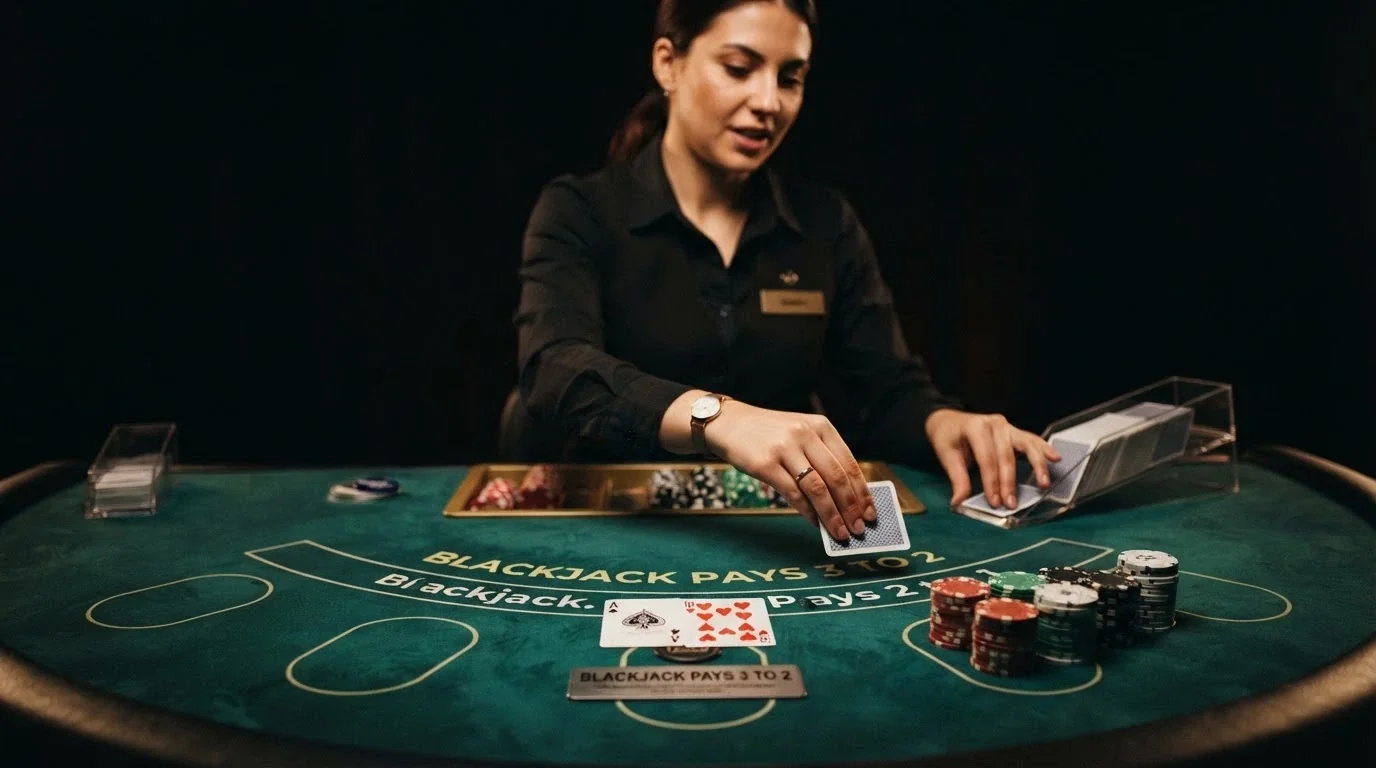
Side bets are where the house edge eats the strategy. Perfect Pairs runs at roughly 4.10% house edge on the standard 25/12/6 paytable. The 21+3 bet, which combines the player’s two cards and the dealer’s upcard into a poker hand, carries a house edge of 3% to 6% depending on deck count. A player who plays the main hand at 99.28% RTP and adds Perfect Pairs every round is effectively playing a game closer to 97% — the side bet drags the combined return down faster than most players realise. The standard rules at most studios are dealer hits on soft 17, blackjack pays 3:2, and the side bets above. Mastering basic strategy to account for the soft-17 rule is the best way to protect your RTP.
Live Roulette: From European Single-Zero to Lightning Multipliers
The wheel a player picks is the single biggest decision in live roulette, because the maths of the wheel differs more than the marketing suggests. European roulette carries one zero, runs at 97.30% RTP, and is the version every serious player defaults to. French roulette with La Partage returns half the even-money stake when the ball lands on zero, lifting the effective RTP to 98.65% on even-money bets and making it the best roulette game a player can sit down at. American roulette carries a second zero, which doubles the house edge to 5.26% and brings the RTP down to 94.74% — the difference between European and American over a session is several percent of bankroll, which is the difference between a grinding night and a quick loss.
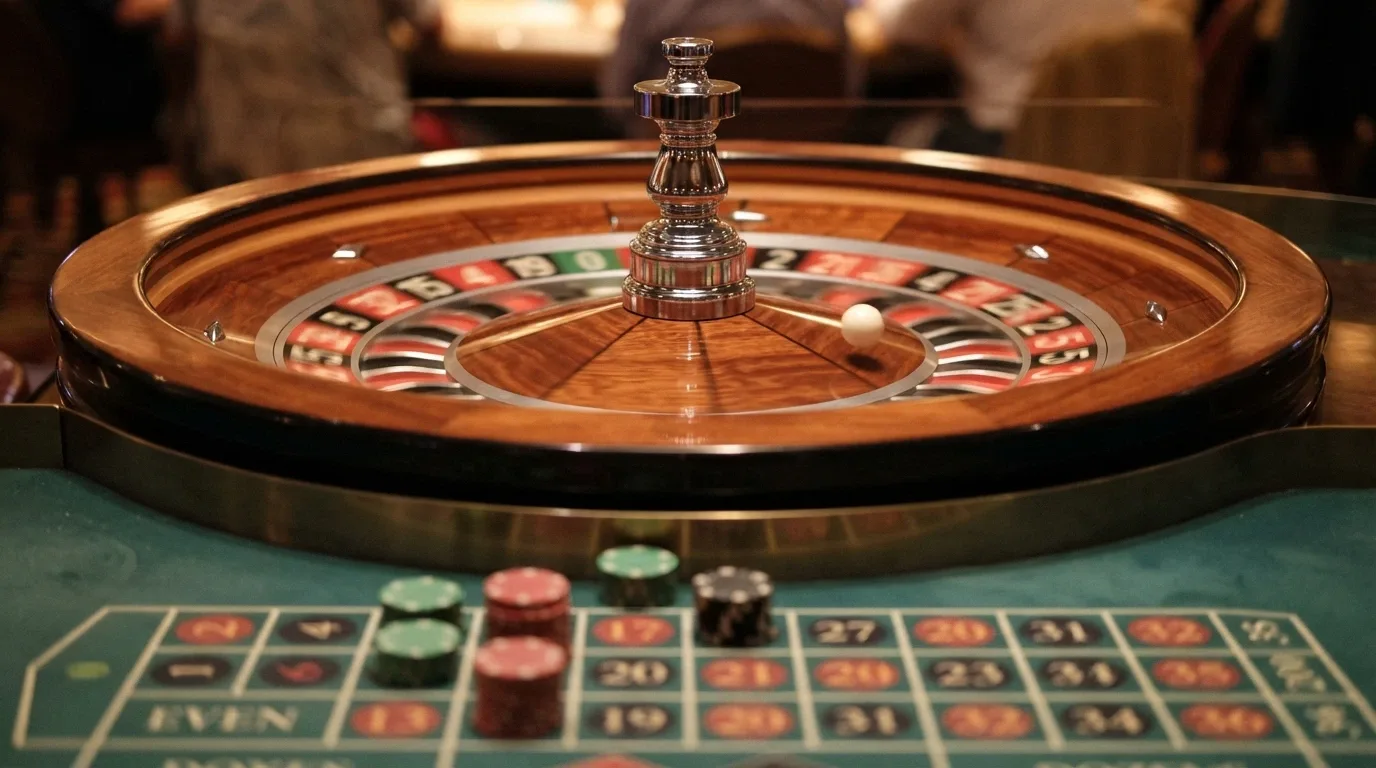
Lightning Roulette adds random multipliers of up to 500x on straight-up numbers, but the trade-off is real: the straight-up payout drops from 35:1 to 29:1 on non-multiplied wins, and the overall RTP settles around 97.01% with a house edge of roughly 2.99%. The multipliers change the shape of variance rather than the long-run return — a player gets more shots at big numbers, fewer shots at the median. Stability-focused players default to European or French variants, while high-variance enthusiasts accept the reduced base payout as the cost of potential multiplier wins.
Live Baccarat: The High-Roller Table, Now on Every Screen
Baccarat used to live behind a rope. It does not anymore. The three bets are simple: banker, player, tie. The maths is sharper than most players expect. The banker bet runs at 1.06% house edge and an RTP of 98.94%. The player bet runs at 1.24%. The tie bet runs at 14.36% — a number so far above the other two that any serious baccarat strategy ignores it. The banker bet is the mathematically best call on the live casino floor, full stop.
The variants are mostly cosmetic. Squeeze baccarat slows the card reveal for theatre; speed baccarat accelerates it for pace. The RTP on the main bets does not change. Squeeze and speed are taste, not strategy, and the choice between them does not move the long-run number.
Live Poker Variants: Casino Hold’em, Three Card and More
Live poker at a casino is player-versus-dealer, not player-versus-player, which removes most of the poker skill from the game and replaces it with a fixed house edge. Casino Hold’em, Three Card Poker, Caribbean Stud and the side bets that come with them all run as house-banked games, with RTPs that vary by variant and paytable. A player who wants to make decisions that matter is better off at a real poker table against other players; a player who wants the dealer-versus-format experience finds a reasonable approximation here. The game selection matters more than the strategy, because the edge is baked into the paytable rather than the play.
Live Game Shows: Crazy Time, Monopoly Live and the Wheel Format
The entertainment end of live casino runs on wheels, presenters and bonus rounds that look more like a TV set than a gaming floor. Crazy Time, Monopoly Live, Dream Catcher, Funky Time, Mega Ball and Lightning variants all sit in this category. The RTP runs lower than the table games — typically 94% to 96% — and the volatility runs higher, which is the explicit trade the format makes. A player gets a more engaging session and a wider distribution of outcomes, in exchange for a heavier house edge per round.
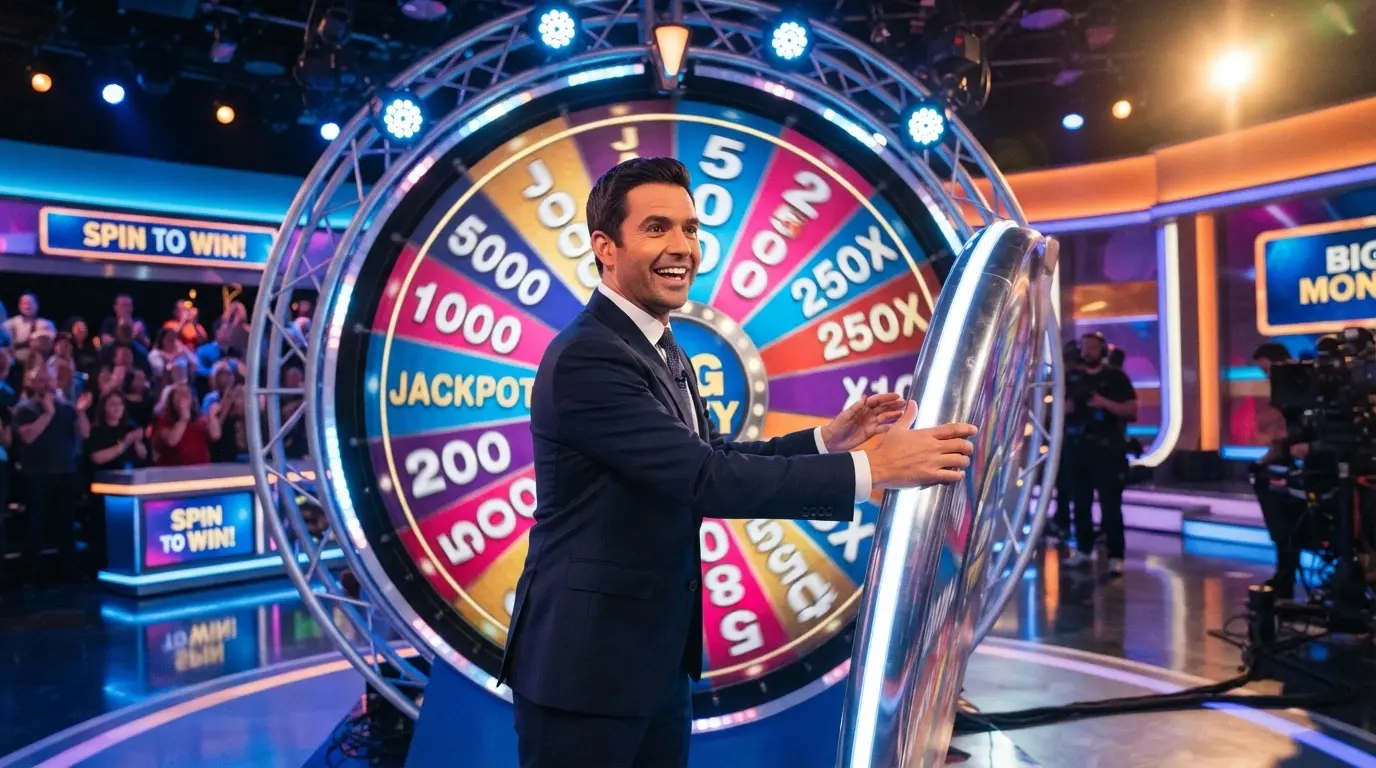
Pragmatic Play Live has pushed into this space with Mega Wheel, Spaceman and Sweet Bonanza Candyland. The mechanics differ from Evolution’s catalogue — Spaceman is a crash-style game with a cash-out mechanic, Sweet Bonanza Candyland is a wheel-of-fortune style game with bonus slots — but the RTP profile is similar: lower than table games, higher than slots, with volatility that can swing a session either way in twenty minutes.
Niche Tables, Free Play and Game Libraries: Everything Else on the Live Shelf
A serious live casino carries more than the headline formats. Sic bo, craps and dragon tiger appear on most major platforms, usually from secondary providers like Ezugi, Vivo Gaming or Asia-focused studios. Sic bo is a dice game with a wide range of bets and a house edge that varies from roughly 2.78% on the small/big bets to over 18% on specific triples. Craps is harder to find live but exists; dragon tiger is the two-card baccarat simplification that runs on most Asian-facing tables.
Demo mode is the other thing the live format handles badly. RNG slots almost always offer a free-play version; live dealer tables almost never do. The cost of running a studio, paying dealers and streaming HD video makes free play uneconomical, and most providers restrict demo access to logged-in players with a deposit history. A player who wants to try a live table first will usually find the only option is a low-stakes real-money hand. The site a player chooses should carry enough tables that a low-stakes grind is comfortable — a benchmark of several hundred live tables at the major operators is now standard, with Rainbet running 130+ tables as a floor rather than a ceiling.
The Providers Behind Every Australian Live Casino Table
The casino brand is the face of the operation, but the live dealer experience is built by a separate studio. The two names that matter most are Evolution Gaming and Pragmatic Play Live; everything else fills specific gaps. The provider matters more than the casino brand because the casino is a wrapper around the studio’s tables, and a casino without Evolution or Pragmatic Play Live is running a thin live lobby.
Evolution Gaming: The Studio That Defined Live Casino
Evolution runs the largest live dealer studio network accessible to Australians and supplies the tables at most offshore casinos. The catalogue covers every major format: live blackjack in standard, Infinite, Lightning, Speed and Free Bet variants; live roulette in European, American, French and Lightning versions; live baccarat including squeeze and speed variants; live poker formats; and the game show portfolio that includes Crazy Time, Dream Catcher, Monopoly Live, Funky Time, Crazy Pachinko and Mega Ball. A casino that does not run Evolution tables is either small, new or deliberately avoiding the segment; the catalogue is what defines a serious live lobby in 2026.
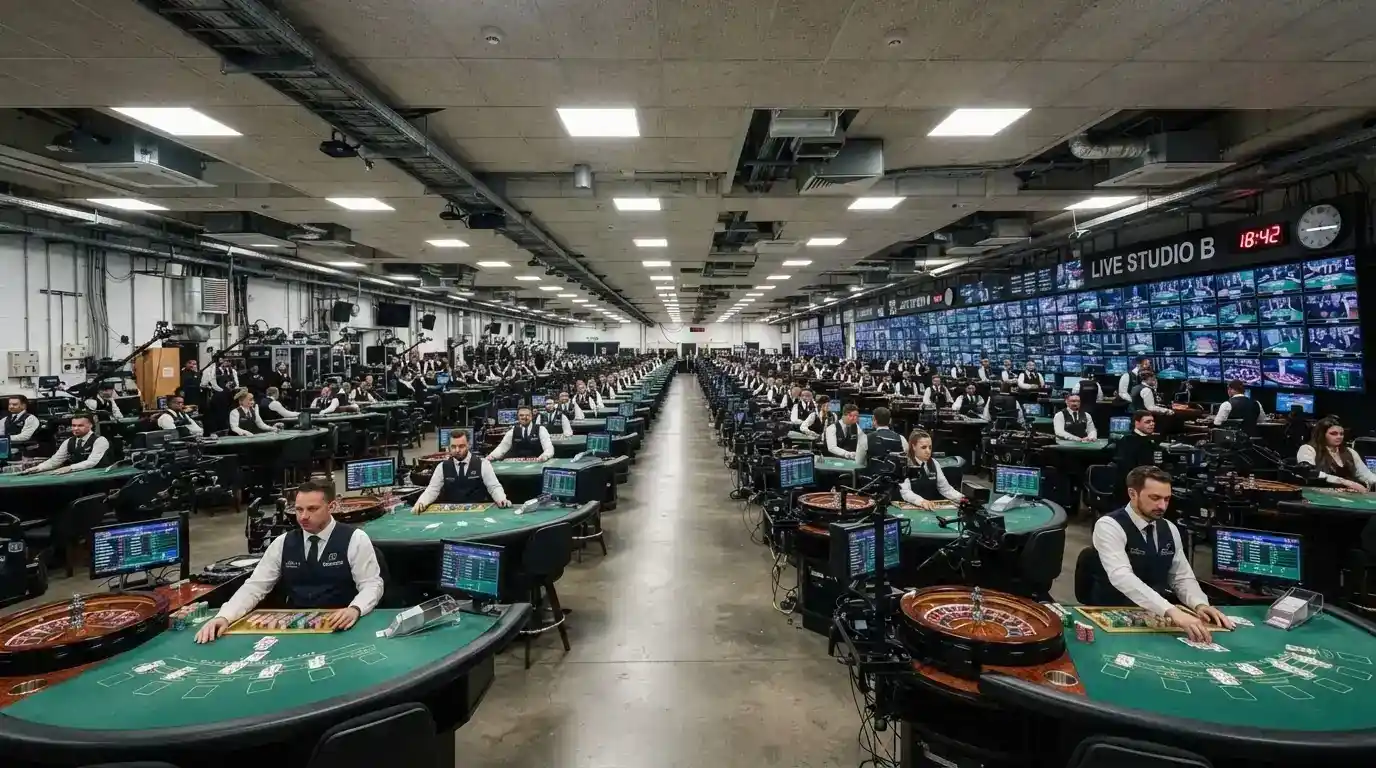
The studio network also matters operationally. Evolution runs multiple studios across Europe, North America and Asia, which means a 24-hour table supply and language coverage. Branded tables — a casino’s logo on the felt, the dealer’s apron, the table surround — are an Evolution product and most major operators carry at least one. The branded table is partly marketing and partly convenience: it gives the casino a presence in the live lobby and gives the player a familiar visual anchor.
Pragmatic Play Live: The Fastest-Growing Live Dealer Platform
Pragmatic Play Live has rolled out more than 150 new live tables in the past year, 55 of them in the last twelve months alone. The catalogue runs parallel to Evolution’s on blackjack, roulette and baccarat, and the theoretical returns match where the games overlap — Pragmatic Play Live blackjack runs at 99.28%, identical to Evolution’s main game. The differentiator is the game show portfolio, which Pragmatic Play Live has built around its slot catalogue: Mega Wheel draws on the Sweet Bonanza aesthetic, Spaceman is a crash-style cash-out game, Sweet Bonanza Candyland is a wheel format that ties back to one of the studio’s most-played slots.
For Australian players, Pragmatic Play Live’s growth matters because it is the second-largest source of live tables after Evolution. A casino running both is a casino with hundreds of tables available around the clock; a casino running only Pragmatic Play Live is rare; a casino running neither is not a live casino.
Secondary Providers and How Live Casino Platforms Work
The secondary tier is small but functional. Ezugi, Vivo Gaming, Lucky Streak and Playtech Live all run live dealer studios with catalogues that include blackjack, roulette and baccarat. Lucky Streak and Vivo Gaming are accessible to Australians through operators like RocketPlay. Playtech Live runs a smaller catalogue but is notable for branded Marvel and DC tables where licensing allows. None of these providers matches Evolution’s breadth or Pragmatic Play Live’s growth pace; they exist to round out a multi-provider lobby or to cover a regional gap.
The technical layer connecting a casino to a studio is a live casino API. The casino integrates the studio’s stream into its own lobby, with the betting grid, the cashier and the player account managed on the casino side. A multi-provider casino — one carrying Evolution, Pragmatic Play Live and a secondary studio — gives the player more tables and more variants than a single-provider setup, at the cost of more visual inconsistency across tables. The choice between the two is largely aesthetic.
The Offshore Live Casino Sites Australians Actually Play At in 2026
Every site below is offshore. The product they offer is prohibited in Australia under the Interactive Gambling Act 2001. None of them holds an Australian licence because no Australian licence exists. The table is what Australian players reach, not what the Australian market approves.
| Operator | Offshore licence | Live dealer providers | Live dealer tables |
|---|---|---|---|
| Skycrown | Curaçao eGaming | Evolution, Pragmatic Play Live, NetEnt, IGTech | Multiple blackjack/roulette/baccarat + game shows |
| RocketPlay | Curaçao (Dama N.V.) | Lucky Streak, Vivo Gaming, Evolution (variable), Ezugi, Atmosfera | Blackjack, roulette, baccarat, poker, game shows |
| Rainbet | Curaçao | Evolution, Pragmatic Play Live, NetEnt, Relax, Hacksaw, BGaming, NoLimit City | 130+ tables, 9 Rainbet-exclusive |
| Stake | Curaçao | Evolution, Pragmatic Play Live | Confirmed live dealer tables |
| Bizzo Casino | Curaçao | — | — |
| Royal Reels | Offshore (specific licence not confirmed) | — | — |
| WinSpirit | Offshore (specific licence not confirmed) | — | — |
| FairGO | Offshore (specific licence not confirmed) | — | — |
| Scream Casino | Offshore (specific licence not confirmed) | — | — |
| Rocket Casino | Offshore (specific licence not confirmed) | — | — |
Skycrown
Skycrown runs on a Curaçao eGaming licence, which means it sits outside the Australian regulatory perimeter. The welcome package runs to A$8,000 plus 400 free spins spread across four deposits, with the first deposit a 100% match up to A$500 plus 100 free spins on Book of Dead. The wagering requirement is 40x on the bonus and 30x on free spin winnings, with a 14-day validity window per tier and a maximum bet of A$5 during the bonus. Live casino games contribute 5% toward wagering, which is the standard figure across the offshore market and is the main reason a deposit-match bonus is a poor tool for live play.
The live casino carries the live cashback offer that sets Skycrown apart: 10% cashback on live losses up to A$1,500, with no wagering requirement on the cashback itself. A wager-free cashback is the one bonus structure that works for live play, because the player is not being asked to grind a 40x requirement through a format that contributes 5%. For a player who intends to play live casino rather than slots, the cashback offer is the more honest of the two. The combination of Evolution and Pragmatic Play Live tables gives the lobby enough depth to cover serious play.
Rainbet
Rainbet is a crypto-first casino that runs over 130 live tables, including nine Rainbet-exclusive tables. The live dealer providers are Evolution and Pragmatic Play Live, with the bulk of the catalogue on blackjack (A$1 minimum, A$25,000+ at Salon Privé), roulette and baccarat, plus game shows. The full library sits at roughly 8,000 games, with crypto support across BTC, ETH, LTC, XRP, SOL, TRX, BNB, USDT and USDC.
The welcome package is 250% up to US$2,100 plus 60 free spins across three deposits (100% to $700, 50% to $700, 100% to $700), with 40x wagering on bonus and free-spin winnings, a 7-day validity window, a US$30 minimum deposit and a maximum bet of 2% of the deposit while the bonus is active. Rainbet is denominated in USD rather than AUD, which is a practical consideration for Australian players; the exchange rate is the player’s to manage. The crypto deposit structure is what makes Rainbet interesting for players already holding digital assets; it is also what places it firmly outside the Australian credit-card/crypto ban, because a casino accepting crypto from Australian players is operating outside the Australian regulatory perimeter.
RocketPlay
RocketPlay is a Dama N.V. casino, which means Curaçao licensing under one of the larger operator groups in the offshore market. The live dealer providers include Lucky Streak and Vivo Gaming (Evolution availability for Oceania is variable), with Ezugi and Atmosfera rounding out the catalogue. The first deposit bonus is a 100% match up to A$1,000 plus 100 free spins delivered at 20 per day over five days, with 40x wagering on both the bonus and the free spin winnings, a 5-day bonus validity, a maximum bet of A$7.50 and a maximum bonus cashout of A$3,000.
The live game contribution is 5% on standard live games and 0% on game shows and some live titles, which is the same contribution trap that affects every deposit-match bonus for live play. The cashout cap of A$3,000 is the figure to watch: a player who lands a bonus-eligible win larger than that walks away with A$3,000 and the rest is forfeit. For a player who plans to grind the bonus on live tables, the 5% contribution combined with the 5-day validity and the A$3,000 cashout cap makes RocketPlay’s bonus among the harder ones to clear profitably.
Stake
Stake is the global crypto-casino brand and runs on a Curaçao licence. The live dealer provision is confirmed: Evolution and Pragmatic Play Live tables are available, and Stake operates as a major global brand rather than an AU-targeted affiliate site. The model differs from the deposit-match bonus structure that the rest of the offshore market runs on. Stake is known for its VIP and rakeback programme rather than a traditional welcome package; the welcome offer structure for Australian players was not confirmed in this review.
For a player who already operates in crypto and wants a global brand with a confirmed live lobby, Stake sits above the smaller offshore brands on brand recognition alone. The live dealer provision is not the differentiator; the operational track record is. Stake’s status as a global platform rather than an AU-centric affiliate site makes it a distinct choice for experienced crypto users.
Bizzo Casino
Bizzo Casino runs on a Curaçao licence. The brand carries an AU-facing presence and sits in the broader offshore market. Specific data on live dealer providers, bonus structure and wagering terms for the live casino is unavailable. As an offshore operator without Australian oversight, Bizzo falls outside the regulatory perimeter; players should assume standard offshore risks apply.
Royal Reels
Royal Reels is an offshore brand that appears in the top tier of Australian-facing operators by traffic volume. Detailed information on licensing and live dealer provision is unavailable. Users should exercise caution, as standard consumer protections associated with licensed Australian services are absent here.
WinSpirit
WinSpirit is an offshore brand in the Australian-facing operator market. Data on licensing or live dealer specifics remains unverified. It shares the same offshore positioning and regulatory gaps as similar AU-focused brands.
FairGO
FairGO is an offshore brand targeting Australian players. As with many in this tier, operational specifics regarding licensing and dealer catalogues are not publicly confirmed. Standard regulatory cautions apply.
Scream Casino
Scream Casino is an offshore brand in the Australian-facing operator market. Verified licensing details or live dealer specifics are not currently accessible. Like other offshore-facing sites, it lacks Australian regulatory safeguards.
Rocket Casino
Rocket Casino is an offshore brand. Detailed information on licensing and live dealer specifics is unavailable. The brand carries an AU-facing presence; the standard offshore caveats apply.
Why Your 2026 Live Casino Bonus Is Smaller Than It Looks
A live casino welcome bonus is the most consistently misleading offer in the offshore market. The headline figure — A$8,000, A$1,000, 250% — is the size of the match. The actual cost to the player who intends to use it on live tables is much higher, because live casino games typically contribute only 5% toward wagering requirements. A 40x bonus on slots is a heavy grind; a 40x bonus on live tables with a 5% contribution rate is an 800x effective grind, because only one-twentieth of every dollar wagered on a live table counts toward the requirement. The bonus the player thought they were claiming turns out to be something different.

The maths works like this. Skycrown’s A$500 first-deposit match carries a 40x wagering requirement on the bonus, so the player needs to turn over A$20,000 in eligible wagers to release the bonus. With live games contributing 5%, the equivalent live-only turnover is A$400,000. At A$5 per hand, that is 80,000 hands. At sixty hands an hour, that is over a thousand hours of play. The 14-day validity window becomes meaningless against a requirement that takes longer than that to clear, even before counting variance.
RocketPlay’s bonus is sharper. The 40x wagering on the A$1,000 first-deposit match requires A$40,000 in eligible turnover. The 5% live contribution lifts the live-only requirement to A$800,000. The validity window is 5 days, the maximum bet is A$7.50 and the maximum cashout from the bonus is A$3,000. A player who clears the bonus on live tables within five days at A$7.50 a hand is wagering roughly 107,000 hands in 120 hours, which is 890 hands an hour sustained — well above the natural pace of a live dealer table. The bonus, in the literal sense, cannot be cleared on live tables within the validity window.
Welcome Bonuses and the Live Casino Contribution Trap
The 5% live contribution is industry-standard across the offshore brands this page covers, and 0% is the rule on game shows. A deposit-match bonus advertised for the casino as a whole is, in practice, a slot bonus that cannot be efficiently cleared on live tables. The contribution trap is not hidden in the small print — the terms usually state the rate clearly — but it is buried under a headline figure that reads as if it applies to the whole casino.
What the player should look for is the maximum bet during the bonus, the validity window, the cashout cap and the contribution rate on the games they actually intend to play. For live casino, the contribution rate is the binding constraint. A bonus that takes 800 hours to clear on live tables is a bonus the player should not take on live tables; the cashback offer is the better tool.
No-Deposit Offers and Free Spins on Live Tables: What’s Actually Available
No checked featured operator currently offers a no-deposit live casino bonus. The free spins that come with most welcome packages are slot-only: Book of Dead, Sweet Bonanza and similar titles that are not live dealer games. A player who deposits at Skycrown, RocketPlay or Rainbet for the live casino is paying for the deposit to fund the live play, with the bonus being a parallel slot offer that does not transfer.
This is the practical state of the market. The bonus structure is built around slots, because slots are where the contribution rate is 100% and the bonus can be cleared in days rather than months. A live casino player who wants to use a bonus is better off treating the bonus as a slot side activity and playing live on the cleared deposit.
Live Casino Cashback: The Wager-Free Alternative
Cashback is the only bonus structure that consistently works for live casino players. Skycrown’s 10% live cashback up to A$1,500, with no wagering requirement on the cashback itself, is the clearest example. A player who loses A$5,000 on live tables receives A$500 back as cash, withdrawable immediately, with no playthrough required. The cashback turns a losing session into a slightly less losing session without imposing a grind.
A cashback offer compares favourably to a deposit-match bonus for live play because it does not require the player to chase a wagering requirement through a 5% contribution rate. The cashback is paid on net losses, which means it does not reward a winning session — but a winning session does not need a bonus. A player who treats cashback as the live bonus structure of choice is making a defensible decision; a player who chases the deposit-match through live tables is grinding against the maths.
Live Casino on Your Phone: Mobile Play in Australia
Most live casinos run on mobile browsers without a dedicated app. The stream is HTML5-based, which means it adapts to the device, the browser and the connection. A modern phone on a modern browser will play the live tables at the same quality a desktop will; an older phone on a slower connection will buffer, drop frames and lose the betting interface at inconvenient moments. The format is technically capable; the device and the network are the constraints.
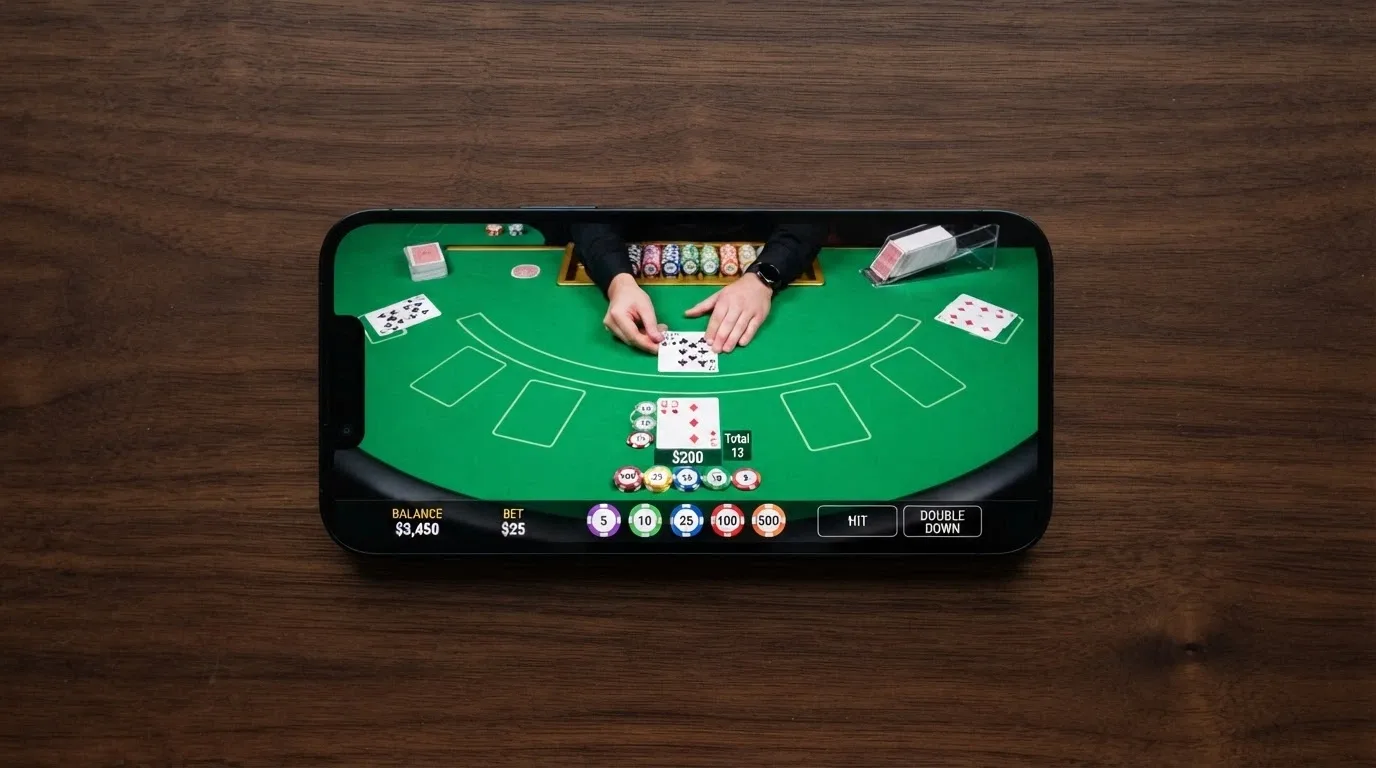
A dedicated app is rare for offshore live casinos. The major Australian-facing brands mostly do not publish iOS or Android apps through the App Store or Google Play, because the app stores in many jurisdictions restrict gambling apps and the operators prefer not to lose the Australian market over an app-store policy. Some operators have explored Telegram mini-apps as a workaround; the experience is functional but rarely matches a native app or a browser-based HTML5 stream.
The Legal Reality: Live Casino and Australian Law
The Interactive Gambling Act 2001 makes online casino games — including live dealer tables — a prohibited interactive gambling service. No licence for online casino exists anywhere in Australia: not federally, not in any state, not in any territory. The Act targets the provider, not the player; a person in Australia using an offshore live casino is not prosecuted. The provider, if identified and reachable, faces civil penalties, criminal charges, referral to the ACMA’s enforcement actions and disruption through Australia’s Movement Alert List.
The ACMA has had 1,564 illegal gambling and affiliate websites blocked by Australian internet service providers since November 2019, with 225 services withdrawing from the Australian market voluntarily since 2017. The Interactive Gambling Amendment (Gambling Reform) Bill 2026 was introduced to Federal Parliament on 2 July 2026 and is scheduled to commence on 1 January 2027. From that date, banks and payment providers gain express authority to block transactions to illegal gambling operators, and the existing advertising and inducement restrictions tighten further.
The Interactive Gambling Act: What It Actually Prohibits
Section 5 of the IGA defines a prohibited interactive gambling service; section 8 defines the Australian-customer link; section 15(2A) creates the offence of providing such a service to a person in Australia. Live dealer casino games fall squarely within the definition — the ACMA’s blocked-site list includes services offering casino-style games including blackjack, roulette, poker and slots, and the criteria for blocking are met where an Australian-customer link can be established. The Act does not require the provider to be physically present in Australia; an offshore operator with Australian customers is within reach.
The player’s position is different. The IGA does not criminalise the act of placing a bet with an offshore operator. The ACMA does not pursue individual players. The penalties — civil and criminal — fall on the provider, and the provider’s directors can be referred to the Movement Alert List, which can affect their ability to travel to Australia. Because the framework specifically targets providers, the end-user remains outside the scope of IGA-based prosecution.
The ACMA, the 2026 Reform and What Changes on 1 January 2027
The 2026 Gambling Reform Bill layers new tools onto the existing prohibition framework. From 1 January 2027, wagering advertising on broadcast television is restricted to no more than three ads per hour between 6:00 am and 8:30 pm, with a complete blackout during live sport broadcasts within those hours. Athletes, celebrities and influencers are barred from promoting wagering products, and wagering ads are banned in sports venues and on player or official uniforms. Schedule 2 of the Bill gives banks and payment providers express authority to block transactions to illegal gambling operators directly, which is the most operationally significant change for offshore live casinos: a player who previously relied on a debit card or bank transfer to fund an offshore account may find the transaction declined by the bank.
The Government has predicted the Australian online gambling black market will reach A$5 billion by 2029, which is the size of the demand the prohibition does not capture. The reform does not legalise online casino; it adds friction to the offshore route without addressing the underlying demand.
What the Prohibition Means for You as a Player
The player-side consequences are concrete and not symmetrical with the provider-side penalties. There is no Australian consumer protection on an offshore live casino. There is no ACMA complaints recourse — the ACMA enforces the prohibition, not the contract between a player and an offshore operator. BetStop, the National Self-Exclusion Register, covers approximately 150 licensed Australian wagering providers and does not reach any of the offshore live casinos on this page. A player who has self-excluded through BetStop can still deposit at an offshore live casino and still play.
The credit card and crypto ban since 11 June 2024 is the most direct tell of the offshore route. The legal deposit routes for licensed Australian wagering are debit card, bank transfer, PayID/Osko and BPAY. A site that accepts credit card deposits from Australians, or that accepts crypto without identity verification, is operating outside the Australian regulatory perimeter; the credit card ban is the signal. An operator that fails to enforce the ban faces penalties of up to A$247,500, which is why licensed wagering does not accept credit cards and offshore live casinos do.
From the player’s side, the practical risks are: no recourse if an operator refuses a withdrawal, no recourse if an account is closed with a balance on it, and the risk of the site being blocked by the ACMA while funds remain in the account. The Australian Taxation Office treats player winnings as not assessable income for ordinary punters, so a win at an offshore live casino is not taxable in Australia; a win is also not protected by any Australian law if the operator decides not to pay it.
Staying Safe: Responsible Gambling for Live Casino Players
The help infrastructure exists, and most of it does not reach the live casino. The National Gambling Helpline (1800 858 858) is free, confidential and staffed 24 hours a day. Gambling Help Online provides free chat and email counselling around the clock. Lifeline (13 11 14) and the National Debt Helpline (1800 007 007) cover the wider crisis and financial counselling layers. The Reset app is a free tool for quitting or cutting back. These are real services and they are open to anyone in Australia, including players at offshore live casinos.
The structural gap is BetStop. The National Self-Exclusion Register is the most powerful self-exclusion tool in Australia: a single registration excludes a person from approximately 150 licensed wagering providers for a minimum of three months up to a lifetime. The register went live in August 2023 and, as at 31 July 2026, had recorded 67,480 registrations — 41,290 of which were still active, with 78% of registrants under 40 and 38% choosing lifetime exclusion. BetStop does not cover offshore casinos. A self-excluded Australian can still deposit at an offshore live casino; the exclusion stops at the Australian-licensed perimeter.
BetStop, Self-Exclusion and the Offshore Gap
The BetStop offshore gap is the most concrete harm of using an offshore live casino from a responsible-gambling perspective. A player who has recognised that their play is causing harm and who has done the right thing by registering for BetStop will still receive promotional emails from offshore casinos, will still be able to deposit, will still be able to play. The exclusion that covers the licensed market does not reach the offshore market. For a player who has made the decision to stop, that gap matters more than any of the consumer-protection considerations.
Practical Tools, Helplines and the Numbers That Matter
About 2.1% of Australian adults — roughly 430,000 people — experience problem gambling, with high-risk gambling at 1.8% (Australian Institute of Health and Welfare, 2022). The numbers are not specific to live casino players, but the offshore route carries a higher concentration of risk factors: no deposit limit infrastructure, no activity statement, no enforced cooling-off period. The helplines above are the practical answer for any player who feels the play has moved from entertainment into harm.
How We Reviewed These Live Casinos
The ranking on this page is built on three layers: licence verification, live casino provision and bonus structure. The licence layer is the most important and the most uncomfortable, because the verification produces the same answer for every operator on the list: offshore, not Australian-licensed. The provision layer evaluates the live dealer catalogue — provider mix, table count, variant depth. The bonus layer evaluates the offer terms — wagering multiple, contribution rate, validity, max bet, cashout cap.
The sources for this ranking are the ACMA register, the operators’ own terms pages where they were reachable, and the live casino review publications that publish per-operator data. Competitor pages tested 35 to 40-plus live casinos with real AUD deposits for their Australian rankings; the figures above are drawn from the operators’ own terms pages and the named review sources, not from the competitor pages themselves. Where a figure was not confirmed in this review, the table shows the absence rather than a guess; absence is information, and a guess dressed up as a figure is worse than an em dash.
Your Move: Choosing a Live Casino Site as an Australian Player
The decision this page equips is not the one most listicles frame, which is “which casino is best”. The decision is whether to use an offshore live casino at all, given the prohibition and the protection gap. A player who has decided to play offshore is then choosing among the offshore brands that offer the strongest live lobby, the most honest bonus terms and the most reliable cashier. The factors that matter are RTP on the specific game the player intends to play (not the headline catalogue figure), live casino contribution rate on any bonus the player intends to claim (5% is the rule, 0% on game shows), the validity window (14 days is generous, 5 days is hostile), the cashout cap (which determines the maximum the player can extract from a bonus win), and whether the operator offers a wager-free cashback that can be used on live tables (Skycrown’s 10% up to A$1,500 is the clearest example).
What does not matter as much as the marketing suggests is the headline welcome figure. A$8,000 across four deposits is a slots figure; a player who intends to play live tables will not clear that bonus on live play at the 5% contribution rate. What does not matter at all is the offshore licence itself — Curaçao is the standard, the licence is the wrapper, and the player experience is determined by the operator’s commercial decisions rather than the licence. A player who reads the bonus terms, the live contribution rate and the cashout cap before depositing will make a better decision than a player who picks on headline size.
The one thing to remember is that the protection gap is real. BetStop does not reach any of these operators. The ACMA does not arbitrate disputes. A site can be blocked with a balance on it. The player’s winnings are not taxable, which is the only Australian-government recognition the offshore route carries, and it is a passive recognition rather than an endorsement. The decision to play offshore is a decision to operate outside the Australian consumer protection framework, and a player who makes that decision should make it with the framework’s absence in mind rather than discovering it after the first withdrawal refusal.
FAQ: Live Casino in Australia — Quick Answers
Does BetStop cover offshore live casino sites?
No. BetStop covers approximately 150 Australian-licensed wagering providers, and an offshore live casino is not connected to the register. A BetStop registration will not stop an offshore casino from accepting deposits or sending promotional material; the exclusion stops at the Australian-licensed perimeter, which the offshore brands on this page sit outside.
Are live casino games fair and how are they audited?
Live dealer games at Evolution and Pragmatic Play Live studios are audited by independent testing agencies, with theoretical return-to-player figures published per game (99.28% on standard blackjack, 97.30% on European roulette, 98.94% on baccarat banker). The published RTP is a long-run average over millions of hands; short sessions will deviate, sometimes sharply, but the long-run return is fixed by the game design rather than the operator. Auditing is done at the studio level, not the casino level, which means the same game carries the same RTP at every casino running the same provider’s tables.
What payment methods can I use at live casino sites as an Australian player?
Credit cards and crypto are banned as payment for online wagering in Australia since 11 June 2024. A live casino that accepts credit card deposits or anonymous crypto from Australians is operating outside the Australian regulatory perimeter. The legal deposit routes for licensed wagering are debit card, bank transfer, PayID/Osko and BPAY. Most offshore live casinos Australians reach accept debit cards and a range of crypto; from 1 January 2027, banks gain express authority to block transactions to illegal operators, which may reduce the number of deposit routes that work in practice.
What is the RTP and house edge of live blackjack, roulette and baccarat?
Standard live blackjack at Evolution runs at 99.28% RTP, with Infinite at 99.47%, Lightning at 99.56%, Free Bet at 98.45% and Speed at 99.28%. Live roulette runs at 97.30% on European (single zero), 98.65% on French with La Partage on even-money bets, 94.74% on American (double zero) and approximately 97.01% on Lightning Roulette. Live baccarat runs at 98.94% RTP on the banker bet, 98.76% on the player bet, and 85.64% on the tie bet — the tie bet carries a 14.36% house edge and is the worst call on the floor.
How do live casino bonuses work and what wagering requirements apply?
Welcome bonuses at offshore live casinos carry wagering requirements of 40x the bonus amount, with live casino games contributing only 5% toward the requirement and game shows contributing 0%. A 40x bonus on slots is a 40x grind; a 40x bonus on live tables is effectively an 800x grind at the 5% contribution rate. Bonus validity windows range from 5 days to 14 days, and maximum cashout caps apply — A$3,000 at RocketPlay is the standard. The bonus structure that works for live play is cashback with no wagering requirement, which is what Skycrown’s 10% live cashback up to A$1,500 offers.
Live Casino Apps vs. Mobile Browser: Which Works Better?
The mobile browser is the better answer for most players. HTML5 streaming works on iOS and Android without an install, the betting interface adapts to portrait or landscape, and the login is the same account as the desktop session. A player who wants to play live casino on a phone should test the browser-based experience before committing to a deposit, because the live stream is the part that varies most between sites. A few sites have Telegram mini-app versions that compress the experience into a chat-window format, and the major operators carry a responsive mobile site that handles the live lobby without compromise.
Prepared by the Online Pokies Real Money editorial staff.