
What an Australian $200 No-Deposit Bonus Really Buys You in 2026
 Available in AU
Data current as of 18 October 2026, with licence and bonus claims verified against ACMA enforcement records and individual operator terms pages.

A punter searching for a $200 no-deposit bonus at an Australian online casino lands on a number that does not exist. No offshore brand currently serving Australians publishes a standalone $200 cash drop with achievable terms. What every operator in this market actually offers is smaller, bundled, and tied to wagering that would take the better part of a working week to clear. The headline figure is the bait; the fine print is the catch.
This page reads those fine prints. It ranks the operators Australian players actually encounter, lays out the wagering arithmetic and the cashout caps that decide whether any money ever moves, and explains why every one of these sites sits outside Australian consumer law. The legal position matters more than the bonus number, and it changes substantially on 1 January 2027.
Table of Contents
- Your $200 No-Deposit Bonus Is Almost Certainly Not Worth $200
- Inside a 2026 No-Deposit Bonus: The Three Structures That Add Up to ‘$200 Free’
- Offshore Casinos With No-Deposit Offers for Australian Players in 2026
- Which Pokies Give Your No-Deposit Bonus Its Longest Run
- How Australians Fund and Withdraw From Offshore Casino Accounts
- Is Online Casino Legal in Australia? What the Law Actually Means for You
- What Offshore Casinos Cannot Give You: The Safety Nets Australian Players Lose
- How We Evaluated These 10 Casinos
- What to Actually Do With This Information
- Frequently Asked Questions
Your $200 No-Deposit Bonus Is Almost Certainly Not Worth $200
The “$200” in your search is, with very few exceptions in 2026, a marketing artefact. The genuine ceiling for a no-deposit bonus a player can actually claim, clear and cash out from sits in the A$50 to A$100 range, and most often well below that. The figure persists for two reasons: it ranks well in search, and the way operators bundle promotions makes it technically defensible without being honest.
Three things drive the gap. No-deposit offers are limited by what the operator can afford to lose to a player who never deposits, and that is much less than the cost of acquiring a depositing customer. The wagering multiplier on a genuine no-deposit bonus is steeper than anything else on the site, because the operator has no leverage from a deposit to mitigate risk. The cashout cap cuts the headline win down to a fraction before the punter ever sees it. The $200 number is the sum of three smaller numbers, dressed up as one.
What a ‘$200 No-Deposit Bonus’ Search Really Means in 2026
The intent behind this search is dominantly transactional — somewhere around three in five users want a list of casinos and a claim they can act on today. A meaningful minority, perhaps a quarter, came to check whether the offer is real before they spend time on it. The remainder are comparing offers or chasing a specific brand they have heard of.
That mix is why most competing pages on this term are listicles: a dozen operators, a paragraph each, a “claim now” button. The listicle answers the transactional intent and ignores the evaluative one. This page tries to do both — give the list, but also explain the structures behind the headline, the cost of the wagering, and the legal position — because a punter who signs up for a “free” A$200 and finds they cannot withdraw more than A$100 has been failed by the page that sent them there.
Who Gets a No-Deposit Bonus and What It Actually Covers
A no-deposit bonus, properly so called, is a credit extended to a new player without requiring a deposit first. The “new” matters: existing account holders almost never see one, and one account per household, payment method or IP is the usual ceiling. The “no-deposit” matters more: it is the difference between an offer you can evaluate before committing any money and one that costs you a deposit to test.
Where the bonus credit applies, the casino decides. Across the offshore sites serving Australians, slots contribute 100% of every dollar wagered toward clearing the bonus. Table games and live casino contribute at most 10%, sometimes nothing. A punter who wants to clear a no-deposit bonus by sitting at a blackjack table will spend ninety times longer doing it than a punter playing pokies, and may never clear it at all. The contribution table is the rule most players never read.
There is also a quiet category distinction worth flagging. A genuinely deposit-free offer requires nothing from the player other than a verified account. A token-deposit offer asks for a small minimum deposit — sometimes as little as A$10 — before unlocking the “free” credit. Both are marketed as no-deposit bonuses; only the first one actually is. Which you are looking at shows up in the terms, not the headline.
Inside a 2026 No-Deposit Bonus: The Three Structures That Add Up to ‘$200 Free’
Every “$200 no-deposit bonus” an Australian player sees in 2026 is one of three things, and the marketer behind it knows exactly which one it is. None of the three is a standalone $200 cash drop.

Structure one: the up-to framing. The advertised bonus is “up to $200”, and the no-deposit component is closer to A$10 or A$20. The remaining A$180 or so sits behind a deposit match you have to fund first. The headline is technically accurate. The reader who wanted a free A$200 walks away having deposited.
Structure two: the split promotion. A small no-deposit free-spin bundle, a separate deposit-match welcome offer, a reload bonus on the second deposit, and a loyalty credit for the third. The marketing sums the headline value of every piece into a “A$200 welcome package” or “A$200 in bonus value”. Each piece exists and is claimable. None of them is a single A$200 bonus.
Structure three: the free-spin revaluation. Two hundred free spins at “A$1 each” equals A$200 on paper. The maximum permitted bet during bonus play is usually capped — A$0.20 is a common figure on the AU-facing offshore sites. Two hundred spins at A$0.20 is A$40 of real exposure.
These are not separate scams. They are the three ways the same deficit gets hidden, and the way to read them is the same in every case: divide the headline by the real ceiling of one spin, multiply by the maximum bet during play, and you have the actual exposure. The marketing will not do that for you.
The Free-Spins Maths: Why 200 Spins at ‘$1 Each’ Delivers $40 of Real Value
The cleanest demonstration of how the revaluation works is a free-spins bundle that is built to look like a cash bonus. Two hundred spins at A$1 each, the headline says, is worth A$200. The maximum bet a player is allowed to make during bonus play is usually capped, and A$0.20 is a common figure on the AU-facing offshore sites. Two hundred spins at A$0.20 is A$40 of real exposure.
What the A$1 figure is, then, is a notional value. It is what the spin would be worth if the casino did not cap the bet. The casino does cap the bet. The notional value is the figure the bonus page prints; the capped value is the figure the bonus pays.
There is one more layer. Not every one of those 200 spins returns anything, and on a high-volatility slot the variance is wide. The arithmetic above is the gross ceiling; the average outcome for a punter is materially lower than the gross ceiling, and that is by design. Volatility is the casino’s shock absorber: even at A$0.20 a spin, the bonus can pay A$1,000 or A$0. The wagering requirement does not care which.
Wagering Requirements: The Multiplier That Decides Whether You Ever See a Dollar
The multiplier is the number that matters more than any other on the bonus page. It is what stands between the bonus balance and the cash balance a punter can withdraw. Across the genuine no-deposit offers an Australian player sees in 2026, the multiplier runs from 40x to 80x, with most clustering around 50x. Free-spin winnings, where the bonus is paid out as win money rather than credit, typically carry 25x to 40x.
The formula is simple. A A$50 no-deposit bonus at 60x wagering requires A$3,000 of slot play before any of it converts to withdrawable cash. On a 96% RTP slot, that A$3,000 in bets returns roughly A$2,880 in prize money, and the bonus converts A$50 of that to withdrawable cash — the rest is what the casino keeps. A punter clearing this bonus in the median case comes out roughly even on the bonus money itself and loses about A$120 in expected return on the volume required to clear it.
A worked example makes the volume concrete. The WinSpirit welcome offer — A$1,000 first-deposit match at 40x wagering — requires A$40,000 of qualifying turnover before the bonus converts. At a A$1 stake per spin on a standard pokie and the typical 5-second interval between spins, that is 40,000 spins, or 55 to 56 hours of continuous play. The bonus is not cleared in an evening. It is cleared over the better part of a working week, and only if the punter plays at exactly the stake the casino expects across the entire run.
Two things soften the picture marginally. Slots contribute 100% of every dollar wagered; table and live games contribute 10% or less. So a punter playing blackjack is clearing the bonus ten times slower than a punter playing pokies, and may not clear it at all before the bonus expires. And game weighting matters in the other direction too: a low-RTP pokie counts the same toward turnover as a high-RTP one, but loses more per spin. The wagering requirement does not penalise you for picking a worse game — it just lets the worse game take a larger cut.
The Cashout Ceiling: Why Your $200 Bonus Win Might Stop at $100
The max-cashout cap is the fine-print term that turns a large win into a small withdrawal. It is a hard ceiling on how much of a bonus’s winnings a player is allowed to cash out, regardless of how the bonus cleared.
Across the Australian-facing offshore market, max-cashout caps on no-deposit bonuses typically run from A$100 to A$200. A punter who clears a A$50 bonus, runs the wagering to completion and ends up with A$400 in the bonus balance may withdraw only A$100 of it; the remaining A$300 is voided. The cap exists because the casino is pricing a no-deposit offer on the assumption that most winners will be small, and a single large winner can wipe out the offer’s economics for the month.
The per-operator picture is more useful than the averages. WinSpirit’s no-deposit bonus carries a A$50 max cashout — modest, but the bonus is forty free spins on a single title and a player clearing it sees most of what they win. RocketPlay’s no-deposit offer caps withdrawals at roughly A$85 (the operator’s terms are quoted in EUR; A$85 is the approximate AUD equivalent at typical conversion rates). SkyCrown sits at the other end of the set with a A$750 cashout cap — unusually generous, and the reason its small no-deposit bonus of around twenty free spins is worth treating as a real offer rather than a token gesture. WinSpirit’s A$50 cap and SkyCrown’s A$750 cap are not the same kind of generosity; one is a restraint on a small bonus, the other is permission for a small bonus to actually pay out.
Bonus Codes and Claim Paths: How These Offers Actually Reach Your Account
Bonus codes still appear in the AU-facing market, but their role has narrowed. They are now most often a claim gateway rather than a discount: enter the code at sign-up or in the cashier, and the bonus unlocks. The value is in the bonus the code unlocks, not in the code itself.
Two claim paths are worth distinguishing. The first is the standard code-drop: an affiliate site publishes a code, the punter pastes it at sign-up or deposit, the bonus credits. The second, which has become more common at offshore sites serving AU, is a review-gated claim. RocketPlay’s twenty free spins no-deposit offer is unlocked by a verified user review — the punter signs up, plays through any minimum requirement, submits a review through the operator’s review funnel, and the twenty spins credit once the review is verified. This is a different mechanism from a code, but the value chain is the same: do something to unlock something, and the value is in the something unlocked.
There is a quieter point underneath both. A code is a distribution tool. It lets the operator track which affiliate channel drove the sign-up, attribute the bonus, and pay the affiliate. The punter’s experience is identical regardless of code or channel. The code is not a discount for the punter; it is an accounting tag for the casino.
When ‘No-Deposit’ Still Needs a Deposit: Free Spins, Free Chips and the Token-Deposit Edge Case
The genuinely deposit-free offers in the Australian-facing offshore market cluster in three formats. The first is a free-spin bundle — twenty to forty spins on a single named pokie, often a Pragmatic Play or Playson title, credited on sign-up. WinSpirit’s forty spins on Coin Strike 2 Hold and Win, SkyCrown’s twenty free spins or A$20 credit, RocketPlay’s twenty spins on Book of Pyramids, RainBet’s twenty-five spins, and Bizzo’s ten-to-twenty-five spin bundles all sit here. The second is a free-chip offer — a small cash credit (A$10 to A$30) usable across the casino’s slot library, which is Fair Go’s standard format. The third is the hybrid — a small free chip plus a small free-spin bundle credited together.
The edge case is the token deposit. Some offers described as no-deposit actually require a small minimum deposit — A$10 or A$20 — to unlock the bonus. The deposit is refundable in the sense that you can withdraw it after clearing the bonus; the bonus is what sits on top. Strictly speaking, this is a deposit-triggered bonus, not a no-deposit one, and the wagering multiplier and cashout cap are usually softer than for a genuinely free offer. A punter who sees an A$200 advertised bonus with a minimum deposit requirement is looking at the hybrid structure, not a real NDB.
The way to tell them apart is the terms page, specifically the deposit requirement line. A real no-deposit bonus has none. A token-deposit bonus has a minimum, often low, but present.
Offshore Casinos With No-Deposit Offers for Australian Players in 2026
The comparison that follows ranks ten operators an Australian player is likely to encounter while searching this term. The ranking is not a purchase recommendation; it is an ordering by fit to the head topic — the existence and value of a no-deposit offer, the fairness of the wagering, the generosity of the cashout cap, and the breadth of the welcome package behind it. Where terms could not be confirmed, the cells are blank rather than guessed.
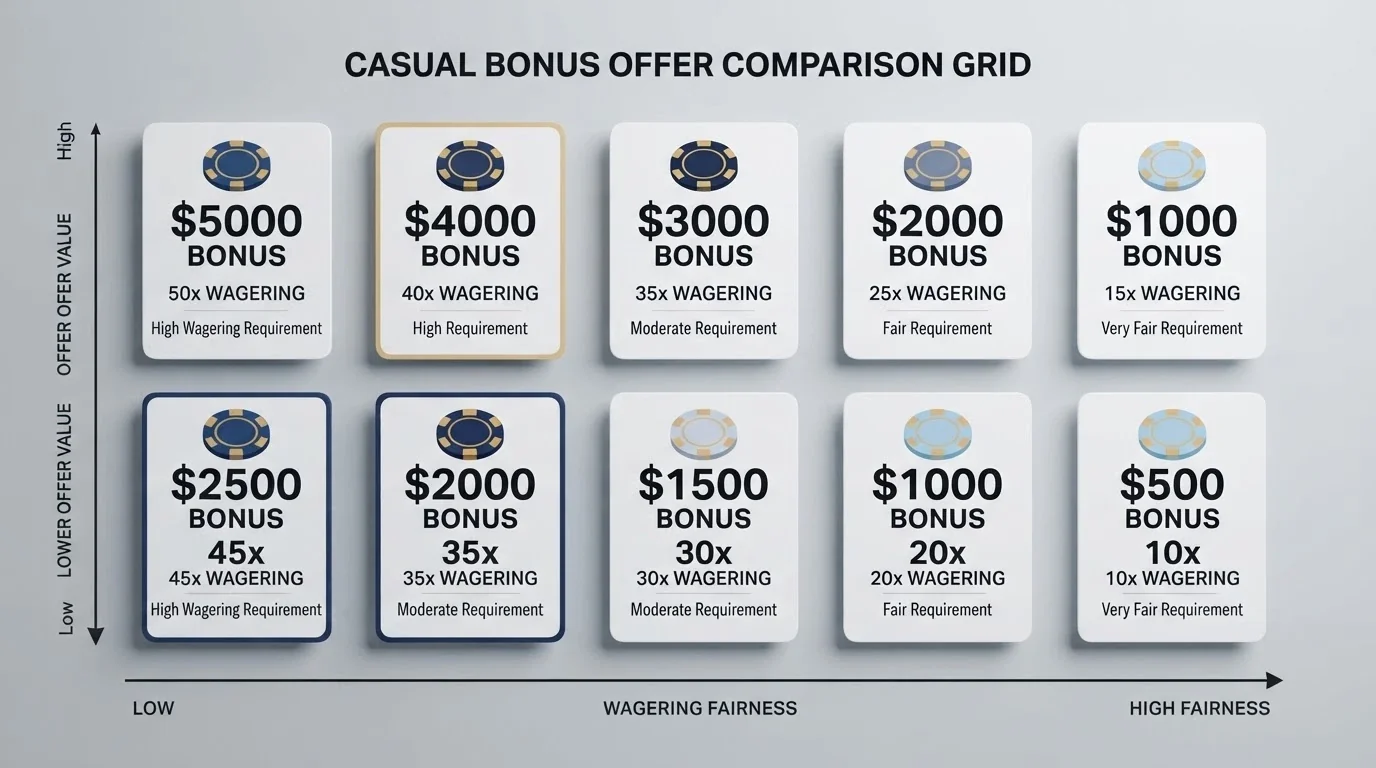
The single most important thing to read in this table is the cashout cap. The wagering multiplier decides whether you ever convert the bonus. The cashout cap decides whether the conversion was worth the play.
| Casino | Licence | No-Deposit Offer | NDB Wagering | Welcome Bonus |
|---|---|---|---|---|
| WinSpirit | Curacao eGaming | 40 FS on Coin Strike 2 Hold and Win (€/$0.10/spin) | 40x | Up to A$2,000 + 100 FS over 2 deposits |
| RocketPlay | Curacao | 20 FS on Book of Pyramids (~A$85 max winnings) | 40x | 100% up to A$500 + 100 FS (first deposit) |
| SkyCrown | Curacao | ~20 FS or A$20 (A$750 cashout cap) | 40x | 100% up to A$200 + FS over 3 deposits |
| RainBet | — | 25 FS | 40x | Up to A$8,000 + 200 FS over 3 deposits |
| Fair Go Casino | Curacao | A$10–A$30 free chip | 60x | Deposit-match welcome (30x) |
| Bizzo Casino | Curacao | 10–25 FS | 40x | — |
| Stake | Curacao eGaming | No NDB offered | — | 200% up to A$2,000 (min. A$50 deposit) |
| Scream Casino | — | — | — | — |
| Royal Reels | — | — | — | — |
| Rocket Casino | — | — | — | — |
Three operators carry the bulk of the verified terms: WinSpirit, RocketPlay and SkyCrown. RainBet, Fair Go and Bizzo carry enough to describe their offer type but not every term was confirmed at the time of writing. Stake’s situation is the inverse of the others — no NDB at all, but the largest brand recognition in the offshore market. The three blanks in the final rows are operators an Australian player sees in AU-market rankings whose specific no-deposit terms were not surfaced during this review, and the write-ups for them are accordingly qualitative.
WinSpirit
WinSpirit carries the most substantial no-deposit offer in the verified set: forty free spins on Coin Strike 2 Hold and Win, credited at €/$0.10 per spin, with 40x wagering on the resulting winnings and a A$50 max cashout. The offer is genuinely deposit-free; the bonus credits on sign-up and the spins run on a single named title the operator has chosen.
The headline welcome package behind it is the largest of the verified operators. A first deposit of at least A$30 unlocks 100% up to A$1,000 plus 100 free spins credited as twenty per day for five days. A second deposit of at least A$30 unlocks 200% up to A$1,000. Both bonuses carry 40x wagering, a A$3,000 win limit on the bonus balance, and a 7-day window from activation to clear the wagering. The first bonus must be activated within 31 days of sign-up.
The licence is Curacao eGaming; the exact licence number was not surfaced during this review. The platform runs a multi-provider aggregator library with Pragmatic Play, BGaming and others confirmed by slot title availability. The cashout cap on the no-deposit offer is the smallest in the verified set at A$50, and a player clearing forty spins on a high-volatility pokie is more likely than not to see most of what they win be voided by the cap. That is the trade-off for getting a genuine forty-spin free run on sign-up.
RocketPlay
RocketPlay takes a different approach to the no-deposit claim. Twenty free spins on Book of Pyramids are unlocked not by a code but by submitting a verified user review after sign-up — the punter plays through any minimum requirement, posts a review, and the spins credit once the review is verified. The wagering on the resulting winnings is 40x and the max cashout is approximately A$85 (50 EUR at typical conversion rates).
The welcome package behind it is more conventional. First deposit of at least A$25 unlocks 100% up to A$500 plus 100 free spins; second deposit unlocks 200% up to A$500. Both carry 40x wagering on the bonus amount and a 14-day validity window from activation. The default maximum bet while any bonus is wagering is A$5 per spin or game round, and the default bonus expiry on no-deposit offers is 7 days.
The licence is Curacao; the specific number was not surfaced this run. The library runs 9,000+ pokies from Pragmatic Play, BGaming and others. The review-gated claim filters out the players who do not want to write a public review, which is itself the audience the bonus targets. Twenty free spins is not worth a public review to a punter who would rather not write one.
SkyCrown
SkyCrown’s no-deposit offer is small — approximately twenty free spins or A$20 in bonus credit on selected slots — but the terms attached to it are the most player-friendly in the verified set. Wagering is 40x on the bonus and the max cashout cap is A$750, which is materially higher than the A$50–A$100 range that dominates the offshore market. The 7-day validity window is tight but workable.
The welcome package is structured across three deposits: a 100% match up to A$200 plus free spins on each. Wagering on the welcome bonus is the lower 30x — better than the 40x on the no-deposit side — and the validity window is the same 7 days. The headline number on the welcome is smaller than WinSpirit’s or RocketPlay’s, but the lower multiplier is the meaningful counterweight.
The licence is Curacao; the specific number was not surfaced this run. The library is multi-provider and the no-deposit spins are tied to either Big Bass Bonanza or Gates of Olympus — both high-RTP, well-known Pragmatic Play titles. The A$750 cashout cap is the standout. On twenty free spins at A$0.20 each, the same win would be slashed under a typical A$100 cap; SkyCrown’s terms let the bonus actually pay out.
RainBet
RainBet is the wildcard in the verified set. The no-deposit offer is twenty-five free spins on a popular slot for new Australian players, with 40x wagering on the winnings; the welcome package behind it is the largest in the verified set — up to A$8,000 plus 200 free spins plus a 7-day 20% rakeback, spread across three deposits (150% up to A$2,000 plus 100 spins first, 75% up to A$3,000 plus 50 spins second, 125% up to A$3,000 plus 50 spins third).
The licence is the gap. RainBet’s licensing status was not confirmed during this review, and a punter who values being able to verify the regulatory framework behind the operator should treat that absence as material. The platform is crypto-oriented, which in the Australian context is itself a signal: AU-licensed wagering operators have been prohibited from accepting crypto since 11 June 2024, so a casino requesting or paying out in crypto is operating outside Australian rules. The offer is large and the wagering is standard. The legal wrapper is not.
A punter comfortable with offshore crypto-funded play gets a large bonus on clearly stated terms. A punter who needs to verify the regulatory framework has no offer at all, because there is nothing to verify.
Fair Go Casino
Fair Go is the niche pick. The no-deposit offer is a free chip in the A$10 to A$30 range with 60x wagering — the highest multiplier in the verified set and a reminder that a no-deposit bonus can be priced beyond reach. The deposit-match welcome bonus behind it carries a kinder 30x wagering, which is where Fair Go’s real value sits.
The library is the differentiator. Fair Go runs an RTG (RealTime Gaming) single-provider library, which means a smaller game catalogue than the multi-provider aggregators but a consistent set of pokies familiar to Australian players who learned the format on RTG titles. The licence is Curacao; the specific number was not surfaced this run.
A A$20 free chip at 60x wagering costs more in expected loss than the bonus is worth in the median case. Fair Go’s value sits in the deposit-match welcome at the kinder 30x, not in the no-deposit chip.
Bizzo Casino
Bizzo runs a standard aggregator model with a modest no-deposit offer. Ten to twenty-five free spins on a selected title, 40x wagering on the resulting winnings. The welcome package was not surfaced in full during this review.
The payout methods are the differentiator. Bizzo supports PayID, crypto and major e-wallets — a payment-method spread that signals offshore operation in the Australian context, since AU-licensed wagering operators are restricted to debit cards, PayID, BPAY and bank transfer under the 2024 credit-and-crypto ban. Curacao again supplies the licence, and again the registration number stayed out of reach.
Without a confirmed cashout cap, this comparison row is incomplete. Verifying it on the operator’s terms page is the step a punter prioritising the cap should take before claiming.
Stake
Stake is the highest-profile brand in the offshore AU market and the only operator in this comparison that does not offer a no-deposit bonus at all. What it does offer is a 200% deposit match up to A$2,000 on the first deposit, with a minimum deposit of A$50, plus the Daily Races promotion — a A$100,000 prize pool distributed every 24 hours.
The platform runs Stake Originals (proprietary in-house titles) alongside major studios, the licence is Curacao eGaming, and the brand recognition is materially higher than every other operator in this set. For a punter who already knows Stake and is comfortable with a deposit-funded play rather than a free bonus, the platform is the obvious pick.
For a punter who came here looking for a no-deposit bonus, this is the wrong page.
Scream Casino
Scream appears in AU-market operator rankings but its specific no-deposit and bonus terms were not surfaced during this review. Without verified terms on the no-deposit offer, wagering multiplier or cashout cap, the only honest framing is that this operator sits in the AU-facing offshore market at a mid-tier ranking, and a punter evaluating it should look up the current terms on the operator’s site before committing. Treating an unverified offer as if it were verified is the failure mode this page exists to avoid.
Royal Reels
Royal Reels is in the same position as Scream: present in the AU-market rankings, specific bonus terms not surfaced during this review. What can be said qualitatively is that it operates in the same offshore category as the other operators in this set, and any no-deposit offer it carries should be read against the same playbook — verify the wagering multiplier, check the cashout cap, and treat the headline number as one-third of what the bonus is actually worth. An unverified bonus is not a recommendation. A punter evaluating Royal Reels should read the terms page before claiming and assume nothing about the cashout cap or wagering multiplier.
Rocket Casino
Rocket Casino is a separate brand from RocketPlay, not a rebrand or a regional variant — they share a name root and nothing else. Rocket Casino sits in the AU-facing offshore market at a lower ranking than RocketPlay in the consulted directories, and its specific bonus terms were not surfaced during this review. A punter who sees Rocket Casino referenced alongside RocketPlay and assumes the two are equivalent should treat that assumption as wrong; they are different operators with different terms.
Which Pokies Give Your No-Deposit Bonus Its Longest Run
The pokies a no-deposit bonus is locked to matter more than the bonus headline. The wagering requirement is a multiplier of money wagered; the rate at which that money is returned to the player is the RTP; the variance of that return is the volatility. A 1% RTP gap across a thousand bonus-spin rounds is roughly A$10 of expected loss for a A$1-per-spin bonus, before the wagering requirement is even considered. The arithmetic compounds fast.
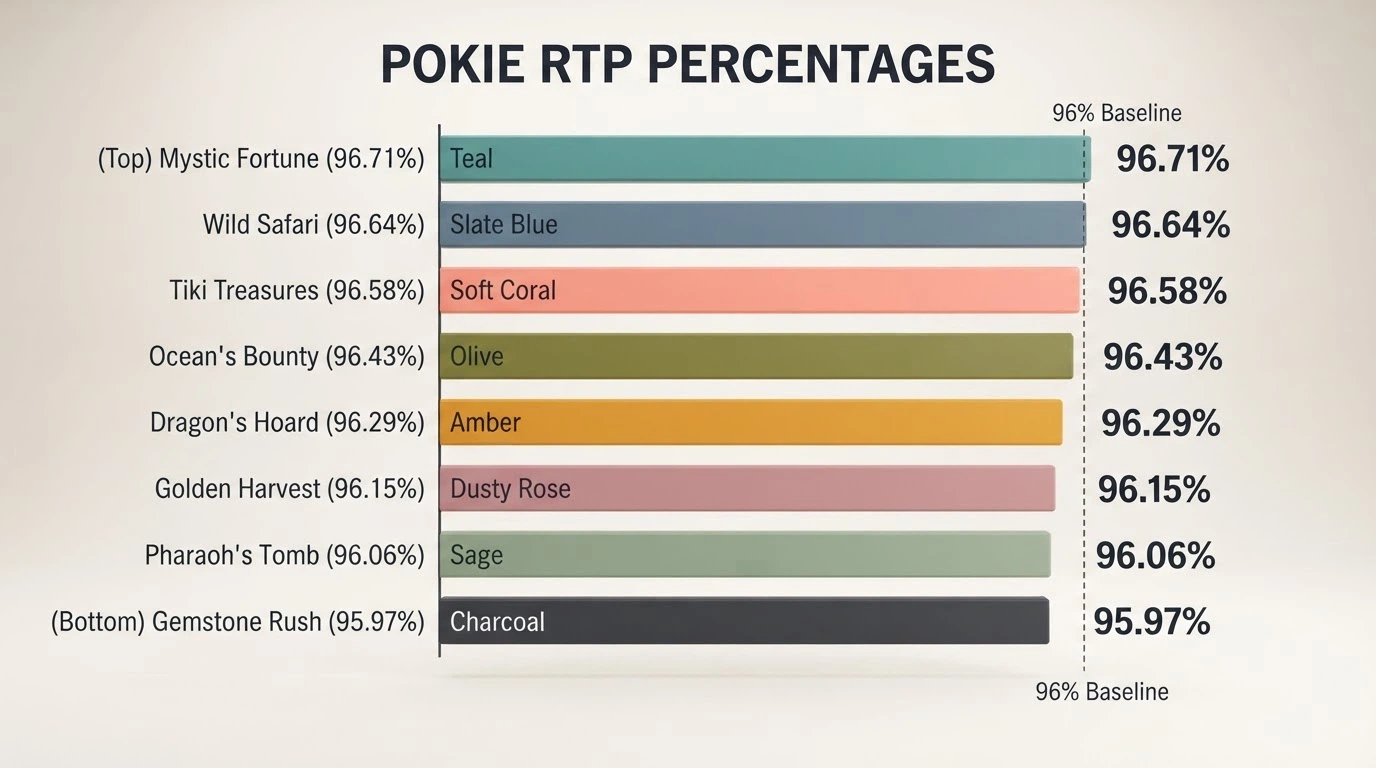
The title matters in another way too. The operator chooses which pokie the bonus free spins run on, and the punter almost never gets to choose. A bonus on a high-RTP title gives a punter a meaningfully better mathematical position than the same bonus on a lower-RTP configuration of the same brand — and several of the titles below are released by providers in multiple RTP configurations, where the operator selects which one to deploy.
The RTP League Table: Eight Pokies Australian Bonus Players Should Know
The eight titles below are the pokies an Australian no-deposit bonus player is most likely to encounter, ordered by confirmed RTP. The volatility column carries the data where research surfaced it; the no-data marker means the figure was not confirmed during this review. Provider matters because two studios releasing a title at the same headline RTP can run materially different bonus behaviour underneath.
| Slot Title | Provider | RTP | Volatility |
|---|---|---|---|
| Big Bass Bonanza | Pragmatic Play / Reel Kingdom | 96.71% | Medium-High |
| Sugar Rush 1000 | Pragmatic Play | 96.53% | High |
| Sweet Bonanza 1000 | Pragmatic Play | 96.53% | High |
| Sweet Bonanza | Pragmatic Play | 96.51% | High |
| Luxor of Cleopatra | Pragmatic Play | 96.51% | Medium |
| Gates of Olympus | Pragmatic Play | 96.5% | Extreme |
| Book of Dead | Play’n GO | 96.21% | High |
| Gonzo’s Quest | NetEnt | 95.97% | Medium-High |
The cluster from Sugar Rush 1000 down to Luxor of Cleopatra is mathematically almost identical at the RTP level — the 0.02% spread between Sugar Rush 1000 and Luxor of Cleopatra is negligible across any volume of bonus play. The real decision is between this cluster and Gates of Olympus, Book of Dead and Gonzo’s Quest below it, where the 0.3% to 0.7% spread is more meaningful.
Volatility is the harder trade. A high-volatility pokie will produce more sessions where the bonus loses everything quickly and more sessions where a small stake returns a large multiple. A medium-volatility pokie produces steadier outcomes — the bonus is more likely to last long enough to convert, but the wins are smaller when they come. For a punter whose priority is converting the bonus rather than chasing a single large payout, medium-volatility titles are the more forgiving choice. For a punter willing to lose the bonus for a chance at a multiplier, high-volatility is the bet.
Why Your Bonus Free Spins Are Probably Tied to One Specific Title
Operators choose the slot for your no-deposit free spins for reasons that have nothing to do with which game is best for you. Coin Strike 2 Hold and Win is the title WinSpirit has bound its forty no-deposit spins to. Book of Pyramids is the title RocketPlay has bound its twenty spins to. SkyCrown’s spins run on either Big Bass Bonanza or Gates of Olympus. A punter cannot redirect the spins to a different game without forfeiting them.
The same title can run at different RTPs depending on which configuration the operator has licensed. Gates of Olympus is published at 96.5% as the default, but the same game ships in configurations at 95.51% and 94.5%; a player who lands on the lower-configuration build is running a 2% lower RTP than the title’s marketing claims. There is no way to tell from the slot lobby which configuration is in play, and the operator is not required to disclose it.
The practical conclusion: read which title your no-deposit spins are locked to, treat the higher-RTP end of that title’s published range as the best case, and assume the actual play may sit at the lower end. A punter who has a choice between two no-deposit offers — same wagering, same cashout cap — should pick the one tied to a higher-RTP title. The 1–2% gap is the most honest edge available in this market.
How Australians Fund and Withdraw From Offshore Casino Accounts
Payment methods at an Australian-facing offshore casino are an editorial choice and a legal signal. A site that accepts PayID is not necessarily licensed in Australia, but it is using a payment rail that Australian banks built; a site that accepts credit cards or crypto is, by definition, operating outside the Australian framework that has prohibited those methods since 11 June 2024.
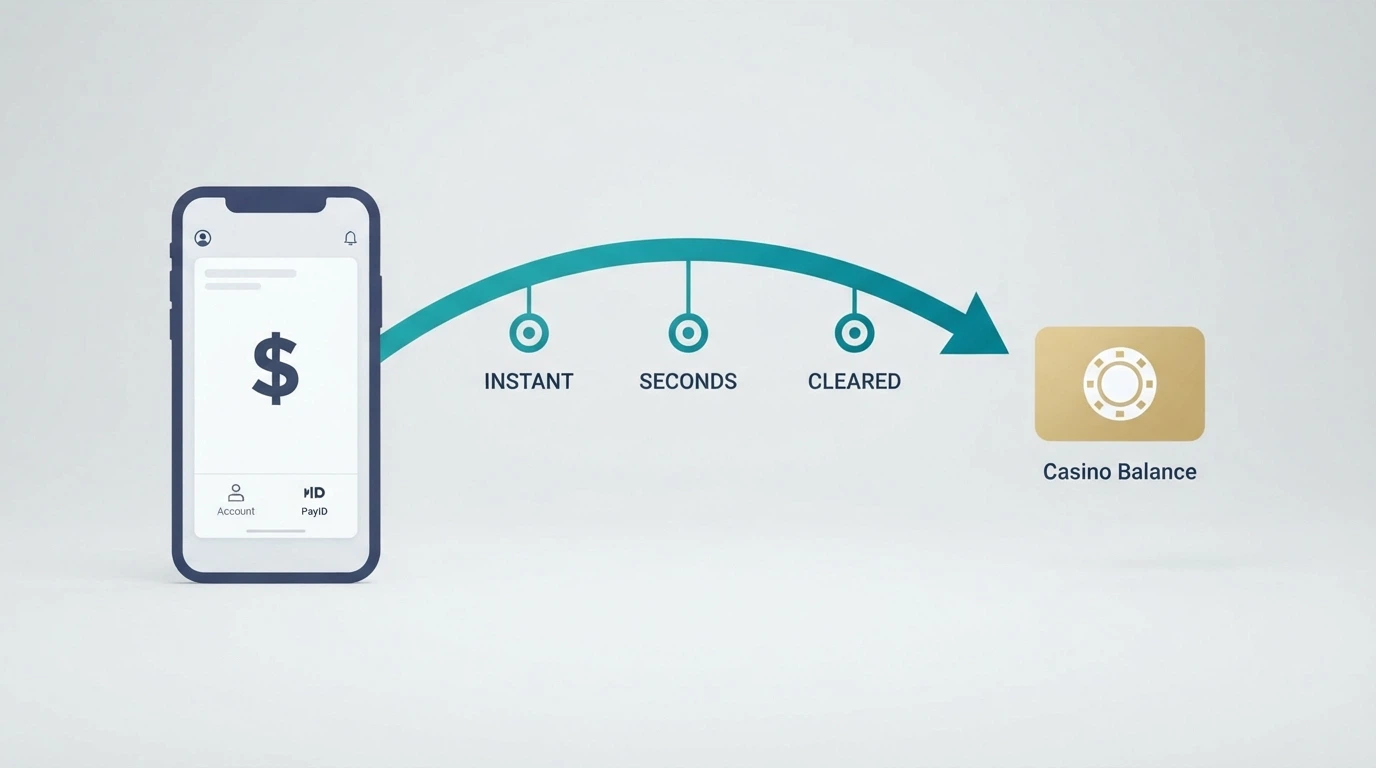
PayID Deposits: How the Fastest Rail to an Offshore Casino Actually Works
PayID is a free service built into the Australian banking system, running on the New Payments Platform. The address is the PayID — typically a phone number, email or ABN — and the delivery mechanism is Osko. Transfers clear in seconds, twenty-four hours a day, seven days a week, including weekends and public holidays. For an Australian punter, it is the fastest deposit rail available, and the only one that does not impose a per-transaction fee.
The deposit flow runs through the punter’s banking app. The punter opens the app, selects PayID/Osko, enters the casino’s PayID, enters the amount, and approves the transfer with their bank’s two-factor authentication. The casino’s balance typically updates within sixty seconds of approval. Most offshore casinos serving Australian players accept PayID deposits with a minimum of A$10 to A$30 — the A$20 to A$30 band is the most common — and daily caps are set by the punter’s bank, ranging from A$1,000 to A$20,000 depending on the institution and the in-app settings.
Withdrawals are where the picture changes. Most AU-facing offshore casinos process withdrawals by standard bank transfer, not by PayID. The processing time is one to three business days after the casino approves the withdrawal, and the funds clear into the punter’s Australian bank account through the regular banking rails. The speed of the deposit does not transfer to the speed of the payout, and a casino that quotes “instant deposits” usually says nothing about instant withdrawals.
The important honesty about PayID at an offshore casino: the speed is real, the fee is zero, and the Australian consumer protection is absent. PayID is a payment rail. It does not come with a refund mechanism for an offshore operator that refuses to pay out, and the consumer protections that apply to a PayID purchase at an Australian-licensed merchant do not transfer to an offshore casino.
What Your Deposit Method Tells You About Your Casino’s Legal Status
The credit-card and crypto ban took effect on 11 June 2024 under the Interactive Gambling Amendment (Credit and Other Measures) Act 2023. Any Australian-licensed wagering operator is prohibited from accepting credit cards, credit-related products or digital currency (crypto) as payment for online wagering. The penalty for an operator that fails to enforce the ban is up to A$247,500.
That creates a clear signal. If an operator asks for a credit card or accepts crypto, it is operating outside Australian rules. The product being offered — online casino, online pokies, in-play betting — is itself prohibited under the Interactive Gambling Act 2001; the offshore operator is not licensed in Australia and cannot be, because no Australian licence for online casino exists. The credit-card and crypto acceptance is not the legal problem. It is the symptom of the legal problem.
What an Australian-licensed wagering operator accepts, by contrast, is debit cards, PayID/Osko, BPAY and bank transfer. The credit-card ban does not affect debit cards. The deposit page of an AU-licensed operator will not list crypto. A punter who sees a “Bitcoin accepted” or “Visa credit card” line on a casino cashier is looking at an offshore brand, full stop, and should treat everything else on the site through that lens.
The 2026 reform adds another layer. From 1 January 2027, banks and payment providers gain express authority to block transactions to illegal gambling operators — meaning that a punter using PayID to fund an offshore casino today may see that transfer declined by their bank from that date onwards. The reform does not change the underlying prohibition on online casino. It makes the payment infrastructure harder to use in the direction the prohibition has always pointed.
Is Online Casino Legal in Australia? What the Law Actually Means for You
Online casino is prohibited in Australia under the Interactive Gambling Act 2001. The prohibition was strengthened in 2017 by the Interactive Gambling Amendment Act 2017, which closed the loopholes offshore operators had been using and gave the Australian Communications and Media Authority its enforcement and site-blocking powers. There is no licence for online casino anywhere in the country — not federally, not in any state or territory. The only online wagering Australia licenses is pre-event sports and race betting, lotteries and keno.
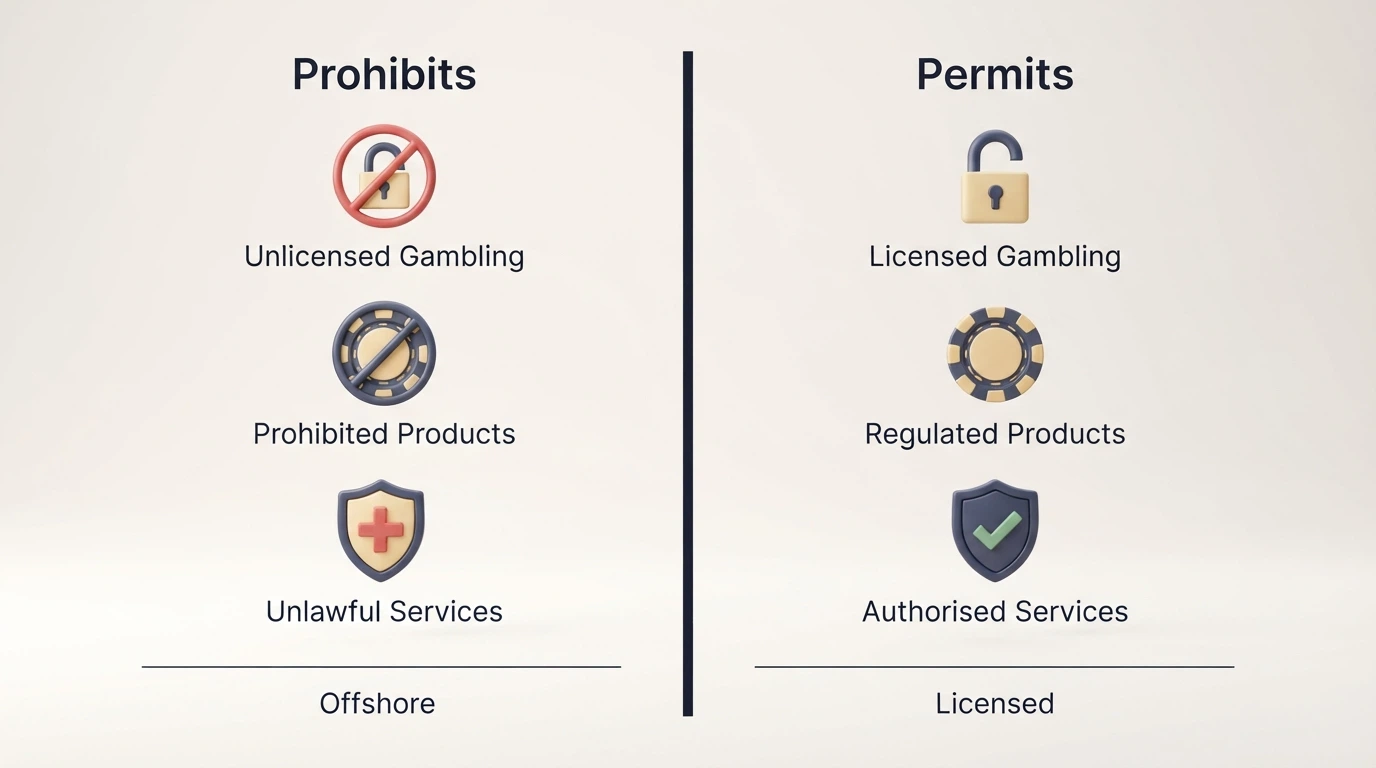
What the law targets is the provider, not the player. The IGA makes it an offence to provide prohibited online gambling services to a person in Australia; it does not make it an offence for an Australian to use those services. The punter is not the subject of the enforcement. The casino, its affiliates, and the infrastructure that delivers it are.
That distinction matters because the practical consequences for a punter are not legal but financial. An Australian player using an offshore casino has no consumer protection, no recourse if the operator refuses a withdrawal, no coverage under BetStop, no complaints pathway through ACMA, and the constant risk that the operator’s domain is added to ACMA’s blocklist — at which point the punter’s balance, any pending withdrawal, and the casino itself becomes unreachable from inside Australia.
ACMA’s Blocking Power: 1,564 Sites Blocked and Counting
ACMA has had 1,564 illegal gambling and affiliate websites blocked at the Australian ISP level since its first blocking request in November 2019, as at March 2026. More than 225 illegal services have voluntarily withdrawn from the Australian market since enforcement was strengthened in 2017. The blocking mechanism is DNS-level: ACMA directs Australian ISPs to resolve the operator’s domain to a non-routable address, and the site becomes unreachable from an Australian IP. Affiliate sites — review portals and code-drop aggregators that feed traffic into offshore operators — fall inside the blocklist too.
The scale matters. 1,564 blocked sites does not mean 1,564 different casinos; it includes rebrand domains, mirror sites and affiliate marketing pages that direct Australian traffic to operators. The number reflects the breadth of the offshore industry targeting Australian players, not the breadth of distinct operators. The withdrawal number — more than 225 since 2017 — is the more meaningful figure: it represents services that decided the enforcement risk was high enough that exiting the AU market was the cheaper option.
For a punter, the practical risk is balance exposure. If ACMA adds an operator’s domain to the blocklist while a punter has funds in the account, the punter’s access to those funds is cut off at the ISP level. The operator may still operate the account; the punter simply cannot reach it from Australia. A punter using a VPN to access a blocked site is using infrastructure the IGA explicitly anticipates, and the offshore operator has no obligation to honour withdrawals to a user whose access channel the operator cannot verify.
The 2026 Reform and What Changes on 1 January 2027
The Interactive Gambling Amendment (Gambling Reform) Bill 2026 passed Parliament on 19 August 2026. Its measures commence on 1 January 2027. The reform is the largest package of gambling-law changes Australia has seen in a decade, and most of it does not touch online casino directly — because online casino remains prohibited in any form. What the reform does is reshape the licensed wagering market and tighten the screws on illegal operators.
The advertising restrictions cap wagering advertising on television to three ads per hour between 5am and 8.30pm, ban wagering ads during live sport (from fifteen minutes before kick-off to five minutes after the final whistle), and prohibit athletes, celebrities and influencers from promoting wagering brands. Wagering ads are banned in sports venues and on player uniforms. A Wagering Advertising Opt-out Register lets account holders suppress wagering advertising from their feed.
The inducement marketing rules are the more interesting piece for the offshore sector. From 1 January 2027, direct marketing of inducements is prohibited for fourteen days after a customer signs up with an AU-licensed wagering operator, for three months after a person deregisters from BetStop, and indefinitely for customers identified as at risk of gambling-related harm. Inducements, in this context, means bonus offers and promotional credits — the same mechanisms the offshore sector uses to attract AU players.
And on the payment side, banks and payment providers gain express authority to block transactions to illegal gambling operators. A PayID transfer to an offshore casino that is on ACMA’s blocklist can be declined by the sending bank. The reform does not make offshore play illegal for the player — that was already the case, in the sense that the player was never the subject of the prohibition. It makes the mechanics of offshore play materially harder.
What Offshore Casinos Cannot Give You: The Safety Nets Australian Players Lose
The difference between an AU-licensed wagering operator and an offshore casino is not the bonus or the payout speed. It is the safety infrastructure that an Australian player is leaving behind when they sign up with an offshore brand.
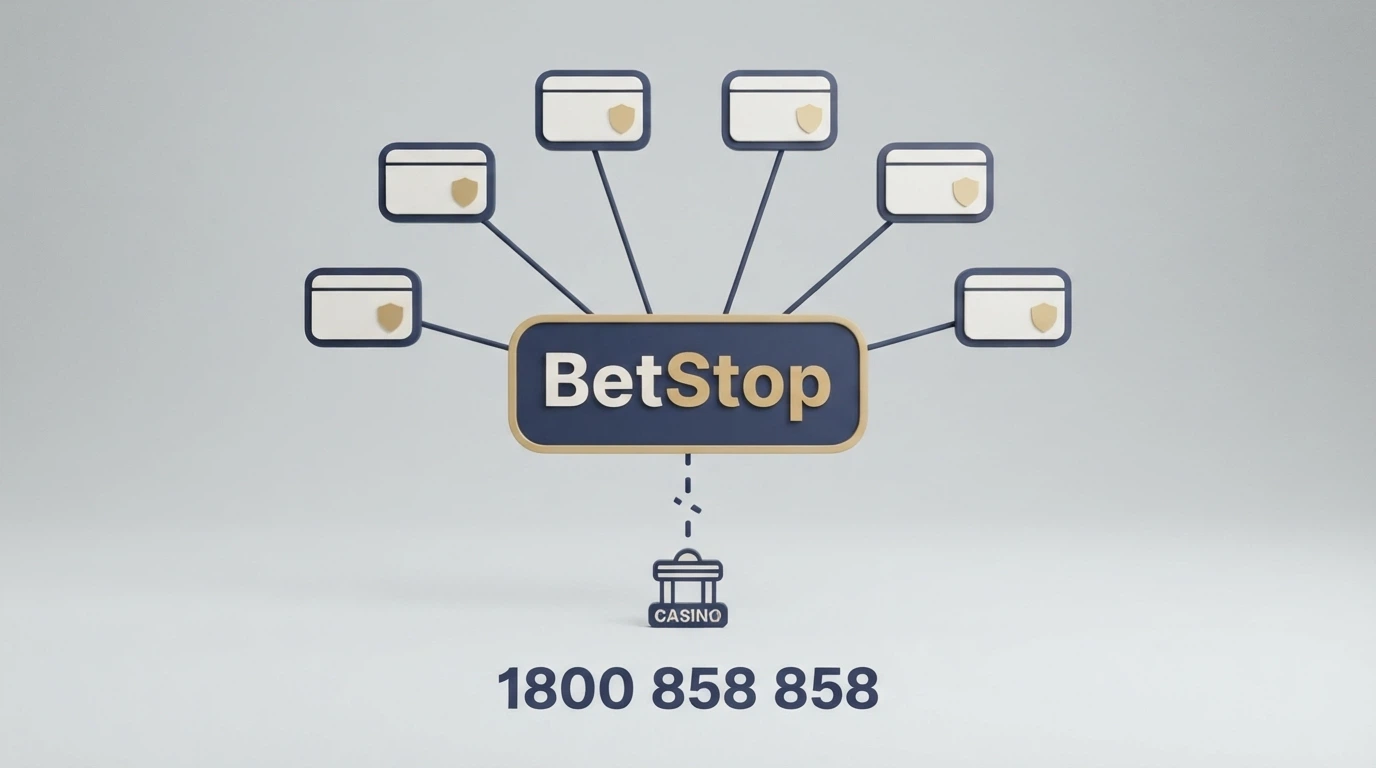
BetStop — the National Self-Exclusion Register — has been live since August 2023. A single registration excludes the person from every Australian-licensed online and phone wagering service in one step. As at 31 July 2026, 67,480 Australians had registered with BetStop, with 41,290 exclusions still active — more than 60% of everyone who has ever registered. Of those registrants, 78% were under 40 and 38% chose lifetime exclusion. The numbers describe a register that is heavily used and heavily committed to.
BetStop does not cover offshore casinos. A punter who has registered with BetStop can open an account at any offshore brand serving Australians and the operator will not check, because it cannot check. The exclusion is binding on the AU-licensed sector and irrelevant outside it.
The National Consumer Protection Framework for Online Wagering sets out ten measures the AU-licensed sector is required to offer: no line of credit for gamblers, strong identity and age verification, restricted incentives and account sign-up offers, easy account closure, deposit limits, monthly gambling activity statements, consistent messaging about gambling risks, trained staff, and the National Self-Exclusion Register. None of these apply to an offshore operator unless the operator chooses to offer them, and most do not.
How Many Australian Players Are Actually at Risk
The prevalence figures put the scale of the safety infrastructure in context. The Australian Institute of Health and Welfare puts problem gambling at 2.1% of Australian adults — roughly 430,000 people — and high-risk gambling at 1.8% (2022 data). The BetStop demographic skews younger: 78% of registrants are under 40. The population using offshore casinos in 2026 is not separately measured, because the offshore sector sits outside every data-gathering system Australia has built.
That absence is the point. An offshore casino in 2026 has no obligation to report player data, identify problem-gambling indicators, or interact with the harm-minimisation infrastructure that the AU-licensed sector funds and operates. The punter’s experience of harm, if harm develops, has no domestic pathway. The nearest service that can help is the National Gambling Helpline, and that is a help line, not a regulator with reach into the offshore operator.
Where to Get Help: The Numbers, the Chat and the Register
- National Gambling Helpline: 1800 858 858. Free, confidential, staffed 24 hours a day, 7 days a week. The single most useful phone number an Australian punter can keep.
- Gambling Help Online: gamblinghelponline.org.au. Free 24/7 chat and email counselling for people who would rather type than talk.
- BetStop: betstop.gov.au. One registration excludes the person from every Australian-licensed online and phone wagering service. Does not cover offshore casinos.
- Deposit limits and activity statements are the two practical tools an AU-licensed operator is required to offer. A punter who sets a weekly deposit limit and reads their monthly activity statement is doing what the framework was built for.
How We Evaluated These 10 Casinos
The operators above were selected from the AU-facing offshore market by fit to the head topic — the existence and value of a no-deposit offer a player can realistically claim. The evaluation drew on ACMA’s enforcement records and blocklist, the operator’s own terms pages, and independent casino review databases; the ranking follows the comparison criteria set out in the table above (no-deposit existence first, then wagering fairness, then cashout cap, then welcome value) without numerical weighting.
No weightings or percentages are assigned, and no single operator has been paid for inclusion. The ranking reflects honest fit to a punter searching this term — that is all it claims to be, and it is less than a recommendation.
What to Actually Do With This Information
The figures on this page point in one direction. No genuine standalone $200 no-deposit bonus exists in the Australian-facing offshore market; the real ceiling for a deposit-free offer is closer to A$50 or A$100; the wagering multiplier on a true NDB is steep enough that most players will not clear it before the bonus expires; and the cashout cap clips whatever remains. The bonus is a trial of the platform, not a payday.
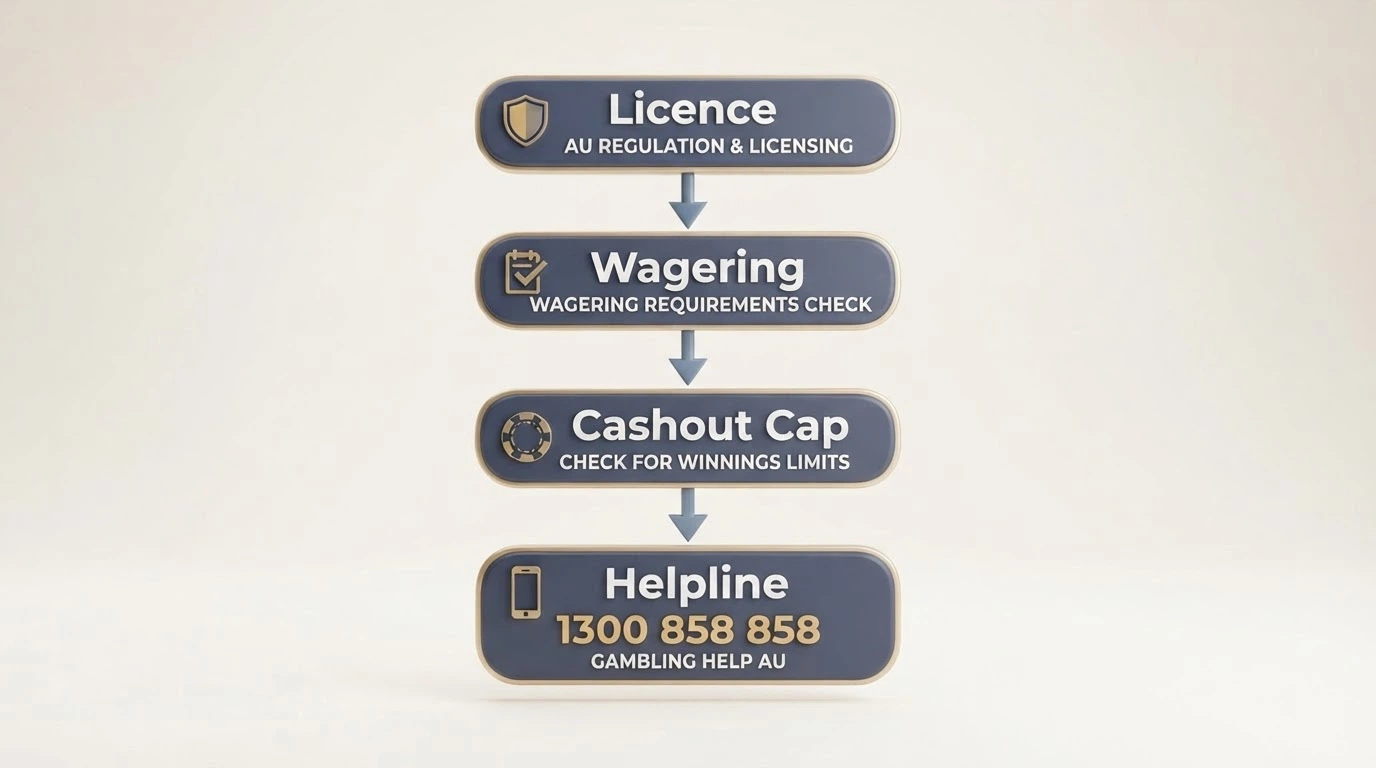
Three concrete steps follow. Verify the licence: a Curacao licence is the most common wrapper, but a licence number that does not resolve on the regulator’s site is not a licence. Check the wagering multiplier against the cashout cap — a A$200 bonus at 80x wagering with a A$100 cashout cap is worth less than a A$50 bonus at 40x with a A$500 cap, because the second one converts to real money and the first one does not. Know the helpline number (1800 858 858) before the bonus is claimed, because the offshore sector sits outside every Australian protection if the play stops being fun.
The honest read is that no-deposit bonuses exist to put a punter inside an operator’s product. Some of them are fair, some are token gestures, and a few are large enough to be worth the time on the wagering. None of them replaces the safety infrastructure that an AU-licensed wagering product provides, and none of them changes the legal position of the punter who claims them. Treat them as the casino does: as a marketing cost, recouped in volume.
Frequently Asked Questions
How much can I actually cash out from a no-deposit bonus at an Australian-facing casino?
No-deposit bonuses at AU-facing offshore casinos typically carry a cashout cap of A$100 to A$200 — A$50 at WinSpirit, around A$85 at RocketPlay, A$750 at SkyCrown. The cap applies to net winnings after wagering, with anything above it voided. The cap, not the headline, is the rule that decides whether a cleared bonus produces a real withdrawal.
What wagering requirements apply to no-deposit bonuses at offshore casinos?
No-deposit bonuses at AU-facing offshore casinos typically carry 40x to 80x wagering, with most genuine offers around 50x. Free-spin winnings carry 25x to 40x. Slots contribute 100% of every wagered dollar; table and live games contribute at most 10%. The multiplier, not the headline, is the rule that decides whether a bonus converts to withdrawable cash.
Does BetStop protect me if I play at an offshore online casino?
BetStop does not cover offshore casinos. A registration excludes a person from every Australian-licensed online and phone wagering service but binds no operator outside the AU-licensed sector. An offshore casino cannot check BetStop and will not honour an exclusion. BetStop is the most useful safety tool in the AU-licensed market — but not against offshore play.
Can I use PayID to deposit and withdraw at offshore casinos in Australia?
Most AU-facing offshore casinos accept PayID for deposits, clearing within sixty seconds of approval. Minimums run A$10 to A$30 and daily caps are set by the punter’s bank. Withdrawals are processed by standard bank transfer in one to three business days. From 1 January 2027, banks gain authority to block PayID transfers to illegal gambling operators.
Do I need to pay tax on casino winnings in Australia?
No. Gambling winnings are not assessable income for an ordinary Australian punter under section 6-5 of the ITAA 1997, and losses are not deductible. The exception is a person carrying on a business of betting or gambling, which no Australian case has held to apply to an ordinary punter. The tax is the operator’s liability, not the player’s.
What changes to Australian gambling laws take effect in 2027?
The Interactive Gambling Amendment (Gambling Reform) Bill 2026 passed on 19 August 2026 and commences 1 January 2027. It caps wagering TV advertising, bans ads during live sport, restricts inducement marketing for new and recently deregistered customers, and gives banks authority to block transactions to illegal gambling operators. The reform does not change the prohibition on online casino.
Published by the Online Pokies Real Money team.